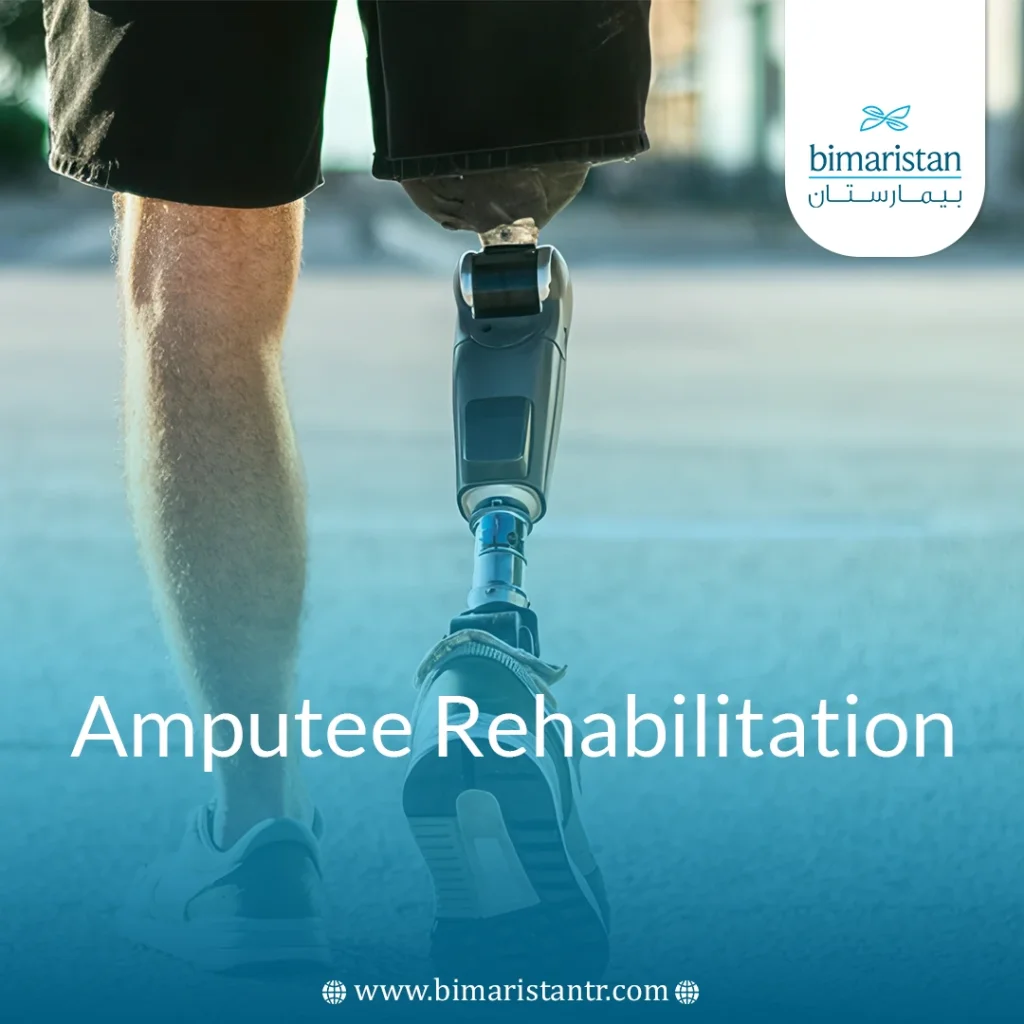
Amputation is one of the most complex medical and psychological challenges due to its long-term functional and social implications. The therapeutic context for amputee patients is a multi-stage process aimed at restoring the physical and psychological function of the patient through comprehensive amputee rehabilitation.
There are approximately 57.7 million amputees in the world, which emphasizes the importance of caring for amputee patients from initial assessment to amputee rehabilitation, prosthetic fitting, and achieving patient independence.
First stage: Medical assessment after amputation
At the beginning of the therapeutic context for limb amputation patients, a thorough evaluation is essential in the process of amputee rehabilitation. This includes a subjective evaluation, covering the medical history of the current condition, previous medical history, medication history, and the patient’s social background. It is followed by an objective evaluation, which involves assessing joint range of motion, muscle strength of the amputated limb, skin integrity, and vital functions such as temperature, pulse, blood pressure, and blood sugar. Additionally, psychological assessment is crucial to identify depression or emotional intolerance to the amputation.
Wound examination, pain assessment, and circulation checks
After amputation, the wound is bandaged and examined to ensure that there is no infection or suppuration, and a drainage tube can be used to help remove excess fluid, as for pain, people may feel pain that seems to be in the amputated limb, this is known as Phantom Limb Pain, and this pain is real, but its location is wrong, and it is more likely if the pain before the amputation is severe or lasts for a long time, and this pain is often more intense in the first period after amputation, then gradually decreases over time, and increases in many cases such as not wearing the prosthesis during the night.
The blood circulation test is also very important, such as checking the pulse in the arteries near the amputation site, as the absence of amputation indicates poor perfusion, and the capillary refill test, by applying pressure to the skin and then leaving it and measuring the time it takes to return to its normal color, as passing more than 3 seconds on this test may indicate poor perfusion, in addition to the above, the temperature and color of the skin should be measured, as pale or bluish color indicates poor perfusion.
Second stage: Wound care and early rehabilitation
In the second phase of the therapeutic context for limb amputation patients, wound care is carried out as a vital step in amputee rehabilitation. During this phase, the doctor monitors the healing of the wound and any underlying conditions that may hinder recovery, such as diabetes or atherosclerosis. Medications are also prescribed to relieve pain and prevent infection if necessary. Ideally, the wound should fully heal within four to eight weeks. During this period, the specialized team initiates early amputee rehabilitation by preparing the patient both physically and psychologically for prosthetic fitting, aiming to reduce long-term complications.
Prevent complications such as sores or muscle stiffness
Sores are prevented by taking care of the skin and using compression stockings to reduce swelling, moisturizing the skin with non-irritating skin moisturizers to avoid dryness and cracking, and preventing muscle stiffness that leads to restriction of joint movement, and it is necessary to prevent contractures early, as they may become permanent and hinder wearing the prosthesis, make it difficult to walk and increase the need for a walker or assistive devices, as the physiotherapist maintains proper posture and normal range of motion in the limb and teaches the patient proper stretching and posture exercises.
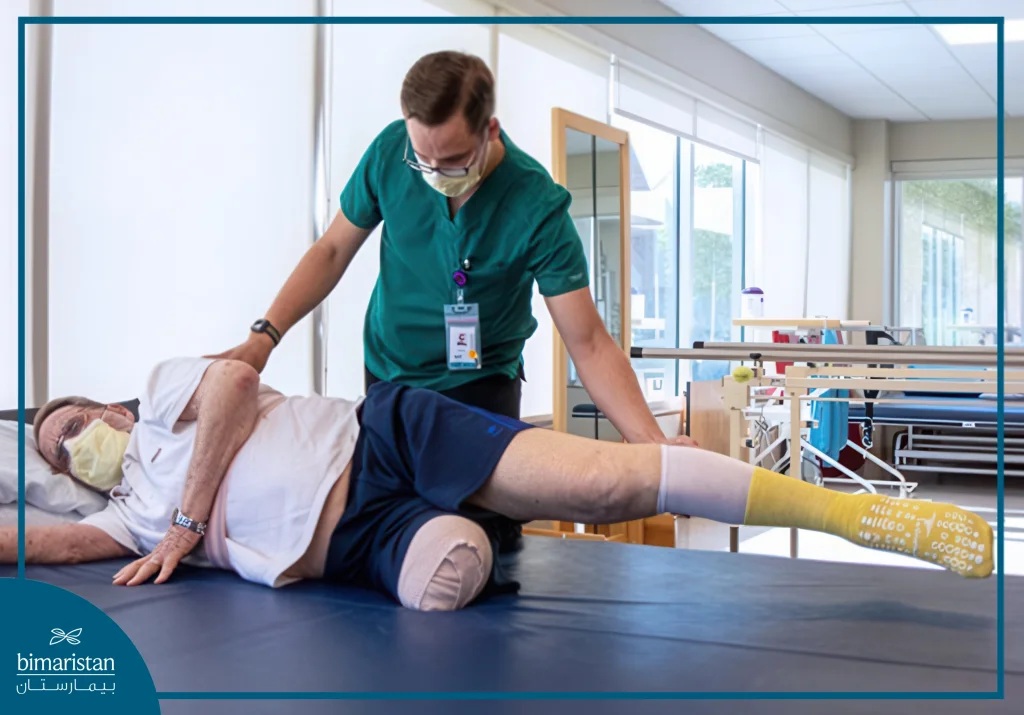
Psychosocial support is the cornerstone of patient rehabilitation, through cognitive behavioral therapy (CBT) techniques to modify negative thoughts, in addition to family and community support by involving the family in the rehabilitation plan and through support groups to share experiences and emotional support, and the patient can be made aware of his rights such as assistive devices and exemptions.
The role of the psychologist in accepting a new disability
By analyzing the patient’s situation before and after the accident, it is necessary to focus on the advantages of the procedure and explain them to the patient, such as explaining that amputation and getting rid of part of his body was necessary to avoid loss of life, in addition to mentioning the advantages of what happened to him on the psychological and health side, in addition to stopping the pain and surviving death, he can resume his life again by installing a prosthetic limb that makes him practice his life in a semi-normal way.
Fourth stage: Selecting and designing the right prosthesis
At this stage of the therapeutic context for amputee patients, a prosthesis is designed and fitted for most individuals. As part of amputee rehabilitation, prosthetics may include bionic prostheses, silicone prostheses, and specialized sports prostheses for athletic patients.
Evaluate the amputation site and the type of prosthesis
The appropriate type of prosthesis is chosen by evaluating the amputation site, the different level of amputation may affect the choice of the prosthesis, such as cases of above knee amputation, the patient needs an artificial knee joint, while in cases of below knee amputation, the situation is more stable and easier to use, and the condition of the remaining limb such as the presence of scars, allergies or ulcers affects the choice of the most appropriate limb, in addition to the patient’s goals may lead to the choice of different prostheses.
Fifth stage: Prosthetic training
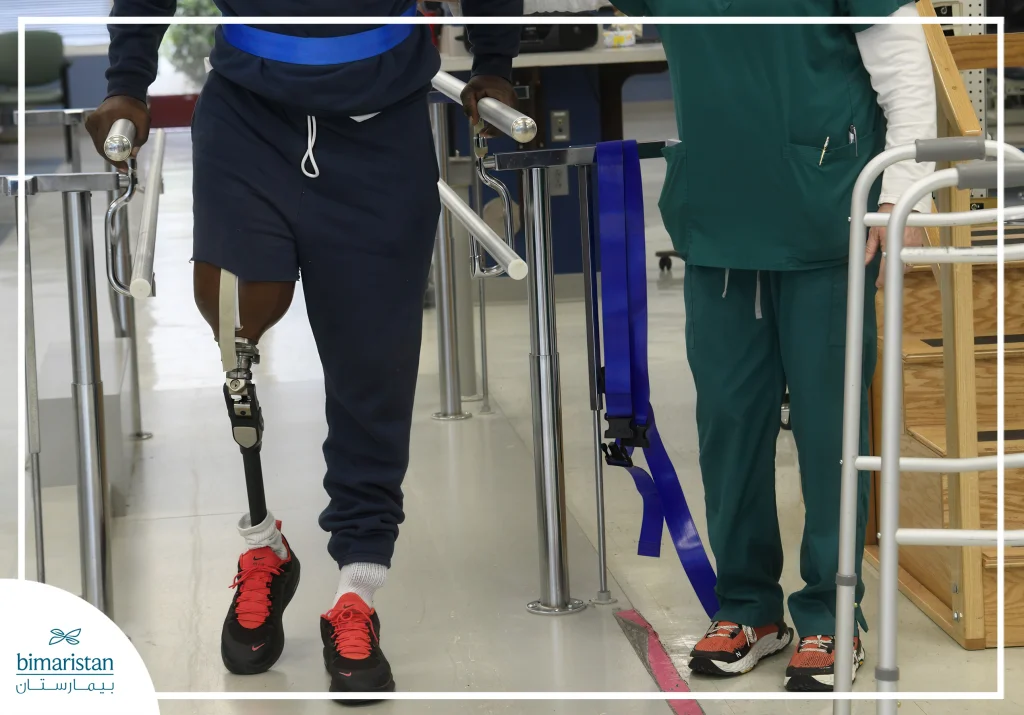
In the fifth stage of amputee rehabilitation, and after fitting the prosthesis, the patient is trained to use the prosthesis, and this stage is an essential step after amputation in order to restore the patient’s ability to move and independence, as the training includes balance and walking exercises in addition to the ability to control the new limb, in order to replace the lost limb safely and efficiently.
Balance exercises, walking, and control of the new limb
In amputee rehabilitation, the patient is trained to stand steadily with the prosthesis next to a walkway or brace and to transfer weight gradually from the healthy limb to the prosthesis. Then, the patient is trained to stand on an uneven surface to stimulate the balance response. These exercises help prevent falls and improve standing and walking stability.
As for walking exercises, the patient is trained to use a walker or crutches and then gradually reduce the support, and the gait pattern is corrected to minimize stumbling and strain, then the patient is trained to go up and down stairs, and the patient must be taught to control the new limb by repeating daily activities such as sitting, standing, or picking up objects to strengthen control and accuracy.
The sixth stage is vocational rehabilitation and ongoing follow-up
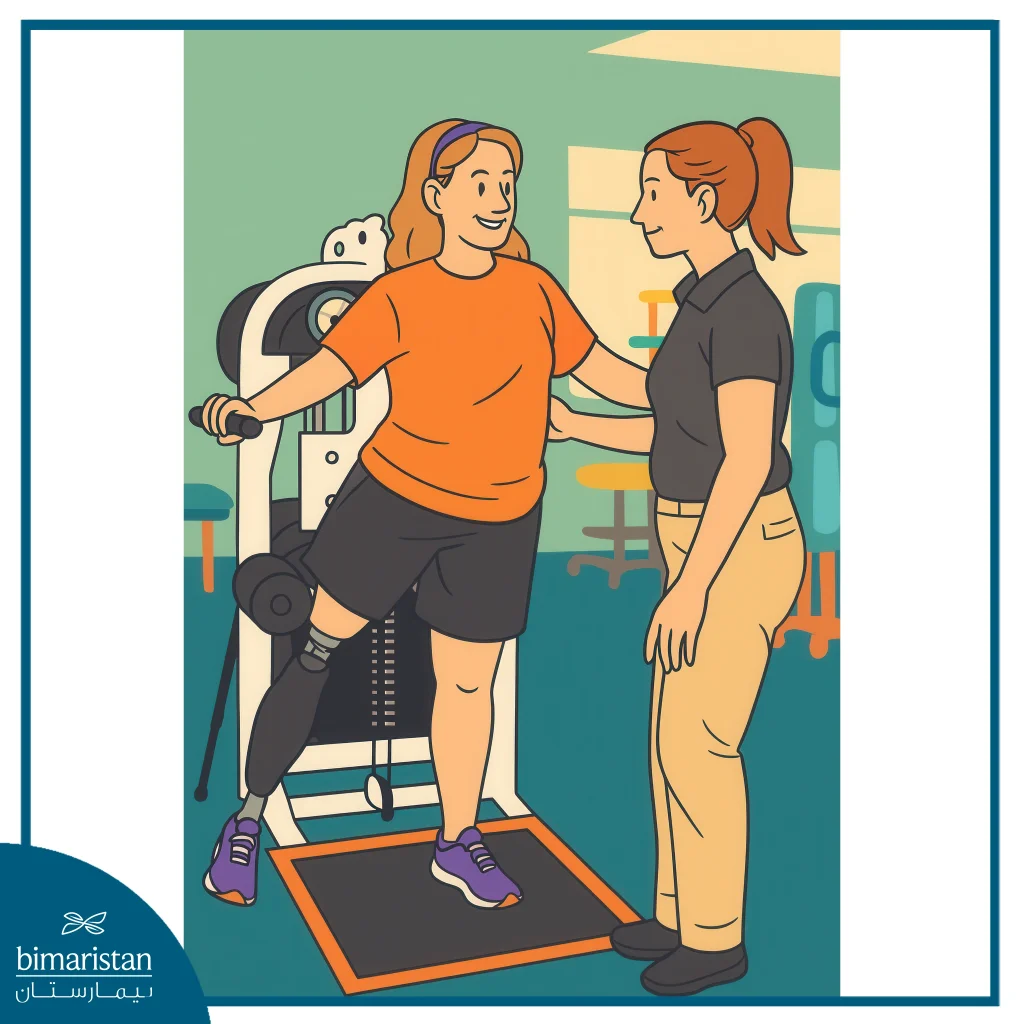
In the final stage of the therapeutic context for limb amputation patients, amputee rehabilitation aims to restore the patient’s ability to perform daily activities independently using a prosthesis or through compensatory strategies. This is done by training the patient in daily activities, muscle strengthening and flexibility exercises, in addition to training the healthy limbs to perform compensatory tasks.
Adjusting the prosthesis over time according to the patient’s needs
Over time, the patient’s body changes, as does the size of the amputated limb, requiring regular adjustments to ensure comfort, motor efficiency, prevention of ulcers or pain, and compatibility of the limb with daily activity:
- Change in the shape of the amputated limb
- Changes in walking pattern or activity
- Pain or pressure points
- Children’s growth
- Weight change
The importance of periodic follow-up and ongoing examinations in amputee rehabilitation
Periodic follow-up and ongoing examinations are of great importance in the therapeutic context of amputee rehabilitation, by monitoring changes in the amputated limb, such as shrinkage or swelling, detecting weaknesses or skin ulcers, adjusting the prosthesis, and preventing complications such as ulcers or spinal issues due to imbalance, in addition to assessing functional performance and providing psychosocial support.
In conclusion, the therapeutic context for amputee rehabilitation represents an integrated pathway for physical and psychological recovery, enabling the patient to regain independence and quality of life. The success of this process depends on the collaboration of a multidisciplinary team, and adopting a holistic and evidence-based treatment approach ensures optimal therapeutic and rehabilitative outcomes.
Sources:
- Demir, Y., & Aydemir, K. (2020). Gülhane lower extremity amputee rehabilitation protocol: A nationwide, 123-year experience. Turkish Journal of Physical Medicine and Rehabilitation,
- U.S. Department of Defense. (2022).The management of upper limb amputation rehabilitation: VA/DoD clinical practice guideline. Veterans Health Administration & Office of Quality & Patient Safety. Retrieved