
.floating_btn{ display:none !important; } .println-contact-form-button-element{ display:none !important; }
Generally, golfer’s elbow is considered one of the common musculoskeletal injuries, involving inflammation of the tendon that connects the forearm muscles to the bony prominence on the inner side of the elbow due to chronic strain. The condition may radiate pain into the forearm and wrist and is often associated with weakened wrist flexion or grip strength, resulting from tendon irritation caused by repetitive movements. Despite its name, golfer’s elbow is not exclusive to golfers—it also affects tennis players, manual laborers, and anyone engaged in repetitive wrist or hand activities. It is often considered the counterpart of “tennis elbow,” which affects the outer part of the elbow.
Management approaches for golfer’s elbow vary from conservative therapies to surgical interventions, raising important questions: Can golfer’s elbow heal without surgery? What determines the necessity of surgical treatment? And what factors accelerate or hinder the recovery process and restoration of normal elbow function? In this article, we explore the nature of golfer’s elbow, its symptoms, underlying causes, and the available treatment strategies to help patients regain pain-free movement and return to their daily routines.
What is golfer’s elbow?
Golfer’s elbow, medically known as medial epicondylitis, is an inflammation of the tendons that originate from the humerus bone’s medial epicondyle. These tendons are associated with the muscles that flex the wrist towards the palm. This condition is characterized by localized pain on the inner side of the forearm. It may extend to affect hand and wrist movement, especially during repetitive motions or sustained muscular effort.
Tendons are robust fibrous tissues that connect muscles to bones, playing a crucial role in transferring the force generated by muscle contraction to the skeletal system. In golfer’s elbow, the tendons of the wrist flexor muscles, specifically originating from the medial epicondyle, become irritated and inflamed due to repetitive movement and constant strain.
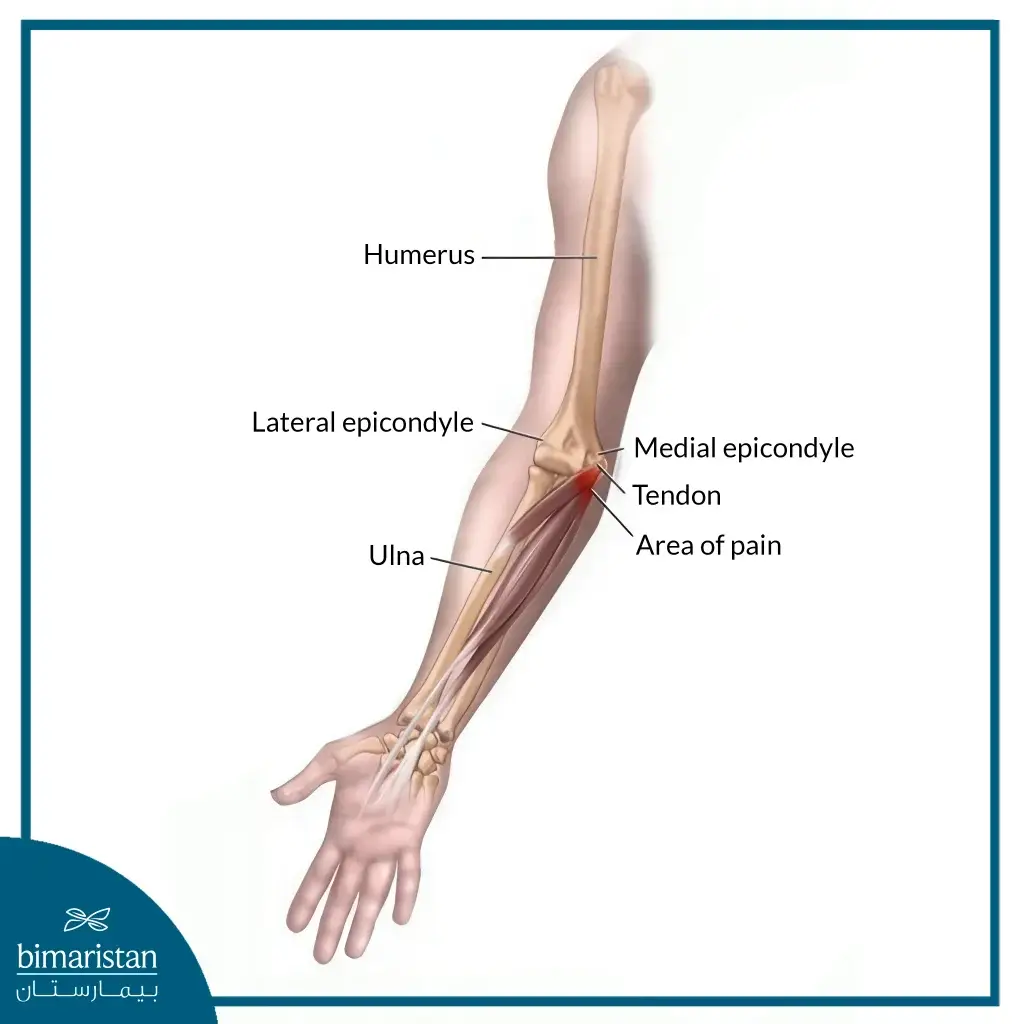
The term “golfer’s elbow” originated because of its frequent occurrence among golfers, given the nature of their swings, which require repeated wrist gripping and continuous arm rotation. However, the condition is not confined to golfers alone but also affects other athletes, such as baseball players, and individuals whose occupations demand frequent lifting or wrist usage, such as bag carriers or manual tool users.
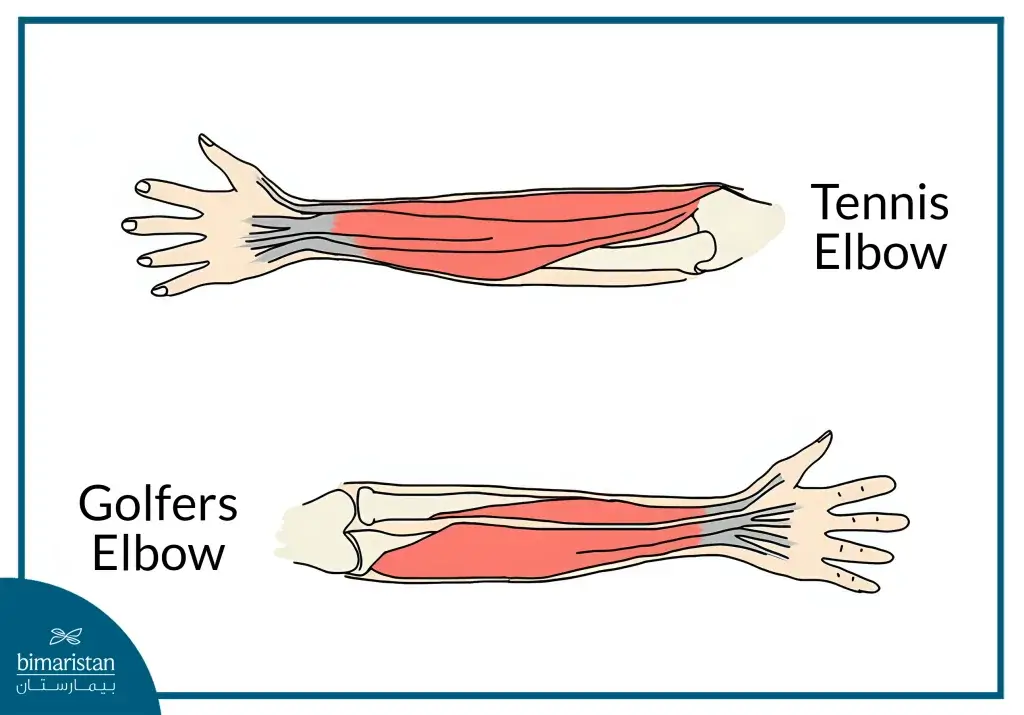
Although the condition shares a similar mechanism of injury with tennis elbow (lateral epicondylitis), the key difference lies in the location of pain. While golfer’s elbow affects the inner side of the forearm, tennis elbow involves the outer side due to the involvement of the tendons attached to the lateral epicondyle of the humerus.
Risk factors for developing golfer’s elbow
- The incidence increases in patients over the age of 40.
- The condition may be associated with higher rates of obesity.
- Chronic, repetitive use of the hands in certain activities increases the likelihood of occurrence.
- Smoking may also play a role in the development of the condition.
Causes of golfer’s elbow
Golfer’s elbow, or medial epicondyle pain, often occurs in golfers due to damage to the wrist flexor muscles and tendons caused by repetitive use. However, several other factors may contribute to medial epicondylitis, including:
- Tennis (Racquet Sports): While tennis is commonly associated with tennis elbow (involving the wrist extensor tendons), improper techniques, particularly frequent backhand strokes, can strain the wrist flexor tendons and lead to golfer’s elbow.
- Sports Requiring Repeated Throwing: Activities that involve repeated throwing motions, such as baseball or javelin, place continuous strain on the wrist tendons, increasing the risk of this condition.
- Heavy Weightlifting: Performing weightlifting exercises, especially those involving wrist flexion against resistance, can inflame the tendons attached to the wrist flexors.
- Occupational Activities Requiring Constant Hand Use: Certain manual professions, such as carpentry or using screwdrivers and hammers, which involve prolonged hand movements and grip, can lead to repetitive strain on the wrist tendons, resulting in inflammation.
Symptoms of golfer’s elbow
The symptoms of golfer’s elbow can appear gradually or suddenly and are typically attributed to inflammation of the tendons associated with the wrist flexor muscles. The severity of symptoms varies depending on the degree of inflammation and the amount of repetitive arm use. The following are common signs and symptoms of golfer’s elbow:
- Pain is localized on the inner side of the elbow and may radiate to the inner forearm. It worsens with wrist flexion.
- Stiffness in the joint is often due to the swelling associated with inflammation and is sometimes accompanied by scar tissue formation.
- Weakness in hand grip, resulting from inflammation or damage to the affected tendons.
- Mild swelling and localized warmth in the elbow area indicate an active inflammatory process.
- Numbness or tingling in the fingers, particularly in the ring and little fingers, may result from inflammation affecting adjacent nerves.
Diagnosis of golfer’s elbow
The diagnosis of golfer’s elbow is primarily based on the patient’s clinical history, considering their participation in activities like golf or other tasks requiring repeated wrist flexion. The diagnosis is further supported by physical examination, where the doctor may ask the patient to place their palm on a table with the palm facing up and then apply resistance to wrist flexion. Pain provoked during this maneuver is indicative of inflammation.
Sometimes, the physician may use additional diagnostic tools, such as simple X-rays, to rule out other conditions that may cause similar symptoms, such as bone fractures or joint inflammation. In rare instances, an MRI may be recommended for a more detailed assessment of the tissues or tendons involved.
Treatment of golfer’s elbow
Medial epicondylitis treatment begins with avoiding the causative activities, such as refraining from playing golf or any other activity that exacerbates the symptoms. A multi-faceted treatment plan is then followed to alleviate pain and promote healing. This plan may include:
- Cold Compresses: Applying cold packs to the elbow reduces inflammation and relieves pain. Warm compresses may also stimulate blood flow to the injured tendons, speeding up recovery.
- Non-prescription Pain Relievers: Over-the-counter non-steroidal anti-inflammatory drugs (NSAIDs) can help reduce pain and inflammation in the elbow area.
- Bracing or Splinting: A brace or splint may be worn around the elbow to stabilize the joint and reduce stress on the injured tendons, allowing the tissues to repair.
- Steroid Injections: Corticosteroid injections may be used to reduce inflammation and pain rapidly in some cases.
- Physical Therapy: This includes strengthening exercises for the forearm muscles and tendons and advanced techniques like ultrasound therapy, which promotes blood flow and aids tissue repair.
- Extracorporeal Shock Wave Therapy (ESWT): In chronic cases that do not respond to other treatments, shock wave therapy may be used to stimulate healing in the fibrous tissues.
- Surgical Intervention: If conservative treatments fail, surgery may be necessary to remove damaged tissue or repair the tendons. Depending on the physician’s assessment, this can be performed through open surgery or arthroscopic techniques.
Prevention of golfer’s elbow
Preventing golfer’s elbow is crucial to maintaining joint health and avoiding tendon inflammation. While most cases are self-limiting and heal over time, following proper preventive measures can help prevent exacerbation or recurrence. The most important preventative step is to avoid excessive wrist flexion, in addition to the following recommendations:
- Strengthening Forearm Muscles: Engaging in directed exercises to strengthen the muscles and improve their ability to withstand physical strain under the guidance of a physical therapist.
- Proper Warm-up: Ensure a proper warm-up before physical activity, including simple stretching exercises to prepare the muscles and reduce the risk of strain or inflammation.
- Use of Appropriate Sports Equipment: For golfers, switching to lighter graphite clubs can reduce the load on the wrist. Additionally, wearing wrist support during work may provide added protection and reduce pressure on the tendons.
- Listening to Your Body: If elbow pain occurs, it is essential to rest and avoid further stressing the injured area.
- Proper Weightlifting Techniques: Ensure correct form during weightlifting exercises and keep the wrist straight to reduce stress on the elbow.
In conclusion, although golfer’s elbow is a common injury among athletes and individuals performing repetitive manual tasks, it is treatable and preventable with simple measures when detected early. Adhering to rest, appropriate therapeutic techniques, strengthening muscles, and avoiding overexertion are key elements in recovery and returning to activity without complications. At Bimaristan Medical Center in Turkey, we believe that accurate diagnosis and specialized care make all the difference in the patient’s recovery journey. That’s why we offer a team of skilled orthopedic specialists and the latest physical therapy techniques to guide you confidently toward full recovery. Your health is in expert hands, and your return to everyday life begins here.
References: