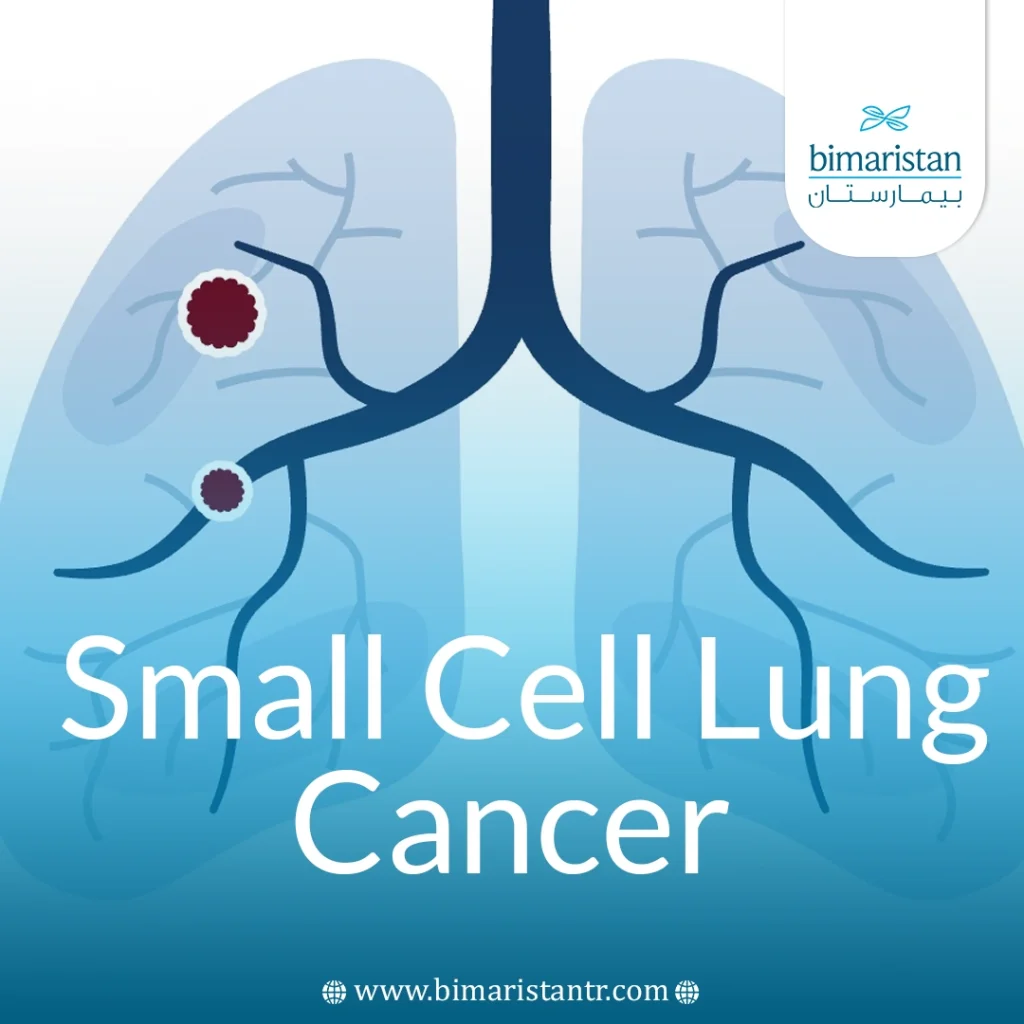

Small cell lung cancer (SCLC) is a high‑risk form of lung cancer strongly linked to smoking. This condition is defined by its rapid growth and early spread, making accurate diagnosis and swift treatment essential. Despite progress in modern medicine, small cell lung cancer continues to pose a major challenge because of its aggressive behavior and significant impact on the patient’s health and overall disease progression.
What is small cell lung cancer?
Small cell lung cancer (SCLC) is a relatively rare type of lung cancer that is characterized by rapid growth and spread compared to other types. It mostly affects people with a long history of smoking, especially cigarette smoking, and is less common than non-small cell lung cancer, accounting for about 15% of lung cancer cases.
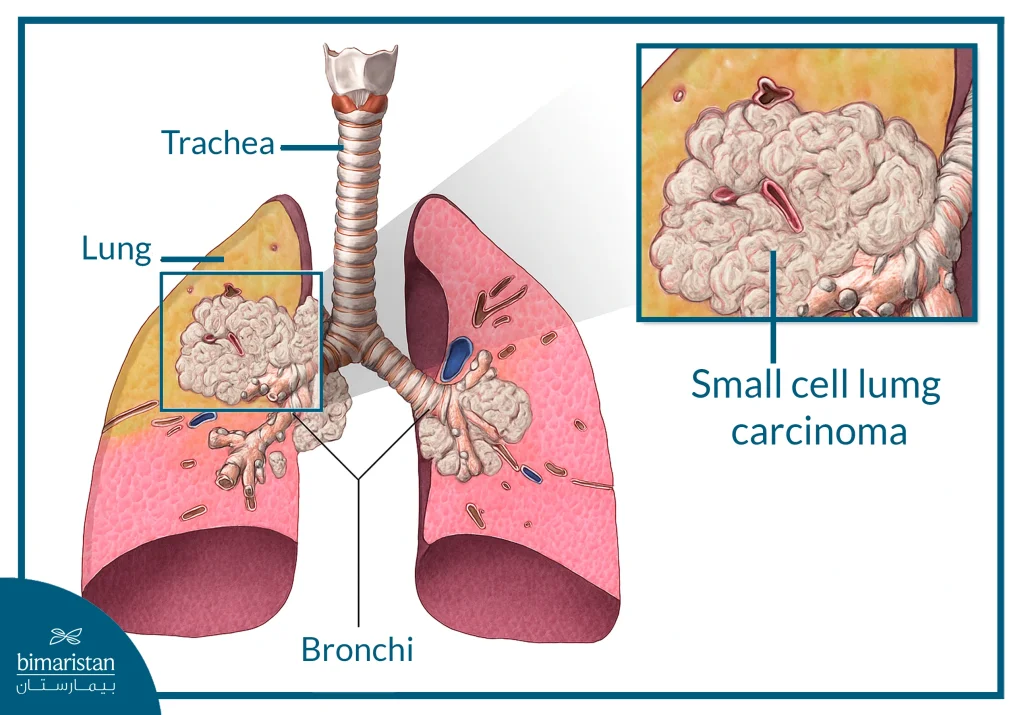
Small cell lung cancer primarily originates in the central bronchi of the chest and is classified as a neuroendocrine tumor. This classification arises from the microscopic appearance of its cells, which are smaller and rounder or oval-shaped compared to healthy lung cells. This type of cancer is known for its aggressive nature, as it grows rapidly and often spreads early. In its initial stages, it may not present obvious symptoms.
Causes of small cell lung cancer
Several factors can contribute to the development of small cell lung cancer, but smoking is the most significant risk factor associated with this type of cancer. Additionally, other environmental, occupational, and health-related factors can also increase the likelihood of developing small cell lung cancer.
1. Smoking
Smoking is the leading cause of small cell lung cancer, with more than 95% of those affected being current or former smokers. The risk increases the younger you start smoking, the longer you smoke, and the more cigarettes you consume. Secondhand smoke may also increase the risk compared to people who are not exposed to smoke. Some studies suggest that vaping may contain toxic substances that cause damage to the DNA of lung cells, which may contribute to an increased risk.
2. Occupational exposure to carcinogens
People exposed to carcinogens such as asbestos are at increased risk, especially when combined with smoking. Also, higher rates are observed among uranium miners and among workers in certain chemical industries that use solvents and other substances harmful to the lungs.
3. Radon gas
Radon is a colorless, odorless, and radioactive gas resulting from the decay of uranium in soil and rocks. It can accumulate in homes, especially on the lower floors, increasing the risk of lung cancer with prolonged exposure.
4. Pollution and radiation
Air pollution from car exhaust, factories, and fuel burning increases the risk of lung cancer. Additionally, previous exposure to radiation therapy to the chest area may increase the likelihood of developing cancer later.
5. Other factors
Genetic factors may play a role in increasing susceptibility, especially if there is a family history of the disease. Certain health conditions such as HIV infection may be associated with a slightly higher risk, and an unhealthy lifestyle contributes to weakening the body’s ability to resist the growth of cancer cells.
Symptoms of small cell lung cancer
Symptoms of small cell lung cancer vary depending on the location of the tumor and the degree of spread in the body. Symptoms may be unclear in the early stages, leading to a delayed diagnosis in many cases.
- Respiratory symptoms: These include persistent coughing, shortness of breath, hemoptysis, and wheezing, often caused by tumor growth within the central bronchus.
- Symptoms caused by compression of the tumor mass: Because the tumor is located in the center of the chest, it may compress adjacent tissues and blood vessels, especially the superior vena cava, leading to superior vena cava syndrome. It may also cause chest pain due to the invasion of neighboring structures or dysphagia when pressing on the esophagus.
- Metastatic symptoms: Neurological symptoms such as headaches or neurological disorders may occur due to brain metastases. Bone pain may occur if the cancer has spread to the bones, while liver metastases can lead to an enlarged liver, jaundice, and pain in the loins.
Paraneoplastic syndromes associated with small cell lung cancer
Small cell lung cancer may cause symptoms caused by the release of hormones or biologically active substances by the cancer cells, even without direct spread of the disease, and these syndromes include:
- Syndrome of inappropriate secretion of antidiuretic hormone: Leads to fluid retention in the body and a low sodium level in the blood.
- Cushing’s syndrome: Caused by the release of adrenocorticotropic hormone (ACTH), resulting in elevated cortisol levels.
- Lambert-Eaton syndrome: Manifests as muscle weakness that improves with exertion.
Diagnosis of small cell lung cancer
Diagnosis of small cell lung cancer relies on a set of clinical tests and medical procedures aimed at confirming the presence of the tumor and determining the extent of its spread within and beyond the thoracic cavity.
Imaging examinations
A standard chest X‑ray is often the initial step in evaluation, as it may reveal a central pulmonary mass; however, it is insufficient for detecting early‑stage disease. Chest computed tomography (CT) is used to confirm the initial diagnosis and assess the tumor’s relationship to adjacent structures. Positron emission tomography–computed tomography (PET‑CT) is also used to assess disease dissemination and select appropriate biopsy sites. Brain magnetic resonance imaging (MRI) is commonly performed to detect possible brain metastases.
Tissue biopsy
A biopsy is an essential step for confirming the diagnosis of small cell lung cancer, as it allows microscopic examination of the cells and determination of their characteristics. Tissue samples may be obtained through flexible bronchoscopy or CT‑guided biopsy, depending on the tumor’s location and the patient’s condition.
Bronchoscopy and thoracoscopy
Bronchoscopy is used to directly visualize the airways, assess tumor invasion, and obtain tissue samples when needed. Thoracoscopy is performed in selected cases, typically when other diagnostic methods fail to establish a definitive diagnosis.
Laboratory Tests
Laboratory tests include complete blood counts, electrolytes, liver function tests, and alkaline phosphatase measurements. These tests help assess the patient’s overall condition and identify complications or indicators of disease spread to other organs.
Stages of small cell lung cancer
Small cell lung cancer is characterized by a staging system that differs somewhat from other types of lung cancer. Two main approaches are used to assess the extent of disease spread and to determine the most appropriate treatment plan.
1. Conventional Staged Classification
This is the most widely used system in clinical practice. It is commonly applied by medical oncologists and radiation oncologists due to its simplicity and its direct relevance to treatment planning. It is divided into two categories:
- Limited stage: The cancer is confined to one lung, may involve neighboring lymph nodes, and can be contained within a single radiation field, allowing it to be treated with concurrent chemotherapy and radiation therapy.
- Extended stage: The cancer has spread beyond the affected lung to another lung or to distant organs such as the brain, bones, or liver, in which case localized radiation therapy is not enough.
TNM classification
The TNM system is used less frequently in small cell lung cancer compared with other lung cancer types, but it is considered scientifically more precise. It is more commonly used in research settings and in rare surgical cases. This classification evaluates:
- Tumor size and characteristics (T)
- Lymph node involvement (N)
- Presence of distant metastases (M)
Small cell lung cancer treatment
The treatment of small cell lung cancer depends primarily on the stage of the disease at the time of diagnosis. The main goals are to control the tumor, slow its progression, and improve the patient’s quality of life. Because of the aggressive nature of this cancer and its rapid spread, systemic therapy is used in most cases.
In limited‑stage disease, concurrent chemotherapy and radiotherapy are considered the standard treatment. Prophylactic cranial irradiation may be added for patients who show a good response to therapy, with the aim of reducing the risk of developing brain metastases.
In extensive‑stage disease, treatment relies mainly on chemotherapy, with the option to add immunotherapy in selected cases. Radiotherapy is used in specific situations to relieve symptoms or control disease at particular sites. Surgery remains extremely rare and is limited to very select early‑stage cases discovered incidentally.
Prevention of small cell lung cancer
Prevention of small cell lung cancer is largely achievable, given its strong association with smoking. Smoking cessation is the most important and effective measure to reduce the risk of developing the disease, both for current and former smokers. Avoiding secondhand smoke also contributes to lowering the health risks linked to lung cancer.
Additionally, reducing exposure to harmful environmental factors, such as radon gas and air pollution, and adhering to safety measures in workplaces that may contain carcinogenic substances are recommended. Early detection and regular medical follow‑up for individuals at higher risk can help identify the disease at earlier stages and improve the chances of controlling it.
Small cell lung cancer is one of the most aggressive forms of lung cancer due to its rapid growth, early spread, and strong link to smoking. Despite advances in diagnostic and therapeutic methods, managing this disease remains a significant challenge that requires early detection and a precise treatment strategy. Awareness of symptoms, avoidance of risk factors, and regular medical monitoring contribute to improved disease control and reduced impact on patients’ lives.
Sources:
- Kim, S. Y., Park, H. S., & Chiang, A. C. (2025). Small Cell Lung Cancer: A Review. JAMA, 333(21), 1906-1917. https://doi.org/10.1001/jama.2025.0560
- P1.01-07 Asbestos Exposure and Small Cell Lung Cancer. Systematic Review and Meta-AnalysisRey Brandariz, J. et al.Journal of Thoracic Oncology, Volume 18, Issue 11, S184 – S185 https://www.jto.org/article/S1556-0864(23)01087-0/fulltext
- Sigel, K., Makinson, A., & Thaler, J. (2017). Lung cancer in persons with HIV. Current opinion in HIV and AIDS, 12(1), 31-38. https://doi.org/10.1097/COH.0000000000000326
- PDQ® Adult Treatment Editorial Board. PDQ Small Cell Lung Cancer Treatment (Health Professional Version). Bethesda, MD: National Cancer Institute. Updated May 14, 2025. Available from: https://www.cancer.gov/types/lung/hp/small-cell-lung-treatment-pdq
- Shehata, S. A., Toraih, E. A., Ismail, E. A., Hagras, A. M., Elmorsy, E., & Fawzy, M. S. (2023). Vaping, Environmental Toxicants Exposure, and Lung Cancer Risk. Cancers, 15(18), 4525. https://doi.org/10.3390/cancers15184525