
Small cell lung cancer is a type of lung cancer characterized by rapid growth and early spread, making it a disease that requires structured and meticulous therapeutic intervention. This form of cancer differs in its biological behavior and treatment response compared with other types of lung cancer, which directly influences the nature of the available therapeutic options. Small cell lung cancer treatment depends on several factors, most notably the stage of the disease and the patient’s overall health status, as well as continuous medical follow‑up to assess treatment response and improve clinical outcomes.
What is small cell lung cancer?
Small cell lung cancer is a rare, fast‑growing form of lung cancer and is considered one of the most aggressive types that tend to spread early. It can affect anyone, but it is more common in individuals with a long history of cigarette smoking. In some cases, it can be cured when detected at an early stage, while in other cases, treatment aims to prolong survival and improve quality of life.
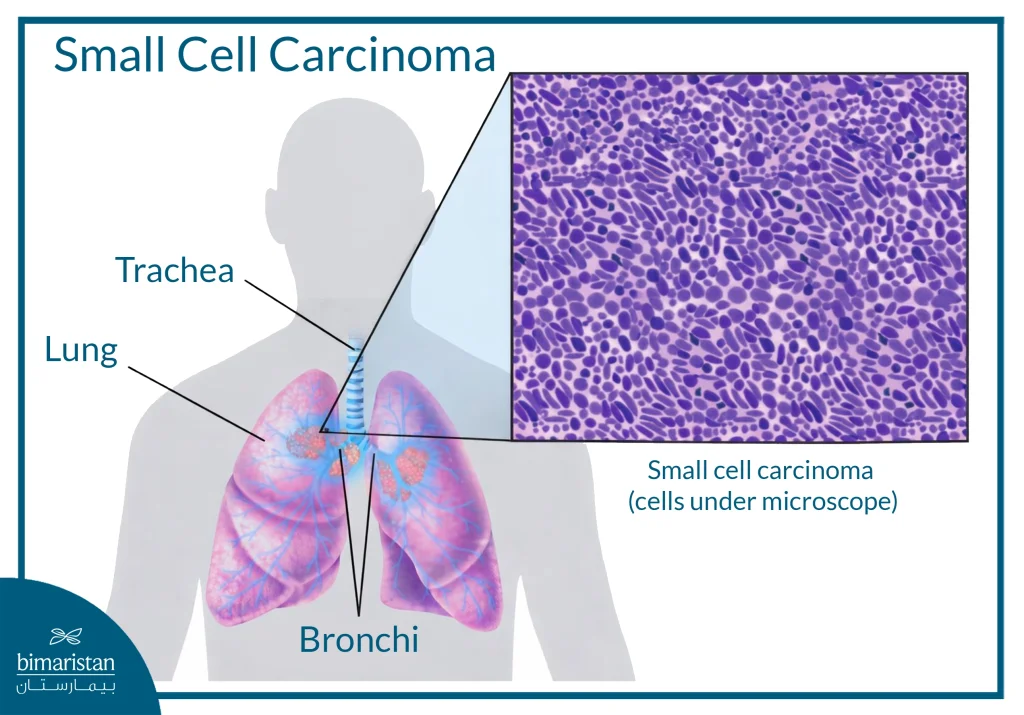
The disease begins when healthy lung cells transform into cancerous cells that divide and multiply uncontrollably, leading to the formation of tumors in the lung. As the disease progresses, cancer cells may spread through the bloodstream or lymphatic system to other parts of the body, such as the lymph nodes, bones, brain, liver, and adrenal glands. In many instances, small cell lung cancer has already spread beyond the lung by the time symptoms appear.
This type accounts for about 15% of all lung cancers and is less common than non‑small cell lung cancer. Its name is derived from the appearance of the cancer cells under the microscope, as they are smaller than normal cells and characterized by rapid division. It is sometimes referred to as oat cell carcinoma.
Stages of small cell lung cancer treatment
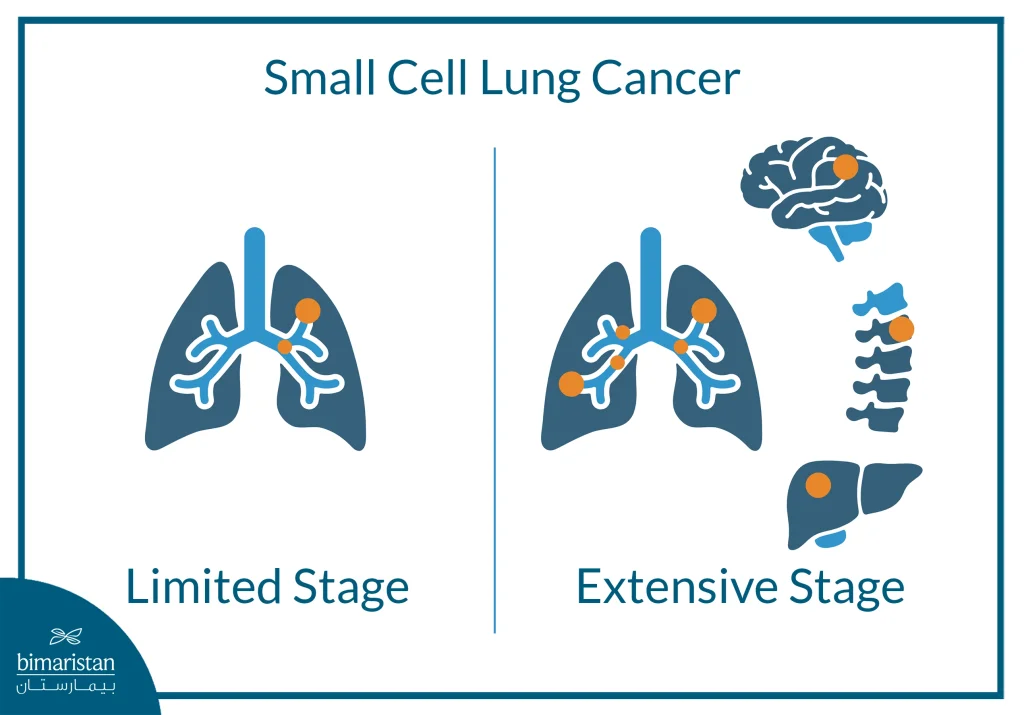
The stages of small cell lung cancer are used to describe how far the disease has spread within the body. Determining the stage helps guide the selection of the appropriate treatment plan. Because this type of cancer tends to spread early, it is usually classified into only two main stages:
Limited-stage small cell lung cancer
In this stage, the cancer is confined to one lung and may extend to the area between the lungs or to nearby lymph nodes, including the lymph nodes above the clavicle. The disease at this stage is considered restricted to one side of the chest, and patients are often suitable candidates for chemotherapy combined with radiation therapy.
Extensive‑stage small cell lung cancer
In the extensive stage, the cancer has spread beyond the lung, the area between the lungs, or the lymph nodes above the collarbone, reaching other parts of the body. This stage represents the majority of cases, as it is estimated to account for about 70% of small cell lung cancer diagnoses.
How is small cell lung cancer treated?
Small cell lung cancer treatment depends on several factors, including the stage of the cancer, the patient’s overall health, age, ability to tolerate therapy, and personal preferences. Treatment plans often involve more than one type of therapy, and decisions are made collaboratively between the patient and the healthcare team.
Small-cell lung cancer surgery
Surgery is used in a very small percentage of patients, no more than about 1 in 20,when the cancer is confined to one lung and has not spread elsewhere. In such cases, part of the lung or the entire lung may be removed, along with nearby lymph nodes for examination. Chemotherapy or radiation therapy is often given after surgery to eliminate any remaining cancer cells.
Chemotherapy for small cell lung cancer
Chemotherapy is a fundamental component of small cell lung cancer treatment for nearly all patients. It is usually administered systemically, either intravenously or orally, allowing the medication to reach cancer cells throughout the body. Although chemotherapy does not cure the disease in most cases, it can shrink tumors, relieve symptoms, and help prolong survival. It may be used alone or in combination with other treatments.
Radiation therapy for small-cell lung cancer
External beam radiation therapy uses high‑energy rays directed at the tumor from outside the body. It is commonly used in limited‑stage small cell lung cancer and is often combined with chemotherapy. Radiation may also be used to relieve symptoms, improve quality of life, or reduce the risk of cancer spreading to the brain in certain cases.
Immunotherapy for small-cell lung cancer
Immunotherapy helps the immune system recognize and attack cancer cells. It is often used in advanced stages and may be combined with chemotherapy to shrink tumors and reduce symptoms. Several approved immunotherapy drugs are available for treating small cell lung cancer, particularly in extensive‑stage disease.
Palliative care and other options
When surgery is not possible or when available treatments do not achieve the desired results, care may focus on symptom relief and improving quality of life. Options include procedures to relieve airway obstruction, radiation therapy for localized symptoms, and supportive palliative care to manage pain, breathing difficulties, and treatment‑related side effects. Participation in clinical trials may also be an option for some patients.
Small cell lung cancer treatment by stage
The therapeutic approach varies depending on the stage at diagnosis. In limited‑stage disease, treatment aims to control the cancer within the chest, while in extensive‑stage disease, the focus is on controlling the cancer and relieving symptoms for as long as possible.
Treatment for limited-stage small cell lung cancer
In very rare cases, when the tumor is small and confined to one lung without spread to lymph nodes or other areas, surgical removal may be an option after confirming that the lymph nodes inside the chest are free of cancer. Surgery is usually followed by chemotherapy, and chest radiation may be added if cancer cells are found in the removed lymph nodes.
However, in most limited‑stage cases, surgery is not suitable due to tumor size, location, or local spread. The standard approach is concurrent chemotherapy and chest radiation, provided the patient’s overall health allows it. If the patient cannot tolerate combined therapy, chemotherapy alone may be given, with radiation considered later.
After completing concurrent treatment, and if the cancer has not progressed, some patients may benefit from adding immunotherapy. Preventive brain radiation may also be used in patients who respond well to initial treatment to reduce the risk of cancer spreading to the brain.
Treatment of extensive‑stage small cell lung cancer
In extensive‑stage disease, the cancer has spread beyond the lung or to other parts of the body, making surgery or localized radiation unsuitable as primary treatment. Chemotherapy is the main treatment and is often combined with immunotherapy for patients who can tolerate it.
This approach helps shrink tumors, improve symptoms, and extend survival for many patients, although the disease typically returns over time. If the tumor causes localized symptoms in the chest, such as shortness of breath or bleeding, radiation therapy or other local procedures may be used for symptom relief. Radiation may also be used if the cancer spreads to the bones, brain, or spinal cord.
For patients with poor overall health, treatment intensity may be reduced, or care may focus solely on palliative and supportive measures to manage pain, breathing problems, and other symptoms.
Possible side effects of small cell lung cancer treatment
Small cell lung cancer treatment may cause side effects that vary from one person to another, depending on the type of therapy,chemotherapy, radiation, immunotherapy, or surgery, as well as treatment duration and the patient’s general health. Most side effects are temporary, though some may persist and require medical follow‑up.
Side effects of chemotherapy
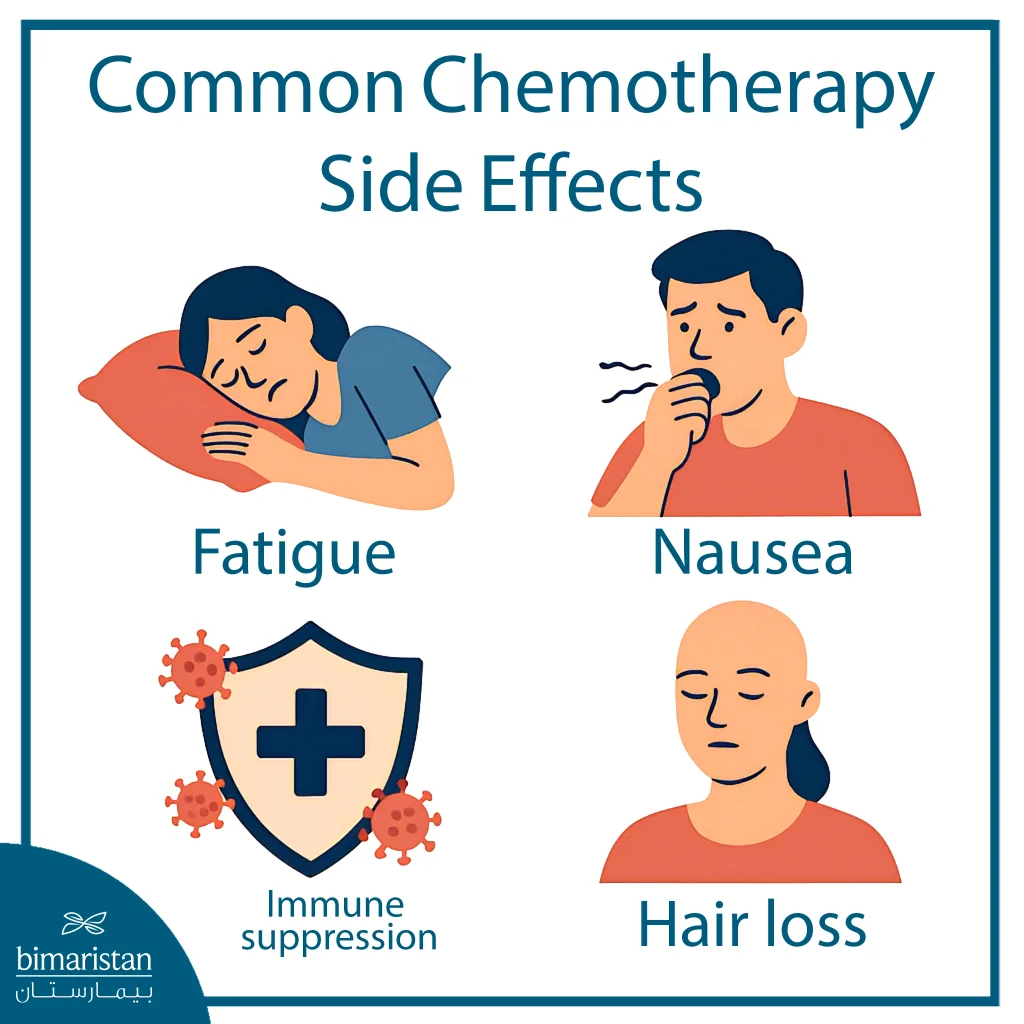
Chemotherapy, a key component of small cell lung cancer treatment, may cause several common side effects, including:
- Hair loss
- Mouth sores
- nausea and vomiting
- Diarrhea or constipation
- Loss of appetite or weight changes
It may also affect blood cells, leading to:
- Increased risk of infection
- Easy bruising or bleeding
- fatigue and fatigue
Radiation therapy side effects
The side effects of radiation therapy depend on the area being treated and may include:
- Irritation or redness of the skin at the radiation site
- Nausea and loss of appetite
- General fatigue
When radiation is directed to the chest, respiratory symptoms may appear, such as coughing or shortness of breath, along with throat pain or temporary difficulty swallowing. Radiation directed to the brain may cause headaches, fatigue, or mild disturbances in memory or concentration, and these symptoms may affect quality of life for some patients.
Side effects of immunotherapy
Immunotherapy is used in certain cases of small cell lung cancer and may lead to side effects resulting from activation of the immune system, such as:
- fatigue
- Cough
- nausea
- skin rash
- loss of appetite
- joint pain
- Diarrhea or constipation
In less common situations, more serious side effects may occur, such as infusion‑related reactions or immune‑mediated disorders that can affect the lungs, liver, intestines, or nervous system. There may also be an increased risk of infection or changes in liver function or blood cell counts. Early reporting of any new symptoms during treatment is therefore essential.
Follow-up after treatment for small-cell lung cancer
Regular follow‑up after small cell lung cancer treatment is a key step in ensuring the best possible long‑term outcomes. Follow‑up aims to assess the body’s response to treatment, detect any early signs of recurrence, and monitor side effects that may appear after therapy ends. Follow‑up typically includes scheduled medical visits, imaging studies, and laboratory tests determined by the healthcare team based on the patient’s condition and the type of treatment received. Continuous monitoring supports early intervention when needed, helps patients manage residual symptoms, and improves overall quality of life.
Response rates and chances of recovery
Response rates to small cell lung cancer treatment vary from one patient to another and depend primarily on the stage of the disease at diagnosis, the extent of its spread, the patient’s general health, and the treatment approach used. This type of cancer often shows a strong initial response to therapy in many patients, but the disease may return later in a large number of cases, making long‑term control a medical challenge.
Chances of recovery are higher when the disease is diagnosed at an early, limited stage, where better control can be achieved using appropriate treatments. In advanced stages, the therapeutic goal typically focuses on prolonging survival and improving quality of life, with close monitoring to assess response and manage any new developments.
Small cell lung cancer treatment remains a medical challenge due to the rapid progression of the disease. However, the treatment options available today help control the cancer and improve quality of life for many patients. Early diagnosis, selecting the appropriate treatment plan, and maintaining regular follow‑up are essential elements for achieving the best possible outcomes. Bimaristan Medical Center also supports patients coming from abroad by facilitating access to specialized medical care and coordinating treatment and follow‑up within accredited centers.
Sources: