
Hair transplantation is one of the most successful and widespread cosmetic procedures in the world, especially in Turkey, which has become a major destination for this type of operation thanks to its expertise and medical competence. However, although in most cases the procedure gives natural and impressive results, in some cases it may fail due to medical errors or personal factors.
Although the success rate of hair transplantation exceeds 90% in advanced centers, some cases may suffer from partial or complete failure due to preventable medical or behavioral factors.
What does hair transplant failure mean?
Hair transplant failure is a condition in which the transplanted follicles do not grow as desired after the operation, and hair transplant failure is divided into partial or total forms.
- Partial failure: Occurs when only some follicles grow, while others die, leading to voids in the scalp and poor density.
- Complete failure: This is when no hair grows at all because most of the follicles die or are rejected by the body.
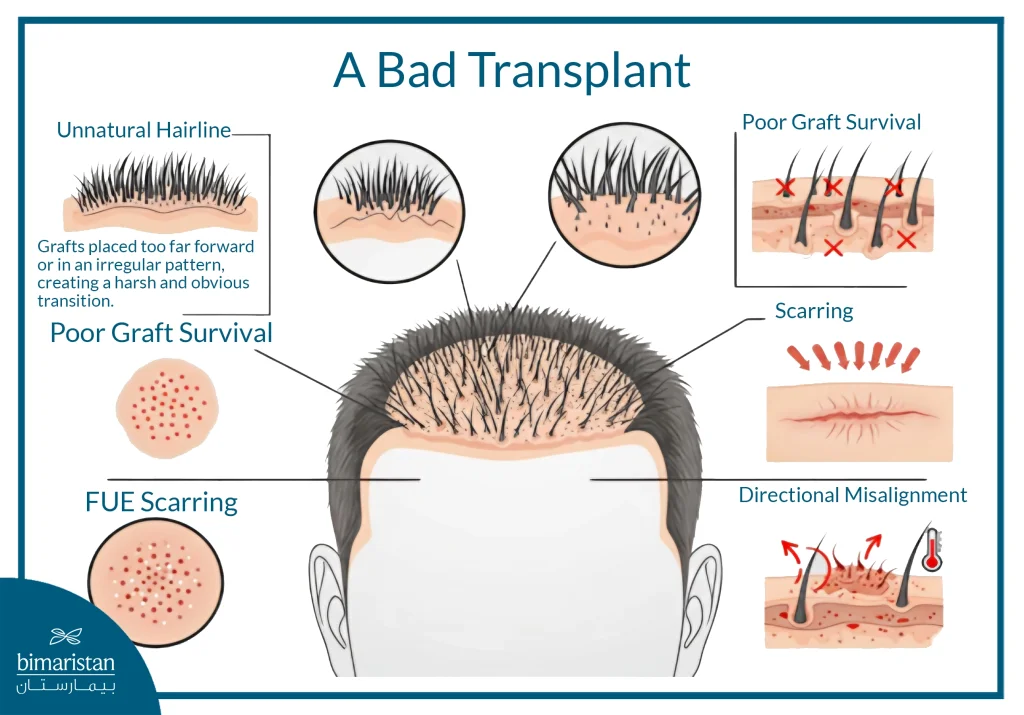
The success or failure of the procedure can usually only be judged after 9 to 12 months, which is how long it takes for the follicles to stabilize and for the new hair to start growing visibly.
Medical and technical reasons for hair transplant failure
There are many medical and technical reasons for hair transplant failure, including:
Poor pre-operative planning
Proper planning is the key to a successful transplant, starting with determining the donor area and the number of grafts needed. Some patients fail when a weak area is chosen, or when necessary medical tests, such as blood and hormone tests, are neglected. Specialized centers use a thorough pre-operative evaluation to ensure an optimal transplant plan that minimizes the chances of failure.
Inexperienced surgeon or medical team
Lack of experience is one of the most common reasons for failure, as the grafts may be planted at an inappropriate angle or depth, or old techniques may be used that damage them. Therefore, it is advisable to choose an accredited center that performs operations by specialized doctors, as is the case at Bimaristan, where transplantation is performed with high precision and with the latest tools.
Poor graft care during transportation
Grafts require special care during transportation from the donor area to the recipient. Staying outside the body for a long time or storing them in an unsterilized environment leads to their deterioration. Strict standards of preservation and sterilization must be observed to ensure the survival and growth of the grafts after transplantation.
Mismatched technology and condition
Choosing the wrong technique is one of the most important reasons for failure, as each patient has a method that suits the nature of their hair and the density of their donor area. Using an inappropriate technique or transplanting an excessive number of grafts impairs blood perfusion.
There are many patient-related reasons that lead to hair transplant failure, including:
Smoking and alcohol
Smoking and drinking alcohol are two of the most common habits that negatively affect the success of a hair transplant. Nicotine narrows blood vessels and reduces blood flow to the scalp, impairing the delivery of oxygen and nutrients to the transplanted follicles. Alcohol thins the blood and increases the risk of bleeding during and after the procedure, slows down the wound healing process, and reduces the stability of new grafts. Therefore, it is recommended to stop smoking and alcohol at least two weeks before and one month after the procedure to ensure the best results.
Chronic diseases
Overall health plays a big role in the success of the procedure. Chronic diseases such as uncontrolled diabetes or autoimmune diseases may hinder wound healing and affect blood flow to the follicles, increasing the risk of transplant failure or subsequent loss of transplanted hair. Some thyroid diseases or hormonal disorders may also cause poor hair growth even after the procedure. For this reason, specialized centers like Bimaristan conduct thorough preoperative examinations to ensure that the patient’s health is stable and able to recover successfully.
Failure to follow instructions after the procedure
The success of hair transplantation depends not only on the surgeon but also on the patient. Many failures occur due to neglecting medical instructions after the procedure, and some of the most serious mistakes to avoid are:
- Rubbing or touching the transplanted area during the first week, as this may cause the follicles to move
- Sleeping the wrong way puts pressure on the scalp, leading to poor blood circulation and loss of grafts
- Premature exposure to the sun or high heat, such as a sauna or hair dryer, can cause irritation to the scalp and delay healing.
Strictly following these instructions during the first few weeks will ensure that the follicles stabilize and grow naturally and permanently.
Genetic and hormonal factors
Even after a successful transplant, non-transplanted hair may continue to fall out due to genetic factors causing male or female pattern baldness. Also, hormonal disorders such as excess androgens or hypothyroidism may lead to poor new hair growth. Therefore, it is important to have hormonal checks before the procedure and use preventive treatments recommended by your doctor (such as minoxidil or finasteride) to maintain the results in the long term.
In specialized centers like Bimaristan, each patient’s genetics and hormones are taken into consideration before transplantation, to avoid any future factors that may affect the success of the procedure.
Signs of Hair Transplant Failure
Early recognition of the signs of hair transplant failure is critical for timely diagnosis and treatment. Some of these signs include the following:
- The transplanted hair falls out continuously after the third month without new hair appearing in its place, as the hair is supposed to start growing gradually during this period
- Chronic redness or inflammation of the scalp weeks after the procedure, an indication of infection or rejection of the transplanted follicles
- Visible scars or voids in either the implant or donor area, as a result of poor care during extraction or implantation, or due to poor skin healing
- Hair growth in random directions or an asymmetrical appearance indicating an error in implant angle or follicle depth during the procedure
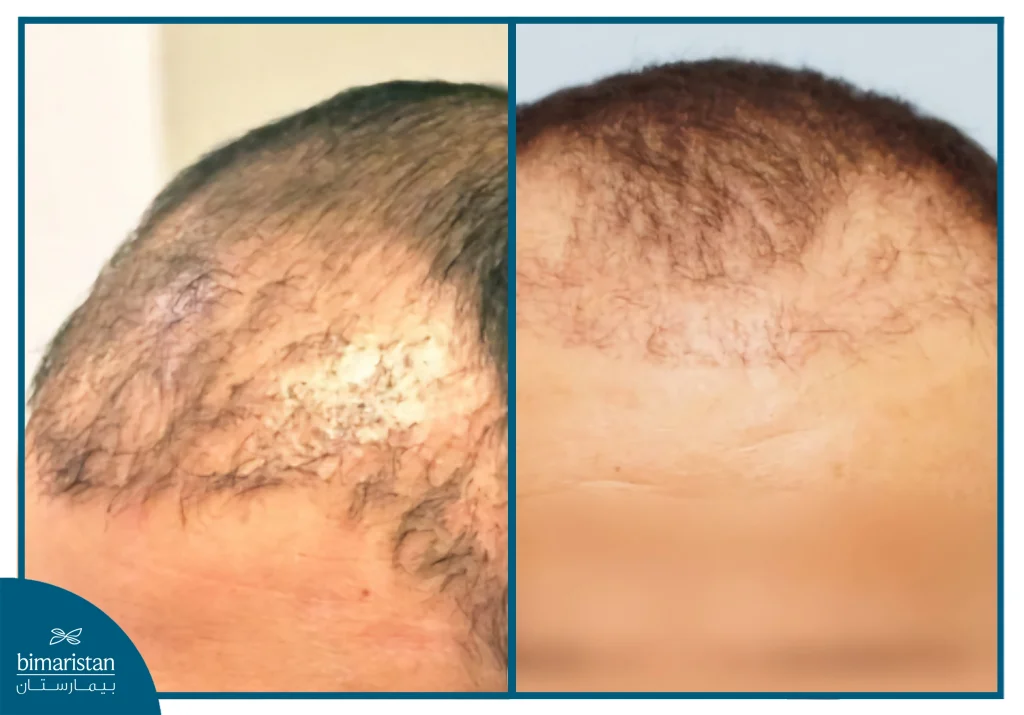
If you notice any of these signs, see your doctor immediately for a thorough evaluation of the condition and a treatment plan to prevent the condition from worsening.
How can hair transplant failure be avoided?
- Strict adherence to post-transplant instructions, such as avoiding friction, not engaging in strenuous activities, and sleeping in a way that prevents pressure on the scalp, these small details are what keep the grafts stable
- Perform hormonal and blood tests before the procedure to make sure the patient is free of any disorders that may affect wound healing or hair growth, such as anemia, thyroid disorders, or uncontrolled diabetes
- Choosing a specialized and certified center that owns modern equipment and works according to strict medical standards in sterilization, planning, and execution, because the success of the operation depends on accuracy and experience, not only on price or fame
- Check the surgeon’s experience and the number of operations he has performed in the past, and it is preferable to see before and after photos of previous patients to know the level of results
- Pay attention to good nutrition rich in proteins and vitamins necessary for hair growth, such as vitamins B and E, iron, and zinc
- Avoid smoking and alcohol before and after the procedure, as they impair blood flow and delay scalp healing
Strictly following these guidelines before and after the procedure not only ensures the success of the implant, but also preserves the results in the long term and minimizes the likelihood of needing any corrective intervention later on.
Treatment options after hair transplant failure
If a hair transplant fails, that doesn’t mean the end of the line, as there are several effective ways to correct the results and significantly improve the appearance of the hair. Some of these options include:
- Re-implantation after one year: It is advisable to wait at least 12 months after the first operation before considering a new transplant, so that the scalp can fully heal and the result can be accurately assessed. At this point, the doctor can replant using more advanced and precise techniques such as DHI or Sapphire FUE, focusing on better distribution of the grafts and achieving a more natural look.
- Platelet-rich plasma (PRP) therapy: PRP is one of the most commonly used techniques after transplant failure, helping to stimulate the growth of weakened follicles and revitalize blood circulation in the scalp. PRP injects growth factor-rich plasma taken from the patient’s own blood, making it a safe and natural treatment that supports previous transplant results and improves the density of the remaining hair.
- Drug therapy: In some cases, it is helpful to support the scalp with hair growth-stimulating medications such as minoxidil and finasteride, which work to strengthen the remaining follicles and minimize persistent hair loss caused by hormonal or genetic factors. This type of treatment is used under a doctor’s supervision to avoid any unwanted side effects.
These solutions help restore the results of the transplant and gradually improve the overall appearance, and increase the chances of a successful second attempt when medical instructions are strictly adhered to.
Although hair transplantation is one of the most successful cosmetic procedures in the modern era, achieving optimal results requires avoiding the causes of hair transplant failure in the first place by choosing the right doctor and center and fully adhering to medical instructions after the procedure. Understanding the causes of hair transplant failure and how to avoid them not only protects you from unwanted results but also ensures a natural look that lasts a lifetime and gives you full confidence in your new look.
Sources: