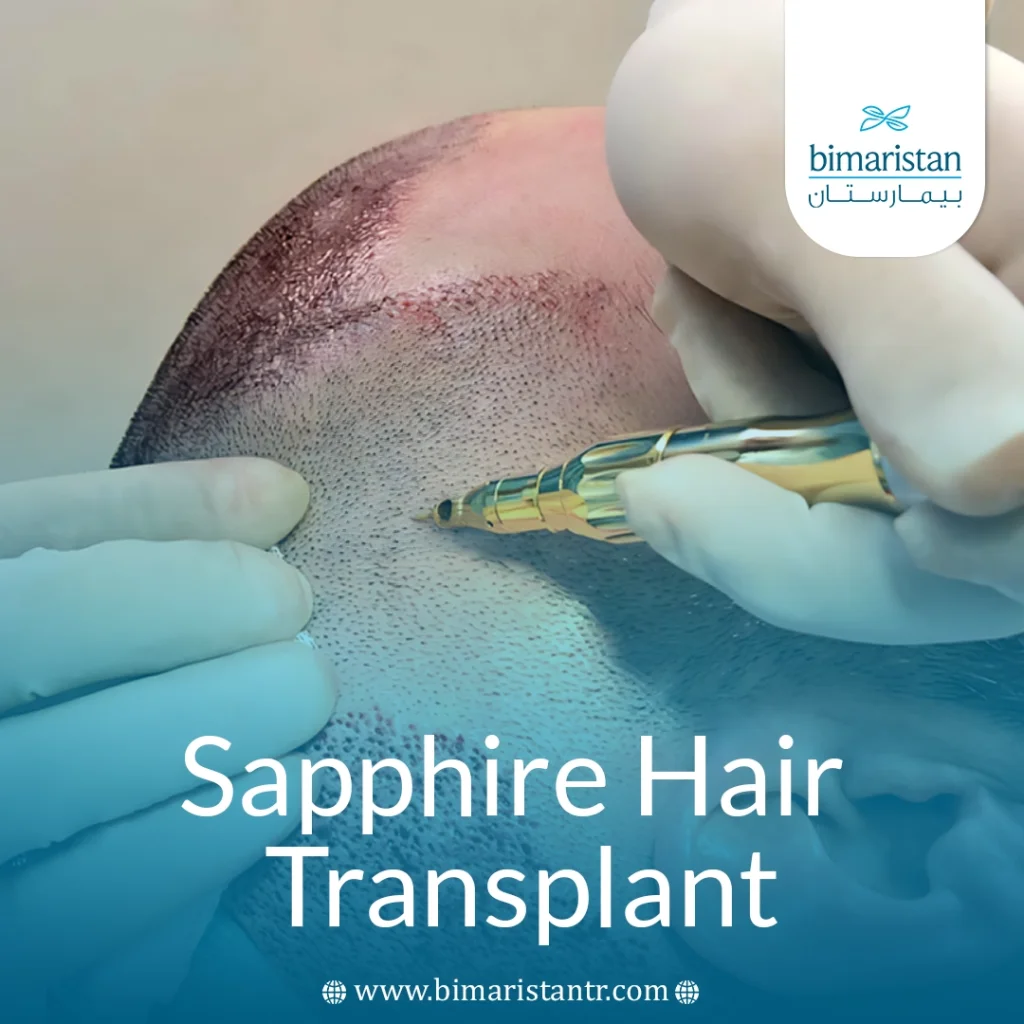
Sapphire hair transplant is one of the latest innovations in the field of hair restoration, evolved from the conventional FUE method but offering more precise and fuller results. The Sapphire technique uses advanced tools made of Sapphire stone to create transplant channels, reducing scalp damage and accelerating recovery while ensuring a natural appearance and healthier, denser hair.
What is a Sapphire hair transplant?
Sapphire hair transplant is an advanced modification of the Follicular Unit Extraction (FUE) technique that employs blades made from Sapphire crystal rather than conventional steel. These blades have a fine V‑shaped tip, enabling micro‑incisions with greater accuracy and reduced tissue disruption, which is essential for optimal follicular unit implantation.
Sapphire technology has several advantages over conventional FUE. The use of Sapphire blades enables more precise incisions, reducing tissue trauma and promoting faster healing. This results in less swelling and discomfort during the recovery period. Furthermore, the precision of graft placement in the Sapphire technique yields denser, more natural hair growth, making it a superior option for those seeking the best possible aesthetic result.
Advantages of Sapphire hair transplant
Sapphire hair transplant has many advantages, including:
- Long-term results
- Almost invisible scars
- Minimal pain and discomfort
- Reduces scale formation and accelerates wound healing
- The donor area remains healthy with unnoticeable effects
- Lower risk of complications compared to other methods
- Greater patient comfort during the recovery period and after the procedure
- Short recovery time and quick return to normal life
- Greater flexibility for patients with partial baldness or weak areas
- Faster healing due to smaller incisions and less scalp trauma
- Natural-looking results, even upon close inspection, with a natural-looking forehead
- High precision in opening canals and implanting grafts thanks to sharp, thin Sapphire blades
- Greater control over the direction of hair growth, allowing the follicles to be precisely positioned to match the natural hair angle
- Higher suitability for transplanting thick hair; a larger number of follicles can be transplanted into a limited area without damaging the surrounding tissue
Disadvantages of Sapphire hair transplant
Despite the many advantages of the Sapphire technique, some potential disadvantages may arise, and often depend heavily on the doctor’s experience and skill in performing the procedure:
- Relatively higher cost compared to other methods
- The process takes longer than some conventional techniques
- Requires a high level of medical expertise to ensure accurate and natural results
- You need a good, dense donor area to ensure successful transplantation
- You need careful follow-up care after the procedure to ensure that the grafts are stabilized
- Not suitable for some cases of severe baldness or very extensive hair loss
- May cause temporary loss of transplanted hair before new growth begins
- Possible temporary scalp swelling or redness after the procedure
- Possible heterogeneous results if the distribution of the grafts is not meticulously planned
- Final results may not be evident for 6-12 months, requiring patience from the patient
Sapphire hair transplant procedure steps
- Diagnosis and medical examination: The procedure begins with a thorough assessment of scalp condition and rate of hair loss, identifying areas requiring transplantation and assessing the patient’s suitability for the technique.
- Identify the donor area: Typically, the donor area is selected at the back of the scalp, where follicles are less susceptible to hair loss, to ensure healthy, strong follicles for transplantation.
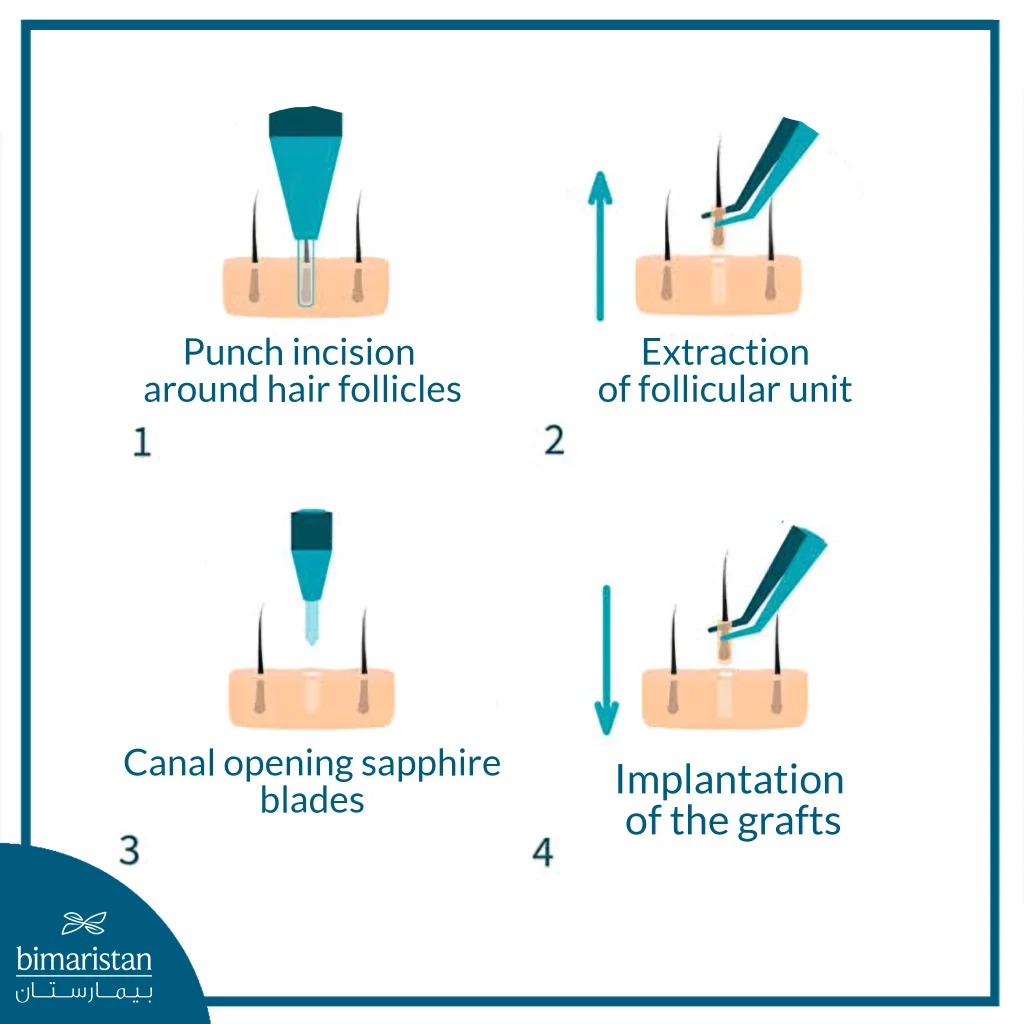
- Follicle extraction: Hair follicles are extracted individually with a micro-punch, minimizing damage, preserving follicle integrity, and maximizing utilization of the donor area.
- Opening the canals with Sapphire blades: This procedure uses V-shaped sapphire blades to create small, precise canals in the recipient area. This precision enables denser grafts, reduces irritation to neighboring grafts, and lowers the risk of scarring.
- The grafts are transplanted into the new canals: The grafts are carefully transplanted into the opened canals, considering hair growth direction and desired density for a natural appearance.
- Recovery and follow-up after the procedure: Sapphire micro-incisions are characterized by rapid healing and a short recovery period, with minimal pain and a quick return to daily activities. Optimal results require adherence to hair and scalp care instructions after the procedure.
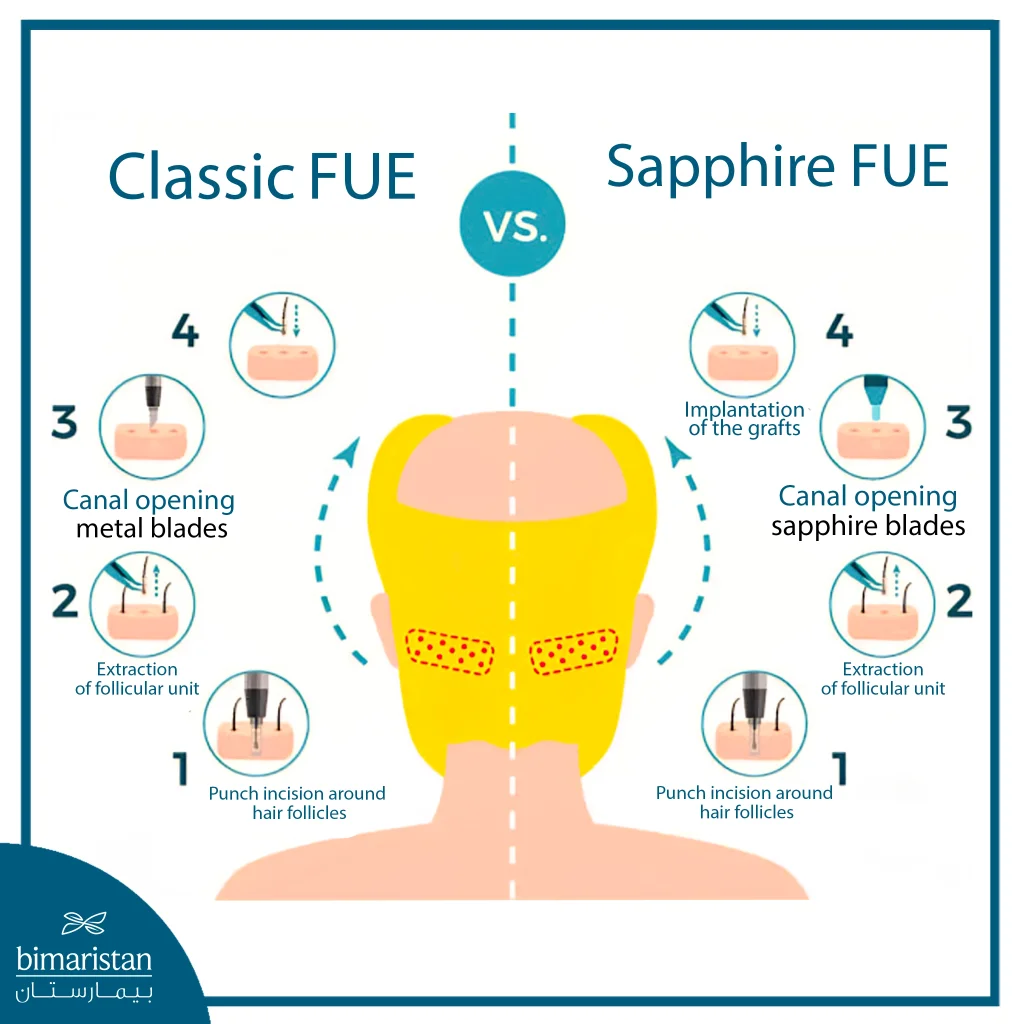
The difference between Sapphire and conventional FUE
Sapphire hair transplant has several advantages over conventional FUE, and the following table shows a comparison between Sapphire hair transplant and conventional FUE:
| Aspect | Conventional FUE | Sapphire FUE |
|---|---|---|
| The tool used | Steel blades with serrated tips | Blades made of V-shaped sapphire stone |
| Accuracy of notches | Larger and less precise incisions | Very fine and small incisions |
| tissue damage | Greater likelihood of scalp trauma | Minimize tissue damage |
| Healing and recovery | Relatively longer recovery period | Faster and more comfortable healing |
| Swelling and discomfort | More common after the operation | Fewer occurrences thanks to the precision of the blades |
| Density and results | Good results but lower density | More natural and denser hair growth |
| Complications | Higher risk of bleeding or minor infections | Significantly reduced risk of complications |
| Innovation | Conventional, widely used technique | Modern and innovative development of FUE optimization |
Recovery period and results
The recovery phase is one of the most important stages that determines the success of the procedure, as the scalp begins to heal gradually and the new hair becomes visible in the months following the procedure.
Recovery time after the procedure?
After a Sapphire hair transplant, recovery time is typically short. There may be slight swelling or soreness in the treated areas, but these symptoms usually resolve within a few days. Centers like Bimaristan offer an aftercare package that includes shampoos, creams, antibacterial serums, and painkillers to accelerate recovery and maintain scalp health.
When does the new hair start to appear?
Within 3 to 4 weeks after the procedure, the transplanted hair may fall out, which is a natural phase that does not affect the final results. The hair will usually grow back within a couple of months. Observe the post-operation care instructions to ensure the best results.
When will the final result be seen?
It can take up to a full year to see optimal results with Sapphire, but you will often notice significant changes in density and appearance within 4 to 6 months after the procedure.
Follow-up and long-term care
Post-procedure care includes instructions on hair and scalp care, nutrition, and lifestyle tips to optimize transplant results and maintain the transplanted hair over the long term.
Who is Sapphire hair transplant suitable for?
Sapphire hair transplant is not suitable for everyone. Several factors determine the procedure’s suitability for the patient. During your communication with the medical consultant and surgeon, all these factors will be discussed, including:
- Cause of baldness and hair loss patterns:
- Individuals with androgenic alopecia (male pattern baldness), traction alopecia, or marginal alopecia
- Those with localized hair loss due to scarring or burns
- Those seeking to improve hair density or naturally reshape their hairline
- Donor area density: The donor area (typically the back and sides of the head) must have thick hair to provide sufficient grafts for transplantation.
- The beginnings of hair loss and early baldness:
- Men and women who have recently begun experiencing hair loss
- For those who want to preserve surrounding hair follicles without damaging them, unlike conventional FUE
- General health and realistic expectations:
- The patient must be in good general health and free from chronic illnesses or scalp problems that could affect the procedure or recovery
- Realistic expectations regarding the final results of the procedure are essential
- Those who have already had a hair transplant: Individuals who have undergone prior procedures can use Sapphire technology to improve density or aesthetic appearance.
- Those seeking a minimally invasive procedure: Ideal for people who prefer minimally invasive procedures with a short recovery period and low pain.
Tips after Sapphire hair transplant
Post-transplant care for Sapphire hair transplant is crucial for the success of the procedure and for achieving natural, lasting results. Key tips include:
- Protect the transplanted area: Avoid friction or pressure on the scalp, and do not scratch or touch the transplanted follicles.
- Wash your hair carefully: Follow your doctor’s instructions for washing your hair, avoiding hot water and harsh chemicals.
- Healthy nutrition: Eat a diet rich in protein, vitamins, and minerals to promote new hair growth.
- Avoid strenuous activities and stress: Stay away from violent sports and psychological stress, and refrain from smoking and alcohol during the recovery period following the operation.
- Sun and heat protection: Avoid direct exposure to sunlight and extreme heat or cold, such as in saunas or steam baths.
- Use prescribed medications and lotions: Minoxidil, finasteride, or medicated shampoos promote healthy follicle growth.
This integrated care stabilizes the transplanted follicles, promotes healthy hair growth, and supports optimal results during the recovery period.
Sapphire hair transplant cost
The cost of Sapphire hair transplant ranges from $2,500 to $5,000, depending on the doctor’s experience, the number of grafts needed, the level of the clinic, and additional services.
Comparing the cost of Sapphire hair transplant between Turkey and other countries
The following table shows the average cost of Sapphire hair transplant in some countries:
| State | Average cost (USD) |
|---|---|
| Turkey | $2,200 – $6,000 |
| United States | $10,000 – $30,000 |
| Canada | $8,000 – $21,000 |
| United Kingdom | $5,500 – $15,000 |
| United Arab Emirates | $4,100 – $9,000 |
In conclusion, Sapphire hair transplant in Turkey delivers high-precision, natural‑looking results with reduced pain and a shorter recovery time than conventional methods. This advanced technique improves hair density and creates a more balanced, natural appearance while minimizing risk and visible scarring.
For optimal results and to confirm the procedure is appropriate for your case, it is strongly recommended that you consult a specialized, experienced hair transplant center. A professional medical consultation will guide you through each step of the process and help establish a treatment plan tailored to your specific needs.
Sources: