
Kidney cancer is the most common kidney tumor and accounts for the largest proportion of solid renal tumors. Surgical resection remains the primary and most effective treatment for localized cases despite the development of early diagnosis, targeted, and immunotherapy.
Surgical techniques have evolved from open surgery to laparoscopic surgery to robotic surgery using advanced systems such as the da Vinci system, which has given doctors greater precision in resection with a higher ability to preserve renal tissue and minimize complications. In this article, we will review everything you need to know about robotic nephrectomy for kidney cancer.
What is robotic surgery?
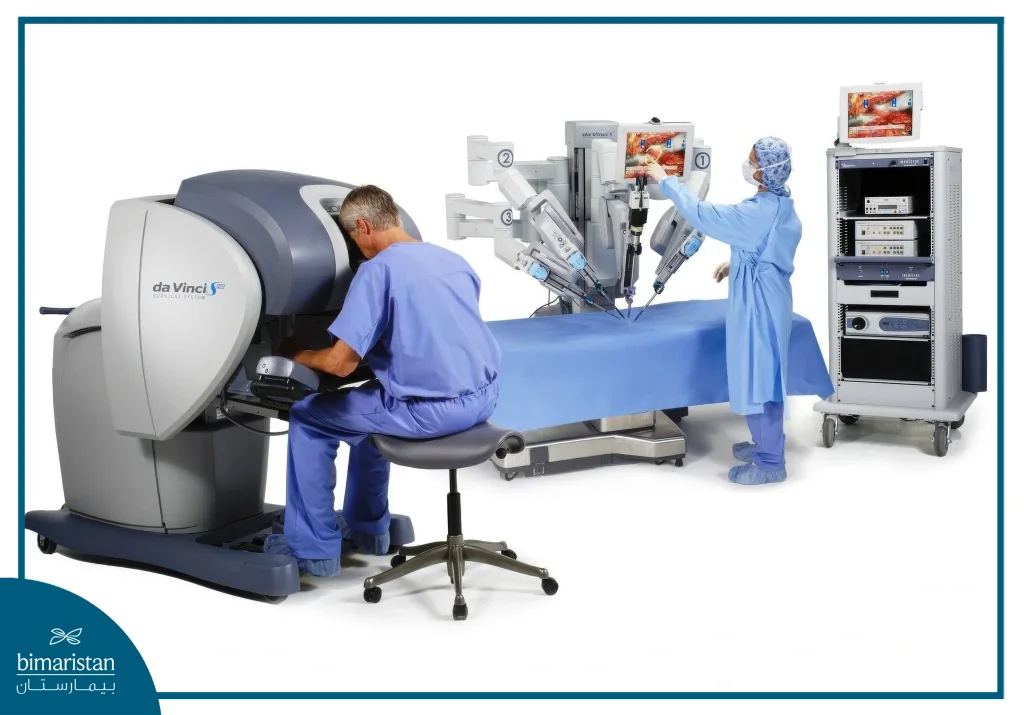
Robotic surgery is an advanced type of minimally invasive surgery in which precise instruments and a camera are inserted through small incisions in the abdomen, and the surgeon controls these instruments through a console connected to a sophisticated robotic system. Robotic surgery offers all of the following:
- Electronic filtration system eliminates any manual shaking
- Vision is three-dimensional and magnified up to 10x
- Robotic surgical arms have more flexibility and range of motion than the human hand
- Surgical instruments allow very precise maneuvers in tight areas around the kidneys and blood vessels
Types of robotic nephrectomy for kidney cancer
Robotic nephrectomy for kidney cancer is divided into several types:
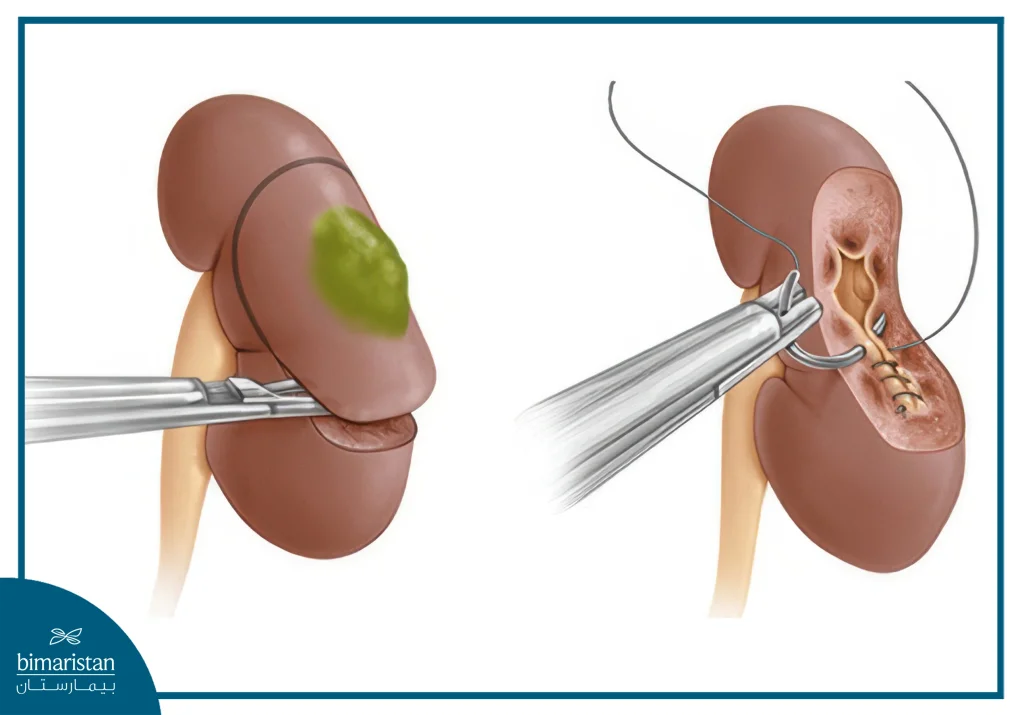
- Partial nephrectomy (RAPN)
- The tumor is removed while preserving as much kidney tissue as possible.
- It is considered the gold standard for treating small tumors ≤ 4 cm
- This involves temporarily closing the renal artery during renal resection and reconstruction.
- Its primary aim is to treat the tumor while preserving kidney function.
- Nephrectomy (RARN)
- It is performed when there are large or multiple tumors, or when partial resection is not possible.
- This involves the removal of the entire kidney along with surrounding fat and sometimes the adrenal gland and lymph nodes.
- Complex and extensional actions
- Excision of tumors extending into the renal vein or inferior vena cava
- Excision with lymph node dissection in advanced cases
- Complex reconstruction procedures after the removal of large tumors
Indications for robotic nephrectomy for kidney cancer
Robotic nephrectomy for kidney cancer is recommended in the following cases:
- Patients who need to maintain renal function due to a single kidney or chronic kidney disease
- Tumors close to blood vessels or the renal pyelonephros, where the operation requires high precision
- Young patients to preserve as much kidney tissue as possible
- Patients who prefer a quick recovery and an early return to daily activities
- Small localized renal tumors (T1a, T1b)
In the TNM classification system for kidney cancer, the T segment is used to determine the size of the tumor and how far it has spread within the kidney:
- T1a: The tumor is limited within the kidney and is ≤ 4 cm in diameter.
- T1b: The tumor is limited within the kidney and has a diameter of >4 and ≤7 cm.
Partial nephrectomy is usually suitable for T1a tumors because they are small and easy to remove while preserving as much kidney tissue as possible. T1b tumors may also be performed with a partial nephrectomy, but require greater precision and expertise. For tumors larger than 7 cm or those that extend beyond the kidney, total resection or more complex surgical procedures are often used.
Steps of robotic nephrectomy for kidney cancer
Robotic nephrectomy for kidney cancer is performed in several stages:
Preparation before robotic nephrectomy for kidney cancer
- Comprehensive clinical evaluation with a focus on renal and cardiac function
- Laboratory tests (creatinine, eGFR, blood picture, and coagulation)
- Stopping blood-thinning medications (such as warfarin or aspirin) days before the procedure
- Advanced imaging (CT urography or MRI) to determine the location of the tumor and its relationship to the vessels
During robotic nephrectomy for kidney cancer
- The patient is fully anesthetized
- The patient is often placed on the side (Lateral Decubitus Position)
- 4-6 small ports are made to insert the robotic tools and camera
- Carbon dioxide gas is used to create a vacuum inside the abdomen
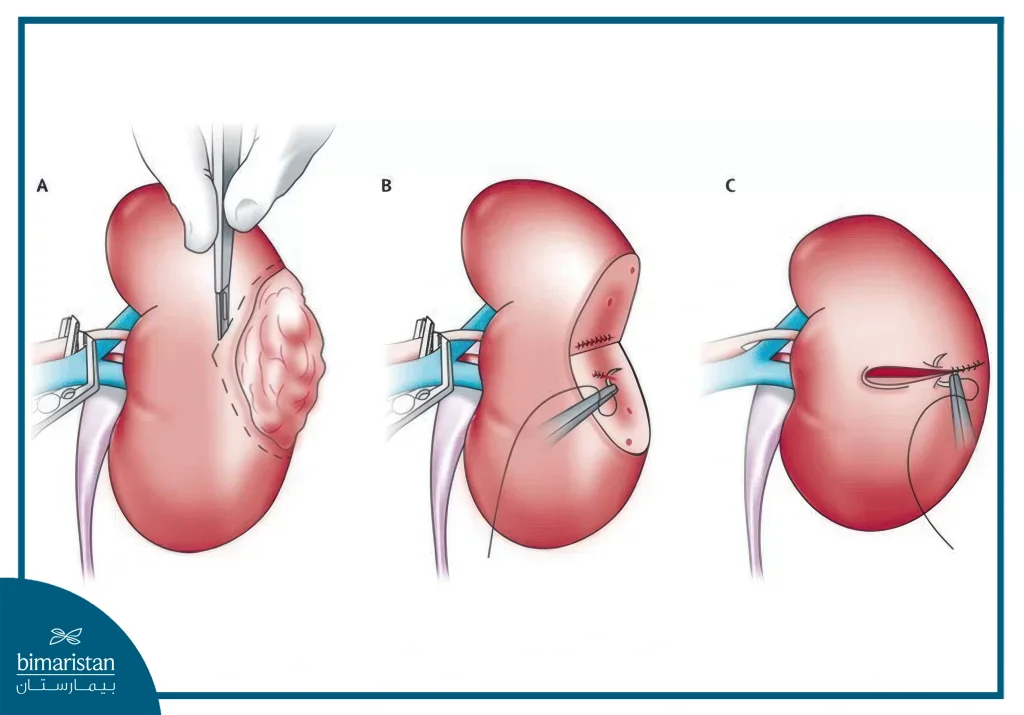
- In partial resection
- Locating the tumor using ultrasound during the procedure
- Temporary closure of the renal artery
- Proper tumor removal
- The kidney tissue is sutured precisely to prevent bleeding or urinary leakage.
- In total resection
- separating the kidney from the surrounding ligaments
- Nephrectomy with fatty tissue and sometimes adrenal gland removal
- Kidney removal via a slightly enlarged incision
After Robotic nephrectomy for Kidney Cancer
- The patient usually stays in the hospital for 2-3 days
- Urinary catheter removed in 1-3 days
- Return to light daily activities within a week
- Return to full physical activity after 3-4 weeks
- Follow instructions to avoid weight lifting and vigorous exercise for the first 4-6 weeks
- Periodic monitoring that includes
- Kidney function tests (creatinine, GFR)
- Periodic imaging scans (CT or MRI) to ensure the tumor has not returned
- A clinical examination is performed every 3–6 months during the first two years, then annually.
- Monitor blood pressure as it may be affected after kidney removal.
Advantages of robotic nephrectomy for kidney cancer
There are several characteristics that distinguish robotic surgery for kidney cancer from other forms of treatment, such as:
- Less blood loss
- Less pain after the procedure
- Shorter hospital stays
- Shorter recovery time and quicker return to normal life
- Smaller surgical scars that minimize aesthetic disfigurement
- Higher accuracy in tumor resection and preservation of kidney tissue
- The ability to perform complex operations that were difficult to perform with traditional laparoscopy
Long-term outcomes of robotic nephrectomy for kidney cancer
- Tumor control rates similar to open and laparoscopic surgery
- Five-year survival rates for localized tumors are 90-95%
- Partial ablation offers greater protection of renal function than total ablation
- Localized relapse rates are low when the tumor is resected with an adequate safety line
Risks and potential complications of robotic nephrectomy for kidney cancer
Although robotic nephrectomy for kidney cancer is relatively safe, some complications may occur, such as:
- Bleeding during or after the procedure
- Urinary leakage after partial resection
- Injury to large vessels or the ureter
- Surgical site infection
- Complications of general anesthesia
- Need for conversion to open surgery in rare cases (<5%)
Comparing robotic nephrectomy for kidney cancer with other alternatives
Table showing the differences between robotic nephrectomy for kidney cancer and other alternatives:
| Worker | Open surgery | Laparoscopic surgery | Robotic nephrectomy |
| Notch size | Large (15-20 cm) | Small (0.5-1 cm x several holes) | Small (0.5-1 cm x several holes) |
| Pain after surgery | High | average | Low |
| blood loss | High | less | Least |
| Accommodation period | 5-7 days | 3-4 days | 2-3 days |
| Return to activity | 6-8 weeks | 3-4 weeks | 2-3 weeks |
| Partial Ablation Accuracy | High | Average | Best |
| Cost | The cheapest | Average | Best |
Non-surgical alternatives for kidney cancer
These options are useful but less effective in the long term than surgery and are not considered a cure in most cases. We list them:
- Radiofrequency thermotherapy: Used for small tumors in patients who are not suitable for surgery.
- Targeted immunotherapy and drug therapy: Used in advanced or metastatic stages.
- Cryotherapy: Freezing the tumor using a special probe.
The cost of robotic nephrectomy for kidney cancer in Turkey
Turkey has become a leading destination for robotic nephrectomy for kidney cancer because it combines state-of-the-art technology and surgical expertise, while providing a much lower cost compared to European countries. Bimaristan is one of the centers of excellence in this field, providing high-quality medical care with integrated programs for local and international patients, making the treatment effective and affordable without compromising accuracy and safety.
| State | Average Cost (USD) | Length of hospitalization | Recovery period | Highlights of features |
|---|---|---|---|---|
| Turkey | 10,000 – 8,000 | 2 – 4 days | 2 – 3 weeks | – Prices up to 60% lower than Europe – State-of-the-art Da Vinci Xi robot systems – Great surgical expertise – Full support for foreign patients (translation, accommodation, follow-up) – Short waiting period |
| Germany | 25,000 – 35,000 | 4 – 6 days | 3-4 weeks | – Strict and rigorous treatment protocols – Ability to participate in research and clinical trials – Advanced post-operative rehabilitation programs |
| Switzerland | 30,000 – 40,000 | 4 – 6 days | 3-4 weeks | – Superior quality and luxury medical services – Meticulous personalized care with fewer patients per doctor – Private rooms and high-level services |
| United Kingdom | 28,000 – 38,000 | 3 – 5 days | 3-4 weeks | – Advanced European treatment protocols – Multidisciplinary teams (surgery, oncology, radiation therapy) – Long-term follow-up and programs for early detection of relapse |
Robotic nephrectomy for kidney cancer represents a paradigm shift in the field of urological surgery, providing exceptional precision in removing tumors while preserving as much kidney tissue as possible. This type of surgery minimizes complications such as blood loss and recovery time compared to traditional methods, allowing patients to return to normal life more quickly.
Turkey, especially the Bimaristan Center, offers this service with high quality and competitive prices, making it an ideal choice for local and international patients. In addition, regular post-operative follow-up ensures the best long-term results and accurate monitoring of renal function. With these advantages, robotic nephrectomy for kidney cancer has become the perfect choice for those looking for an effective, safe, and advanced treatment.
Sources: