
Prostate cancer is one of the most common cancers in men, and it is estimated that one in eight men will develop it during their lifetime. Although prostate cancer is a serious disease that can significantly affect the quality of life, advances in diagnosis and prostate cancer treatment have made the chances of control and cure very high, especially when detected in its early stages.
One of the most prominent modern technologies that has revolutionized prostate cancer treatment is prostate robotic radiotherapy. This non-invasive technique has proven to be highly effective and exceptionally accurate in targeting cancer cells, while minimizing complications and preserving the patient’s normal life.
What is Prostate Robotic Radiotherapy?
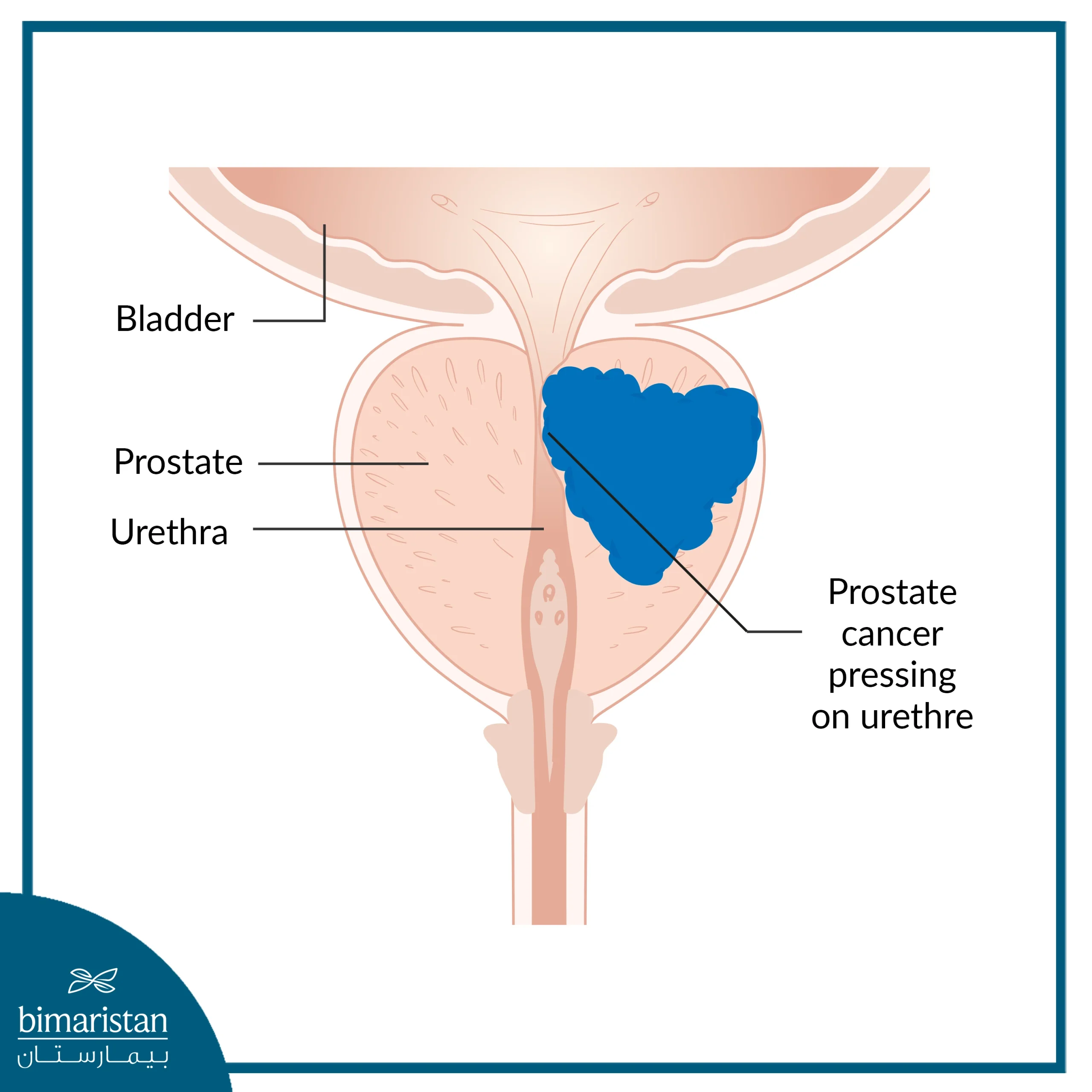
Prostate cancer is one of the most common cancers in men and is caused by the abnormal growth of cells inside the prostate gland, the gland responsible for producing part of the semen. This cancer often develops slowly, but in some cases it can be aggressive and quickly spread to neighboring bones or organs if not treated in time. Early detection plays a crucial role in improving cure rates and minimizing complications.
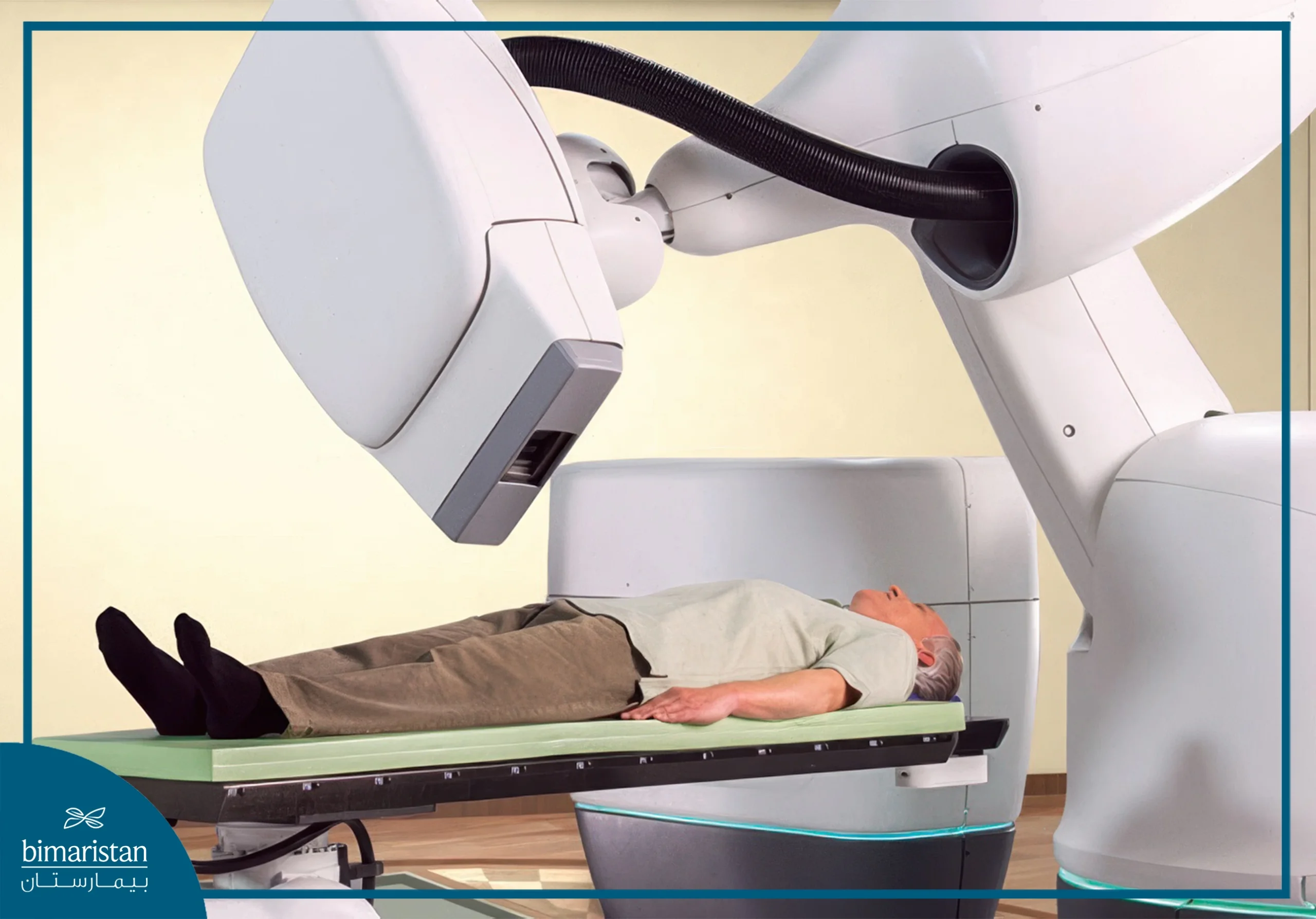
Prostate robotic radiotherapy is an advanced technique of stereotactic radiation therapy, in which very precise beams of high-dose ionizing radiation are delivered to the tumor within the prostate. The device features a flexible robotic arm that can move in multiple directions, allowing the tumor to be targeted from multiple angles with micron precision while tracking the movement of the prostate in real time during the session.
Advantages of Robotic Radiation Therapy
prostate robotic radiotherapy is characterized by the following:
- Superior accuracy: Thanks to real-time tracking, accuracy comes down to less than 1 millimeter.
- Protecting healthy tissues: Such as the bladder, urethra, and rectum.
- Non-invasive procedure: Does not require surgery or anesthesia.
- Short treatment time: Only a few sessions compared to traditional therapy.
- High safety: Less likely to develop urinary or sexual complications.
- High cure rates: Studies have shown long-term tumor control rates exceeding 90% in the early stages.
- Patient comfort: The patient can go about their daily lives between sessions without restrictions.
- Elasticity of the organ: Used to treat other tumors such as brain, lung, liver, and pancreatic tumors.
Prostate cancer treatment with robotic radiation
Treatment involves several stages:
Preparing to treat prostate cancer with robotic radiation
Before starting prostate robotic radiotherapy, the patient undergoes a number of preparations:
- Blood tests including PSA (prostate-specific antigen)
- Clinical assessment of the patient’s general condition, kidney and liver function
- CT or MRI scans to determine the stage of the disease
- Inserting metal tags via a simple guided imaging procedure
- Nutritional instructions and regulation of bladder and bowel fullness before each session
How robotic radiation therapy treats prostate cancer
Prostate cancer treatment with radiation is carried out in organized and precise steps:
- Planning and Visualization
- The patient undergoes a high-resolution MRI or CT scan.
- The images are combined to determine the tumor’s dimensions with 3D accuracy.
- Small metal tags are placed inside or near the prostate to facilitate tracking.
- Define treatment plan
- A multidisciplinary team (oncologists, physicists, and technicians) develops a detailed plan that includes the radiation dose, number of sessions, and targeting angles.
- Session implementation
- The patient lies on the bed without the need for anesthesia or surgical intervention.
- The device directs radiation beams toward the tumor from hundreds of different angles.
- Thanks to the real-time tracking system, the beams are automatically adjusted to compensate for any movement of the prostate due to breathing, bladder fullness, or bowel movements.
- Treatment duration
- Each session lasts from 30 to 90 minutes.
- The patient often needs only 4–5 sessions over a period of one to two weeks, which is equivalent to more than 40 sessions of traditional radiation therapy.
Follow-up after treatment
There are some steps we must adhere to in order to minimize the possibility of relapse and get the best result, such as:
- The patient is periodically monitored with PSA scans
- An MRI or CT scan may be ordered to check if the tumor has disappeared
- Follow-up is usually every 3-6 months for the first 2 years and then annually
- Treatment is considered successful if the PSA drop is stable
Comparison of prostate robotic radiotherapy with other treatments
| Type of treatment | Number of sessions | The need for surgery | Recovery period | Tumor control rates |
| Radiation therapy for prostate cancer | 4-5 sessions | No | Very fast (1-2 days) | High (90-95%) |
| Traditional radiation therapy | 35-45 sessions | No | Weeks | Medium to high |
| Surgery (radical prostatectomy) | One operation | Yes (Anesthesiology and Surgery) | Several weeks | High but with risks of incontinence and impotence |
| Hormonal therapy | Continuous | No | No immediate recovery | Slows the progression of the disease but does not cure it |
Possible harms and complications of prostate robotic radiotherapy
Although robotic radiotherapy for prostate cancer is safe, some temporary symptoms may occur:
- Rectal irritation or minor bleeding with stool
- Mild urinary disorders, such as urgency or burning
- Constipation or hemorrhoids
- Sexual dysfunction in a small percentage of cases
- Minor post-session fatigue that goes away quickly
Compared to traditional surgery or radiation, these symptoms are much fewer and less severe.
The cost of robotic radiation treatment for prostate cancer in Turkey
Turkey is one of the most prominent medical destinations in oncology treatment, thanks to the great development of its centers and their equipment with the latest CyberKnife systems, with highly experienced medical staff and much lower prices compared to Europe and America. Bimaristan Medical Center is one of the leading centers in this field, providing the highest quality treatment with the latest technology, while ensuring patient comfort and offering the most competitive costs.
| Country/Region | Approximate full price in dollars | Notes and sources |
| Turkey | Approximately $6,520 to $9,500 | Between $9,900 and $12,100, approximately |
| Germany | Between $9,900 and $12,100 approximately | Depends on the city and hospital |
| Other cities in Central/Eastern Europe | Starting at around $15,000 | In some countries, offers may be lower because the infrastructure is less developed |
Robotic radiation therapy is one of the most prominent mechanisms for managing prostate cancer, combining microscopic precision, high clinical efficacy, short treatment time, and low complications compared to surgery or conventional radiation. This treatment is now available in Turkey in specialized centers at a lower cost than in Western countries, giving patients the opportunity to receive world-class treatment with a comfortable experience and excellent results.
Sources: