
Severe hyperopia is a vision disorder that affects the eye’s ability to focus, especially when looking at close objects, and may extend to distant vision with age. In severe cases, eyeglasses or contact lenses are not enough to provide comfortable and stable vision, prompting the search for more effective surgical solutions.
With the evolution of refractive surgery, lens implants for severe hyperopia have become an advanced option, especially for patients who do not qualify for traditional laser techniques, as they allow for the correction of high degrees of refractive error while maintaining long-term vision quality.
What is severe hyperopia?
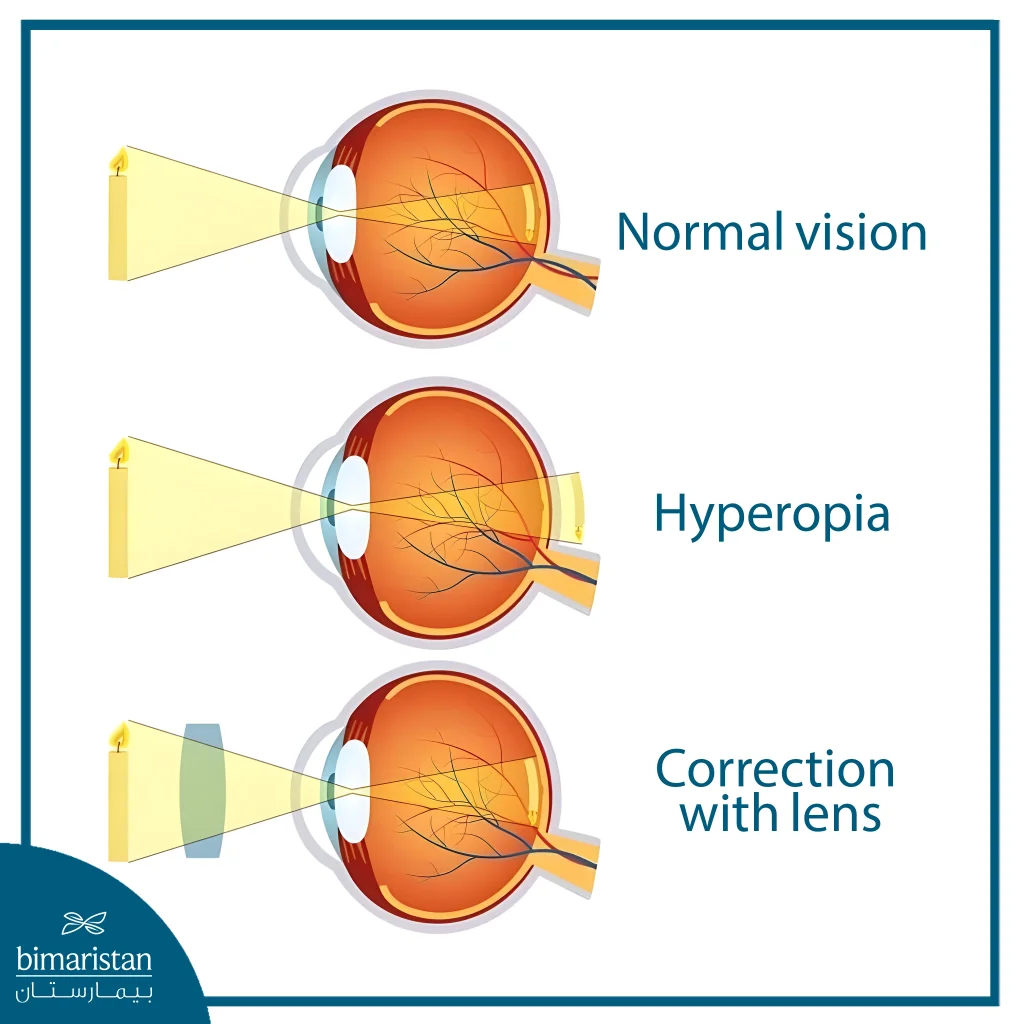
Farsightedness(hyperopia) is a refractive defect that occurs when the eye’s ability to focus light rays is insufficient, so the image is formed behind the retina instead of directly on it. This makes it difficult to see nearby objects clearly, and the brain may partially compensate for this defect by increasing the focusing effort. In severe farsightedness, this compensation becomes inadequate, leading to persistent visual blurring and visible eye strain, especially during reading or prolonged screen use.
When is hyperopia considered severe?
Farsightedness is categorized as severe when the degree of refraction is so high that it significantly affects daily vision and cannot be comfortably corrected with conventional optical means. Sufferers often experience frequent headaches, rapid visual fatigue, and difficulty performing near tasks despite the use of glasses. At this point, surgical intervention becomes an option to improve the quality of vision and minimize symptoms.
What is an intraocular lens implant?
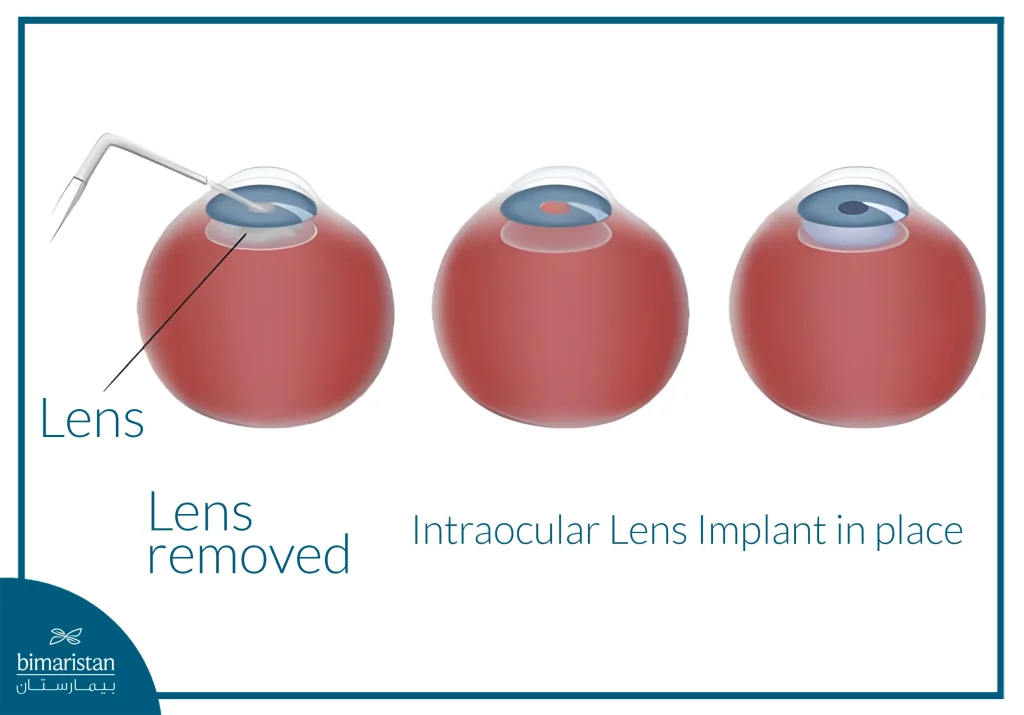
Intraocular lens implantation is a surgical procedure that aims to correct refractive defects by inserting a transparent artificial lens into the eye. This lens refracts light entering the eye, focusing it precisely on the retina. Depending on the patient’s age, the condition of the natural lens, and the presence of comorbidities, the implant can be performed with the natural lens or with an artificial lens.
How do lens implants for severe hyperopia work?
Lens implants are used to compensate for a deficiency in the eye’s refractive power. In cases of severe farsightedness, the eye is unable to adequately focus light, causing the image to form behind the retina. An implanted lens modifies this path, allowing light rays to be collected properly, improving clarity of vision and minimizing the need for additional correction.
Types of lens implants for severe hyperopia
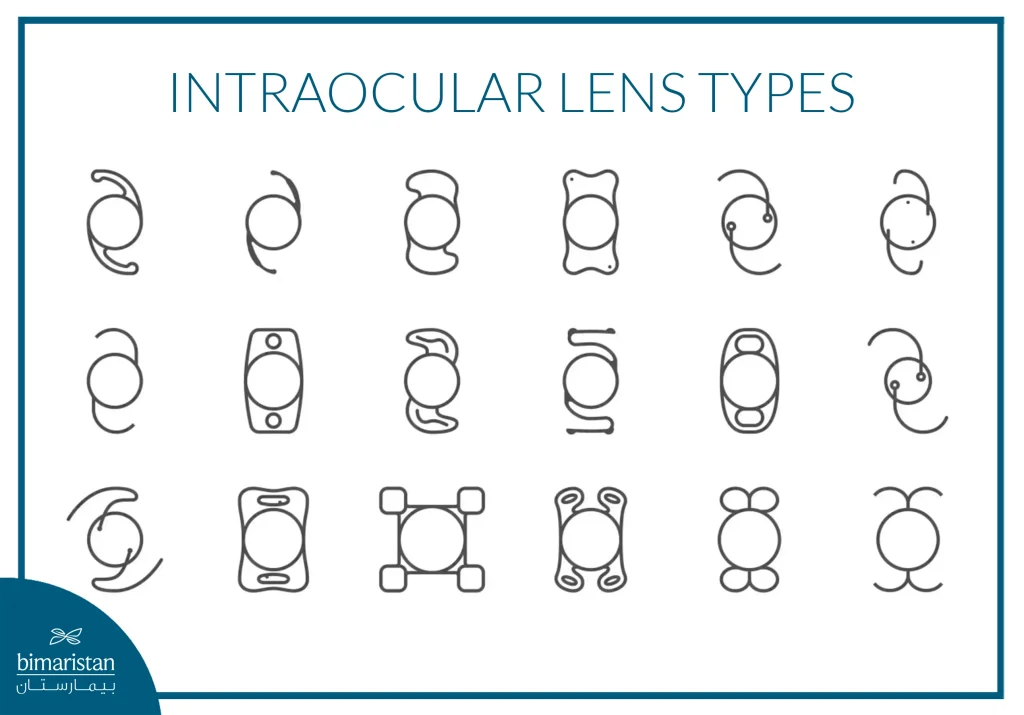
There are several types of intraocular lens implants for severe hyperopia, and choosing the right one depends on the patient’s age, the degree of farsightedness, the health of the natural lens and the rest of the eye, as well as lifestyle and daily visual needs.
Lens implants in front of the natural lens
This type implants a clear artificial lens into the eye while leaving the natural lens in place, and is often used in younger patients who do not have lens opacities. A common example of this type is the ICL, designed specifically for the correction of severe farsightedness, which enhances the refractive power of the eye without removing the natural lens, while preserving visual accommodation as much as possible.
Replacing your natural lens with an artificial lens
This procedure involves removing the natural lens and replacing it with a permanent artificial lens, and is preferred in older patients or in the presence of early cataracts. The procedure uses an artificial lens made of advanced acrylic materials, the same lens used in cataract surgery, which allows correction of severe farsightedness and prevents the development of future cataracts.
Monofocal lenses
Monofocal lenses are designed to provide clear visual focus for only one distance, most often distance vision. A common example is a monofocal lens for distance vision, which is characterized by high optical quality and long-lasting stability, but the patient may need glasses for near vision after surgery.
Multifocal lenses
Multifocal lenses improve vision at multiple distances, such as near and far, reducing dependence on glasses after the procedure. Bifocal or trifocal lenses, which distribute light to more than one focus, are examples of this type of lens, but they may cause light phenomena in some patients, especially in low light.
Extended focal depth lenses
Extended focal depth lenses provide a graduated optical range between far and intermediate vision, while minimizing visual distortion compared to multifocal lenses. A common example is an extended focal-depth lens designed to provide comfortable, functional vision while driving or using electronic devices, while minimizing the need for glasses at intermediate distances.
Astigmatism-correcting lenses
Astigmatism-correcting lenses are used to treat the irregular refraction of light within the eye in conjunction with farsightedness. Examples include toric lenses, which are designed with targeted refractive power to correct astigmatism and improve clarity and quality of vision after surgery.
Who are good candidates for lens implants for severe hyperopia?
A patient is a good candidate for lens implantation when there is stable severe farsightedness, good corneal and retinal health, and unsuitability for laser vision correction. There should also be no active ocular infections or advanced eye diseases that may affect the safety or outcome of the procedure.
Tests needed before lens implants for severe hyperopia
Before deciding to implant lenses, the patient undergoes a series of rigorous tests to fully assess the eye’s health and select the most suitable lens for each case. These tests include the following:
- Measuring eye pressure to rule out high eye pressure may increase the risk of complications
- Measure the length of the eye to determine the proper refractive power of the implanted lens and ensure accurate visual results
- Examine the cornea to ensure its integrity and surface regularity, and rule out any diseases that may affect the success of the surgery
- Evaluation of the retina and optic nerve to detect any diseases of the fundus that may affect the quality of vision after the operation
Lens implants for severe hyperopia
Lens implantation is a precise surgical procedure that aims to safely and effectively correct farsightedness. The process can be summarized as follows:
- Local eye anesthesia to ensure the patient is comfortable and pain-free during the procedure
- A small, precise incision in the eye that allows the lens to be inserted without causing too much damage to the eye tissue
- Inserting the IOL into the eye and guiding it to the correct position, depending on the type of implant
- Holding the lens in place to ensure it is stable and achieves the best possible optical correction
- No stitches are required in most cases, which helps with faster healing and shorter recovery time
Potential complications and risks of lens implants for severe hyperopia
Although lens implantation is a safe procedure in most cases, it can be associated with some rare complications, and it is important to recognize them to ensure proper medical follow-up. These complications include:
- Inflammation inside the eye is a rare complication when using the drops, and medical follow-up
- Temporary or persistent high intraocular pressure that may require additional drug treatment or follow-up
- Instability of the implanted lens is uncommon and may require additional intervention in limited cases
- Temporary blurred vision after the procedure often improves gradually during the recovery period
Cost of lens implants for severe hyperopia
The cost of lens implantation varies depending on the type of lens, the doctor’s experience, the level of the medical center, and the country where the procedure is performed. The following table shows an approximate comparison of costs between Turkey, the United States, and the Gulf countries:
| Lens type | Turkey | United States | Gulf States |
|---|---|---|---|
| Lenses in front of the natural lens | 2,500 – 4,000 dollars | 6,000 – 9,000 dollars | 5,000 – 8,000 dollars |
| Monofocal lenses | 2,000 – $3,500 | 5,000 – 8,000 dollars | 4,000 – 7,000 dollars |
| Multifocal lenses | 3,000 – 5,000 dollars | 7,000 – 12,000 dollars | 6,000 – 10,000 dollars |
| Extended focal depth lenses | $3,200 – $5,500 | 8,000 – $13,000 | 6,500 – $11,000 |
| Astigmatism-correcting lenses | $2,800 – $4,800 | $6,500 – $10,500 | 5,500 – 9,000 dollars |
Lens implants or lasers for severe farsightedness?
Choosing the most appropriate method for treating severe farsightedness depends on the degree of refractive error and the eye’s characteristics.
| Element | Lens implantation | Laser vision correction |
|---|---|---|
| Degree of hyperopia | Suitable for severe cases | Suitable for mild to moderate cases |
| Impact on the cornea | Does not affect the thickness of the cornea | Depends on the thickness of the cornea |
| Ability to undo or modify | Customizable or removable | Irreversible |
| Suitability for a thin cornea | Suitable | Often inappropriate |
| Long-term stability | High | Good in the right situations |
| Cost | Relatively higher | Relatively less |
| Suitable age | All ages, depending on the case | Often younger ages |
In conclusion, lens implantation is an advanced and effective solution for the treatment of severe farsightedness, especially in patients who do not qualify for laser vision correction. This procedure helps improve vision quality and reduce dependence on glasses, with stable results when the right case is selected and a thorough medical evaluation is performed. The final decision is based on a thorough diagnosis and discussion of treatment options with your physician.
Sources:
- Horgan N, Condon PI, Beatty S. Refractive lens exchange in high myopia: long term follow up. Br J Ophthalmol. 2005 Jun;89(6):670-2. doi: 10.1136/bjo.2004.052720. PMID: 15923498; PMCID: PMC1772665.
- Review of Ophthalmology. (2018). A review of refractive lens exchange.
- National Eye Institute. (n.d.). Farsightedness (hyperopia). U.S. Department of Health and Human Services.