
Vision issues are one of the most common health issues and can directly affect quality of life and the ability to perform daily activities. With advances in ophthalmic technology, monofocal intraocular lenses (IOLs) have become an effective solution for improving vision in many cases, whether they are related to natural changes in the lens of the eye or disorders that affect visual acuity.
Choosing the type of lens implant is an essential step in achieving the best possible visual outcome, as lenses differ in their design, mechanism of action, and ability to correct vision. Among these options, IOLs are popular due to their simplicity, reliability, and long-term stability.
What are monofocal intraocular lenses?
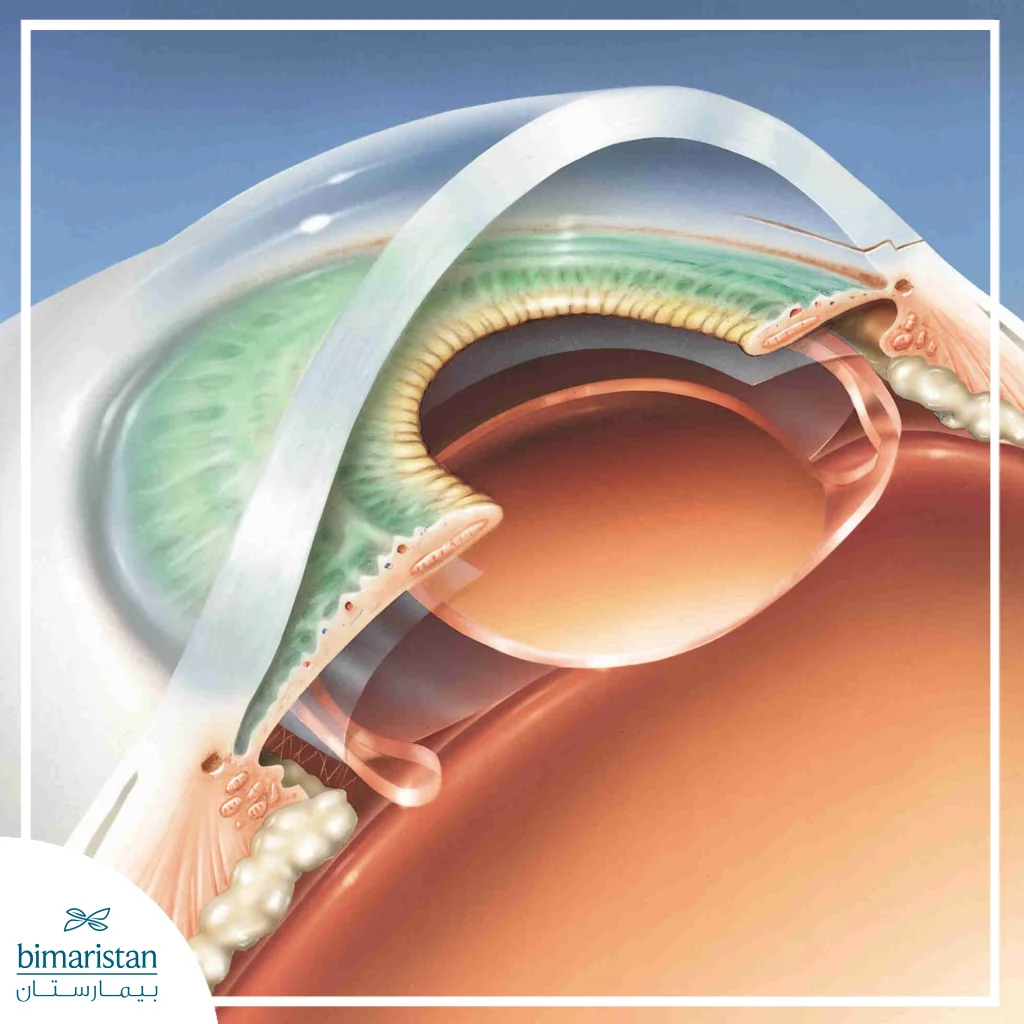
Monofocal IOLs are clear artificial lenses that are surgically implanted into the eye to improve vision by replacing or supporting the function of the natural lens. These lenses are characterized by having a single fixed focus, which means they are designed to provide clear vision for only one distance, most often distance vision. This type of lens is used for a number of conditions that require stable and reliable optical correction and is a popular choice due to its ability to provide high-quality vision with less distortion and visual side effects than more complex lenses.
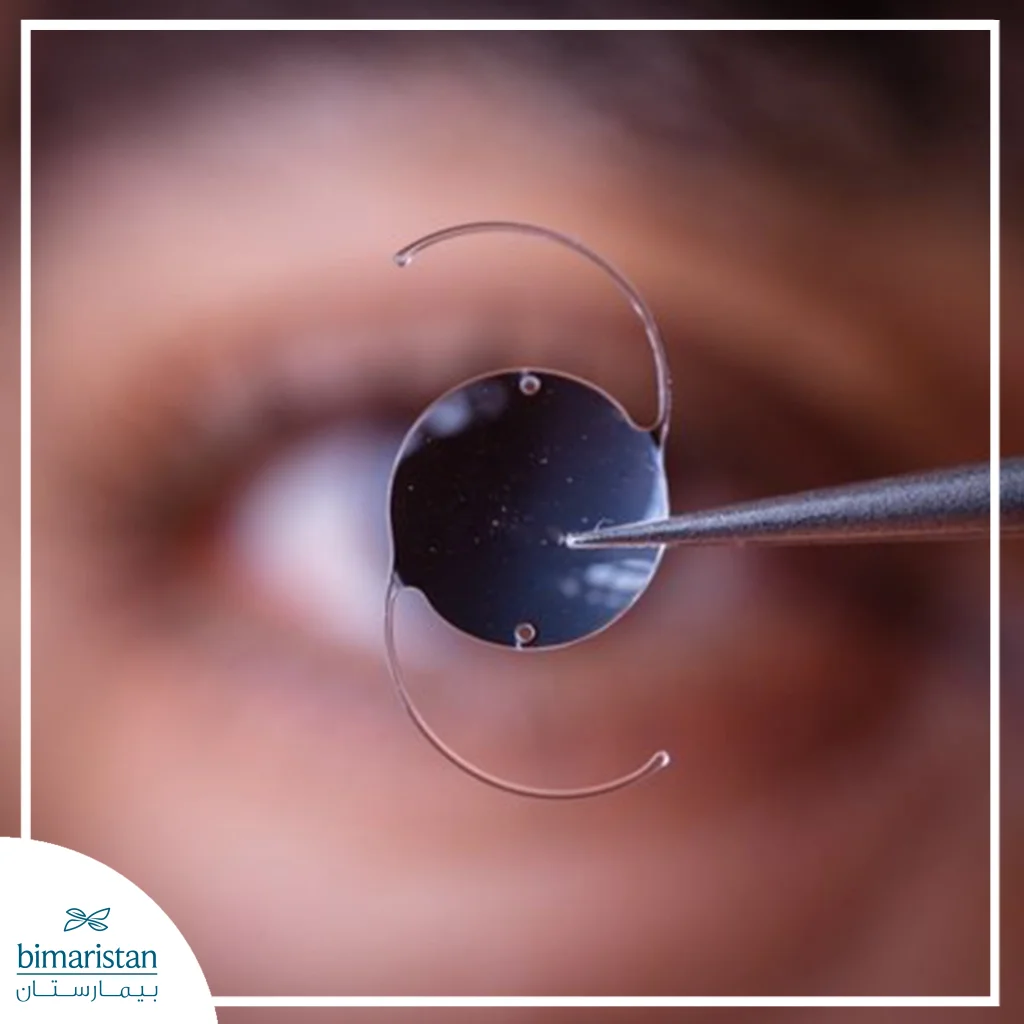
How do intraocular lenses work?
Intraocular lenses (IOLs) work on the principle of focusing the light entering the eye precisely on the retina at one specific point. Unlike a natural lens, IOLs cannot change their focus or adapt to different distances, remaining fixed at a pre-selected distance.
Prior to implantation, precise eye measurements are taken to determine the appropriate lens power for each patient, ensuring the best possible clarity of vision at the target distance. This simple design provides a stable and clear vision while minimizing the likelihood of light halos or visual distortion, making monovision lenses a viable option for a wide range of patients.
Types of intraocular lenses
Although intraocular lenses (IOLs) all share the principle of monofocalization, they are not a single identical type, but rather several types that differ in the way they correct vision, optical properties, and the conditions in which they are used. This diversity helps doctors choose the most appropriate lens for each patient based on their visual condition and lifestyle.
Far-vision monovision lenses
This is the most commonly used type of intraocular lens. The power of the lens is adjusted to provide clear vision for distant objects, such as driving, watching TV, or recognizing faces at a distance. After this type of lens is implanted, the patient often needs to use eyeglasses for near or intermediate vision, such as reading or using a cell phone.
This option is preferred for patients who rely primarily on distance vision in their daily lives, or who don’t mind using reading glasses.
Monocular lenses for near vision
In this type, the lens is adjusted to provide clear vision for near objects, such as reading or fine work. This option is less common and is typically used for patients who focus on near activities and want to minimize their reliance on reading glasses. In contrast, patients in this case need glasses to correct distance vision, such as driving or viewing objects at long distances. The choice of this type of lens requires careful discussion with the doctor to determine its suitability for the patient’s lifestyle.
Astigmatism-correcting Toric Monofocal IOLs
These lenses are an advanced option in the monovision category, combining single vision correction with astigmatism management. It has a special design that allows the irregularity of the corneal curvature to be adjusted, improving the quality of vision and reducing the need for additional glasses after surgery.
These lenses are used in patients with significant astigmatism and are implanted at a specific angle within the eye to ensure the best possible visual outcome, which requires high precision during surgery.
Contrast-enhanced monocular lenses
This type is designed to improve the quality of visual contrast, especially in low-light conditions. Although they do not change the monofocal principle, they do help some patients see more clearly with less visual distortion.
They are a good choice for people who drive at night or work in environments with less-than-ideal lighting and are looking for a clearer, more stable view.
Aspheric Monofocal IOLs
These lenses feature an aspherical optical design that aims to minimize optical aberrations and improve image quality on the retina. Compared to traditional spherical lenses, aspherical lenses offer better clarity and higher contrast, especially in low light.
This type is preferred for patients who seek the highest visual quality possible within the confines of a monovision lens.
Advantages of monovision intraocular lenses
IOLs have a number of characteristics that make them a popular and reliable option for vision correction, including the following:
- High quality of vision for one specific distance, often long-distance vision, with excellent optical clarity
- Long-lasting optical stability, as the lens characteristics do not change over time
- Lower likelihood of halos and night glare compared to multifocal lenses
- Good improvement in visual contrast, especially in low-light conditions
- Eye adaptation after implantation is easy, and vision improvement is quickly noticeable
- Suitable for a wide range of patients, including those with retinal or optic nerve disease
- High safety and low complication rates when performed according to medical standards
- Relatively lower cost compared to multifocal or progressive lenses
Disadvantages of intraocular monocular lenses
Despite their many benefits, intraocular lenses have some limitations that need to be considered:
- Corrects vision for only one distance because it has a single fixed focus
- The need for eyeglasses for near or intermediate vision in most cases
- Not completely eliminating glasses in patients who want to see at multiple distances without aids
- Limited options compared to advanced lenses in terms of optical flexibility
- It requires careful selection of the corrected distance before surgery to avoid dissatisfaction with the result
- Not ideal for a lifestyle that relies on constantly changing distances without glasses
Who are suitable candidates for monovision intraocular lenses?
Intraocular lenses (IOLs) are suitable for a wide range of patients, especially those who put quality and stability of vision first. They are ideal for people who don’t mind wearing glasses after surgery, whether for near or far vision.
This type of lens is also preferred in patients with retinal or optic nerve disease, as multifocal lenses may reduce the quality of their visual contrast. A thorough medical evaluation plays a key role in determining the suitability of monovision lenses for each case, based on eye health and the patient’s visual expectations.
Monofocal vs. multifocal lenses
The fundamental difference between monofocal and multifocal lenses lies in how light is processed inside the eye. Monofocal lenses focus light at a single point, providing stable and clear vision for a specific distance. Multifocal lenses, on the other hand, rely on splitting the light into multiple foci to cover near, intermediate, and far vision.
Although multifocal lenses may reduce dependence on glasses, they may be associated with an increased likelihood of halos or reduced visual contrast, especially in low light. Therefore, many patients prefer monofocal lenses for their consistent visual clarity and higher visual comfort.
Tests needed before implanting a monovision intraocular lens
Intraocular lens implantation requires a thorough and accurate eye evaluation to ensure the most appropriate lens is selected and the best possible visual outcome is achieved:
- Measurement of visual acuity and refraction: Performed to determine the current degree of visual impairment and the nature of the visual defect, such as nearsightedness or farsightedness, which helps in accurately planning the strength of the implanted lens.
- Examine the cornea and measure its curvature and thickness: Assesses the shape of the cornea and detects any abnormalities or astigmatism that may affect lens selection or accuracy.
- Biometry: This is one of the most important tests, as it is used to calculate the strength of the intraocular lens with high accuracy, which is directly reflected in the quality of vision after implantation.
- Examination of the retina and optic nerve: Performed to check the integrity of the back of the eye and rule out diseases that may limit the expected visual improvement.
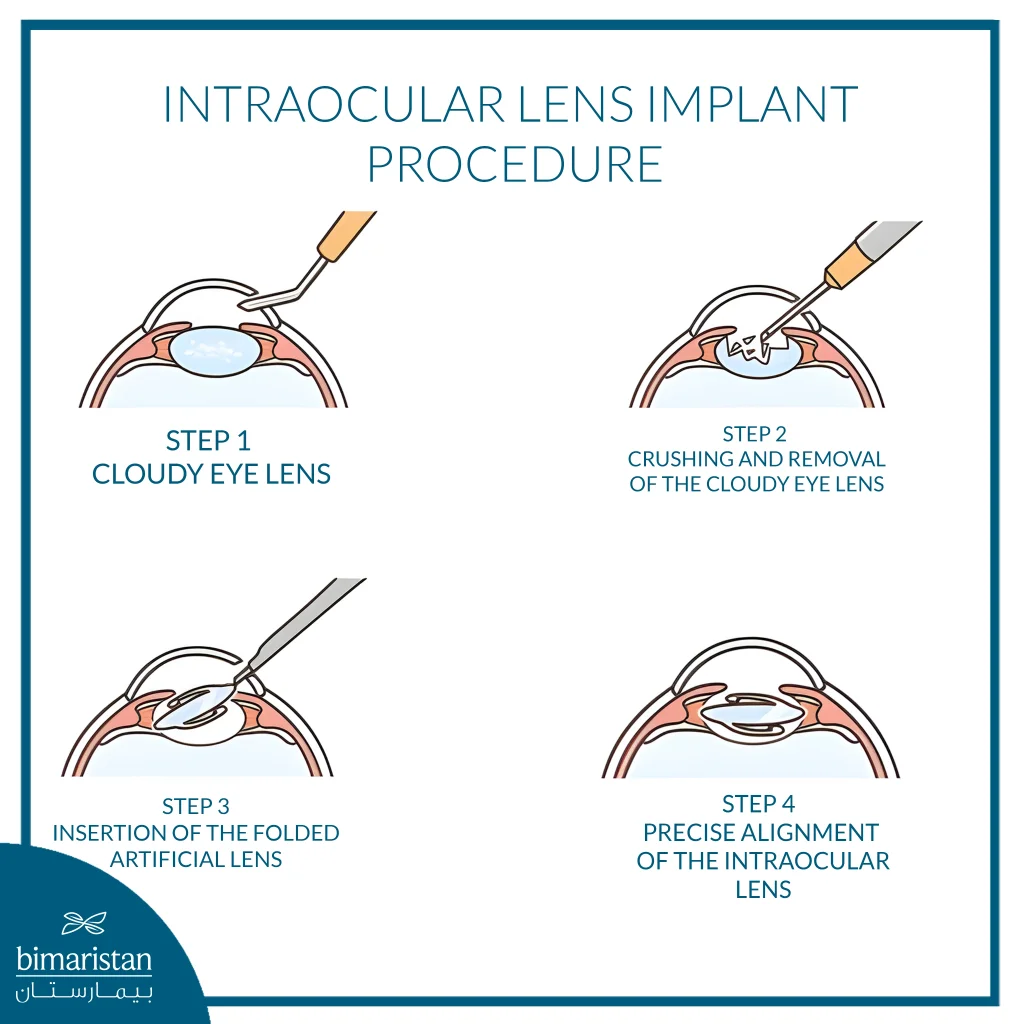
Steps for implanting monovision intraocular lenses
Intraocular lens implantation is performed according to precise surgical steps aimed at achieving the highest level of safety and accuracy, including the following:
- Local anesthesia of the eye: Anesthetic drops are used to ensure patient comfort during the procedure without the need for general anesthesia.
- Removing the ineffective natural lens: The surgeon removes the affected lens using modern techniques through a very small incision.
- Intraocular lens insertion: The folded lens is inserted through the incision, then opened and carefully placed inside the capsule in the correct position.
- Make sure the lens is stabilized and finish the procedure: The intraocular lens is stabilized, and the procedure is closed without the need for stitches in most cases.
Expected results after intraocular lens implantation
Results vary from person to person, but most patients achieve a significant improvement in vision, and expected results include the following:
- Gradual improvement in clarity of vision: Begins within the first few days after the procedure and continues as the eye heals and the lens stabilizes.
- Stabilized vision at the corrected distance: The monocular lens provides good clarity at a pre-selected distance, often far away.
- Possible need for eyeglasses: You may need glasses for reading or intermediate vision, depending on the type of lens chosen.
- Long-lasting results and high satisfaction: Intraocular lenses are characterized by stability and longevity, with good satisfaction rates when adhering to the doctor’s instructions after implantation.
The cost of implanting intraocular lenses in Turkey and comparing it with other countries
| State | Average cost per eye | What is usually included in the price | Notes |
|---|---|---|---|
| Turkey | $1,200 – $2,000 | Preoperative tests, monocular lens, surgical fees, postoperative follow-up | Relatively low cost with advanced medical level and extensive experience in eye surgeries |
| United States | 3,500 – 6,000 dollars | Surgery and lens, and may not include all tests or follow-up | High cost, and there may be separate fees for tests or follow-ups |
| Gulf States | $2,500 – $4,500 | Basic tests, lens, surgery, short follow-up | Good medical quality, but the cost is higher than Turkey and lower than the U.S. |
Intraocular lenses (IOLs) are a reliable and effective medical option for improving vision in a wide range of patients, thanks to their simple design and the quality of their long-term results. Although they only correct vision for one distance, they are characterized by high visual stability and fewer side effects than more complex lenses. Choosing the right lens is an individual decision based on careful medical assessment, lifestyle, and visual expectations, making specialized consultation an essential step in achieving the best possible outcome and improving the quality of vision safely and sustainably.
Sources: