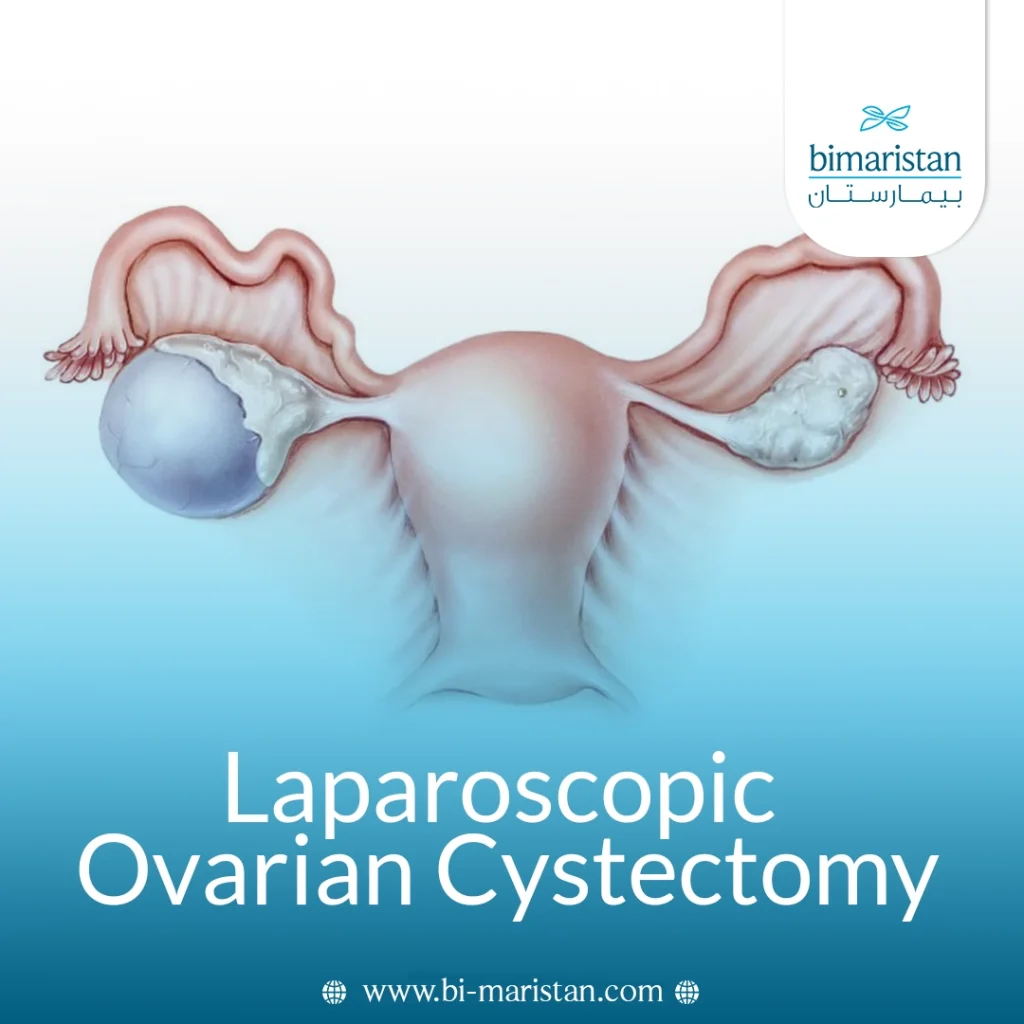
Laparoscopic ovarian cystectomy is a surgical procedure designed to remove the cyst while preserving as much ovarian tissue as possible. It is commonly used in women of reproductive age to treat benign conditions such as functional cysts and endometriosis, as well as certain suspected tumors. The choice of surgical technique between open surgery and laparoscopic surgery depends on multiple clinical factors; however, laparoscopic surgery is classified as a minimally invasive procedure that relies on several small incisions in the lower abdomen, which limits tissue trauma and improves postoperative recovery.
The importance of the surgical technique lies in its potential impact on future fertility. While open surgery may be associated with a larger incision, more severe pain, a longer recovery period, and a higher risk of adhesions, laparoscopic surgery offers advantages that make it a more suitable option.
What is an ovarian cyst?
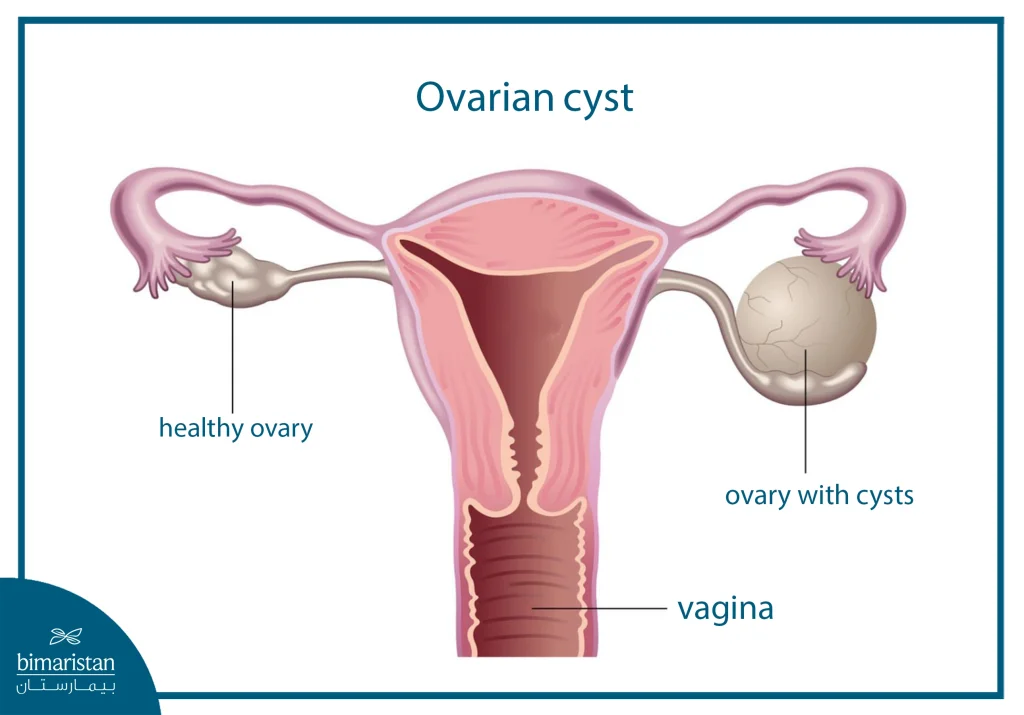
An ovarian cyst is a fluid-filled sac or pouch that forms on the surface of or inside the ovary. These cysts are relatively common, and many of them resolve on their own without treatment. However, surgical intervention may be necessary if the cyst persists, grows larger, or causes pain, hormonal imbalances, or fertility issues.
If the cyst does not go away on its own or causes bothersome symptoms or potential complications, your doctor may recommend an ovarian cystectomy, a surgical procedure designed to remove the cyst while preserving the ovary whenever possible.
Causes of Polycystic Ovary Syndrome
Ovarian cysts often develop as a result of ovulation disorders or hormonal changes that affect normal ovarian function. In most cases, the cysts are functional and related to the menstrual cycle; however, other causes may lead to their formation, ranging from benign to pathological conditions that require careful evaluation. The most common causes of polycystic ovary syndrome (PCOS):
- The ovulation process itself: A cyst may form if the follicle does not rupture to release the egg, or if the follicle closes after ovulation and fills with fluid.
- Hormonal disorders, such as polycystic ovary syndrome, affect egg maturation and the regularity of ovulation.
- The use of ovulation-inducing medications in fertility treatments, which may increase the likelihood of cysts forming.
- Pelvic infections, which may spread to the ovaries and lead to the formation of inflammatory cysts.
- Ovarian tumors: both benign and malignant, which may appear as a cystic mass on imaging tests.
- Endometriosis: Cysts known as “chocolate cysts” can form as a result of endometrial tissue growing outside the uterus.
Determining the exact cause requires a clinical examination, an ultrasound, and sometimes laboratory tests to identify the type of cyst and determine the appropriate course of treatment.
When should we perform laparoscopic removal of an ovarian cyst?
Not all ovarian cysts require surgical intervention, as many are benign, filled with fluid, and resolve on their own over the course of several menstrual cycles without causing any significant symptoms. However, surgery is recommended when the cyst causes noticeable symptoms such as pelvic pain, especially during menstruation or intercourse, or when the cyst is large, or if an ultrasound, CT scan, or MRI reveals features that warrant laboratory examination after removal.
Surgical intervention is also recommended if the cyst persists for an extended period without shrinking, or if it contains solid components or atypical features that warrant a more detailed evaluation to rule out pathological changes. The final decision is made after a detailed discussion between the patient and the doctor based on symptoms, test results, age, and future reproductive plans.
First: Preparing for Laparoscopic Ovarian Cyst Removal
Preparation for laparoscopic ovarian cyst removal follows precise instructions set by the surgical team. This includes fasting before surgery, reviewing current medications, and scheduling appointments before and after the procedure. You must also arrange for someone to drive you home after the procedure due to general anesthesia. Key preparation steps:
- Do not eat or drink anything after midnight on the day before the procedure
- Discuss current medications with your doctor and discontinue any as recommended
- Please arrive at the hospital approximately two hours before your surgery
- Arrange for someone to accompany you and drive you home after surgery
- Adherence to pre- and post-operative evaluation appointments
- Ask your doctor any questions you may have the day before surgery to avoid any confusion
How to Perform Laparoscopic Ovarian Cyst Removal
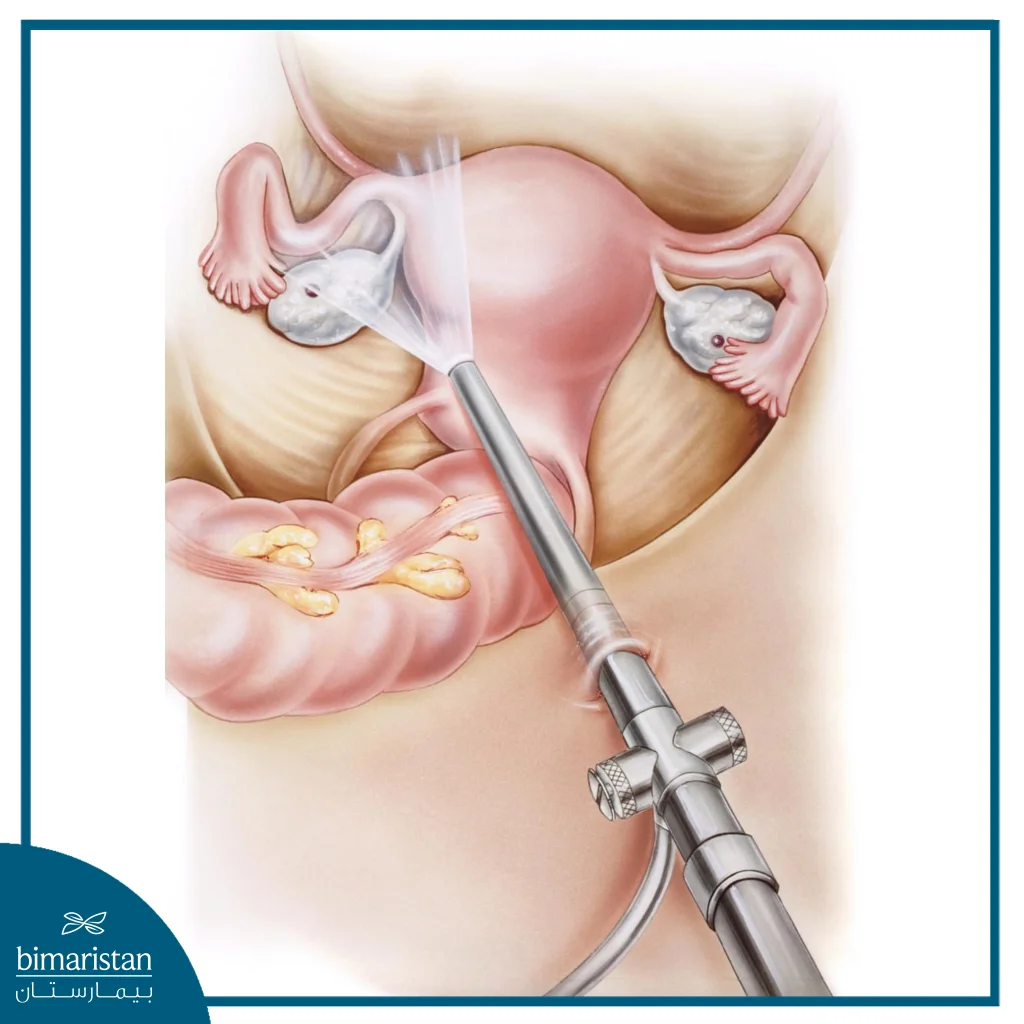
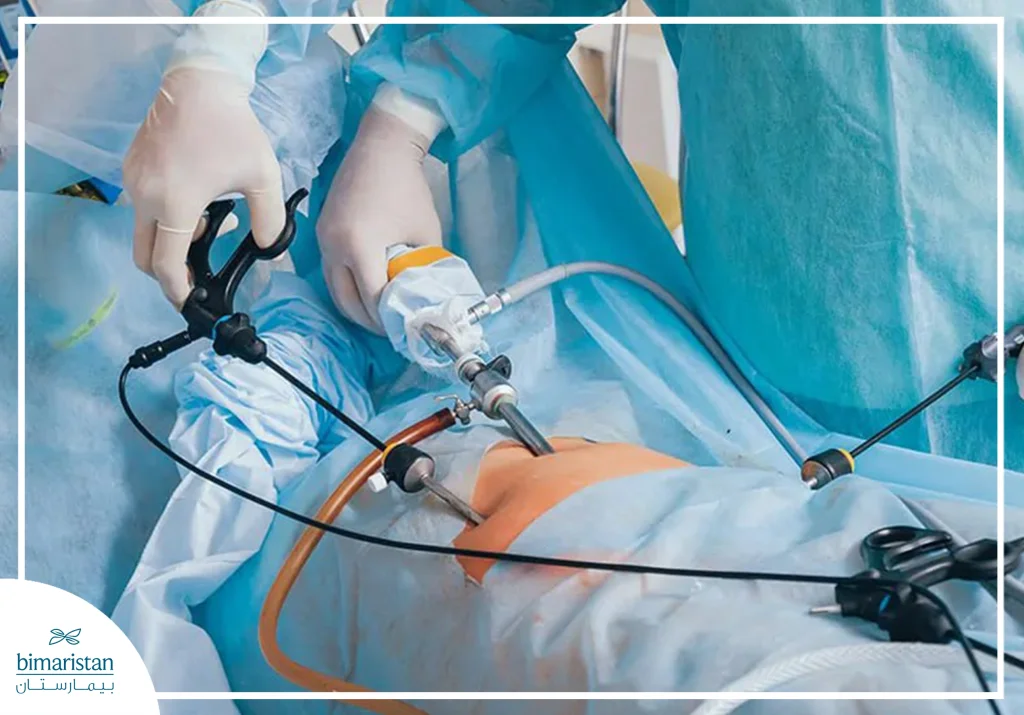
The procedure is performed under general anesthesia, meaning the patient is completely asleep. The surgeon begins by making a small incision in the navel to insert the laparoscope, a thin tube equipped with a camera that provides a clear view of the pelvic organs. Carbon dioxide gas is pumped into the abdomen to create space for the surgical procedure. Additional small incisions are then made to insert the surgical instruments.
Once the ovary is reached, a small incision is made on its surface, and the cyst is carefully separated from the healthy tissue. The contents of the cyst are often drained to facilitate its removal into a special surgical bag through one of the incisions. After the cyst is removed, any bleeding is controlled using thermal energy or surgical sutures as needed. The cyst is sent to the laboratory for final histological examination. Finally, most of the gas is removed, and the incisions are closed with dissolvable sutures or skin adhesive. The following is a brief summary of the steps involved in laparoscopic ovarian cyst removal:
- General anesthesia
- A small incision in the navel and insertion of the laparoscope
- Inflating the abdomen with carbon dioxide
- Make small additional slits to insert the tools
- Opening the surface of the ovary and separating the cyst
- Empty the contents of the bag as needed
- Removal of the cyst using a special surgical bag
- Control of bleeding and examination of the abdominal cavity
- Closing cracks with sutures or medical tape
After Laparoscopic Removal of Ovarian Cysts
After the procedure, the patient is taken to the recovery room for monitoring of her vital signs until she regains full consciousness. It is normal to feel mild pain in the abdomen or around the navel, and shoulder pain may occur due to residual gas in the abdomen. The pain can be managed with mild pain relievers. Patients can usually be discharged from the hospital on the same day, except in some cases that require monitoring until the following day.
During the first week, the patient may feel more tired than usual; it is recommended to rest and gradually increase activity by taking light walks. Showering is permitted after 24 hours, but avoid rubbing the incisions or submerging them in water in a bathtub or swimming pool. There may be light vaginal discharge or spotting for a short period. Post-operative instructions:
- Avoid driving for 48 hours after general anesthesia
- Remove the bandages after 24 hours, as instructed
- Do not submerge wounds in water or go swimming until they have healed
- Gradually increase your activity while avoiding strenuous exercise during the first week
- Resuming the marital relationship once you feel comfortable
- Please keep your follow-up appointment to review the results of your biopsy
Laparoscopic removal of ovarian cysts is a relatively safe procedure with a quick recovery compared to open surgery, provided that medical instructions are followed and regular post-operative follow-ups are attended.
Possible complications of laparoscopic removal of polycystic ovaries
Laparoscopic removal of ovarian cysts is a safe surgical procedure in most cases, with lower complication rates compared to open surgery. However, there is still a possibility of complications, ranging from minor and temporary issues to rare complications that may require additional intervention. These risks are minimized through careful preoperative evaluation, the surgical team’s expertise, and adherence to postoperative instructions. The most significant potential complications:
- Pain or bruising at the incision site
- Shoulder pain caused by residual carbon dioxide in the abdomen
- Wound infection or wound dehiscence
- Bleeding during the procedure may require a blood transfusion
- Involvement of adjacent organs such as the intestines, bladder, ureters, or blood vessels
- The need to switch to open surgery in the event of complications
- Partial decline in ovarian function resulting from the removal of part of the ovarian tissue
- The need to remove the ovary or fallopian tube in certain specific cases
The risk of certain complications is higher in patients who have had previous abdominal surgery or who are obese, have diabetes, or smoke. Therefore, each case is evaluated individually to ensure the highest level of safety and minimize risks as much as possible.
The Difference Between Laparoscopic Removal of Ovarian Cysts and Oophorectomy
Laparoscopic removal of an ovarian cyst involves excising only the cyst while preserving as much healthy ovarian tissue as possible, whereas an oophorectomy involves removing the entire ovary. The decision between the two procedures depends on the nature of the cyst, the patient’s age, her desire to have children, and the results of imaging and laboratory tests.
When is it preferable to treat polycystic ovary syndrome using laparoscopy alone?
This option is the preferred choice for women of childbearing age when the goal is to preserve fertility and ovarian hormonal function. This procedure is chosen in the following cases:
- Simple benign cysts
- Persistent or painful cysts
- No signs of malignancy on imaging and laboratory tests
- Endometrioma and Trying to Conceive
When is an oophorectomy recommended?
Oophorectomy is performed when preserving the ovary is unsafe or not surgically feasible. This procedure is chosen in the following cases:
- Strong suspicion of a malignant tumor
- Severe damage to ovarian tissue
- Uncontrollable bleeding during surgery
- Recurrent cysts in the same ovary
- After menopause, with a suspicious ovarian mass
It is important to note that the removal of one ovary does not usually lead to menopause if the other ovary is healthy, but it may have a partial effect on ovarian reserve.
The Cost of Laparoscopic Ovarian Cyst Removal in Turkey and a Comparison with Other Countries
| The State | Average cost (USD) | General Remarks |
|---|---|---|
| Turkey | 2,000–4,000 | This typically involves surgery, anesthesia, and a short hospital stay |
| United States | 10,000–20,000 | It depends heavily on insurance and the type of hospital |
| Germany | 7,000–12,000 | Varies by state and type of medical facility |
| Gulf States | 6,000–12,000 | Varies by country (UAE, Saudi Arabia, Qatar) and type of hospital |
Sources:
- Sethi N, Agrawal M, Patel A, Reddy LS, Bhatt DM. Surgical Technique and Fertility Outcomes: A Comprehensive Review of Open and Laparoscopic Cystectomy in Women of Reproductive Age. Cureus. October 10, 2024;16(10):e71179. doi: 10.7759/cureus.71179. PMID: 39525144; PMCID: PMC11550112.
- Royal Berkshire NHS Foundation Trust. (n.d.). Laparoscopic ovarian cystectomy.
- Leeds Teaching Hospitals NHS Trust. (n.d.). Laparoscopic ovarian cystectomy (keyhole surgery to remove an ovarian cyst).