
Types of Knee Replacements are an important medical topic of interest to both patients and doctors, especially in cases of advanced knee osteoarthritis or injuries that cause severe joint damage. With advances in medical technology, knee replacement has become an effective option that helps reduce pain, restore mobility, and significantly improve quality of life, particularly in medically advanced countries such as Turkey, which has become a popular destination for this type of surgery.
The success of knee replacement surgery depends primarily on selecting the appropriate type of artificial joint, as different types vary in design, materials used, and durability. This makes a thorough medical evaluation an essential step before deciding to undergo surgery, whether in Turkey or abroad.
When should we consider knee replacement surgery?
Knee replacement surgery is performed when symptoms worsen to the point of affecting daily life and the condition does not respond to medication or physical therapy. At this stage, surgery becomes the most effective solution for improving mobility and reducing pain. It is performed in the following cases:
- Chronic knee pain that does not improve with treatment
- Severe joint stiffness that impairs movement
- Advanced degeneration of the knee cartilage
- Difficulty walking or going up and down stairs
- Obvious deformity of the joint
- The condition has a significant impact on daily activities
How do you choose the right type of knee joint?
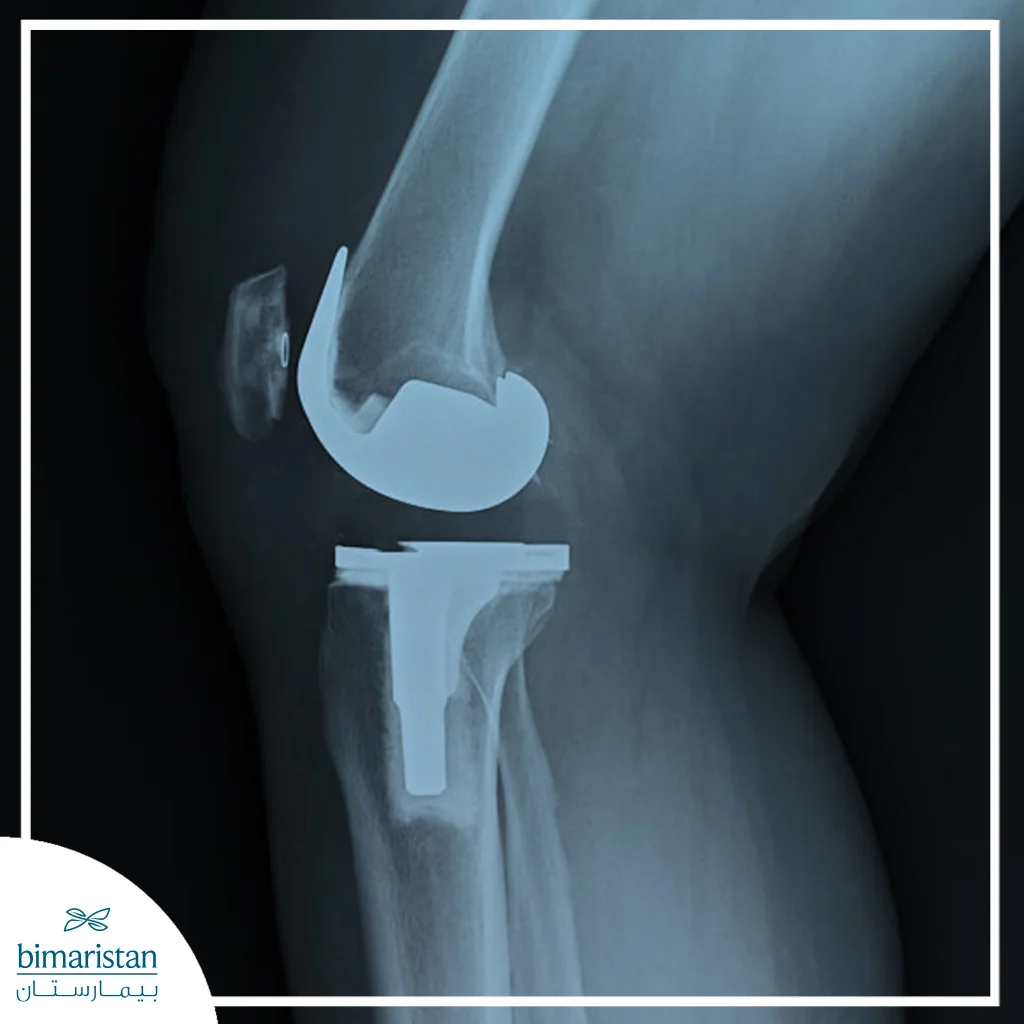
The selection of the appropriate type of artificial knee joint depends on a thorough medical evaluation aimed at achieving the best functional outcome for the patient and minimizing future complications. The choice is based on:
- Patient’s age
- Level of daily physical activity
- Degree of joint damage
- General Health Status
- Radiology Results and Diagnostic Tests
Types of Knee Replacements
There are many types of Knee Replacements, varying in design, range of motion, and materials used in their manufacture. This variety is intended to meet patients’ diverse needs and achieve the best balance among stability, flexibility, and joint lifespan. The doctor selects the most appropriate type based on the condition of the knee, the extent of damage, and the patient’s lifestyle. These include:
In terms of the extent of replacement
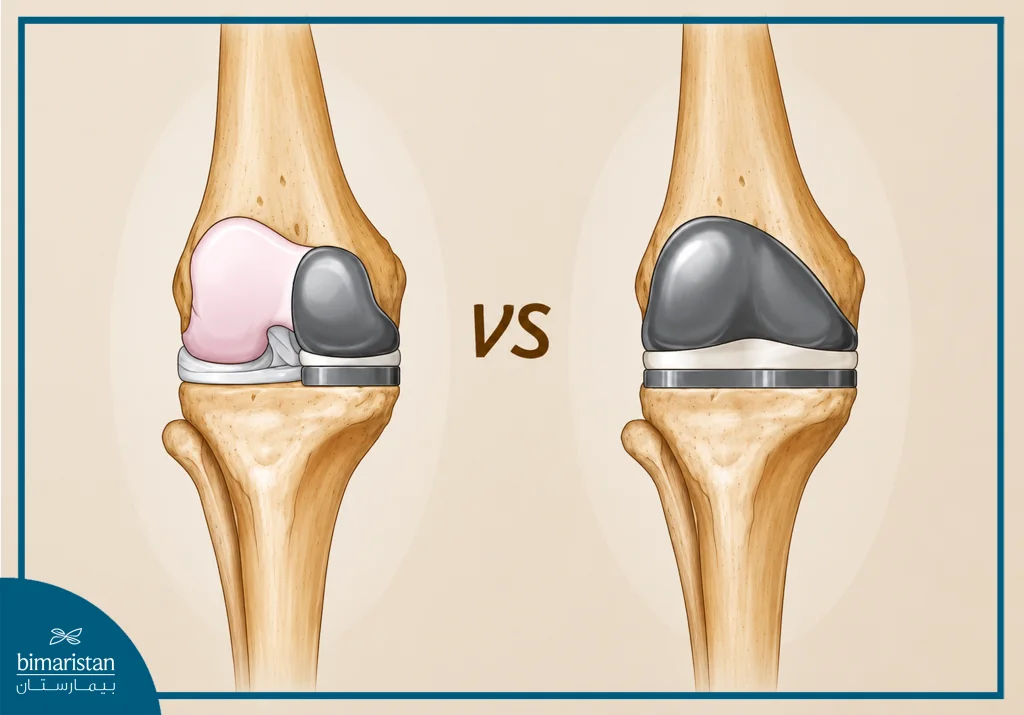
Total knee replacement
In this procedure, all damaged surfaces of the knee joint are replaced with artificial components specifically designed to fully replace the natural joint. This type of surgery is used for severe damage or advanced osteoarthritis affecting most parts of the joint and is considered the most common solution at advanced stages of the disease, as it helps significantly reduce pain and improve mobility.
Partial knee replacement
Only a specific part of the knee joint, such as the inner or outer side, is replaced, while the healthy parts of the joint are preserved. This type of surgery is used in cases where damage is limited to a specific area; it involves less invasive surgery and helps reduce recovery time compared to total knee replacement.
In terms of design and movement
Fixed joint
It is characterized by a plastic surface that remains fixed during joint movement, providing high stability, and is commonly used in standard cases. This type is suitable for patients who do not engage in high levels of physical activity, as it strikes a good balance between stability and function.
Hinge
In this type, the plastic surface is movable, allowing greater flexibility during movement and reducing stress on the joint components. It is often used for more active patients and may help reduce long-term wear and tear.
In terms of the materials used
Metal hinge with medical-grade plastic
It is one of the most commonly used types, consisting of metal components coated with a layer of medical-grade polyethylene. It is characterized by good stability, reasonable cost, and reliable long-term results.
Ceramic joint
It features an extremely smooth surface that reduces friction, improving mobility and minimizing wear. It is used in certain specific cases, particularly for patients who require a longer joint lifespan.
Mixed-media joint
It combines multiple materials, such as metal, ceramics, and medical-grade plastic, to achieve a balance between strength and durability while minimizing friction. It is used in applications that require superior performance and longer-lasting durability.
Risks and Complications of Knee Replacement Surgery
Knee replacement surgery is considered a relatively safe procedure, but like any surgery, it may be associated with risks and complications that vary from patient to patient, depending on their overall health and adherence to post-operative medical instructions. The most significant of these risks include:
- Infection at the surgical site or around the artificial joint
- Blood clots in the leg
- Joint stiffness or limited range of motion
- Wear and tear of joint components over time
- Temporary pain or swelling after surgery
- A slight difference in leg length in some cases
How long does an artificial knee joint last?
The lifespan of an artificial knee joint varies from patient to patient, but most modern joints last an average of 15 to 20 years; in some cases, this lifespan may be even longer thanks to significant advances in manufacturing materials and surgical techniques. The joint’s lifespan depends primarily on the quality of the implant used and the precision of the surgical procedure.
Several factors also play an important role in determining how long the joint will last, such as the patient’s weight, level of physical activity, and adherence to the doctor’s post-surgery instructions. The less stress placed on the joint, the greater the chances that it will last longer without the need for replacement or additional surgery.
Cost of Knee Replacement Surgery in Turkey in 2026
The cost of a knee replacement in Turkey typically ranges from $5,000 to $12,000 and may vary depending on several factors, such as the type of joint used, the surgeon’s experience, the hospital’s standards, as well as pre- and post-operative medical examinations and rehabilitation. Turkey is considered one of the countries that offers competitive pricing compared to many European countries while maintaining high medical standards in joint replacement surgeries.
Advantages of Knee Replacement Surgery in Turkey
Turkey is considered a leading medical destination for knee replacement surgery, combining medical expertise, modern technology, and affordable costs, making it a popular choice for patients from various countries. Among its key advantages are:
- Offers modern and advanced surgical techniques
- Highly experienced orthopedic surgeons
- Lower costs compared to European countries
- Comprehensive medical care before and after surgery
- High success rates in joint replacement surgeries
- Advanced Rehabilitation and Physical Therapy Programs
Knee replacement surgery is an advanced medical procedure that has revolutionized the treatment of severe joint damage and advanced osteoarthritis, helping many patients eliminate chronic pain and regain better mobility. With continuous advancements in surgical techniques and joint implant materials, outcomes have become more precise and stable, leading to a clear improvement in quality of life and a reduction in potential post-operative complications.
Choosing the right type of artificial joint remains a key factor in the success of the procedure, as it depends on a comprehensive assessment that considers the joint condition, the patient’s age, lifestyle, and level of daily activity. Therefore, consulting a specialist and gaining a thorough understanding of the types of artificial knee joints before surgery is an essential step to ensure the best possible outcome and achieve long-term joint stability.
Sources: