
Mesothelioma is a medical condition that warrants special attention due to its nature and impact on patients’ quality of life, as its onset is linked to several health and environmental factors and may go unnoticed for years before symptoms appear. As medical awareness of this disease has increased, early diagnosis and an understanding of available treatment options have become essential for improving outcomes and reducing complications, making learning about mesothelioma an important first step for anyone seeking a clearer understanding of the disease.
What is mesothelioma?
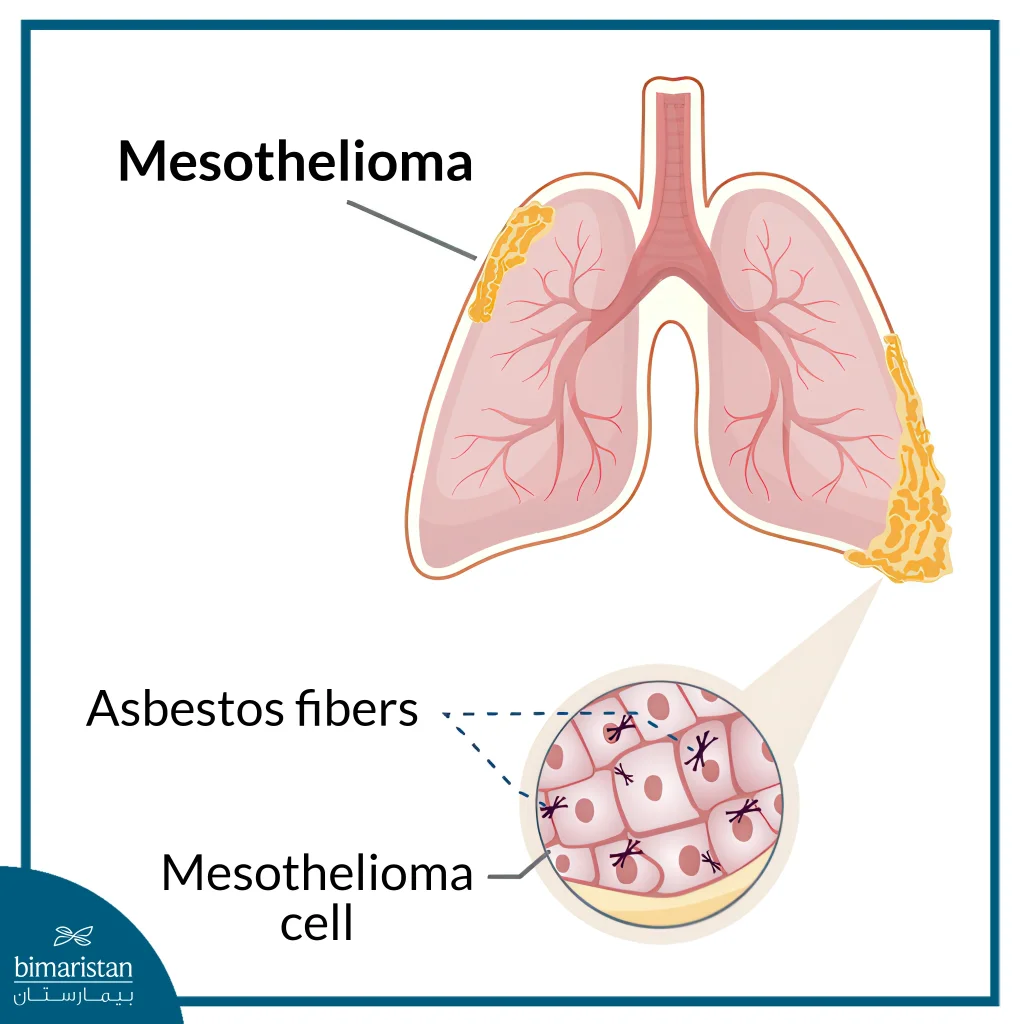
Mesothelioma is a rare type of cancer that begins in the thin tissue surrounding many of the body’s organs, known as the mesothelium. This tissue acts as a membrane that envelops and protects organs such as the lungs, abdomen, heart, and other parts of the body, which explains why this tumor can develop in multiple locations within the body.
The most common form of mesothelioma affects the membrane surrounding the lungs, known as pleural mesothelioma. It can also occur in the membrane lining the abdomen or in the membranes surrounding the heart or testicles, although this is less common. As the disease progresses, it can lead to thickening of this membrane and affect the function of the organs it surrounds.
A mesothelial tumor usually begins as an abnormal growth in the cells that make up this membrane; it may develop into multiple tumors that can sometimes merge to cover the surface of the affected organ, making treatment more difficult and affecting the course of the disease.
Types of Mesothelioma
Mesoepithelial tumors can be classified into several main types based on their location in the body; each type differs in lesion site and clinical characteristics. The following are the most common types:
- Pleural mesothelioma: This is the most common type and affects the membrane that surrounds the lungs and chest wall.
- Peritoneal mesothelioma affects the membrane lining the abdomen and internal organs and is the second most common type.
- Pericardial mesothelial tumor: This tumor arises from the membrane surrounding the heart and is extremely rare.
- Mesothelial tumor of the tunica vaginalis: This tumor affects the membrane surrounding the testicles and is one of the rarest types.
In addition to this location-based classification, mesothelioma can also be described by the appearance of the cancer cells; it is classified as epithelioid, sarcomatoid, or mixed. This classification may influence treatment choices and the prognosis.
Causes and Risk Factors for Mesothelioma
Exposure to asbestos is the most common cause of mesothelioma. Asbestos is a naturally occurring mineral that was widely used in many industries, such as construction, shipbuilding, and automotive maintenance. When microscopic asbestos fibers are inhaled or ingested, they can become embedded in the tissues and, over time, cause cell damage. However, the disease does not develop immediately; it may take anywhere from 15 to 60 years after exposure.
Although asbestos is the main risk factor, not everyone who has been exposed to it develops mesothelioma, and some cases may occur without a clear history of exposure, suggesting that other factors may contribute to the disease.
Risk factors associated with mesothelioma include the following:
- Indirect exposure to asbestos through family members who carry fibers on their clothing or skin
- Exposure to radiation therapy, especially in the chest area
- Exposure to asbestos-like minerals such as erionite
- The presence of genetic factors, such as mutations in certain genes
- Higher incidence rate among men compared to women
It is also believed that changes in the DNA of mesothelial cells contribute to the development of this cancer, as these changes lead to abnormal cell growth and prevent cells from dying at the normal time, resulting in the formation and spread of tumors throughout the body.

Symptoms of Mesothelioma
The symptoms of mesoepithelial tumors vary by location; they may develop gradually and become more pronounced as the disease progresses. The following are the most common symptoms associated with each type:
- Chest pain
- Shortness of breath
- A persistent or painful cough
- Difficulty swallowing or hoarseness
- Lumps under the skin in the chest area
- General fatigue and exhaustion
- Weight loss for no apparent reason
- Night sweats or fever in some cases
As for peritoneal mesothelial tumors, they affect the abdomen and may cause:
- Abdominal pain
- Abdominal bloating or swelling
- Nausea or Vomiting
- Loss of appetite
- Digestive problems such as diarrhea or constipation
- Unexplained Weight Loss
In rare types of mesoepithelial tumors, less common symptoms may appear, such as:
- Chest pain or difficulty breathing when the membrane surrounding the heart is affected
- Swelling or a lump in the testicle when the tunica albuginea surrounding it is injured
In general, symptoms may also include general signs such as severe fatigue, fever, and night sweats—symptoms that may overlap with those of other diseases, which can delay diagnosis in some cases.
How is mesothelioma diagnosed?
The diagnosis of mesothelioma relies on a series of tests that begin with an evaluation of symptoms and medical history—particularly a history of asbestos exposure—followed by advanced tests to confirm or rule out the condition. Diagnosis is often difficult in the early stages because the symptoms are similar to those of other diseases.
The steps and tests used in diagnosis include the following:
- Clinical Examination and Medical History: The doctor assesses symptoms and looks for signs such as fluid buildup in the chest or abdomen, and asks about previous exposure to asbestos.
- Imaging tests, such as X-rays, computed tomography (CT), magnetic resonance imaging (MRI), and positron emission tomography (PET), help detect tumors and determine their location and extent of spread.
- Blood tests: These may detect biomarkers associated with the disease, but they are not sufficient to definitively confirm the diagnosis.
- Fluid drainage: A sample of fluid that has accumulated in the chest or abdomen is withdrawn and examined to detect cancer cells.
- Biopsy: This is the only definitive method for diagnosing a mesodermal tumor, in which a tissue sample is taken and examined in a laboratory to determine whether cancer cells are present.
After the diagnosis is confirmed, additional tests may be performed to determine the extent to which the disease has spread to the lymph nodes or other organs, which helps stage the disease and select the appropriate treatment plan.
Stages of Mesothelioma
The stages of mesothelioma describe the extent to which the cancer has spread in the body and are an important factor in determining appropriate treatment options. The staging system varies by tumor type; a clear classification is primarily used for pleural mesothelioma. This type is classified into four main stages:
- Stages I and II: These are early stages in which the cancer is confined to the area surrounding the lungs, and more treatment options are available.
- Stages III and IV: These are advanced stages, in which the tumor has spread to the lymph nodes or to other parts of the body, limiting treatment options.
In other types of mesodermal tumors, there isn’t always a clearly defined staging system, and the condition is often assessed by the extent of tumor spread and whether it can be surgically removed—for example, whether it is localized and resectable or widespread and inoperable.
In general, knowing the stage of the disease helps in determining the appropriate treatment plan, as treatment options are more extensive in the early stages than in the advanced stages.
Treatment Options for Mesoepithelial Tumors
Treatment for Mesoepithelial tumors depends on several factors, such as the type of tumor, its location, the extent of its spread, and the patient’s overall health. In most cases, treatment does not rely on a single option; rather, a combination of therapies is used to control the disease, alleviate symptoms, and improve quality of life.
1. Surgery
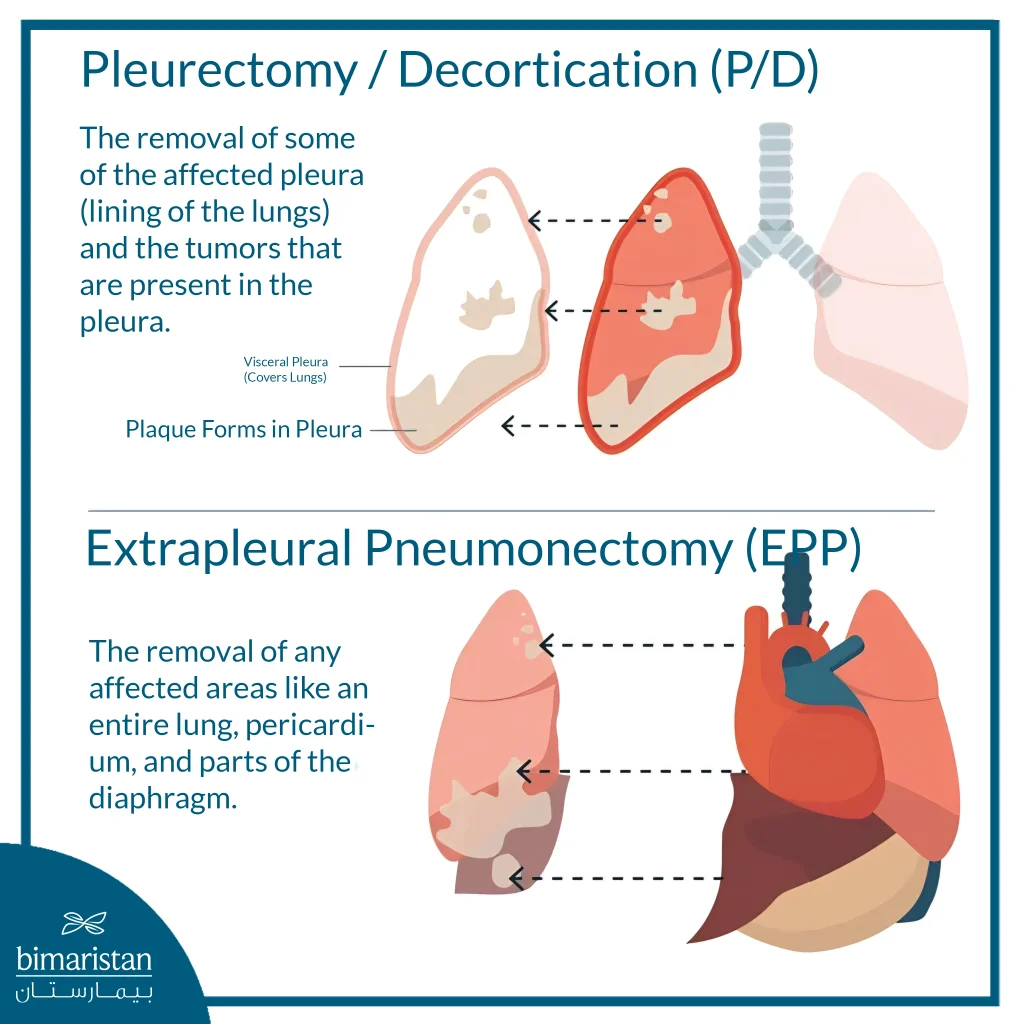
Surgery is primarily used in the early stages of the disease, when doctors attempt to remove as much of the tumor as possible; this may involve removing the membrane surrounding the lung or, in some cases, even removing the affected lung. Surgery may also be performed to alleviate symptoms, such as draining fluid that has accumulated around the lungs or in the abdomen. However, it is often difficult to completely remove the cancer because it has spread.
2. Chemotherapy
Chemotherapy involves the use of powerful drugs to kill cancer cells or slow their growth. It can be used as the primary treatment before surgery to shrink the tumor, or after surgery to enhance treatment effectiveness. In some cases, chemotherapy is administered directly into the affected area, such as the abdomen, to increase its localized effect.
3. Radiation Therapy
Radiation therapy uses high-energy rays to destroy cancer cells. It may be used after surgery to help reduce the likelihood of the disease returning, or before surgery to shrink the tumor. It can also be used to relieve symptoms when surgery is not possible.
4. Immunotherapy
Immunotherapy aims to boost the immune system’s ability to recognize and attack cancer cells, and it is a common treatment option, especially when surgery is not possible or as part of a comprehensive treatment plan that includes other therapies.
5. Targeted Therapy
Targeted therapy works by targeting specific changes within cancer cells, which helps stop their growth or destroy them. This type of treatment is used in certain cases, particularly when the tumor has specific genetic characteristics that can be targeted.
6. Palliative Care
Palliative care focuses on improving a patient’s quality of life by alleviating symptoms caused by the disease or treatment. It includes pain management, treatment for shortness of breath, and procedures such as draining fluid that has accumulated around organs, as well as ongoing medical support.
The appropriate treatment plan for each patient is determined in collaboration with the medical team, based on the stage and characteristics of the disease and the desired treatment goals.
Prognosis for Patients with Mesoepithelial Tumors
The prognosis for patients with mesothelioma depends on several factors, such as the type of tumor, its stage at diagnosis, and the patient’s overall health. In general, this cancer is considered aggressive and is often detected at advanced stages, which affects treatment outcomes.
The five-year survival rate for pleural mesothelioma ranges from 7% to 24%, whereas it is higher for peritoneal mesothelioma. The median survival after diagnosis for many patients is approximately 12 to 18 months, with significant variation among cases.
In general, treatment outcomes are better in the early stages, and various treatments may help control the disease and improve quality of life for periods ranging from months to years.
Prevention of Mesoepithelial Tumors
Mesothelioma cannot be completely prevented, but the risk of developing it can be reduced by avoiding exposure to asbestos, which is the main factor associated with the onset of this disease. Therefore, avoiding sources of asbestos or handling it with extreme caution is one of the most important preventive measures.
If your work involves handling materials containing asbestos, you must follow safety procedures and use appropriate protective equipment to minimize the risk of inhaling fibers. People who may be exposed to asbestos are also advised to follow occupational guidelines for the safe handling and disposal of these materials.
In residential settings, if asbestos is found inside a home, it is important not to handle it carelessly, especially if it is undamaged, because the fibers are released only when the material is damaged. If removal or renovation work is necessary, it is best to hire certified professionals to avoid any potential exposure.
For people who have been exposed to asbestos in the past, it is recommended that they consult a doctor to determine whether periodic checkups or health monitoring are needed for the early detection of any potential problems.
In conclusion, mesothelioma is a disease that requires health awareness and a thorough understanding of its nature, especially given its association with factors whose effects may extend for many years before symptoms appear. Despite the challenges of diagnosis and treatment, ongoing medical advances have improved approaches to managing the disease and provided multiple treatment options that help control it and improve quality of life. Early diagnosis and regular medical follow-up remain among the most important factors that can make a difference in the course and outcome of the disease.
Sources: