.floating_btn { display: none !important; } .println-contact-form-button-element { display: none !important; }
Tooth decay is one of the most common oral and dental diseases among children and adults. It is a progressive disease that begins with minor damage to the outer enamel layer and gradually affects the deeper tissues of the tooth; in advanced cases, it can lead to tooth loss or serious complications if not treated early. Tooth decay can affect all age groups, from children to the elderly, and the rate of progression and severity vary with dietary habits, oral health, genetic factors, and accompanying medical conditions.
What is tooth decay?
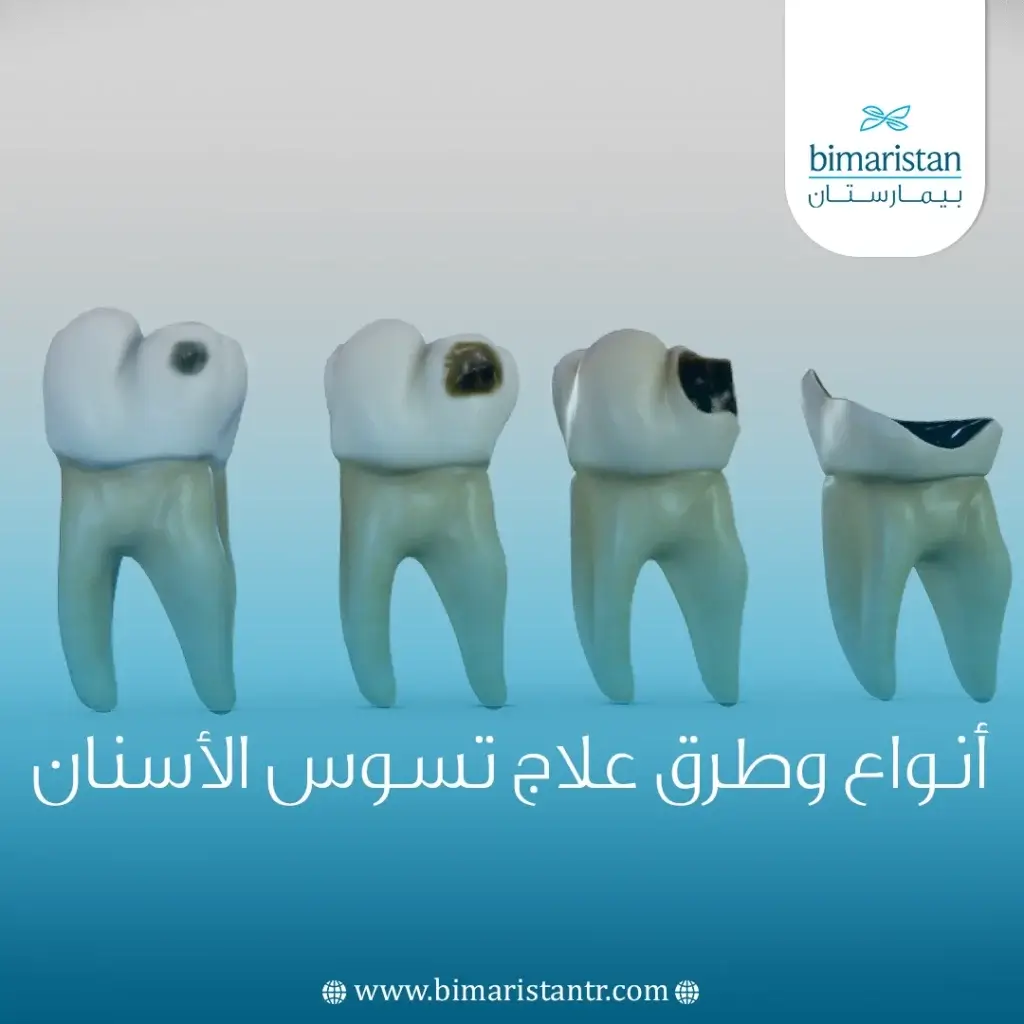
Tooth decay is a gradual process that damages the tooth’s structure due to bacterial activity in the mouth. This process begins when food debris—especially sugars and carbohydrates—accumulates on the surface of the teeth; the bacteria then break it down, producing acids that erode the enamel. As the effects of these acids continue, cavities begin to form inside the teeth, and the decay may later spread to the dentin and then to the pulp and nerve.
How Does Tooth Decay Occur?
Tooth decay progresses through the following stages:
- The buildup of food particles and bacteria on the teeth
- The formation of plaque (bacterial plaque)
- Production of acids as a result of the fermentation of sugars
- Loss of minerals from the enamel layer
- Tooth Decay and Cavities
Causes of Tooth Decay
There are several factors and habits that increase the risk of tooth decay, the most important of which are:
- Smoking
- Dry mouth
- Fluoride Deficiency
- Poor Oral Hygiene
- Excessive consumption of sugars and sweets
- Frequent snacking between main meals
- Failure to brush and floss regularly
- Consumption of carbonated and acidic beverages
- Eating disorders such as bulimia and anorexia
- Certain digestive disorders, such as gastroesophageal reflux disease
Risk Factors for Tooth Decay
People who suffer from the following are more likely to develop tooth decay:
- Malnutrition
- Chronic dry mouth
- Gum Recession and Exposed Tooth Roots
- Use of certain medications that reduce saliva production
- Weakening of the enamel due to genetics or disease
Symptoms of Tooth Decay
Symptoms may vary depending on the stage of tooth decay and include:
- Bad breath
- Pain while chewing
- Development of a Dental Abscess
- Sudden Toothache
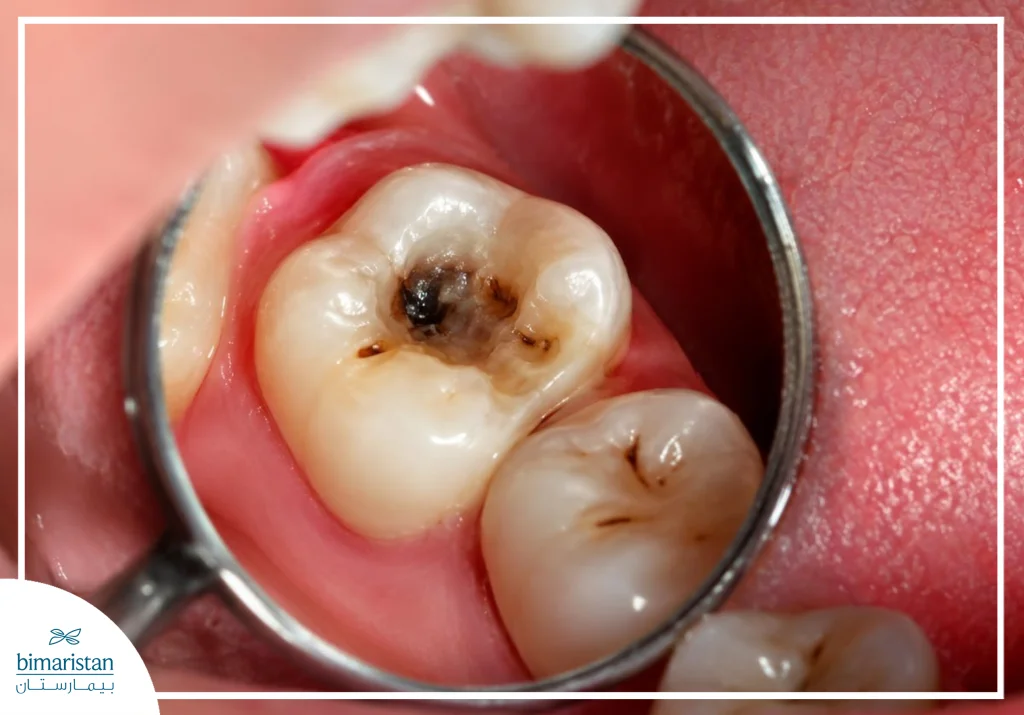
- Forms holes or cavities
- Food getting stuck between the teeth
- Swelling of the gums or face in advanced cases
- The appearance of white, brown, or black spots on the teeth
- Sensitivity to cold, hot, or sweet foods
Diagnosis of Tooth Decay
Early diagnosis helps treat cavities before they reach advanced stages. The dentist diagnoses cavities by:
- Clinical Dental Examination
- Use of X-rays
- Assessment of the Smoothness or Roughness of the Tooth Surface
- Early Detection of Cavities Between Teeth or Under Fillings
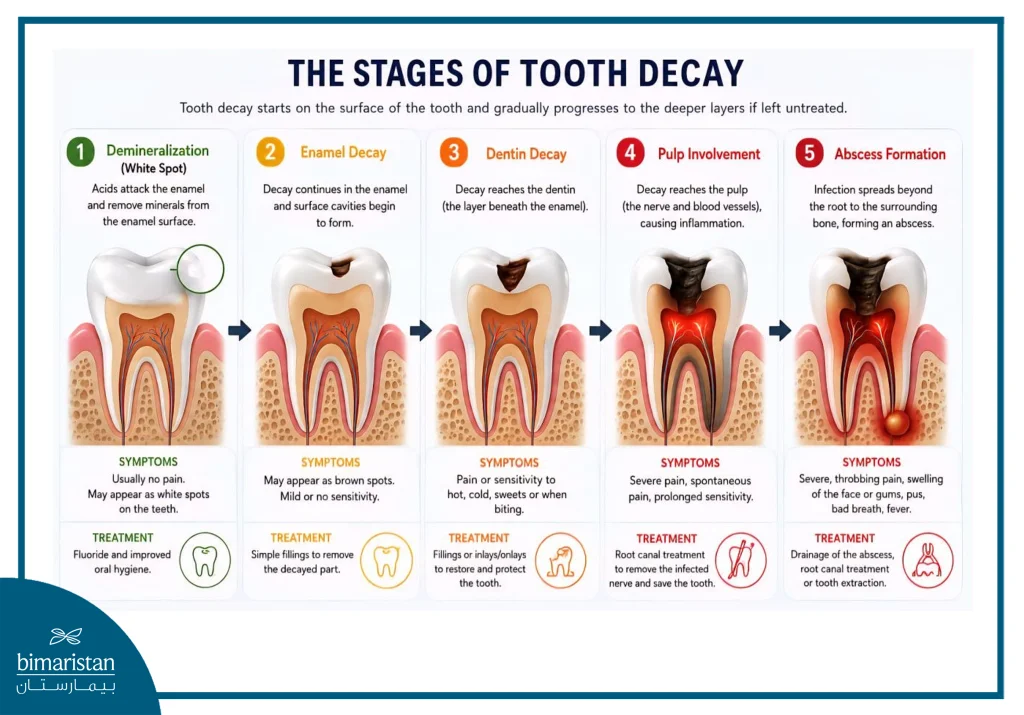
Stages of Tooth Decay
Tooth decay progresses through several stages, and treatment varies with each stage.
1. Demineralization of the enamel
This is considered the first stage of tooth decay, during which acids produced by plaque begin to dissolve minerals in the enamel.
Symptoms:
- The appearance of chalky white spots on the teeth
- The absence of pain is common
Treatment:
- Fluoride Application
- Reducing Sugar Intake
- Improving Oral Care
2. Enamel Decay
As mineral loss continues, the tooth enamel begins to deteriorate, and surface cavities form
Symptoms:
- The white spots turn brown
- The Onset of Cavity Formation
Treatment:
- Simple Dental Fillings
- Fluoride Treatments in the Early Stages
3. Dentin Decay
Tooth decay spreads to the dentin layer beneath the enamel, which is softer and more susceptible to acids.
Symptoms:
- Severe sensitivity
- Pain while chewing
- Pain when eating or drinking something cold or hot
Treatment:
- Cleaning Cavities
- Cosmetic Fillers
- Crowns in Major Cases
4. Tooth Decay Reaching the Tooth Pulp
At this stage, the decay reaches the dental pulp, which contains nerves and blood vessels.
Symptoms:
- Severe, persistent pain
- Swelling of a Tooth or Gum
- Increased Sensitivity
- Difficulty sleeping due to pain
Treatment:
- Root Canal Treatment (Nerve Treatment)
5. Dental abscess formation
This is considered the most serious stage of tooth decay, as the bacterial infection spreads around the roots of the teeth.
Symptoms:
- Discharge of pus
- Severe throbbing pain
- Bad breath
- Swelling of the face or gums
- Occasional spikes in temperature
Treatment:
- Drainage of an abscess
- Antibiotics
- Root canal treatment or tooth extraction, depending on the case
| Stage | Symptoms | Treatment |
|---|---|---|
| Demineralization | White spots | Fluoride and Oral Care |
| Enamel Erosion | Superficial cavities | Fillings |
| Dental Caries | Sensitivity and Pain | Fillings or Crowns |
| Pulp Injury | Severe pain | Nerve Treatment |
| Abscess | Swelling and pus | Root Canal Treatment or Extraction |
Complications of Tooth Decay
Failure to treat tooth decay may lead to serious complications, including:
- Tooth Loss
- Gum and Bone Infections
- Difficulty Chewing and Speaking
- Dental Abscesses
- Spread of the infection to the surrounding tissues
- Impacts on Public Health and Quality of Life
Methods for Treating Tooth Decay
Treatment depends on the severity and stage of the decay.
Fluoride Treatments
These are used in the early stages to remineralize and strengthen the enamel. They include:
- Fluoride Gel
- Fluoride Varnish
- Mouthwashes containing fluoride
Dental Fillings
They are used after removing the decayed portion of a tooth to restore the lost structure. Types of fillings include:
- Cosmetic Fillers
- Metal Fillings
- Ceramic fillings
Dental Crowns
Dental crowns are used when the damage is extensive and fillings alone are not sufficient; the crown covers and protects the tooth, restoring its shape and function.
Root Canal Treatment (Nerve Treatment)
This procedure is performed when tooth decay reaches the dental pulp. It involves:
- Removal of the affected pulp
- Root Canal Cleaning
- Tooth Sterilization
- Sealing canals with a Special Filler
- Tooth Restoration with a Filling or Crown
Tooth Extraction
Tooth extraction may be necessary when decay is severe and cannot be treated. After extraction, the tooth can be replaced by:
- Dental Implants
- Bridges
- Dentures
When should you see a dentist right away?
Seek urgent medical care if you experience:
- Intense, unrelenting pain
- Rising Temperatures
- Pus coming from the gums
- Severe or persistent bleeding
- Difficulty swallowing or breathing
- Swelling of the face or jaw
Preventing Tooth Decay
The risk of tooth decay can be significantly reduced by:
- Drink water regularly
- Cut back on sugars and sweets
- Professional Teeth Cleaning
- Daily Use of Dental Floss
- Have a checkup every 6 months
- Avoid carbonated, acidic beverages
- Use of Antibacterial Mouthwash
- Cut back on frequent snacking
- Brush your teeth twice a day with fluoride toothpaste
In conclusion, decay is one of the most common oral health problems; however, early detection and treatment go a long way toward preserving teeth and preventing serious complications, including infections, abscesses, and tooth loss. Daily oral care, a healthy diet, and regular visits to the dentist also play a vital role in preventing tooth decay and maintaining long-term oral health.
With the significant advancements in modern dental technology, treatment options for tooth decay have become more effective and comfortable for patients, ranging from fluoride treatments and cosmetic fillings to root canal treatments and dental crowns. Turkey is considered a premier destination for dental treatment thanks to its access to modern technology, medical expertise, and lower costs than many other countries, making it an ideal choice for patients seeking advanced dental care and high-quality treatment.
Sources:
- Medical News Today. (n.d.). Tooth decay: Symptoms, causes, treatment, and prevention. Retrieved May 15, 2026
- MedlinePlus. (n.d.). Tooth decay. U.S. National Library of Medicine. Retrieved May 15, 2026
- Healthline. (May 18, 2023). Tooth Cavities: Symptoms, Causes, and Treatments
- NHS. (n.d.). Tooth decay. National Health Service. Retrieved May 15, 2026