
Dental restorations are no longer just cosmetic procedures; they have become among the most important medical solutions for restoring and protecting tooth function while also significantly improving the appearance of a smile. With the significant advancements in dental technology, there are now numerous options available to suit various cases, ranging from thin cosmetic veneers to full crowns that completely rebuild the tooth.
Types of Dental Veneers and Crowns
The type of dental restoration is selected based on the condition of the tooth, the treatment goal, and the dentist’s clinical evaluation. The following are the main types of dental restorations:
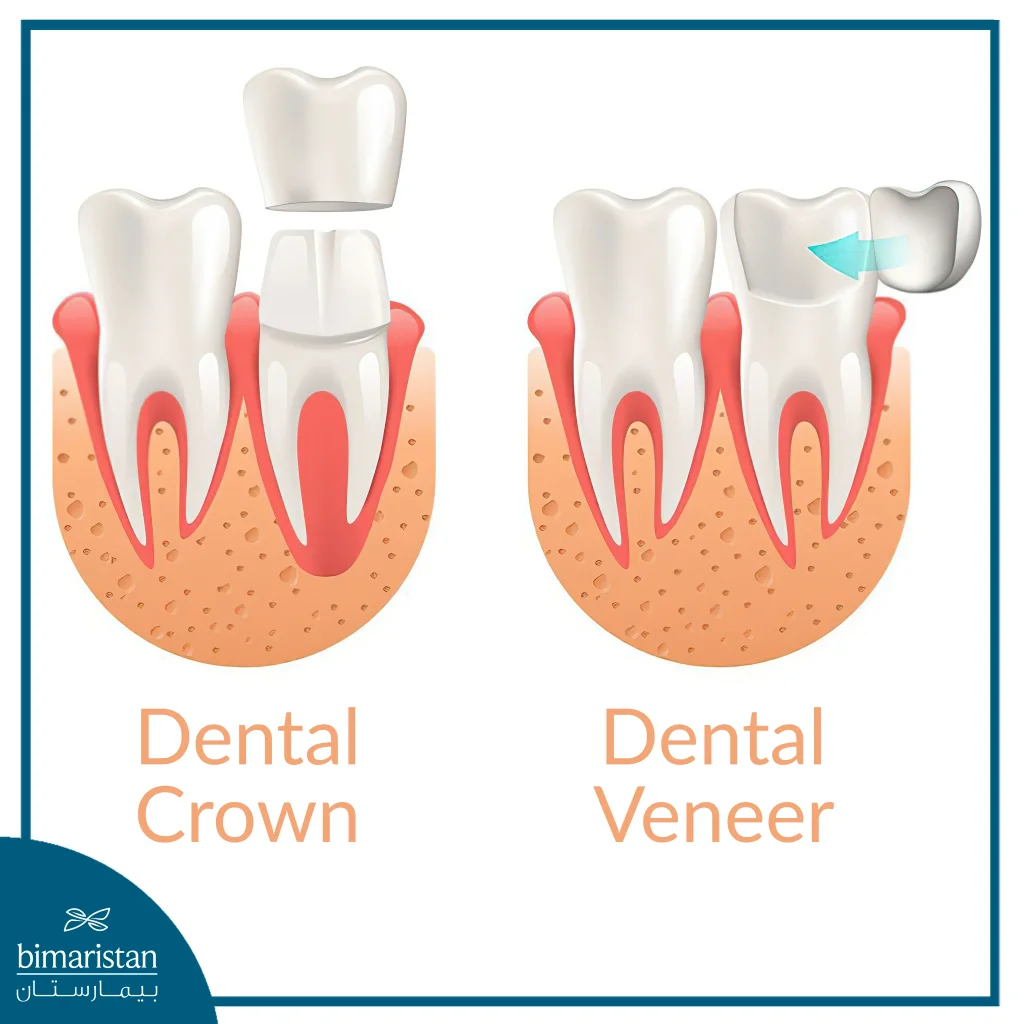
- Dental veneers: These include porcelain, E-max, Lumineers, and composite veneers and are often used for cosmetic purposes to improve the shape and color of the front teeth while preserving most of the tooth’s structure.
- Dental crowns: These cover the entire tooth and are used for therapeutic purposes or when the tooth structure is weak. They include:
- Zirconia crowns: These are among the strongest and most advanced materials available, combining durability with aesthetic appeal, and are suitable for both front and back teeth.
- Porcelain and ceramic veneers: They provide a natural appearance that closely resembles real teeth and are commonly used for cosmetic purposes.
- Metal crowns: Very strong and long-lasting, but they are less commonly used at present because of their unattractive appearance.
The Difference Between Veneers and Crowns in Dental Restorations
Veneers are the ideal choice for simple cosmetic procedures, while crowns are the best solution for damaged or weak teeth that require full protection and functional restoration. The following table compares veneers and crowns, highlighting the key differences:
| Element | Veneer | The Crown |
|---|---|---|
| Coverage Area | Covers only the front surface of the tooth | It completely covers the tooth from all sides |
| Primary Purpose | Cosmetic (improving color and shape) | Restorative + Cosmetic (Tooth Protection and Reconstruction) |
| Amount of Ice (Preparation) | Simple (0.3–0.7 mm) | Larger (up to 1.5–2 mm) |
| Appropriate Situations | Stains, minor voids, slight distortions | Extensive decay, fracture, following root canal treatment |
| Durability and Strength | Below the Crown | Taller and more pressure-resistant |
| Service Life | 10–15 years | 10–20 years |
| Effects on Tooth Structure | Preserves most of the tooth | It requires removing a larger portion of the tooth |
| Aesthetic Aspects | Excellent, especially for front teeth | Very good, depending on the type of material |
Steps for Installing Veneer
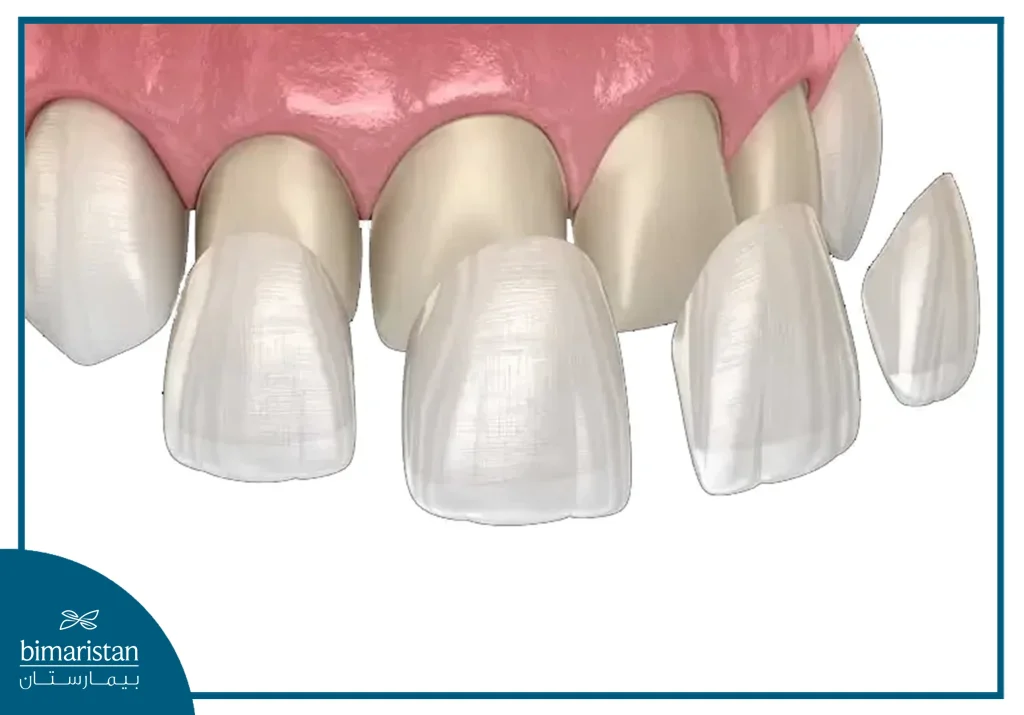
The veneer placement process involves several precise, systematic steps designed to achieve optimal aesthetic results while preserving the health and function of the teeth. It includes the following stages:
- Initial Examination and Evaluation: The dentist evaluates the condition of the teeth and gums and determines whether veneers are appropriate for the patient.
- Planning and Selecting Shape and Color: The shape of the smile and the appropriate color are determined based on the patient’s facial features and teeth.
- Tooth Preparation (Simple Enamel Reduction): A very thin layer of tooth enamel (approximately 0.3–0.7 mm) is removed to prepare the surface.
- Taking impressions or digital scans: A precise impression of the teeth is taken, or 3D scanning technology is used to send the data to the lab.
- Placement of a Temporary Veneer (if necessary): A temporary veneer is placed to protect the teeth until the permanent veneers are ready.
- Laboratory-fabricated veneers: These veneers are fabricated from materials such as porcelain or E-max to ensure precise shape and color.
- Fitting and Adjustment: The dentist tries the veneer on the teeth to ensure a proper fit and check the final shape.
- Final Installation: The veneer is installed with a special adhesive and light-curing to ensure a strong, durable bond.
- Polishing and Follow-up: The veneers are polished, and their proper fit is verified, and instructions for care and periodic follow-up are provided.
Steps for Installing the Crown
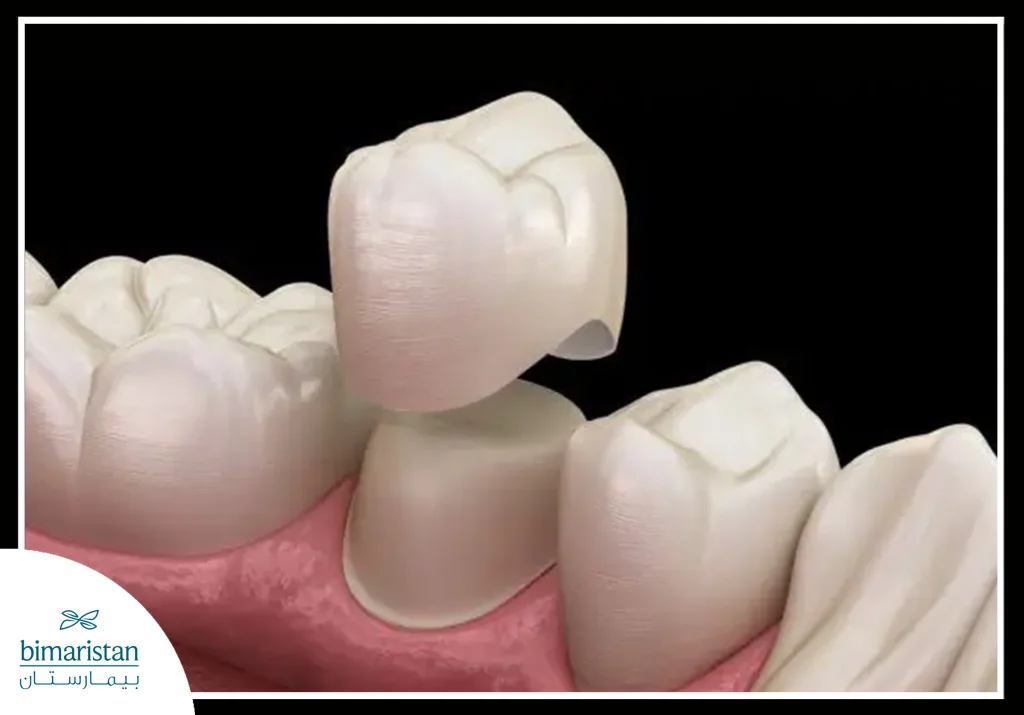
The crown placement process involves several precise steps to restore the tooth’s function and aesthetics while ensuring stability and long-term durability. These steps include the following:
- Examination and Diagnosis: The dentist evaluates the tooth’s condition and determines whether a crown is necessary.
- Tooth Preparation (Tooth Shaping): A portion of the tooth’s outer layer is removed to prepare it for the crown.
- Additional treatment as needed: If there is deep decay or a nerve problem, it is treated first before the crown is placed.
- Taking impressions or digital scans: The shape of the teeth is accurately recorded using traditional impressions or digital techniques.
- Placement of a temporary crown: A temporary crown is placed to protect the tooth and preserve its shape and function while the permanent crown is fabricated.
- Laboratory Crown Fabrication: The crown is designed using materials such as zirconia, porcelain, or E-max, depending on the case.
- Final Crown Fitting: The crown is checked for proper fit in terms of shape, color, and occlusion before being cemented in place.
- Final Installation: The crown is secured using special adhesives to ensure a strong hold.
- Follow-up and Adjustments: Minor adjustments are made as needed, along with care instructions.
Advantages of Veneers and Crowns
Advantages of Dental Veneers:
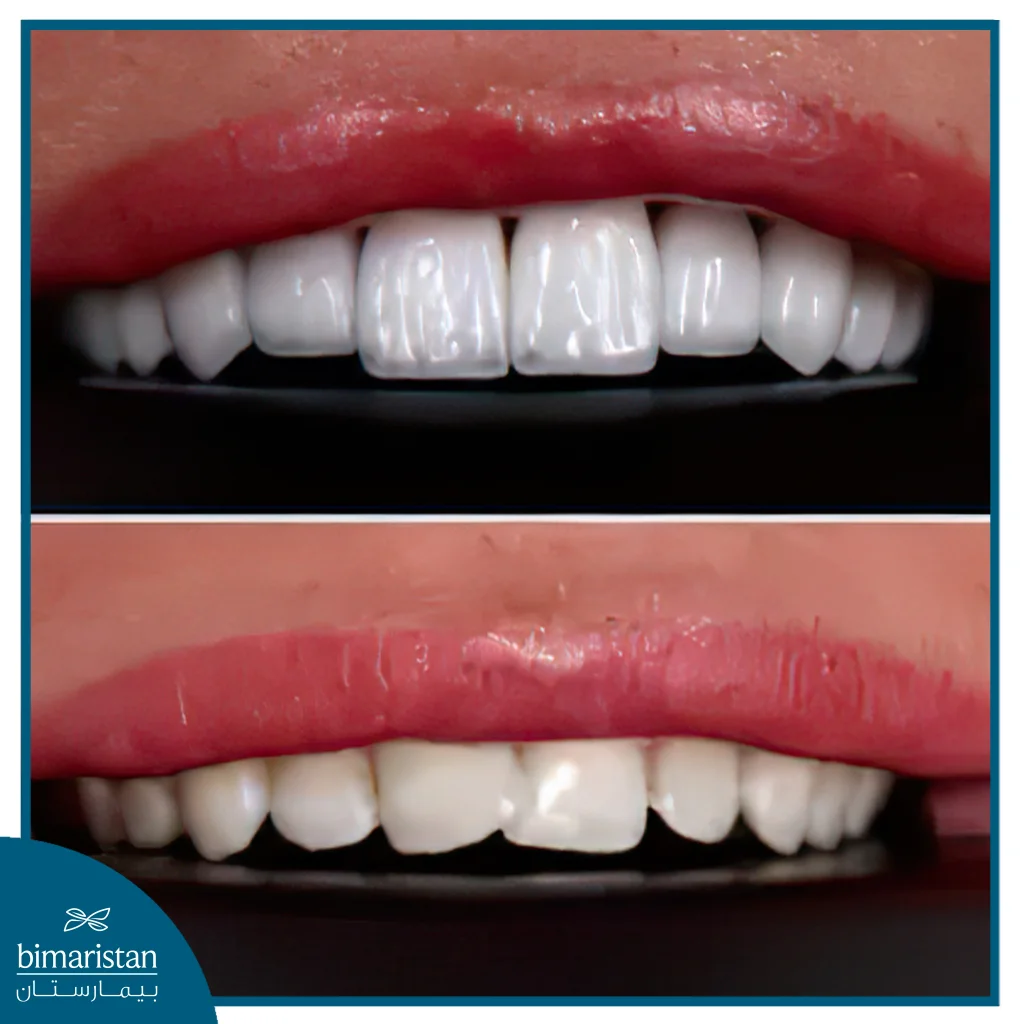
- Provides a beautiful appearance and a natural smile
- It requires only a simple dental filling, which preserves most of the tooth’s structure
- Resistant to staining, especially in porcelain varieties
- Suitable for correcting cosmetic imperfections such as discoloration, gaps, and irregularities in shape
- Fast and Effective Results in Smile Enhancement
Features of Dental Crowns:
- It completely covers the tooth, providing strong protection for weak or damaged teeth
- Restores the tooth’s natural function in chewing and speaking
- It is characterized by high strength and durability, especially in the back teeth
- Suitable for dental procedures such as deep cavities or after root canal treatment
- It lasts a long time with proper care
Disadvantages of Veneers and Crowns
Disadvantages of Dental Veneers:
- A procedure that is irreversible in most cases due to the exposure of part of the tooth enamel.
- Less durable than crowns, and may break or crack under extreme pressure.
- Not suitable for cases involving significant weakening of the tooth structure.
- It may need to be replaced after several years, depending on the type of material and how well it is cared for.
- Not suitable for patients with severe teeth grinding who do not use a night guard.
Disadvantages of dental crowns:
- It requires removing more of the tooth structure than veneers do.
- A temporary sensitivity to heat or cold may occur after installation.
- In some types (such as PFM), a dark line may appear along the gum line over time.
- Thorough oral hygiene is needed to prevent plaque buildup and bad breath.
- If the dentures are not manufactured or fitted accurately, they may not fit properly and cause discomfort.
How to Choose Between Dental Veneers and Crowns
The choice of the appropriate type of dental restoration depends on the clinical condition of the tooth and the goal of treatment, whether cosmetic or therapeutic. This can be explained as follows:
- Veneers are preferred in the following cases:
- Relatively healthy teeth with only cosmetic issues (stains, irregular shape, minor gaps).
- The desire to improve one’s smile while preserving as much of the tooth’s structure as possible.
- Cases that require particularly high aesthetic results, especially for the front teeth.
- A crown is preferred in the following cases:
- The presence of extensive decay or severe erosion of the tooth structure.
- Teeth that have undergone root canal treatment need to be strengthened and protected.
- The presence of large fractures or cracks in the tooth.
- The need to fully restore both the tooth’s function and appearance.
Cost of Dental Veneers and Crowns Placement
The cost of dental veneers and crowns in Turkey varies significantly depending on the type of material used, the dentist’s experience, and the techniques employed. The following is a rough comparison of the main options available:
| Type of Lining | Article | Cost per tooth (approximate) | Notes |
|---|---|---|---|
| Composite Veneer | Cosmetic Resin | $100–$180 | Cheaper, but less durable and less attractive |
| Porcelain Veneers | Ceramics | $180–$300 | Natural-looking and stain-resistant |
| E-max Veneers | Lithium disilicate | $200–$350 | Best in terms of aesthetics and high transparency |
| Zircon Veneers | Zirconia | $250–$400 | Stronger than porcelain and less transparent |
| Zircon Crowns | Zirconia | $120–$250 | An excellent balance between strength and beauty |
| Porcelain Crowns | Ceramics | $150–$300 | Good aesthetics for the front teeth |
| E-max Crowns | Advanced Ceramics | $200–$400 | High aesthetic appeal, but less durable than zircon |
| Metal Crowns | Metal + Porcelain | $100–$200 | Strong but less aesthetically pleasing (a dark line may appear) |
Tips After Getting Dental Veneers
After having dental veneers installed, it is essential to follow guidelines to maintain the results and ensure the veneers last as long as possible. The most important tips include the following:
- Maintaining oral hygiene: Brush your teeth twice a day using a soft-bristled toothbrush and appropriate toothpaste, and floss regularly.
- Avoid harmful habits, such as biting your nails, opening things with your teeth, or chewing on hard objects.
- Avoid very hard foods, especially in the first few days after placement, to prevent excessive pressure on the crown.
- Limit colored beverages—such as coffee and tea—to preserve the color of your dental restorations, especially veneers.
- Use a night guard as needed: if you grind your teeth, to protect your dental restorations from breaking or wearing down.
- Regular follow-up visits with your dentist: to undergo checkups and ensure that your fillings and gums are healthy.
- Be on the lookout for any unusual symptoms—such as persistent pain or discomfort—and see a doctor immediately if they occur.
Ultimately, dental restorations are effective solutions that combine aesthetic improvement with functional restoration, whether through veneers for cosmetic cases or crowns for more complex therapeutic cases. The right choice depends primarily on an accurate diagnosis of the tooth’s condition and the patient’s needs.
With significant advancements in dental technology, Turkey has become one of the world’s leading destinations in this field, offering high-quality medical care, advanced expertise, and affordable costs compared to many other countries. Therefore, deciding to have dental veneers done in Turkey can be a wise choice for those seeking professional results at a reasonable cost.
Sources: