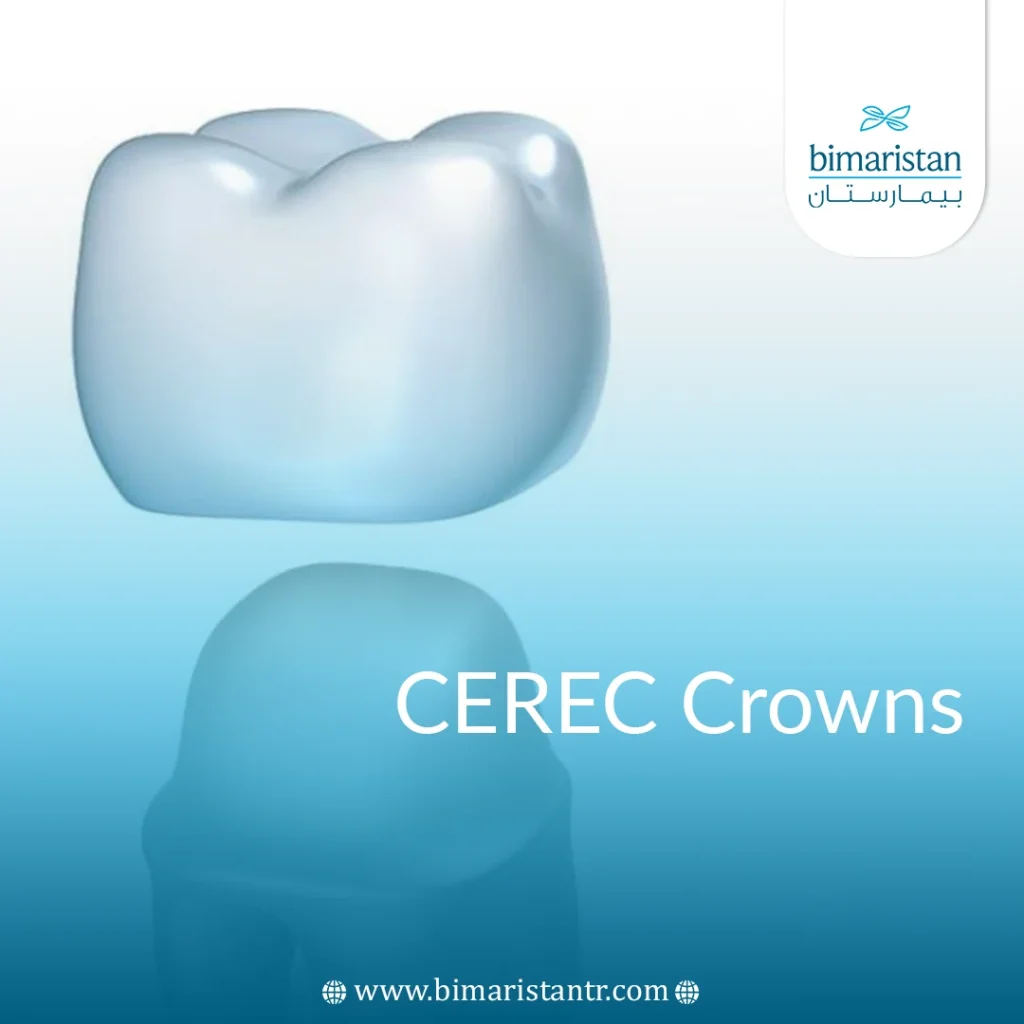
In recent years, dentistry has seen significant advancements thanks to modern digital technologies, and CEREC dental crowns are among the most notable of these developments. This technology relies on computer-aided design and manufacturing (CAD/CAM) systems to produce dental crowns with high precision in a short amount of time—in some cases, in just a single treatment session. This technology helps improve the precision of dental crowns, reduce the number of clinic visits, and deliver aesthetic results that closely resemble natural teeth.
What are CEREC dental crowns?
A dental crown is an artificial cap used to cover a damaged or weak tooth for the purpose of:
- Tooth Protection
- Fixing Dental Bridges
- Improving Aesthetics
- Restoring Form and Function
- Supporting Teeth After Root Canal Treatment
CEREC dental crowns, on the other hand, use digital technology to design and manufacture crowns on a computer, without relying entirely on traditional impressions and manual laboratory work. This system is known as CEREC, which stands for “Chairside Economical Restoration of Esthetic Ceramics,” meaning cosmetic ceramic restorations fabricated directly in the dental office using digital technology.
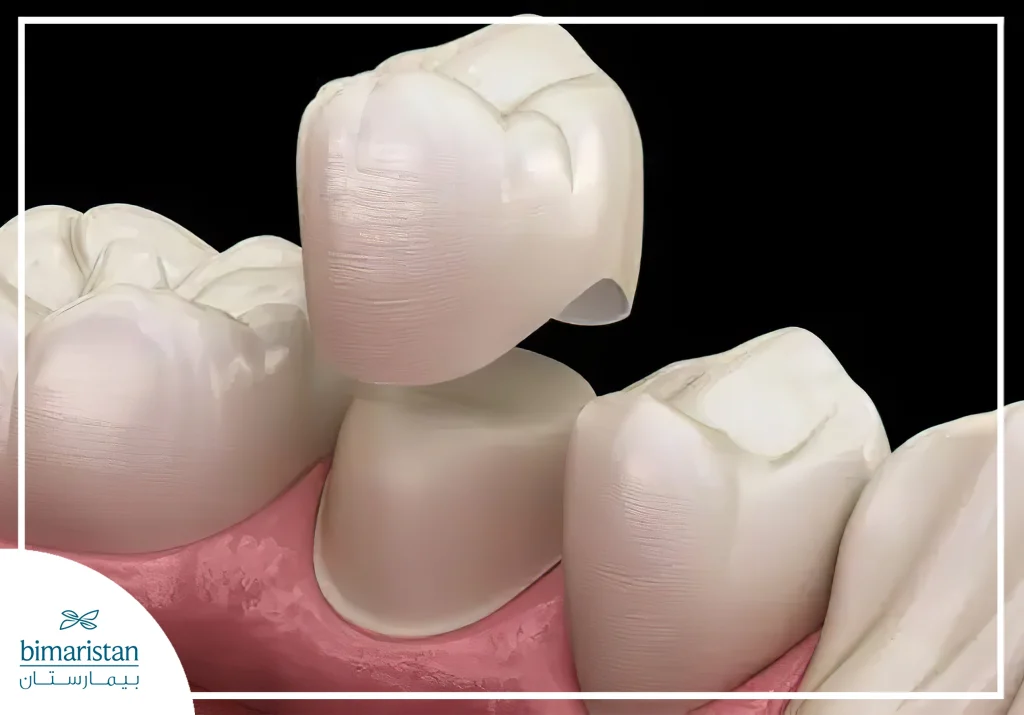
Types of Dental Crowns
Dental crowns are available in several different materials, and the dentist selects the appropriate type based on the condition of the tooth, its location, the strength of the bite, and aesthetic considerations. Among the most common types of dental crowns are:
- Metal Crowns
- Porcelain Crowns
- Full-Ceramic Crowns
- Zircon Crowns
- Crowns made of porcelain fused to metal
| Material | Features | Disadvantages | Usage |
|---|---|---|---|
| Metal Crowns | Very strong, shatter-resistant, long-lasting | An unattractive metallic color | Back molars |
| Porcelain Crowns | A natural look and excellent aesthetics | More brittle than metal | Front teeth |
| Full-Ceramic Crowns | High aesthetic appeal and excellent compatibility with the gums | Less durable in the back molars | Front and Middle Teeth |
| Zircon Crowns | Very sturdy and aesthetically pleasing | It may be harder on the opposing teeth | Back Teeth and Front Teeth |
| Porcelain fused to metal | It combines strength and beauty | A metallic line may appear along the gumline over time | General Uses |
How does CEREC technology work?
The Ceric technology is based on three main stages:
1. Digital Dental Imaging
Instead of using traditional impression materials, the dentist uses a small digital scanner to capture high-resolution 3D images of the teeth and jaws. This stage is characterized by:
- More comfortable for the patient
- Faster than traditional printing methods
- Reduces the likelihood of distortion or printing errors
2. Computer-Aided Crown Design
After the digital scan is complete, the images are transferred to a specialized design software program that the dentist uses to design the crown to fit:
- Bite and Occlusion
- Natural Tooth Color
- Shape of Adjacent Teeth
- The Aesthetic Harmony of a Smile
3. In-office crown fabrication
The design is sent to a digital fabrication machine, which mills the crown from a block of ceramic or porcelain in a short time—typically 10 to 20 minutes. The dentist then tries the crown on and permanently cements it in place.
The Difference Between Traditional and Digital Dental Crowns
Traditional dental crowns differ from CEREC dental crowns in terms of manufacturing method, precision, number of visits, and patient comfort. The following table highlights the main differences between the two techniques:
| Element | Traditional Crowns | CEREC dental crowns |
|---|---|---|
| How to Take an Impression | Taken by hand using special materials | 3D Digital Scanning |
| Accuracy of Measurements | It depends largely on the quality of the print and the experience | High Precision in Imaging and Design |
| Crown Manufacturing | It is done by hand in the dental lab | It is done using computers and CAD/CAM machines |
| Duration of Treatment | Several days or weeks | Usually in a single session |
| The Need for a Temporary Crown | Frequently Requested | Not required in many cases |
| Patient Comfort | The impressions may be uncomfortable for some patients | More convenient and faster |
| Probability of error | Relatively higher due to the number of manual steps | Less, thanks to digital technology |
| Number of visits | Two or more visits | One visit in some cases |
| Post-Installation Modifications | Additional adjustments may be needed | Usually requires fewer modifications |
Benefits of CEREC dental crowns
CEREC dental crowns technology offers numerous advantages, making it one of the most widely used modern solutions in digital dentistry. It combines high precision, speed, and comfort with aesthetic results that closely resemble natural teeth. Among its most notable features are:
- High precision: Digital scanning technology improves crown precision and reduces the need for post-installation adjustments.
- Treatment Speed: In many cases, the crown can be fabricated and fitted in a single visit, without the need for a temporary crown.
- Greater patient comfort: The patient does not need to undergo traditional, uncomfortable impressions that may cause nausea or discomfort.
- Preserving tooth structure: Some ceramic restorations preserve more tooth structure than certain types of traditional crowns.
- Excellent aesthetic results: Ceric crowns look very similar to natural teeth in terms of color, translucency, and light reflection
Disadvantages of CEREC dental crowns
Despite its significant advantages, this technology has some drawbacks:
- Limited applicability in certain cases; it may not be suitable in the following situations:
- Severe teeth grinding.
- Deep fractures beneath the gums.
- Loss of a very large portion of the tooth.
- Some complex occlusion cases.
- High cost: Ceramic crowns are more expensive than certain traditional crowns.
- Fracture susceptibility in certain types: The strength of a crown depends on the material used, and some ceramic types may be less fracture-resistant than metal or zirconia crowns in the back teeth.
Steps for CEREC dental crowns
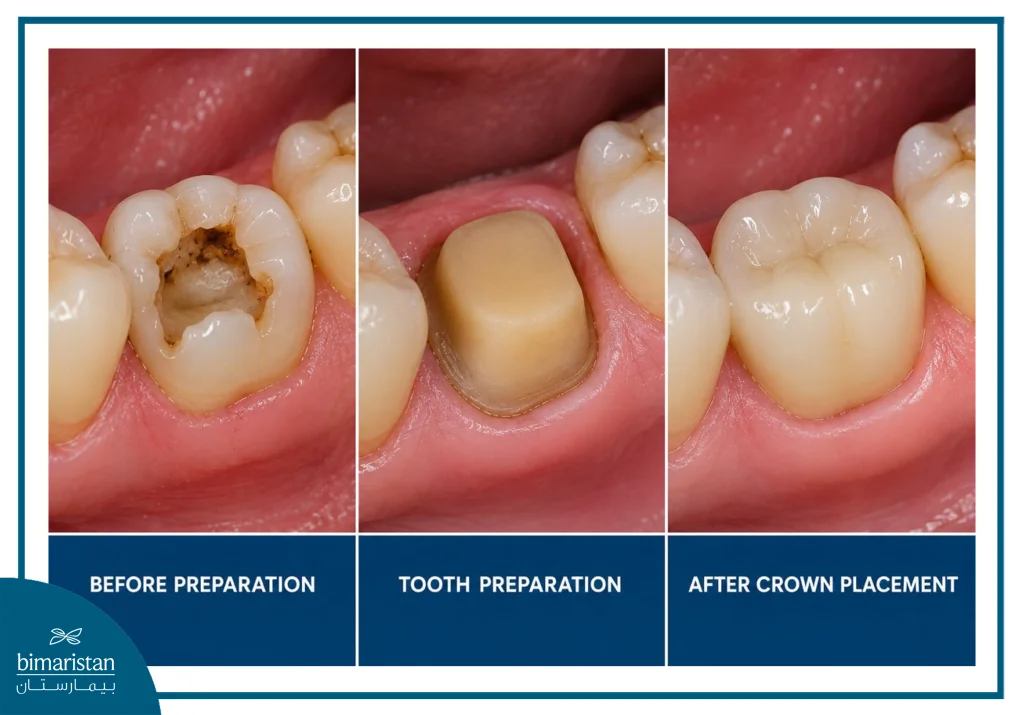
- Dental Examination and Diagnosis: The dentist examines the teeth and takes X-rays to assess the condition.
- Tooth Preparation: The decayed or damaged portions are removed, and the tooth is reshaped to accommodate the crown.
- Digital Scanning: A CAD/CAM device is used to digitally scan the teeth.
- Crown Design: The crown is designed using a computer.
- Crown Manufacturing: The digital milling machine manufactures the crown.
- Fitting the Final Crown: The crown is fitted after verifying the fit and final shape.
Are CEREC dental crowns suitable for all patients?
It is not appropriate in all cases; rather, it depends on a thorough medical evaluation of each patient. It is a suitable option for mild to moderate cases, such as:
- Eroded Teeth
- Partial Tooth Fractures
- Teeth After Root Canal Treatment
It may not be appropriate in some complex cases, such as:
- Severe teeth grinding
- Severe weakness in tooth structure
- A deep fracture below the gum line
How long do CEREC crowns last?
Ceramic crowns can last between 10 and 15 years—or even longer—when:
- Good Oral Care
- Brushing Your Teeth Regularly
- Avoid harmful habits such as grinding your teeth or breaking hard objects
The Cost of CEREC dental crowns in Turkey
The cost of CEREC dental crowns varies from country to country, depending on the type of crown used, the dentist’s experience, and the technologies available at the clinic; however, Turkey is considered one of the leading treatment destinations that combines affordable prices with modern technologies in digital dentistry.
| The State | Average cost per crown (in U.S. dollars) |
|---|---|
| Turkey | $250–$400 |
| The United States of America | $1,000–$2,500 |
| Britain | $700–$1,800 |
| France | $650–$1,200 |
CEREC dental crowns technology has become one of the most significant recent advancements in digital dentistry, thanks to its high precision, treatment speed, and aesthetic results that closely mimic natural teeth. CAD/CAM technologies have also contributed to improving the patient experience, reducing the number of visits, and enhancing the quality of dental crowns compared to many traditional methods. Although choosing the right type of crown depends on the condition of the tooth and the treatment plan determined by the dentist, digital ceramic crowns have become a popular choice among patients seeking comfort, precision, and a natural appearance.
Today, Turkey is considered one of the world’s leading destinations for cosmetic and digital dental treatments, thanks to modern technologies, medical expertise, and competitive prices, making it a preferred choice for many patients worldwide seeking a healthy, high-quality smile.
Sources: