.floating_btn { display: none !important; } .println-contact-form-button-element { display: none !important; }
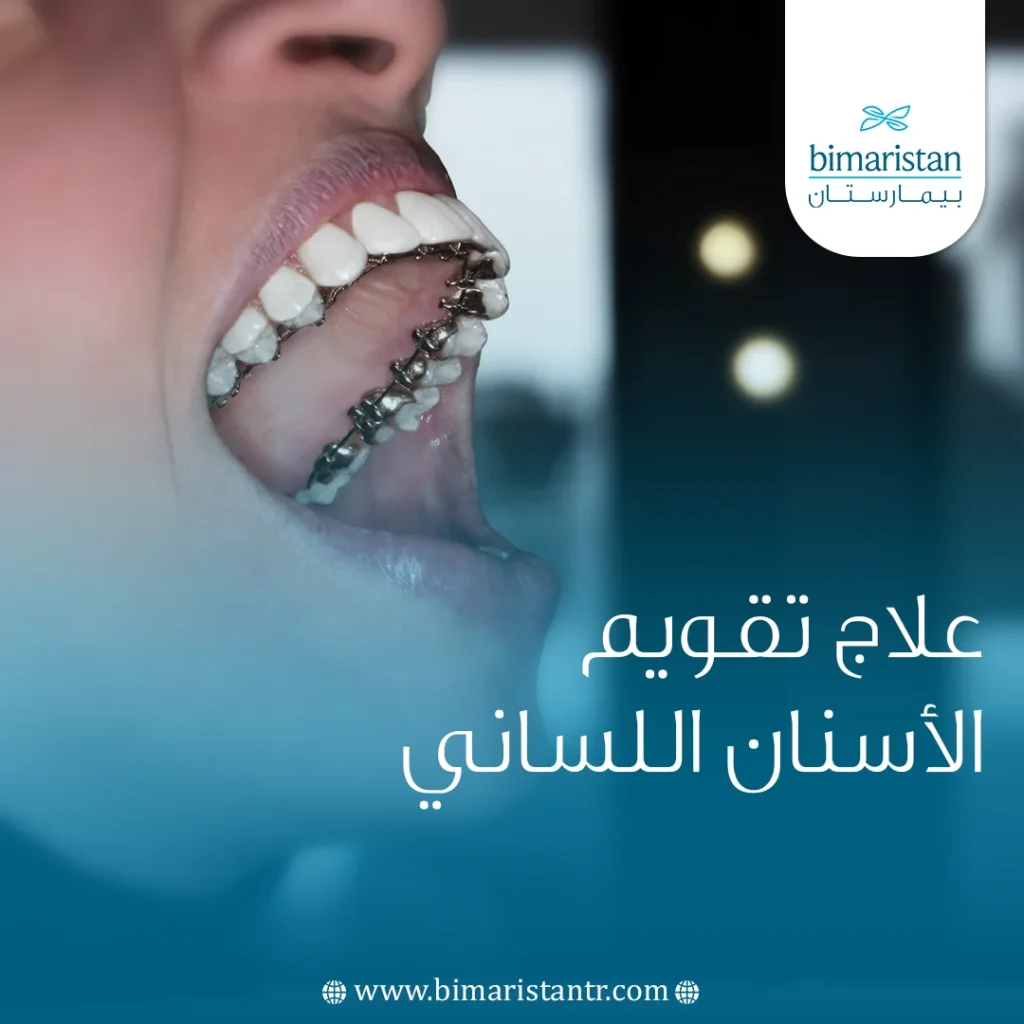
Many people suffer from malocclusion or misaligned teeth, but they are hesitant to get traditional braces because of their conspicuous metal appearance. This is where lingual braces have emerged as a cosmetic treatment option that combines the effectiveness of fixed braces with a nearly invisible appearance. This type of brace is attached to the inner surfaces of the teeth that face the tongue, making it hidden when speaking or smiling.
As a result, lingual braces have become a popular choice among adults, professionals, and those who want to improve their dental alignment without affecting their appearance. In this article, we’ll explore how lingual braces work, their advantages and disadvantages, how they differ from clear aligners, the treatment duration, the cost, and how to properly care for them.
What are lingual orthodontics?
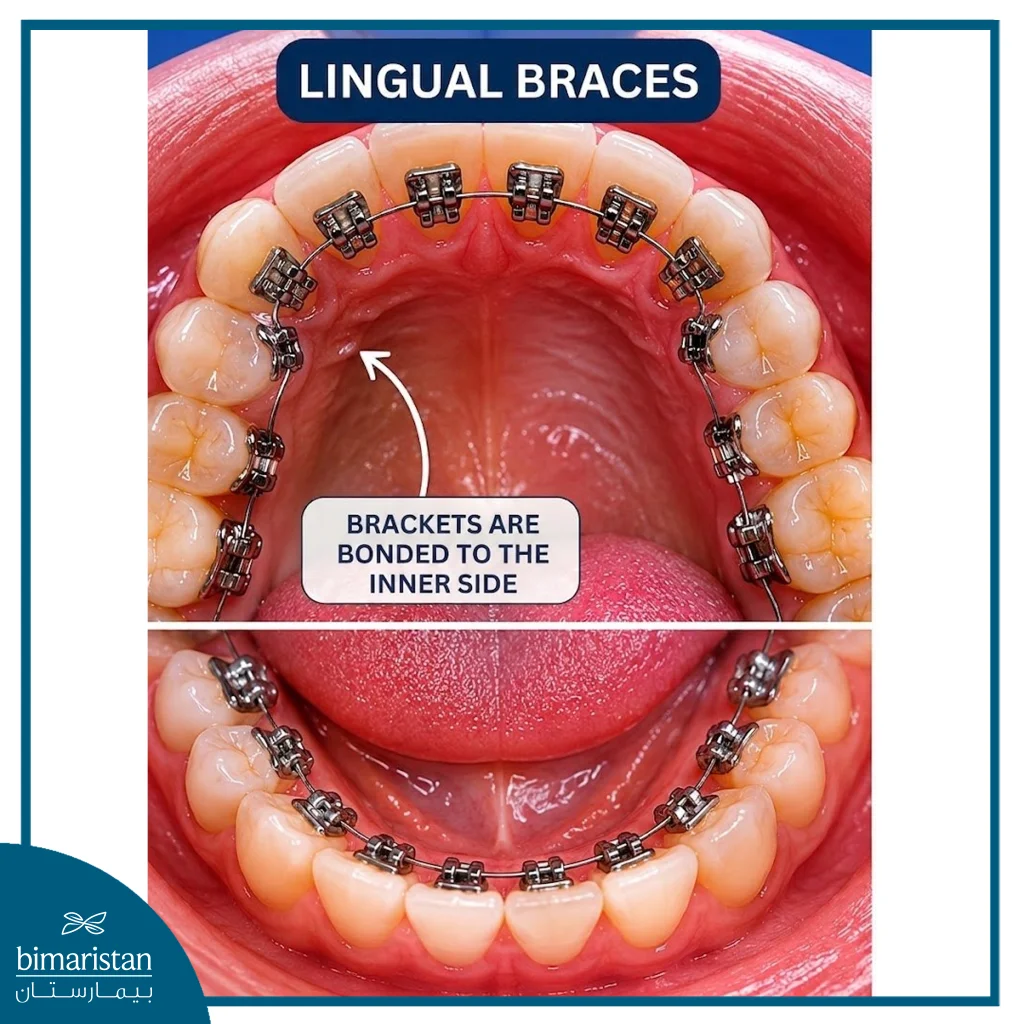
Lingual braces are a type of fixed orthodontic appliance that is attached to the back of the teeth rather than the visible front surface; therefore, they are also known as hidden braces or lingual braces. They consist of small metal brackets, orthodontic wires, and fasteners similar to those used in traditional braces, but the main difference lies in their placement: they are attached to the inner surfaces of the teeth facing the tongue. They are used to treat:
- Crowded Teeth
- Gaps Between Teeth
- Protruding Front Teeth
- Some Types of Malocclusion
- Mild and moderate misalignment of the teeth, and some complex cases
How does a lingual brace work?
Clear aligners operate on the same therapeutic principle as traditional metal braces, relying on gentle, continuous, and precisely planned forces to gradually move the teeth into their correct positions within the jaw, thereby improving overall alignment and the bite between the jaws. At the beginning of treatment, the orthodontist conducts a comprehensive evaluation of the case by:
- A thorough examination of the teeth, gums, and jaws
- Taking traditional impressions or using 3D digital scanning to create an accurate model of the teeth
- Develop a personalized treatment plan for each patient based on the severity of the malocclusion and the desired tooth movement
The braces are then custom-made and fitted to the inner surfaces of the teeth, tailored to each individual case to ensure the accuracy of the applied force and the direction of movement. During treatment, the patient is seen periodically, usually every 6 to 8 weeks, when the dentist makes the necessary adjustments to the wires or brackets to ensure the teeth continue to move gradually and under control.
Features of Lingual Orthodontics
Lingual braces combine therapeutic effectiveness with a cosmetic appearance, making them a suitable option for patients who wish to correct their tooth alignment without the braces being clearly visible. Among their most notable advantages are:
- Virtually invisible: The biggest advantage is that the aligners are hidden behind the teeth, so they aren’t visible when you smile or talk.
- Suitable for adults and professionals: Preferred by people whose jobs require a professional appearance, such as:
- Doctors
- Media professionals
- Teachers
- Company Employees
- High therapeutic effectiveness: It can treat many dental alignment problems, similar to those addressed by traditional orthodontics.
- Does not irritate the lips or cheeks: Because the brackets are located behind the teeth, there is less friction against the lips and cheeks compared to front-facing braces.
- Excellent cosmetic results: It allows you to achieve a straighter smile without the braces being visible during treatment.
Disadvantages of Lingual Braces
Despite the cosmetic benefits of lingual braces, there are some challenges and drawbacks to be aware of before starting treatment, to ensure you make the right decision. The most important of these are:
- High Cost: Lingual braces are among the most expensive types of braces due to:
- A Customized Design for Each Patient
- Difficulty in Installation
- The Need for Advanced Expertise
- Tongue irritation: Contact between the tongue and the blockers may cause temporary discomfort at the start of treatment.
- It requires an experienced dentist: Fitting lingual braces is more technically complex than fitting traditional braces.
- Difficulty in cleaning: The presence of brackets behind the teeth makes cleaning them more complicated than with traditional braces.
- Temporary speech difficulties: The patient may notice slight changes in their speech during the first few weeks, especially when pronouncing certain letters.
The Difference Between Lingual Braces and Clear Aligners
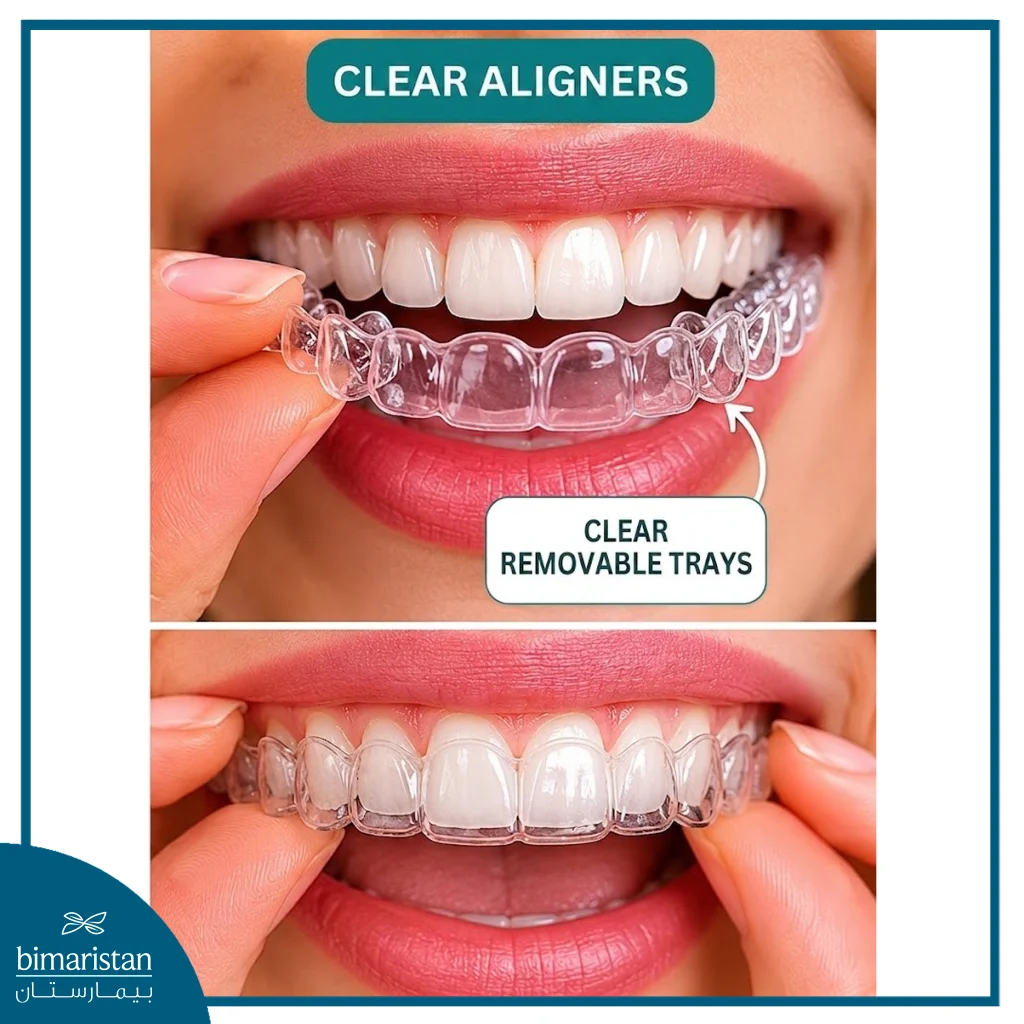
Both lingual braces and clear aligners are modern cosmetic options for orthodontic treatment, but each has distinct characteristics in appearance, comfort, method of use, and the cases for which they are suitable.
| Element | Lingual Braces | Clear Braces |
|---|---|---|
| Appearance | Completely hidden | Almost invisible |
| Removability | Non-removable | Removable |
| Suitable for complex cases | Most of the time, yes | Limited to certain cases |
| Adherence to Treatment | Higher because it’s stable | It depends on the patient’s commitment |
| Rest | Needs time to adjust | Most often, more comfortable |
| Cost | Usually higher | Moderate to high |
Who is a good candidate for lingual orthodontics?
Lingual braces are not suitable for all cases, as treatment success depends on the health of the teeth and gums, the nature of the bite, and the patient’s commitment to oral hygiene. Therefore, an orthodontist carefully evaluates each case to determine whether this type of braces is the most appropriate option for achieving effective and safe results. Lingual braces are suitable for people who:
- They want a treatment that isn’t visible
- They have healthy gums and teeth
- They take good care of their oral hygiene
- They do not have active periodontal disease
- Their teeth have surfaces suitable for attaching retainers
It may not be the best option in some cases:
- Very Small Teeth
- Poor Oral Hygiene
- Severe and Complex Malocclusion
Duration of Treatment and Expected Outcomes
The duration of treatment varies with the severity of the condition, typically ranging from 12 to 24 months; treatment may take longer in complex cases or if the patient does not attend regular follow-up visits and follow treatment instructions. Recent studies also indicate that lingual orthodontics achieves effective clinical results in improving tooth alignment and occlusion when properly applied by a specialist. Scientific reviews have also shown that this type of orthodontic treatment can achieve good therapeutic outcomes, high aesthetic results, and notable patient satisfaction, despite requiring a high level of technical skill during application.
Temporary Side Effects of Lingual Braces
It is normal for some symptoms to appear during the first few weeks, and these symptoms usually disappear gradually as the mouth adjusts to the braces. The most common symptoms include:
- Tongue Irritation
- Increased saliva production
- Temporary difficulty speaking
- Mild discomfort while chewing
- Mild pain or pressure in the teeth
Care and Hygiene During Treatment
Maintaining good oral hygiene is essential while wearing a lingual braces system. It is also recommended to have regular cleanings at the dentist’s office during treatment to prevent plaque buildup, gum inflammation, tooth decay, and staining. Therefore, it is recommended to:
- Use an appropriate mouthwash
- Brush your teeth after every meal
- Avoid hard and sticky foods
- Use a soft-bristled brush or an electric brush
- Using Orthodontic Dental Floss
The Cost of Orthodontic Treatment in Turkey
Clear aligners are more expensive than traditional metal braces and clear aligners in many cases due to their custom design and the difficulty of fitting them. The cost of lingual braces in Turkey ranges from $2,000 to $4,000, while removable clear aligners range from $1,000 to $2,500. The cost of lingual braces varies depending on several factors, including:
- Duration of Treatment
- Degree of Complexity of the Case
- An Orthodontist’s Experience
- Type of System Used
- The Need for Additional Measures
Ultimately, lingual braces are an advanced therapeutic and cosmetic option for people who want to improve the alignment of their teeth without affecting the appearance of their smile during treatment. Although it requires meticulous oral care and specialized expertise to apply, it delivers effective results and is virtually invisible compared to traditional braces.
The success of treatment depends largely on choosing an experienced orthodontist and adhering to regular checkups and daily care instructions. With the continuous advancement of orthodontic techniques, Turkey has become a well-known destination in this field, where many modern medical centers offer a variety of options for treating misaligned teeth, including lingual braces and advanced cosmetic techniques.
Sources: