
Tongue cancer is a type of oral cancer that requires careful medical management, as the tongue is essential for speech, swallowing, and taste; any delay in detecting the tumor may affect quality of life and treatment outcomes. The significance of this disease stems from the fact that it is classified as a cancer of the head and neck, which are often linked to factors such as smoking, alcohol, chronic irritation, and certain viral infections. Furthermore, a significant proportion of cases are detected at advanced stages because sores or small lumps inside the mouth are ignored.
Tongue cancer treatment depends on the size of the tumor, its location, and whether it has spread to the lymph nodes or surrounding tissues; it may include surgery, radiation therapy, chemotherapy, or immunotherapy in some cases. The earlier the disease is diagnosed, the better the chances of controlling it; therefore, it is recommended to see a doctor if you have a sore that won’t heal, unexplained bleeding, persistent pain, or difficulty moving the tongue, as early evaluation helps in selecting the most appropriate treatment plan and minimizing the disease’s impact on speech and swallowing.
What is tongue cancer?
First, the tongue consists of two parts: the oral portion, which is the front part, and the pharyngeal portion, located in the pharynx and called the pharyngeal tongue (or root of the tongue). Tongue cancer can affect both parts, and its symptoms and methods of diagnosis vary slightly depending on which part is affected. For example, when a person has cancer in the front part of the tongue, they may notice it themselves or their dentist may detect it, but when the back part is affected, it is difficult to notice quickly; it may even cause symptoms such as a sore throat or ear pain, but it is difficult to predict that the cause is tongue cancer.
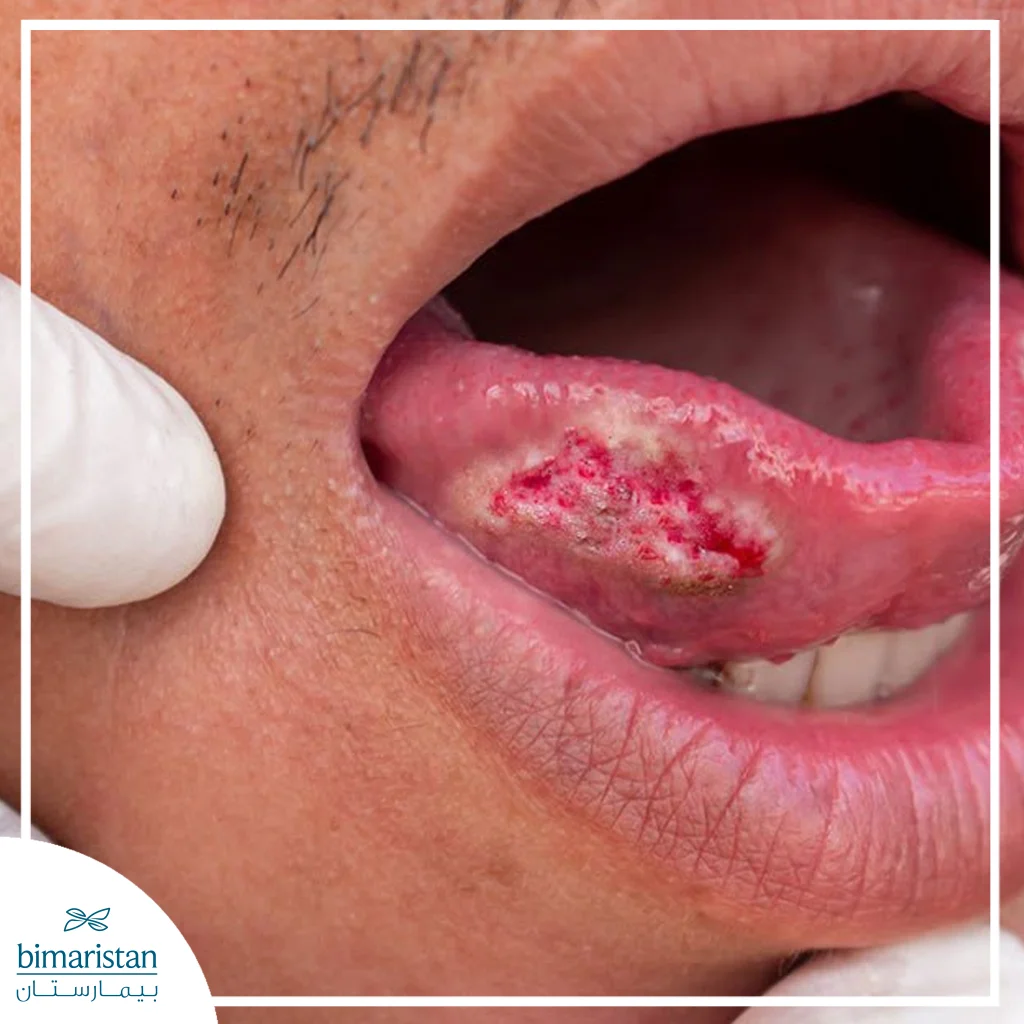
Causes of Tongue Cancer and Risk Factors
The primary cause of tongue cancer is genetic factors, as changes in the DNA of cells in the tongue lead to uncontrolled cell division and to these cells surviving longer than they should. These genetic changes may result from a number of risk factors, the most important of which are:
- Smoking: Smoking is the biggest risk factor associated with tongue cancer, including cigarettes, cigars, pipes, and other forms of tobacco.
- Alcohol consumption: Frequent and excessive alcohol consumption increases the risk of tongue cancer. Furthermore, the combined use of alcohol and tobacco further increases the likelihood of developing the disease.
- Human Papillomavirus (HPV) Infection: Recent studies indicate that cancer of the back of the tongue (oropharyngeal cancer) is common among people infected with human papillomavirus (HPV).
- A weakened immune system: In general, it is a risk factor for developing any type of cancer.
- Advancing Age: The risk of developing tongue cancer increases in people over the age of 45, usually due to years of tobacco and alcohol use.
- Problems with oral hygiene: Poor dental care can lead to tongue cancer, and the risk is even higher among people who use alcohol and tobacco.
Symptoms of Tongue Cancer
At first, tongue cancer does not cause any symptoms, but over time, a dentist or general practitioner may notice a sore on the surface of the tongue that does not heal (which is usually the first symptom), At that point, the doctor may suspect a tumor on the tongue and assess whether there are other symptoms, after which the patient is referred to an oncologist for a direct examination of the sore. Other symptoms of tongue cancer include:
- Difficulty or pain when chewing, swallowing, or moving the jaws or tongue
- A lump on the side of the tongue that bleeds easily
- Swollen Lymph Nodes in the Neck
- Red or white spots on the tongue or inside the mouth
- A sore throat that won’t go away
- The feeling as if there is something in the throat
- Numbness in the mouth or tongue
- Swelling of the Jaw
- Change in Voice
- Ear or neck pain
- Weight Loss
- Loose teeth or sudden changes in how dentures fit
- There may also be a lump at the back of the mouth, throat, or neck
How is tongue cancer diagnosed?
The diagnosis of tongue cancer relies on a combination of a thorough clinical examination, biopsy, and medical imaging, as the appearance of an ulcer or mass alone is not sufficient to confirm the presence of cancer. The goal of diagnosis is first to determine the nature of the lesion, and then to determine the tumor’s size, depth, and whether it has spread to the lymph nodes or surrounding tissues, as this information determines the appropriate treatment plan.
Examination of the mouth, tongue, and lymph nodes
The doctor begins by examining the entire tongue, including the sides, surface, and base, because some tumors may be small or hidden in areas the patient may not easily notice. The doctor looks for a sore that won’t heal, a hard lump, a change in the color of the mucous membrane, slight bleeding upon touch, or a specific painful area. He also assesses tongue mobility, as impaired movement or a deviated tongue may indicate that the tumor extends deeper.
Next, the neck and lymph nodes are examined, particularly under the jaw and on both sides of the neck, because tongue cancer can spread early to nearby lymph nodes. The presence of a hard, fixed, or enlarged lymph node does not necessarily indicate cancer spread, but it does warrant a more detailed evaluation through imaging or a biopsy, if necessary.
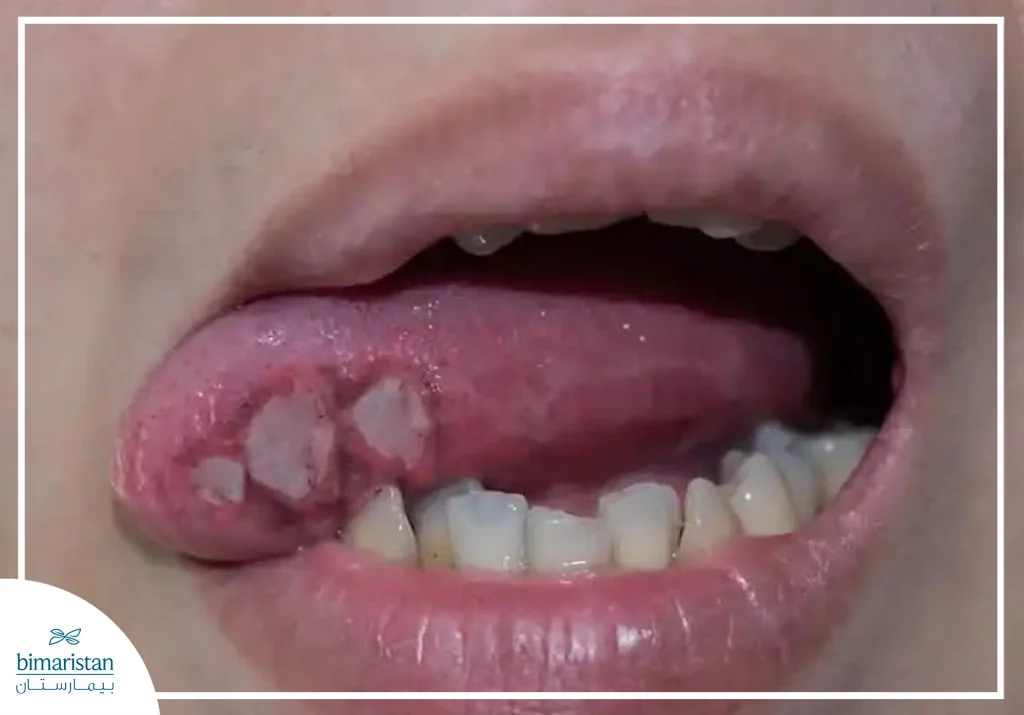
Taking a biopsy of tongue tissue
A biopsy is the crucial step in diagnosing tongue cancer, in which the doctor removes a small sample of suspicious tissue and examines it under a microscope. A biopsy helps confirm the presence of cancer cells, determine the type and grade of the tumor, and assess its aggressiveness. A biopsy is usually performed under local anesthesia if the lesion is visible and easily accessible; deeper anesthesia may be required if the tumor is located at the base of the tongue or in an area that is difficult to examine directly.
It is not advisable to delay a biopsy if there is a sore that has persisted for more than two weeks or an unexplained lump on the tongue, because waiting may lead to the tumor growing larger or spreading to the lymph nodes, Furthermore, a biopsy does not cause the cancer to spread, as some patients believe; rather, it is the primary and safest method for confirming the diagnosis before beginning treatment.
Medical Imaging to Determine the Extent of the Tumor
After the diagnosis has been confirmed or when the disease is strongly suspected, medical imaging is used to accurately determine the stage of tongue cancer. The doctor may order an MRI to assess the depth of the tumor and its spread within the muscles of the tongue and surrounding tissues, or a CT scan to examine the bones of the jaw and neck and the lymph nodes. In some advanced cases, positron emission tomography (PET) may be used to look for distant spread in the body.
Imaging helps determine whether treatment will rely on surgery alone or require radiation or chemotherapy after the operation; it also guides the surgeon in planning the tumor resection while preserving, as much as possible, the tongue’s functions—such as speech, swallowing, and taste. Therefore, the diagnosis is not limited to confirming the presence of cancer; it also involves creating a precise map of its spread before developing a treatment plan.
Tongue Cancer Treatment Options
Treatment options for tongue cancer vary depending on the stage of the disease, the location of the tumor on the tongue, how deeply it has invaded the tissue, and whether the lymph nodes in the neck are affected, The treatment plan is not chosen based solely on the visible size of the tumor, but rather on a comprehensive assessment of tongue function—such as swallowing and speech—and the patient’s overall condition, because the goal is not only to remove the tumor but also to preserve, as much as possible, the ability to speak and eat, as well as the patient’s quality of life after treatment.
In the early stages, treatment may be localized and involve only surgery or radiation therapy, while advanced cases often require a combined approach that includes surgery, radiation therapy, and chemotherapy. In cases of metastatic or recurrent disease, immunotherapy or targeted therapy may be among the options, especially when surgical resection is insufficient or not possible.
Tongue Cancer Surgery
Surgery is one of the most important treatment options for tongue cancer, especially when the tumor is resectable. The procedure involves removing the tumor along with a safe margin of surrounding healthy tissue to reduce the likelihood of the cancer returning. For small tumors, the surgeon may perform a limited partial resection of the tongue, whereas for larger tumors, a more extensive resection may be necessary. Sometimes, the area is reconstructed using a tissue graft from another part of the body to help restore form and function.
Surgery may also involve the removal of some lymph nodes in the neck if there is suspicion that the cancer has spread to them or if the tumor is deep-seated and carries a higher risk of spreading. After the operation, the specimen is analyzed in the laboratory to determine the tumor depth, the status of the surgical margins, and the presence of lymphatic spread or nerve and blood vessel invasion. Based on these results, the medical team decides whether the patient needs adjuvant radiation or chemotherapy after surgery.
Radiation Therapy
Radiation therapy uses precise beams of radiation to destroy cancer cells or reduce the likelihood of their recurrence after surgery, and may be used as a primary treatment in some cases where surgery is not appropriate, but it is most often used after surgery if the tumor is advanced, if the surgical margins were close, or if spread to the lymph nodes has been detected. In these cases, radiation aims to target microscopic cells that may not have been visible during surgery.
Radiation therapy requires careful planning to protect healthy tissues, such as the salivary glands, jaw, and pharynx, as it may cause side effects including dry mouth, mucositis, difficulty swallowing, changes in taste, or skin irritation in the neck area. Therefore, the patient requires regular nutritional monitoring and oral care during and after treatment.
Chemotherapy
Chemotherapy is not usually the only treatment option for tongue cancer, but it is used in combination with radiation therapy in some advanced cases to increase the effectiveness of radiation on cancer cells; this is known as concurrent chemoradiation therapy, It is used especially when there are high-risk factors after surgery, such as the spread of cancer beyond the lymph nodes or the presence of cancer cells near the margins of the resection.
Chemotherapy may also be used in cases where the cancer has spread or has returned after treatment, especially when further surgery is not possible, The drugs and dosages vary depending on the patient’s condition and ability to tolerate the treatment, as chemotherapy may cause fatigue, nausea, a weakened immune system, mouth sores, or effects on the kidneys and hearing with certain types of drugs, Therefore, it is administered only after a thorough evaluation.
Immunotherapy and Targeted Therapy
Immunotherapy has become an important treatment option in some cases of advanced or recurrent tongue cancer, especially when the disease has spread or is no longer treatable with surgery or radiation alone. Immunotherapy works by stimulating the immune system to recognize and attack cancer cells. It is not used indiscriminately for all patients, but rather after evaluating the tumor characteristics, the patient’s overall condition, and the results of specific laboratory tests.
Targeted therapy, on the other hand, works by targeting specific pathways that help cancer cells grow and divide, and may be used in specific cases of head and neck cancers, sometimes in combination with radiation therapy or in advanced disease. Immunotherapy or targeted therapy is not a direct substitute for surgery in resectable stages, but it may be part of the treatment plan when the disease is advanced, recurrent, or has spread beyond the tongue and neck.
Can tongue cancer be cured?
Yes, tongue cancer can be cured in many cases, especially when detected at an early stage before it has spread to the lymph nodes or deep tissues. The chance of a cure depends on the size of the tumor, its location, the stage of the disease, and the patient’s response to treatment. Therefore, early diagnosis and the initiation of an appropriate treatment plan are among the most important factors in increasing success rates and reducing the likelihood of recurrence.
In conclusion, the treatment of tongue cancer depends on an accurate diagnosis and determination of the tumor stage, followed by the selection of the most appropriate treatment—whether surgery, radiation, chemotherapy, or modern therapies when necessary. The chances of recovery increase the earlier the disease is detected, especially before it spreads to the lymph nodes or deep tissues. The Bimaristan Medical Center helps patients access specialized evaluation and an appropriate treatment plan, while coordinating medical care to ensure accurate treatment and quality of life afterward.
Sources: