
Liver cancer is a disease that requires intensive care and a treatment approach tailored to each patient, especially given the continuous advancements in the field of cancer treatment, the variety of treatment options available for this type of cancer, and the possibility of combining multiple treatment modalities.
Y-90 radioembolization for liver cancer is one of the most advanced treatment modalities, offering targeted therapy for certain patients. This technique can help avoid surgical resection, particularly when the tumor is inoperable or requires localized treatment.
What is liver cancer?
Liver cancer is a malignant tumor originating from liver cells as a result of genetic changes that cause uncontrolled cell growth and division; the tumor may grow locally or spread to other organs, and the most common type of primary liver cancer is hepatocellular carcinoma.
Treatment for liver cancer depends on several factors, the most important of which are the type and stage of the tumor, its size and location, and the extent of its spread, in addition to liver function and the patient’s overall health. Treatment options include surgical resection of the tumor, liver transplantation, local therapies such as thermal ablation, as well as transarterial therapies such as transarterial chemoembolization and radioembolization using Y-90. In advanced cases, systemic therapies such as immunotherapy and targeted therapies may be used, depending on the tumor type and stage.
What is Y-90 radioembolization for liver cancer?
Y-90 radioembolization for liver cancer is an interventional radiology treatment; it is a minimally invasive procedure that combines localized radiation therapy with targeted embolization to reduce blood flow through the target artery. Microscopic beads loaded with the radioisotope Yttrium-90 (Y-90) are placed in the blood vessels supplying the tumor, delivering a high dose of radiation directly to the tumor while sparing surrounding healthy tissue as much as possible. This treatment can help prolong the lives of patients with surgically unresectable tumors and improve their quality of life.
How is liver cancer treated with radioembolization?
Y-90 radioembolization for liver cancer is typically performed in two sessions. It begins with careful planning to identify the blood vessels supplying the tumor and ensure the treatment can be delivered safely, followed by administration. During the first session, a thin catheter is inserted through the femoral or radial artery and then guided, using imaging, to the hepatic arteries. Afterward, detailed imaging of the blood vessels is performed to identify the arteries supplying the tumor and to detect any vessels that might allow the radioactive beads to reach the stomach or intestines. When needed, small metal coils may occlude some of these vessels to protect healthy organs.
Next, a treatment simulation is performed using a radioactive substance at a diagnostic dose; 99mTc-MAA is used to assess the path and distribution of the particles within the liver and to ensure that no unsafe radiation dose reaches the lungs or nearby organs. This step also helps the doctor calculate the appropriate radiation dose for each patient.
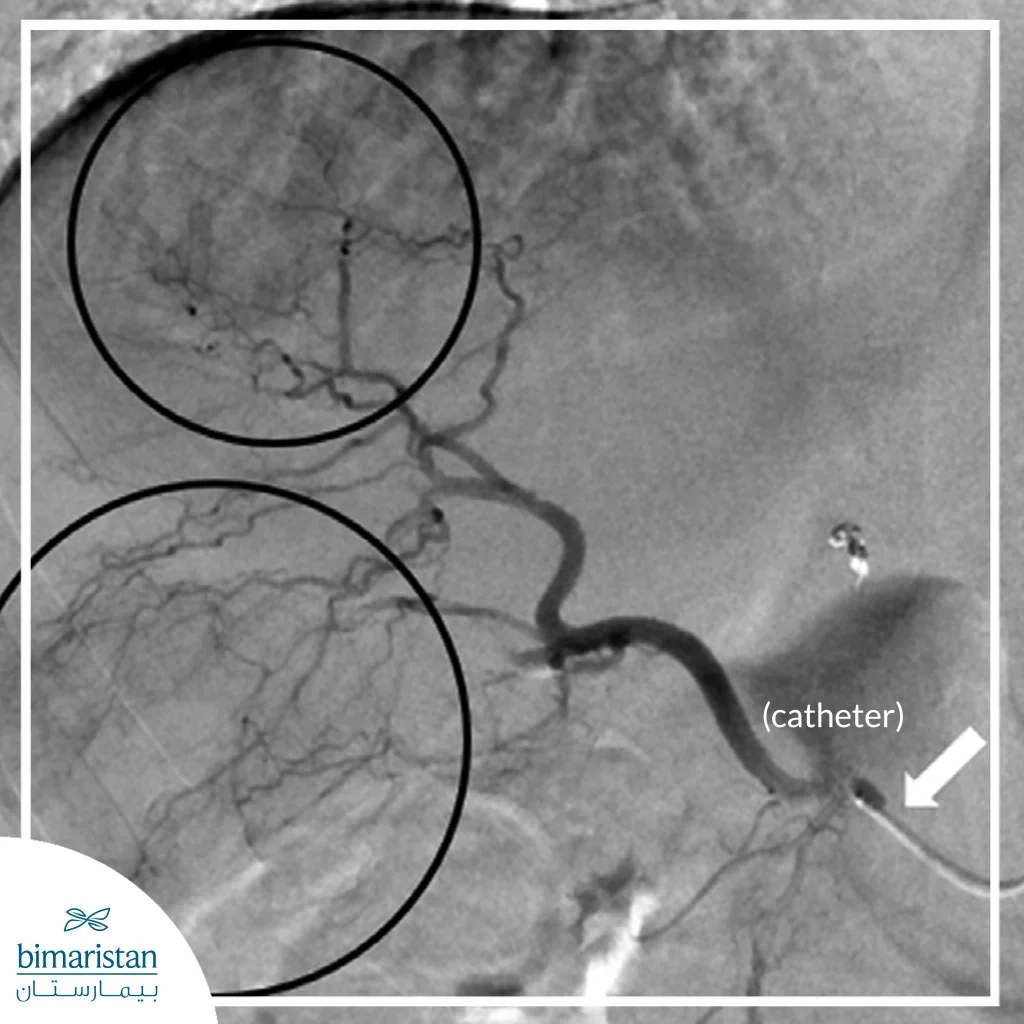
If the planning and simulation results indicate that the treatment is safe and appropriate, the treatment session is scheduled, typically shortly after the initial session. During this session, a catheter is reintroduced into the arteries supplying the tumor and microspheres loaded with a radioisotope are injected; these travel with the bloodstream and lodge primarily in the microvessels feeding the tumor. The session may last approximately one to two hours, depending on the patient’s condition.
Which patients are candidates for Y-90 radioembolization treatment?
The doctor conducts a detailed evaluation of each patient and bases the treatment decision on the tumor’s type, size, and location; its extent of spread; and the patient’s liver function and overall health. Treatment may be particularly appropriate in the following cases:
- Patients with liver tumors that are unresectable or difficult to treat surgically
- Patients whose tumors are relatively confined to the liver, without extrahepatic spread that would preclude the benefit of treatment
- Patients with adequate liver function to tolerate the treatment
- Selected patients with liver metastases, depending on the primary cancer type and the patient’s condition
Advantages of Y-90 radioembolization treatment
Y-90 radioembolization is characterized by its ability to deliver a high dose of radiation directly to the tumor in a localized and precise manner, while minimizing radiation exposure to surrounding healthy tissue. Since it is typically performed using a minimally invasive approach via a vascular catheter, it spares the patient from surgical resection, particularly in cases of inoperable tumors or patients who are unable to undergo surgery. Furthermore, its embolic effect on blood vessels is limited compared to chemoembolization; therefore, it can be used in some patients with portal vein thrombosis, following a careful evaluation of their condition.
Risks of Y-90 radioembolization treatment
Although radioembolization is generally considered a safe procedure when appropriate patients are selected, it can still cause side effects and complications. After treatment, patients may experience fatigue, nausea, abdominal pain, or fever. There may also be a temporary increase in liver enzymes. In rare cases, if a large portion of the liver is exposed to radiation, it could lead to radiation-induced liver disease, especially in patients with pre-existing liver conditions.
Complications may also arise if radioactive seeds inadvertently reach organs outside the liver, such as the stomach or intestines, potentially resulting in peptic ulcers. Furthermore, the treatment requires meticulous preparation and assessment of the vasculature and hepatopulmonary shunting prior to the procedure, which may render it unsuitable for all patients.
Outcomes of Y-90 radioembolization treatment for liver cancer
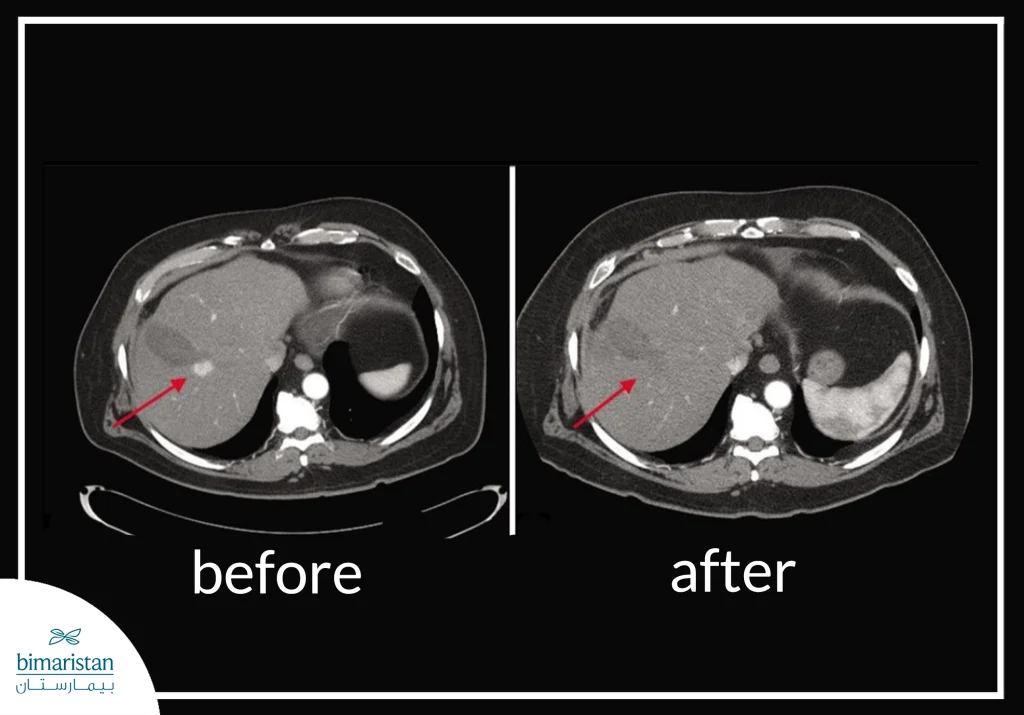
The results of Y-90 radioembolization treatment for liver cancer vary from patient to patient, and a fixed success rate cannot be determined. The results depend on the stage of liver cancer, the size and number of tumors, liver function, and the patient’s overall health. Studies indicate that the treatment can achieve good response rates in carefully selected patients and may help improve survival and prolong patient life. Recent analyses show that Y-90 radioembolization may provide promising results in tumor control and symptom relief. However, comparative evidence still shows a difference in results between studies, and therefore, radioembolization treatment for liver cancer cannot be considered a suitable and curative treatment for all patients.
Costs of liver cancer treatment with Y-90 radioembolization in Turkey and around the world
Turkey is considered one of the best countries for cancer treatment, as Turkish hospitals offer advanced therapeutic services in oncology and interventional radiology at affordable prices compared to other countries. The cost of treating liver cancer with radioembolization ranges from approximately $18,500 to $27,500. The following table compares treatment costs around the world:
| Country | Cost in U.S. dollars |
|---|---|
| Turkey | 18,500–27,500 |
| Germany | 30,000–45,000 |
| Spain | 20,000–35,000 |
| The United States of America | About 190,000 |
In conclusion, Y-90 radioembolization is a significant and advanced treatment option for liver cancer. With the continuous improvements in interventional radiology techniques, Turkey, particularly Istanbul, has emerged as a preferred destination for patients seeking cutting-edge treatment. This is due to the presence of specialized medical centers, highly skilled medical professionals, and modern technologies, alongside competitive costs compared to many other countries. As advancements in oncology continue, radioembolization is solidifying its reputation as one of the most promising treatment options for liver cancer.
Sources:
- Salem, R., Lewandowski, R. J., Mulcahy, M. F., Ryu, R. K., Ibrahim, S. M., Sato, K. T., & Omary, R. A. (2011). Radioembolization for hepatocellular carcinoma using Y-90 microspheres: A comprehensive review. Journal of Vascular and Interventional Radiology, 22(11), 1553–1564.
- (June 15, 2026). Radioembolization (Y90). Radiological Society of North America (RSNA)