Tennis elbow is a painful condition resulting from the overuse of the forearm muscles and tendons, leading to wear or micro-tearing of the tendons attached to the outer part of the elbow. This inflammation is characterized by swelling of the tendons responsible for bending the wrist backward away from the palm. Despite its name, most individuals affected by this condition do not play tennis; it may result from repetitive movements required in certain professions such as plumbing, painting, and carpentry.
The treatment of tennis elbow depends on several factors, the most important of which are the severity of the pain, the patient’s age, medical history, and the type of medications taken. The primary goal is to alleviate pain and inflammation. Treatment is often multidisciplinary, involving primary care physicians, physical or occupational therapists, and sometimes surgeons.
Several important questions arise: What causes tennis elbow? What is the treatment for tennis elbow? Is tennis elbow a chronic disease? And does exercising help in its treatment? These questions will be discussed in more detail in this article.
What is tennis elbow?
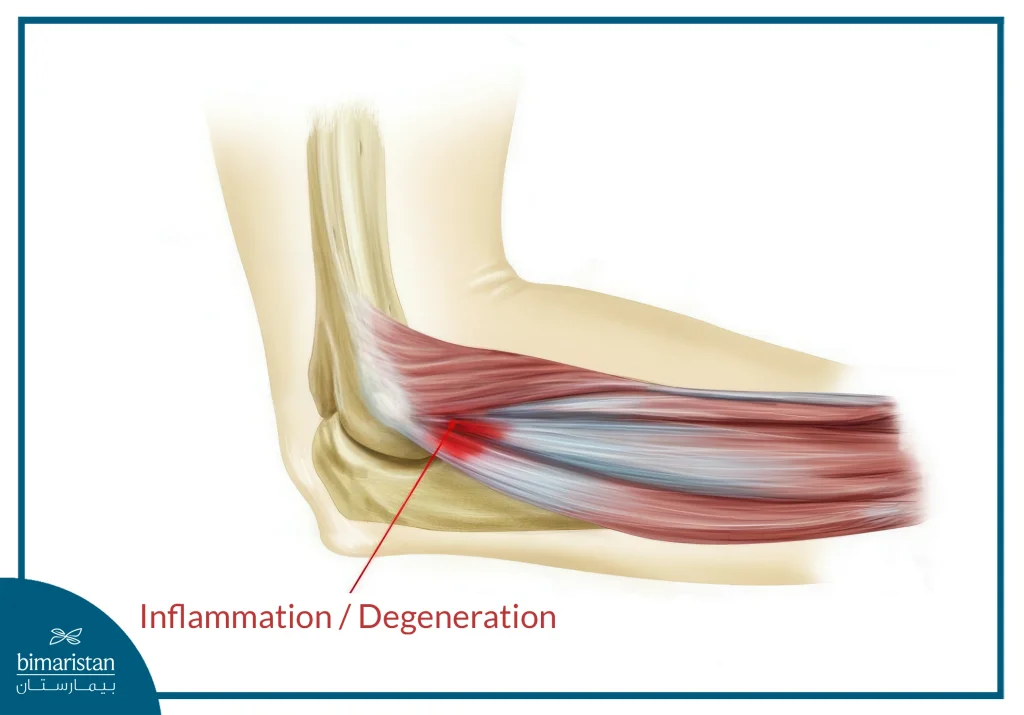
Tennis elbow, medically known as lateral epicondylitis, is a painful condition caused by the overuse of the arm and wrist and is common among tennis players and others who perform repetitive movements. A tendon is the part of a muscle that connects it to the bone. Specifically, the forearm tendons connect the muscles to the outer bone of the elbow. In tennis elbow, the injury is associated with inflammation of the forearm tendons and damage to the extensor carpi radialis brevis (ECRB) muscle, where microtearing of soft tissues connecting the muscles to the bone occurs, causing degeneration and external elbow pain over time.
Tennis elbow affects not only athletes, such as golfers, tennis players, or fencers, but also workers in professions that require repetitive and strenuous use of the hands, arms, and wrists, including butchers, chefs, dentists, and musicians, especially in tasks that require a strong grip. Lateral epicondylitis can also occur without any known repetitive injury (idiopathic).
Prevalence of tennis elbow
Tennis elbow is most common among individuals aged 30 to 50 years and affects both genders equally across various racial groups. Statistics indicate that about 1% to 3% of Americans suffer from this condition. The time spent playing or engaging in repetitive activities is a significant factor, as those under 40 years of age experience an increased risk with greater activity, while the risk doubles with aging.
Tennis elbow primarily affects the site where the tendons attach to the bony prominence on the outer side of the elbow, and the pain may extend to the forearm and wrist. Rest, pain relievers, and physical therapy often help alleviate the symptoms, but in cases unresponsive to conventional treatment or those significantly impacting daily life activities, medical procedures such as injections or surgery may be considered.
Symptoms of tennis elbow
Symptoms develop gradually and significantly affect functional performance and quality of life. Symptoms typically begin with mild pain on the outer side of the elbow, which worsens over time and may sometimes extend to the forearm and wrist. With ongoing provocative activities, the pain becomes more severe and persistent, potentially hindering even the simplest daily movements. The main symptom is localized pain and tenderness at the outer bony prominence of the elbow where the affected tendons are attached, with the pain sometimes radiating to the arm or hand. Grip strength may weaken, making daily activities challenging. Common signs and symptoms include:
- Mild elbow pain that progressively worsens over days.
- Pain spreading from the elbow down to the forearm and wrist, often intensifying at night.
- Weak grip strength.
- Increased pain when shaking hands or pressing on objects.
- Pain when twisting or bending the arm, especially when lifting objects or using tools.
- Arm stiffness when attempting to extend it.
- Painful swelling when palpating the elbow joint.
Symptoms are often triggered by repetitive forearm movements, such as using a tennis racket, turning a key, or shaking hands. Although the dominant arm is more prone to injury, both arms can be affected. In advanced cases, a lump or prominent swelling may develop, necessitating a careful medical evaluation, especially if symptoms persist for several months without improvement.
Diagnosis of tennis elbow
The diagnosis of tennis elbow in Turkey, as globally, relies on accurate clinical examination and comprehensive evaluation of the patient’s medical and occupational history. The physician begins by inquiring about the development of symptoms and triggering factors, followed by a physical examination that involves gentle movement of the elbow and pressure on the lateral epicondyle to assess the location and severity of pain. The patient may be asked to perform specific movements, such as wrist and finger extension against resistance with the arm extended, to provoke pain and confirm the location of the injury. Grip strength is also assessed, and wrist or finger resistance tests may be conducted to determine tendon involvement.
Several imaging tests are used to support the diagnosis or rule out similar conditions, including:
- X-ray: A fundamental tool to exclude fractures, arthritis, or other bone disorders that may mimic tennis elbow symptoms.
- MRI (Magnetic Resonance Imaging): This imaging technique allows for an accurate assessment of tendon and soft tissue conditions, helps detect microtears, inflammation, or degenerative changes, and may be used to image the neck if a herniated disc or nerve injury is suspected, extending symptoms to the arm.
- EMG (Electromyography): Requested if nerve compression is suspected, to distinguish tennis elbow from other neuropathies presenting with similar symptoms.
Treatment of tennis elbow
Symptoms of tennis elbow often improve over time with well-planned self-care measures that are consistent with the patient’s daily activities. However, this treatment course may take up to eighteen months for the elbow to return to normal function and strength.
Treatment is divided into two main categories: conservative management, which is the first-line approach, and surgical treatment, reserved for cases that are unresponsive to non-surgical measures.
Conservative management
Conservative management encompasses a range of integrated therapeutic methods designed to alleviate pain, promote tissue healing, and restore elbow function. A combination of several therapeutic approaches is often recommended to enhance outcomes and accelerate recovery.
Conservative treatment options include:
Rest
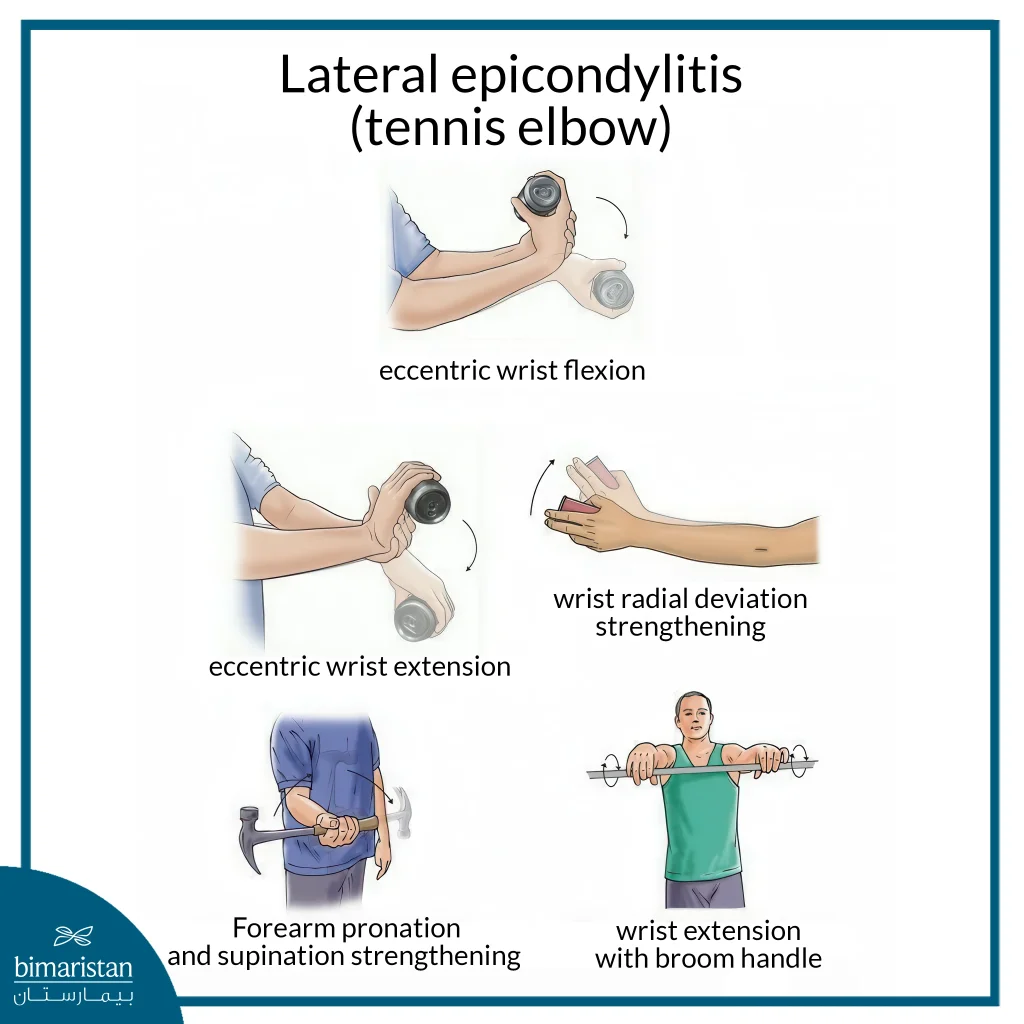
Reducing or stopping activities for several weeks is crucial to allow the tendon to recover, while maintaining natural elbow movement through gentle exercises to prevent stiffness.
Medications
Paracetamol is used as a primary pain reliever, alongside topical NSAIDs such as ibuprofen and naproxen, applied directly to the skin over the affected elbow as creams or gels, showing high efficacy in reducing tendon inflammation and alleviating pain.
Orthotic supports
Physicians may recommend an external brace or removable splint to reduce mechanical stress on the affected tendons and improve joint function. Notable types include:
- Counterforce brace: Wraps around the arm with a compressive strap applied at the origin of the wrist extensor muscles, reducing fiber strain.
- Wrist extension splint: Keeps the wrist slightly extended, reducing stress on the injured area and alleviating overload during movement.
Physical and physiotherapy
Physical therapy and physiotherapy involve therapeutic massage sessions, ultrasound techniques, and electrical muscle stimulation, which enhance blood flow and accelerate healing. This type of therapy is performed under the supervision of qualified specialists in equipped centers.
Injection therapy
Corticosteroids are injected at the injury site under ultrasound guidance for precision. This procedure effectively relieves pain and inflammation, providing temporary improvement, and should not be overused to avoid potential adverse effects.
Natural herbal therapy
Certain herbs, such as ginger, turmeric, fenugreek, and garlic, are effective in reducing inflammation and swelling associated with tennis elbow, with fewer side effects compared to conventional drug therapies.
Dry needling (acupuncture)
Considered a safe and effective method, contributing to pain relief by enhancing blood flow and stimulating the tendons’ self-healing process without notable side effects.
Platelet-rich plasma (PRP) injection
Platelet-rich plasma injection involves extracting a sample of the patient’s blood, concentrating the platelets, and re-injecting them into the injury site under ultrasound guidance. It promotes cellular regeneration and accelerates recovery, although long-term efficacy remains under study. The injection process takes about thirty minutes.
Extracorporeal shockwave therapy (ESWT)
Involves transmitting high-energy waves through the skin to the injured elbow area, aiming to break down scar tissue and stimulate blood supply. Although safe, it may cause temporary bruising or localized redness, and ongoing research is assessing its overall effectiveness.
Percutaneous tenotomy
This procedure uses a special needle to remove damaged tendon tissue precisely and non-surgically, offering a promising alternative to traditional surgery.
Surgical treatment of tennis elbow
Surgical treatment is a rare option, recommended only when conservative treatments fail after six to twelve months. The type of surgery depends on the patient’s condition, the severity, and duration of the injury. Surgical options include:
- Arthroscopic debridement: Using fine instruments to access the injured tendon and accurately remove damaged tissue.
- Open tendon debridement: Involves surgically opening the area to remove damaged tissue and repair the tendon directly.
- Tendon repair: This may involve replacing the injured portion of the tendon and muscle with healthy tendons or muscles taken from another site in the body.
Surgery is successful in treating tennis elbow in 80% to 90% of cases, although some patients may experience a slight decrease in forearm muscle strength after the procedure.
Prevention of tennis elbow
Prevention plays a crucial role in avoiding the development or recurrence of tennis elbow after treatment and includes the following measures:
- Using appropriate equipment and correct techniques for each type of sport or physical activity.
- Performing proper warm-up exercises before intense activities, focusing on gently stretching the arm muscles.
- Maintaining forearm strength and flexibility through regular specific exercises.
- Applying ice or cold compresses to the elbow after intense physical activity can reduce inflammation and prevent strain.
- Rest the elbow when experiencing any pain during arm flexion or extension to prevent further injury.
In conclusion, tennis elbow (lateral epicondylitis) is a painful and common condition resulting from the overuse of forearm muscles and tendons, significantly impacting the quality of daily life for affected individuals, whether athletes or workers performing repetitive hand and wrist movements. Although tennis elbow may seem simple initially, neglecting appropriate treatment can lead to symptom progression and worsening of the condition, necessitating comprehensive medical intervention. Treatment methods range from conservative measures such as rest, medications, physiotherapy, and special braces, to modern techniques like PRP injections and ESWT, and ultimately surgery in resistant cases. Prevention, through improved performance techniques and strengthening forearm muscles, remains essential to reduce the risk of injury or recurrence.
In this context, Bimaristan Hospital in Turkey stands out as a leading medical center for treating such conditions, thanks to its highly skilled doctors and high-quality healthcare services. The hospital is distinguished by offering the latest diagnostic and therapeutic means, adopting an integrated therapeutic approach combining clinical expertise, advanced technologies, and exceptional patient care. It houses a multidisciplinary medical team including orthopedic surgeons, physical therapists, and rehabilitation experts, ensuring individualized treatment plans tailored to each case to achieve the best possible outcomes. With all these features, Bimaristan Hospital has become a preferred destination for both local and international patients seeking safe and effective treatment for tennis elbow and other musculoskeletal disorders. As the hospital continues to adopt the latest medical technologies, there is great hope for patients to restore their everyday lives and daily activities without pain or limitations.
References: