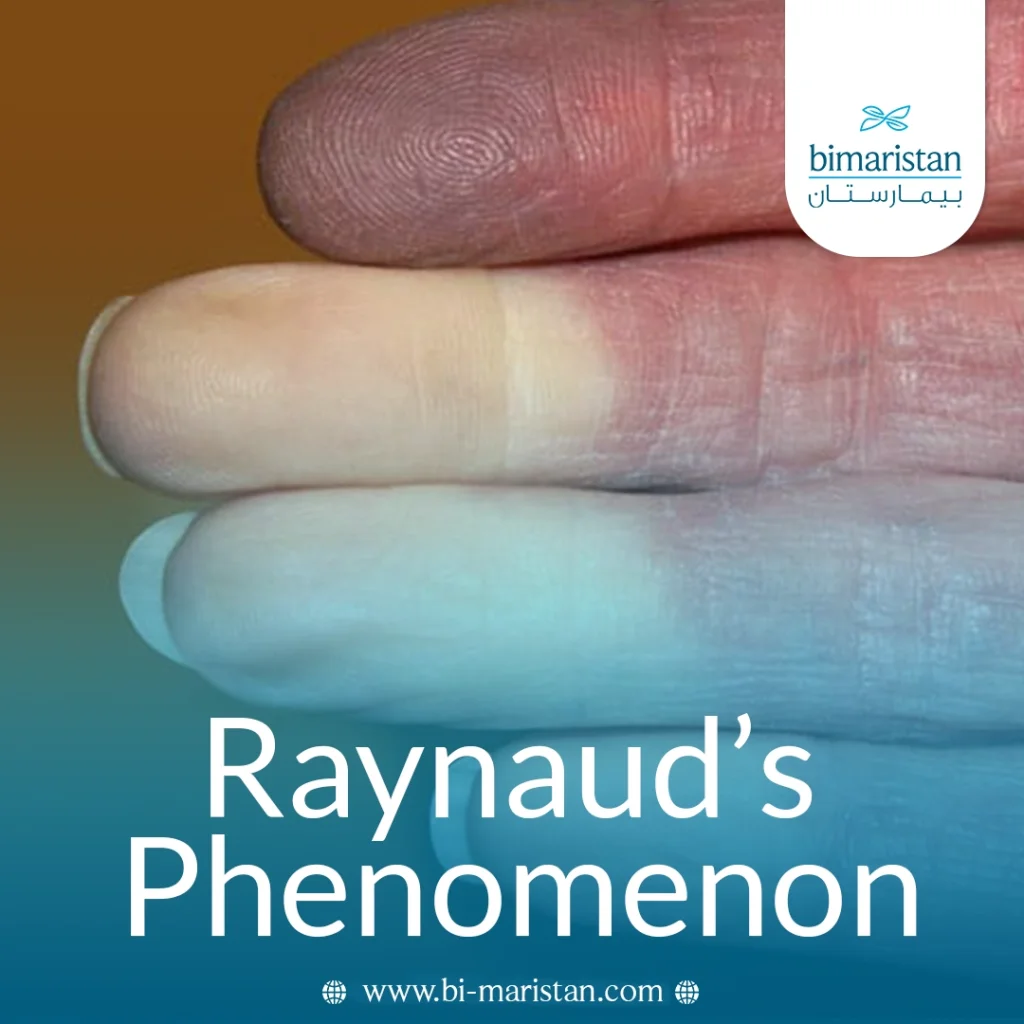

Raynaud’s phenomenon is a vascular disorder that affects the response of the limbs to cold or stress, often manifesting as brief episodes. Although the symptoms may seem minor at first, they reflect a change in microvascular behavior. Recognizing the nature of the condition helps in understanding its possible causes and distinguishing its initial form from conditions associated with other diseases. This allows you to choose the proper medical evaluation and initiate effective treatment options when needed.
What is Raynaud’s phenomenon?
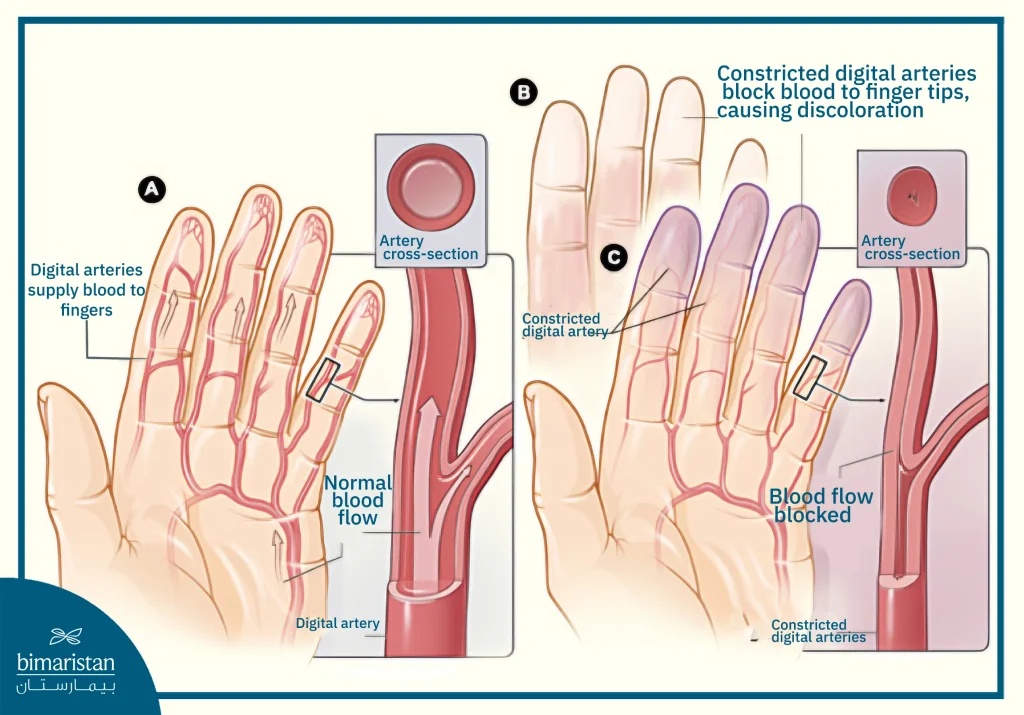
Raynaud’s phenomenon, also called Raynaud’s syndrome or Raynaud’s disease, is a disorder that affects the small blood vessels that supply blood to the fingers and toes and can sometimes include a lack of blood to the toes, earlobes, nose, or lips. It’s caused by a sudden spasm of blood vessels when exposed to cold or stress, resulting in a temporary reduction in blood flow and episodes of skin discoloration, coldness, or numbness.
Types of Raynaud’s phenomenon
Before differentiating between the two types, it is important to understand that the disorder does not present in the same way in all patients; it can be a simple isolated condition or an indication of another disease in the body, so Raynaud’s phenomenon presents in two main patterns:
1) Initial Renaud
It is the most common and mildest form in terms of symptoms, and often starts at a young age, especially between the ages of 15-25. This type is usually not associated with any other diseases and appears as intermittent attacks that respond to warmth and subside spontaneously. It is more likely to occur in females and in people living in colder regions.
2) Secondary Renaud
Less common but more severe, it usually appears later in life, often between the ages of 35-40. It is characterized by occurring as part of another health condition and may be accompanied by more severe symptoms or permanent vascular changes, requiring careful medical evaluation to determine the underlying factor.
Causes of Raynaud’s phenomenon
The exact cause of Raynaud’s disease is not yet known, but studies indicate that there is a disorder in the mechanism of vasoconstriction when exposed to cold or stress, and the cause of the condition varies according to its type; the primary form has no clear cause, while the secondary form is associated with a group of diseases or factors that affect the perfusion of the limbs or the function of blood vessels.
I. Diseases and medical conditions that may cause secondary Raynaud’s
Several disorders are associated with the onset of secondary Raynaud’s phenomenon due to their effect on the blood vessels or immune system, the most important of which include:
- Connective tissue diseases: Lupus, scleroderma, and CREST syndrome
- Diseases of the arteries: Buerger’s disease, narrowing or hardening of the peripheral arteries
- Autoimmune diseases: Rheumatoid arthritis, Sjogren’s syndrome
- Muscle and skin diseases: Dermatomyositis, polymyositis
- Other conditions: Pulmonary hypertension, thyroid disorders, and certain blood diseases
II: Medications and substances that may trigger Raynaud’s attacks
Certain medications or chemicals can cause blood vessels to narrow, increasing the likelihood of Raynaud’s attacks, including:
- Beta blockers
- Nicotine and cocaine
- Exposure to resinous materials
- Stimulants such as caffeine and some ADHD medications
- Chemotherapy drugs (such as vinblastine and bleomycin)
- Vasodilator medications used for migraines (such as ergotamine)
- Nasal decongestants containing phenylephrine or pseudoephedrine
III: Mechanical or environmental factors
Factors that may lead to limb ischemia include:
- Repeated injuries or trauma to the hand
- Prolonged use of vibrating tools
- Exposure to extreme cold or frostbite
- Repetitive movements, such as playing the piano or rigorous manual labor
IV: Changes in blood properties
In some cases, increased blood viscosity or high platelet or erythrocyte counts may trigger seizures by limiting blood flow in the peripheral capillaries.
Raynaud’s phenomenon symptoms
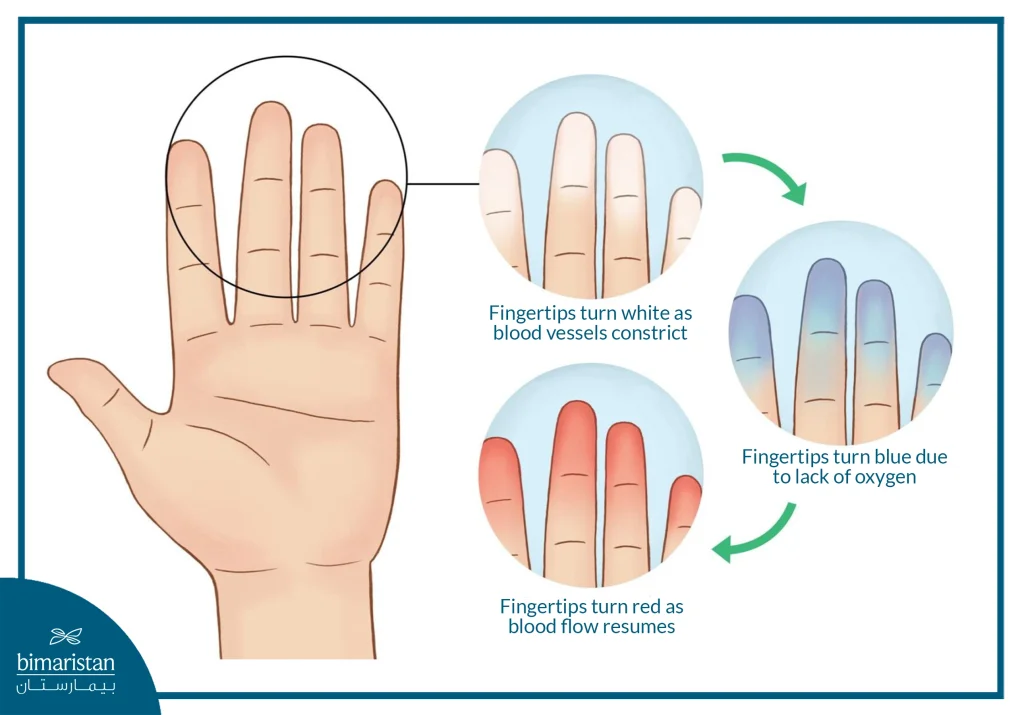
Raynaud’s phenomenon symptoms appear as intermittent attacks that often occur when exposed to cold or stress, primarily affecting the fingers and toes, but may also spread to the toes, ears, nose, or lips. Symptoms range in severity from brief, mild attacks to more pronounced symptoms in people with the secondary form. The most common symptoms of Raynaud’s disease include:
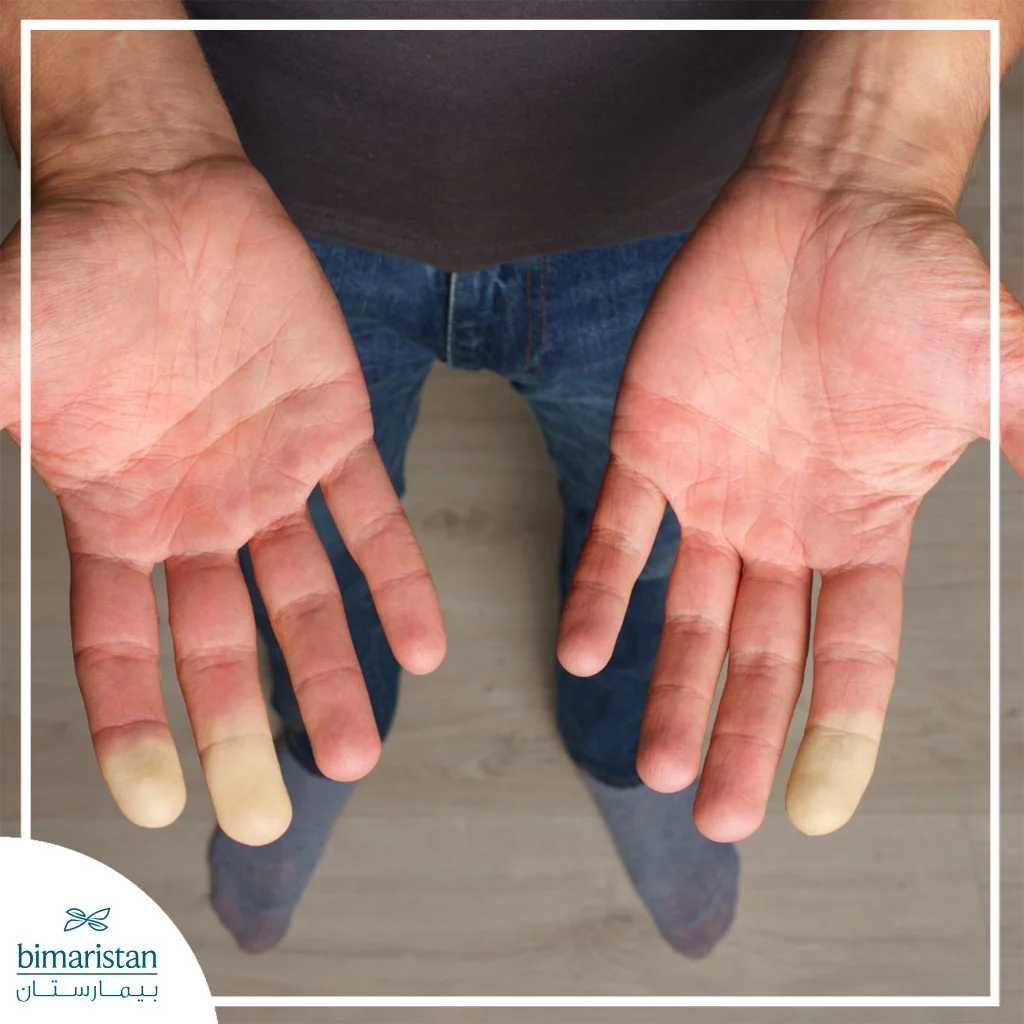
- The skin on the fingers changes color, becoming pale or white, then may turn blue before returning to red as perfusion improves
- Numbness or tingling as the blood returns to flow, which may be accompanied by a pulsating sensation or mild pain
- Coldness and numbness in the affected area during the seizure
- Temporary swelling of the fingers after the seizure has passed in some people
Risk factors for Raynaud’s phenomenon
Risk factors differ between primary and secondary Raynaud’s phenomenon, with some groups being more likely to develop the condition than others. These factors do not directly cause the disease, but they do increase the likelihood of vasoconstrictor episodes in susceptible people.
Risk factors for primary Raynaud’s include:
- sex: Significantly more women than men.
- Age: Often begins before the age of 30, especially during the teenage years and early adulthood.
- Climate: Common in people who live in cold regions.
- Family history: Having a similar condition in a family member increases the likelihood of developing the condition.
Risk factors for secondary Raynaud’s include:
- Smoking, which further narrows blood vessels and impairs limb perfusion
- Nature of work, such as frequent use of vibrating tools or working for long periods of time in cold weather
- Occupational exposure to certain chemicals, such as certain solvents or materials used in the plastics industry
- Certain chronic diseases, especially autoimmune diseases, connective tissue diseases, or certain nerve and muscle disorders
- Taking medications that affect the constriction of blood vessels, such as some high blood pressure medications, migraine medications, or ADHD medications
Diagnosis of Raynaud’s phenomenon
The diagnosis of Raynaud’s phenomenon is based on a comprehensive evaluation that combines history, clinical examination, and observation of the nature of the seizures that recur when exposed to cold or stress. The doctor may ask the patient to describe the color changes or even photograph them during an attack, because seeing the color sequence helps confirm the diagnosis. In some cases, especially when symptoms begin after the age of 35, additional tests are performed to check whether the condition is primary or related to another disease. To differentiate between primary and secondary types, a range of tests may be used, the most important of which are:
- Capillaroscopy of the capillaries around the nails: A drop of oil is applied to the base of the nail, and the capillaries are examined under a microscope for any enlargement or deformation, signs that may indicate the presence of connective tissue disease.
- Cold stimulation test: The hand is exposed to a cold environment to observe the color change and intensity of the vascular reaction.
- Various blood tests that help detect diseases predisposing to secondary Raynaud’s, including
- ANA antinuclear antibody test for detecting autoimmune diseases
- Erythrocyte sedimentation rate (ESR) is used to assess the presence of inflammation or immune disorders.
- Complete blood count (CBC) to check for blood disorders
- Rheumatoid factor (RF) testing when inflammatory joint diseases are suspected
- Additional tests, such as urine analysis or pulse volume recording to measure blood flow in the extremities, may be needed.
This integrated assessment helps confirm the diagnosis and determine whether Raynaud’s phenomenon is a simple primary condition or a sign of another disorder that needs careful follow-up.
Complications of Raynaud’s phenomenon
Complications of Raynaud’s phenomenon are rare in the primary form, and the symptoms are often mild and temporary, while they are more likely to occur in patients with the secondary form associated with immunologic diseases or vascular disorders. These complications are caused by recurrent ischemia of the fingers and the resulting impaired tissue healing. Possible complications include
- Localized infections due to skin cracks and a lack of blood flow
- Painful skin sores on the fingertips due to lack of oxygen and frequent episodes of anemia
- Poor wound healing in fingers or toes in patients with concomitant vascular disorders
- In severe cases, the functional capacity of the hand is reduced, affecting fine movements due to pain and sensitivity to cold
- Gangrene is a very rare complication that occurs with prolonged ischemia and may require surgical procedures if not treated early
Raynaud’s phenomenon treatment
The treatment of Raynaud’s phenomenon depends on the severity of symptoms and the type of condition (primary or secondary), and is primarily aimed at reducing the number of attacks, minimizing their severity, and preventing tissue damage. Simple daily changes often help control symptoms, while severe cases require medications or special procedures to improve blood perfusion.
First: Lifestyle changes to minimize seizures
Lifestyle modifications are a key step in controlling Raynaud’s phenomenon, helping to reduce the frequency and severity of attacks before any drug treatment is needed:
- Avoid touching cold objects or staying in heavily air-conditioned spaces
- Reducing exposure to triggers such as nicotine and caffeine
- Wear warm clothes in the cold, especially gloves and thick socks
- Avoid stress and emotions, and try to stay away from situations that trigger seizures as much as possible
- Warming your hands or feet when a seizure begins with warm (but not hot) water, placing your hands under your armpits, or moving your fingers
II: Medications used to treat moderate to severe cases
When lifestyle measures alone are not enough to control symptoms, your doctor may resort to drug therapy aimed at improving blood flow and relieving vascular spasms. The most important medications include:
- Calcium channel blockers: Such as nifedipine, amlodipine, and felodipine help relax blood vessels, reduce the number of seizures, and help heal ulcers.
- Vasodilators: These include losartan, some ED medications (such as sildenafil), fluoxetine, as well as prostaglandins that improve peripheral perfusion.
- Topical ointments: Nitroglycerin ointments are used to improve blood flow in affected areas, especially when sores are present.
- Alpha-blockers: Counteract the effect of norepinephrine, which causes vasoconstriction.
Third: Advanced procedures for severe cases
In severe or intractable cases that do not respond to conservative treatment, medical or surgical procedures may be used to minimize vasospasm and prevent complications. The most important procedures include
- Neurosurgery (sympathectomy): Aimed at disrupting the nerves that trigger vasoconstriction, it may reduce seizures for one to two years, but may need to be repeated later.
- Chemical or Botox injections: These are used to stop the nerve signals that cause the vessels to constrict, and can be repeated if symptoms return.
- Treating the underlying cause of secondary Raynaud’s: Like controlling lupus or rheumatoid arthritis, this is key to preventing the condition from worsening.
Preventing Raynaud’s phenomenon
Raynaud’s phenomenon episodes can be mitigated and their frequency reduced by following a set of preventative measures aimed at minimizing vascular stimulation and avoiding triggers that increase limb sensitivity. These steps aim to improve blood flow and keep small vessels as stable as possible, and include:
- Minimize sudden exposure to cold by gradually moving between warm and cold places, and avoid touching cold surfaces directly
- Avoid repetitive vibrations caused by industrial tools or activities that strain the hands for long periods of time
- Limit caffeine and stimulants, which may affect limb perfusion in some sensitive individuals
- Monitor the medications used and talk to your doctor if there are medications that may increase the likelihood of seizures
- Quit smoking, as it increases the sensitivity of blood vessels and causes them to narrow more easily
- Choose moderate physical activities that help stimulate blood circulation naturally, without overworking the limbs
- Pay attention to recurring injuries to the hands or feet and treat them early to avoid increasing vascular sensitivity
These daily measures help reduce the frequency of Raynaud’s attacks and the severity of symptoms, but do not replace a medical evaluation if the condition persists or worsens over time.
In conclusion, Raynaud’s phenomenon is a common condition that can be lived with by understanding its causes and dealing with its triggers. Early diagnosis helps avoid complications and improve control of daily symptoms, and with effective treatments and specialized care available in Turkey, patients can access an accurate assessment and appropriate treatment plans. Bimaristan Medical Center provides the necessary support to accompany the patient through their treatment journey with the highest level of quality and attention.
Sources:
- MedlinePlus. (2024, June 11). Raynaud phenomenon. U.S. National Library of Medicine.
- Johns Hopkins Medicine. (2025). Raynaud’s phenomenon.