
LASIK Surgery in Turkey 2026

dr. Muhammed Alkhatib Updated: 11 min read

LASIK surgery in Turkey is a sensitive and precise procedure aimed at correcting vision defects and improving vision for a large group of patients without needing prescription glasses or contact lenses.

LASIK eye surgery in Istanbul is one of the most common procedures and may be the most widely used therapeutic procedure in the field of ophthalmology within Turkish territory. By precisely directing laser beams toward the eye, it is possible to correct various vision problems in a procedure that typically lasts no more than 20 minutes in normal cases and at a low cost compared to neighboring countries.

But what do we mean by LASIK eye surgery? How is this procedure performed in its various types, who is the target audience, and why is it preferred in Turkey over others? We will explain all the details of the procedure in this article. You can also request a free consultation through our website and inquire about special discounts for LASIK surgery by contacting us.

The principle of LASIK surgery in Turkey

The word LASIK is an acronym for Laser-assisted in situ keratomileusis, which means “correcting the curvature of the transparent corneal layer using laser.”

To understand its main principle, let us first illuminate the concept of natural vision and how it occurs from the moment we focus on something until we understand the image we see with our eyes. This process occurs instantaneously and quickly in less than a fraction of a second.

In the ideal case, when a person looks at an object, light rays emanate from the body being observed. These rays then enter the eye of the observer and reach the cornea and the transparent lens (the front part of the eye). The entering rays are refracted to varying degrees depending on the distance of the observed object from the eye, to position the shadow beam accurately on the retina (the back part of the eye).

Viewing distant objects requires refracting the beam differently than when viewing close objects. Thus, the rays fall completely on the retina, which then sends light signals to the brain to interpret the visual images clearly.

The cornea may suffer from some problems that affect its natural shape and ability to curve correctly, meaning that the light rays may refract more or less than necessary, causing a distortion in the position of the image on the retina and thus blurring of near or distant vision. Here lies the benefit of Lasik in Turkey in correcting the defective shape of the cornea so that it can provide the necessary refraction of light, achieving excellent and clear vision at all distances.
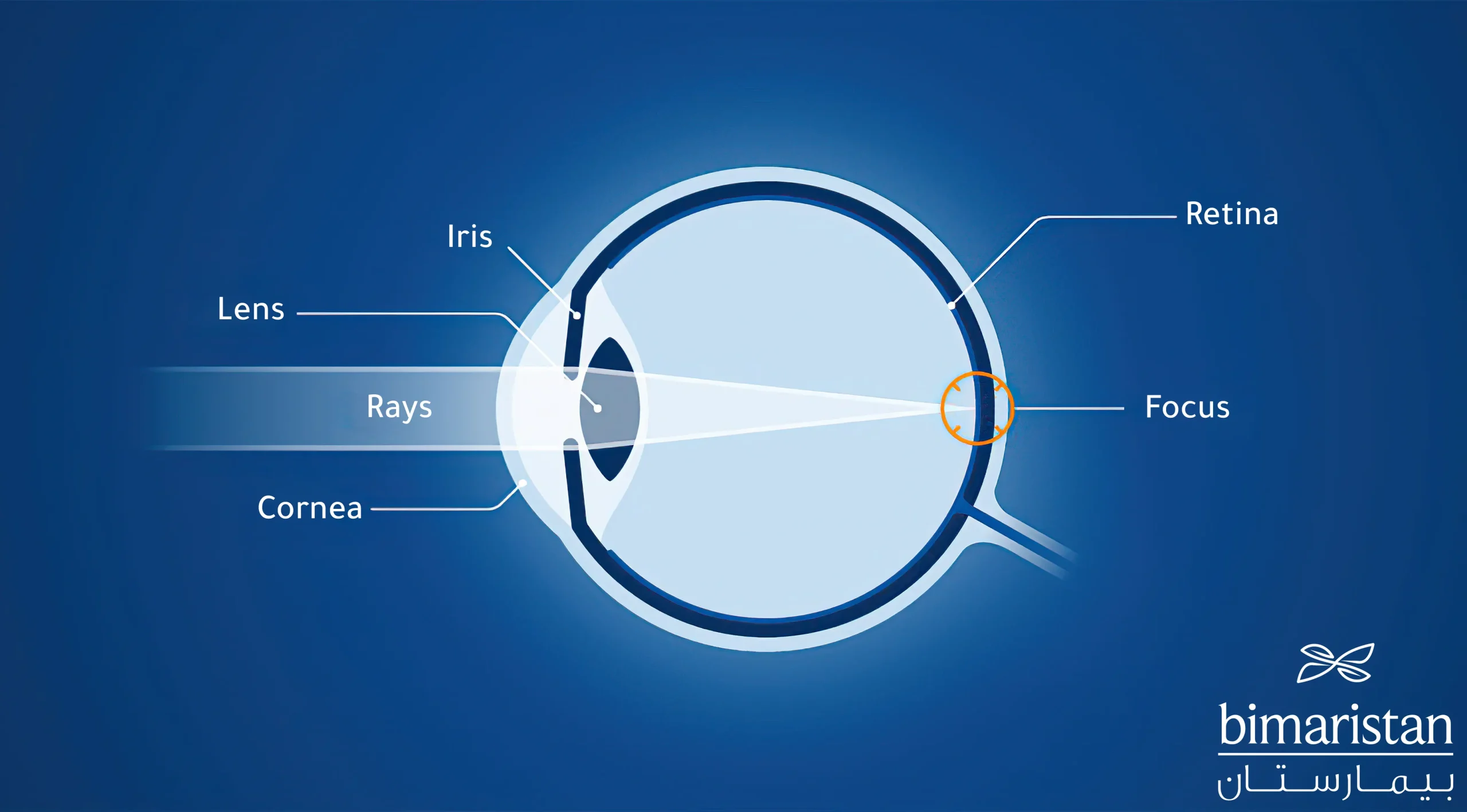
This Picture Illustrates The Process Of Natural Vision And How Light Rays Enter And Refract Until The Shadow Falls Perfectly On The Retina. Lasik Surgery In Turkey Aims To Correct Refractive Errors Of These Light Rays To Provide Clear And Sharp Vision.
Clear Vision Occurs When The Light Ray Refracts Correctly As It Enters The Eye.

Cases Treated with LASIK Surgery

As mentioned earlier, the eye’s cornea can be affected by some diseases that affect its function and shape, leading to defects in clear vision. Some of these conditions include:

Myopia (Nearsightedness)

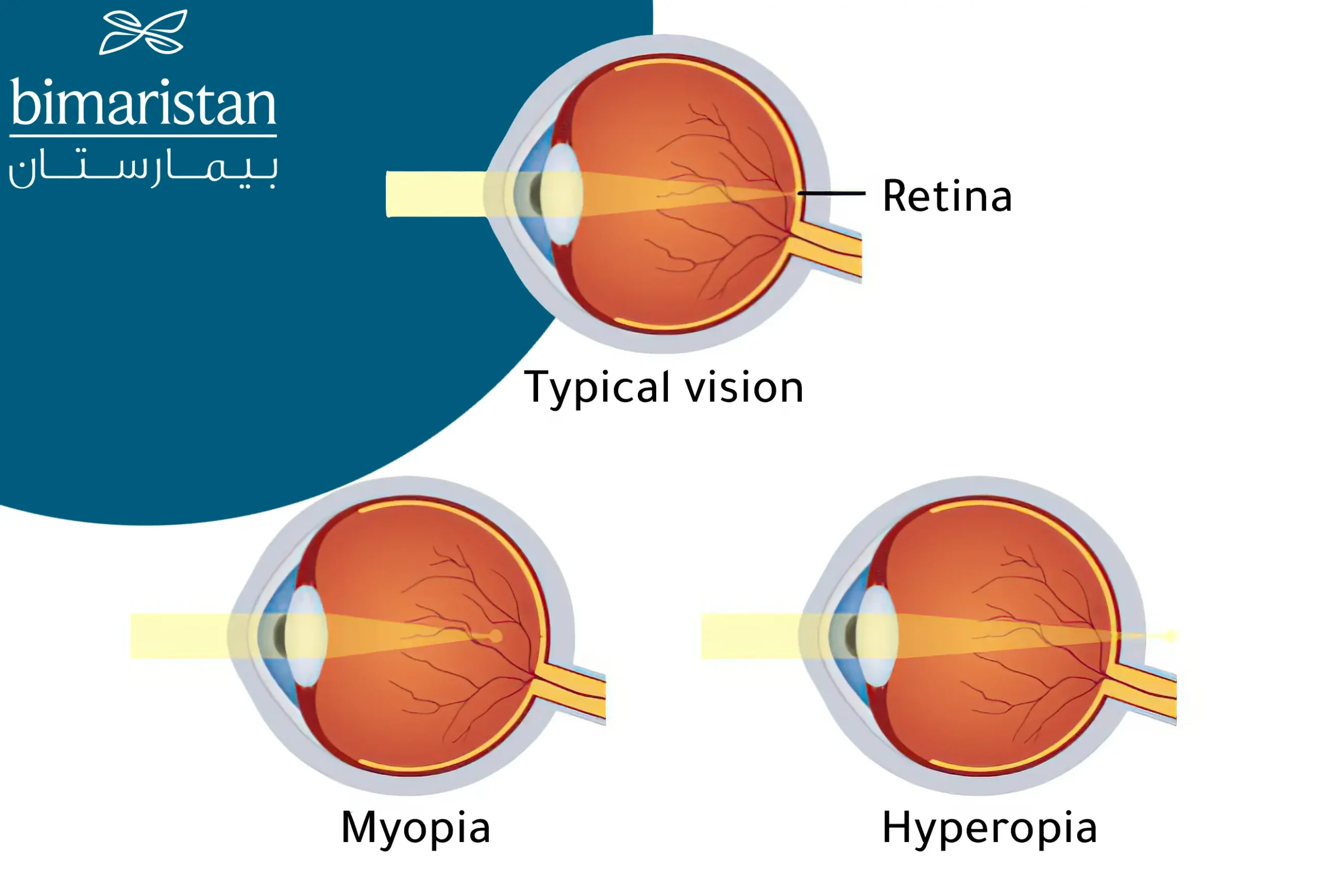
Patients with myopia have difficulty with distant vision (objects appear blurry and hazy from afar) because their corneas are curved more than normal. This causes light rays from a distance to converge in front of the retina rather than directly on it.

This problem can be corrected by wearing prescription glasses or contact lenses. Still, some individuals prefer not to do so and opt for LASIK treatment in Turkey, which eliminates the need for them.

Hyperopia (Farsightedness)

For these individuals, their problem is the opposite of what occurs in myopia. They can see distant objects clearly but suffer from blurriness when looking at near objects. They may find themselves pushing things away to see them clearly (especially when reading). This issue is due to the cornea being too flat. It can be permanently corrected through LASIK eye correction. Lens implantation surgery may also be beneficial in treating this condition when the cause is related to a problem with the lens.

You can read more about the Top 10 causes of Blurry Vision on our site.

Astigmatism

In this condition, the cornea is irregularly shaped or lacks its round shape, leading to a defect in the spherical refractive surface of the eye. This causes blurriness or distortion in vision for the patient. You can read more about Astigmatism.

A Picture Showing Vision Defects That Can Be Corrected Through Lasik Surgery In Turkey.
Refractive Errors That Can Be Corrected Through Lasik Surgery In Turkey.

How is LASIK surgery performed in Turkey?

A skilled eye surgeon first examines the eye using Ultrasound technology, focusing on the cornea to determine the amount of tissue that needs to be removed and reshaped during the procedure.

The procedure begins with local anesthesia around the eye to ensure you do not feel any pain or discomfort. Then, the doctor uses a speculum to separate and hold the eyelids apart, keeping the eye open throughout the procedure.

The corneal surface is then lubricated with a mild alcohol solution for a short period, approximately 30 seconds. Then, this solution is thoroughly removed to ensure the corneal surface is clear for the doctor. The superficial layer of the cornea is then separated from the inner part using a laser, allowing the correction of any defects on the corneal surface.

Using a specified laser, excess tissue is removed, or the shape of the cornea is corrected to enable proper refraction of light rays and ensure the image falls directly onto the retina. After this is completed, the superficial layer of the cornea is repositioned and adequately covered, and the clip holding the eyelids apart is removed.

Typically, this entire procedure takes about 20 minutes, and complications or side effects are rare, especially when performed in an advanced center under the supervision of an experienced doctor.
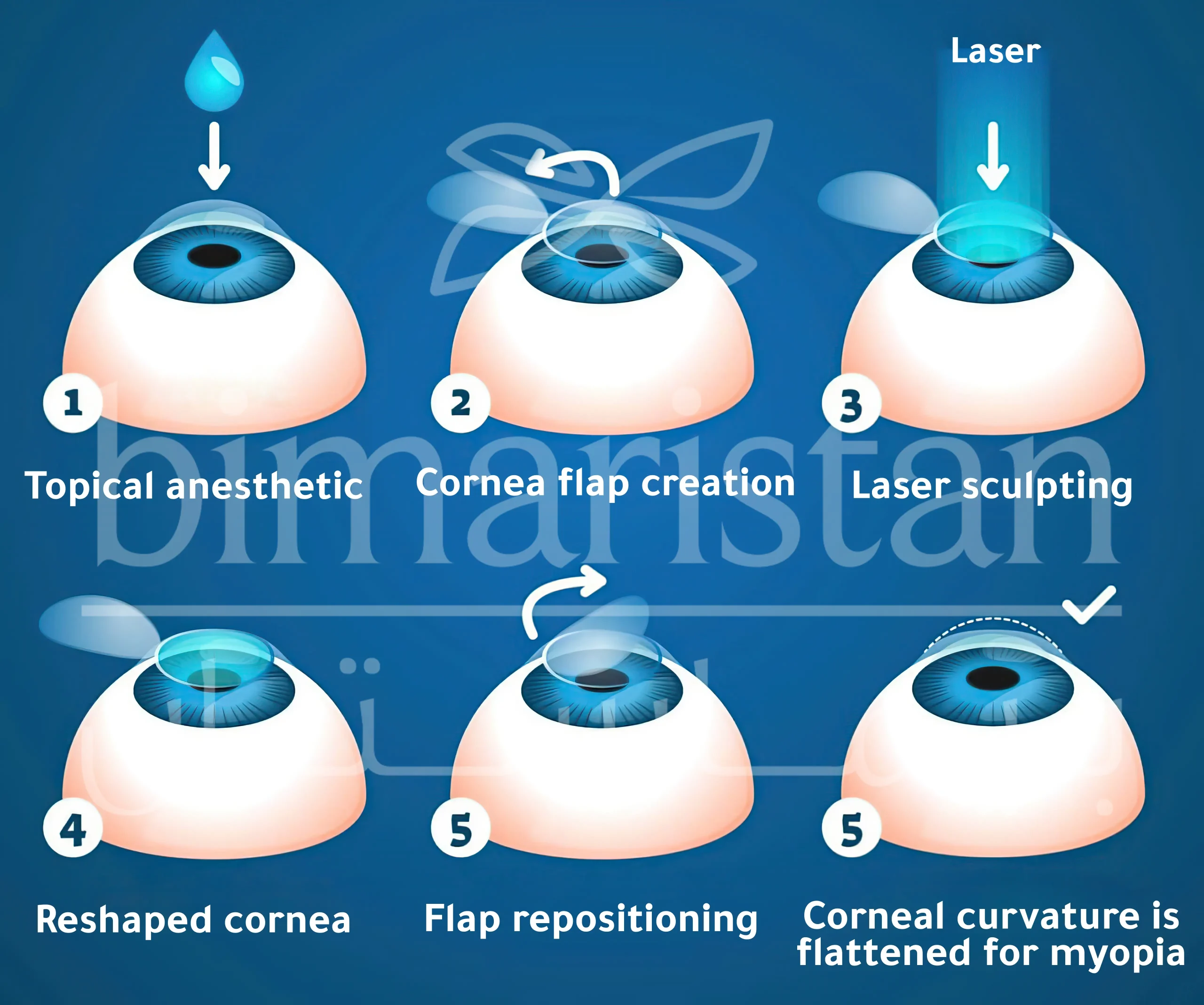
Steps To Perform Lasik Surgery In Turkey.
Stages Of Lasik Surgery In Turkey.

Types of LASIK surgeries in Turkey

There are several types of laser eye surgeries based on the type and specifications of the laser used and the procedure’s method. After discussing this matter with your doctor, you can choose the type you prefer, who will determine the best option for you based on your condition. The types are as follows:

Surface Laser Ablation

This somewhat older method has become less commonly used due to significant advancements in the field, and modern LASIK has replaced it. However, it is still used in fragile corneas that are difficult to treat with advanced methods.

Traditional LASIK (Mechanical Microkeratome)

This type involves isolating the superficial layer of the cornea from the inner part, which remains attached to the eye. Then, the laser is used to correct the curvature of the corneal surface, followed by repositioning the superficial tissues in place, ensuring their adherence to the inner part.

Femto-LASIK eye surgery in Turkey

It is one of the most popular, safe, and fast types of LASIK, contributing to its widespread use. It relies entirely on laser without using any sharp tools. It also involves separating the superficial part from the inner tissue of the cornea, followed by correcting any defective curvature.

Femto-smile LASIK in Turkey

This is the latest and most advanced method for treating most visual defects, even in individuals with extremely thin corneas. It is performed in a single step without the need to lift and separate parts of the cornea.

What should you do before LASIK eye surgery?

Before undergoing vision correction, you must undergo an eye examination to determine the main problem you are experiencing. This is a fundamental requirement before undergoing LASIK surgery in Turkey.

The eye examination includes assessing visual acuity, measuring eye pressure, and determining corneal thickness. It is crucial to fully understand the problem before LASIK vision surgery is performed.

There are some instructions and tips to follow before the procedure, including:

  • Stop wearing hard contact lenses at least a week before the procedure, as they may interfere with it.
  • Reduce screen time and mobile phone use the day before the procedure to rest your eyes well.
  • Completely avoid using makeup powders at least 24 hours before your surgery.
  • Drink plenty of water to avoid eye dryness, speed up recovery, and avoid consuming alcohol, which can cause dry eyes.
  • Consult your doctor and inform them of your medical history, and do not hesitate to ask any questions about the procedure, how to prepare for it, and recovery afterward.

One of the most important things to do before Laser eye surgery is to choose the best center and have the best experienced doctor so that you feel comfortable and avoid worrying about potential side effects of the procedure. We can help you with that! Our team consists of medical professionals knowledgeable about all ophthalmology centers in Turkey that provide the best services at the lowest possible costs. Reach out to us.

What happens after LASIK surgery in Turkey?

The recovery and healing phase after LASIK eye surgery is crucial, and patients must follow their doctor’s instructions during this time to ensure the best results from the procedure.

Feeling some discomfort and mild pain in the moments following LASIK treatment is normal. There is no need to worry as this is a natural occurrence due to corneal stimulation during the procedure. These side effects usually subside quickly and spontaneously.

You may also feel like something is stuck in your eye after the procedure, accompanied by slight headaches. These are all temporary and typically disappear after a short period following LASIK.

Your doctor will prescribe pain-relieving and anti-inflammatory eye drops to alleviate these symptoms. You may feel a strong urge to rub your eye, but you must completely avoid doing so.

Someone must accompany you home after undergoing LASIK as your eyes will be sensitive to light. You should wear protective sunglasses when leaving the doctor’s office.

Eye pain lasts two to three days after LASIK treatment, and discomfort usually subsides within a few days after the procedure. However, light sensitivity and blurred vision may persist even after a week.

You will gradually notice an improvement in vision during the few weeks following LASIK, and you can return to work on the fourth or fifth day after it.

During the first two weeks after LASIK surgery, it is advisable to wear sunglasses to protect your light-sensitive eyes from sunlight.

Now, dear reader, here are some tips for the few days following laser eye surgery in Turkey:

  • It is essential to avoid physical and visual strain.
  • Try covering your eyes, especially on the first night, to prevent continuous movement during sleep. You can wear a protective shield.
  • Avoid swimming or washing your face during the initial days after LASIK eye surgery.

Side effects of LASIK eye surgery

It should be noted that the occurrence rate of side effects varies depending on the medical center where the procedure is performed. The more advanced the center and the better the medical team, the rarer and even absent the side effects.

Some of the most common side effects of LASIK surgery include:

  • Dry eyes: This is the most common side effect encountered during this procedure, often accompanied by itching and burning sensation inside the eye.
  • Blurred or double vision, halos, or glare, especially at night, usually resulting from pupil dilation during the procedure.
  • Poor corrections: If the corneal problem is not adequately corrected, the patient will not achieve the desired results from LASIK.
  • Astigmatism: This is one of the possible complications of LASIK surgery due to uneven tissue removal.
  • Vision disruption (extremely rare): Happens because of the cuts and flaps made on the cornea and usually goes after a short period of time.

Complete vision loss is considered an extremely rare complication. According to a recent study, this complication occurs in only one patient out of every 5 million who undergo the procedure. Often, the cause is attributed to the incompetence of the treating physician.

Cost of LASIK surgery in Turkey in 2024

Due to the significant price differences between countries, this question might be among the most important and frequently asked by patients interested in undergoing LASIK surgery. For example, the cost in the United States may reach around $2000 US dollars per eye, while in Germany, it’s estimated at around €1500. In the UK, LASIK surgery typically starts at over £1000.

Rest assured, dear reader, that in Turkey, alongside the exceptional services and medical advancements you will witness firsthand, the price isn’t as high as in other countries. Typically, the cost of LASIK surgery in Turkey starts at just $500 US dollars per eye, which is a crucial factor for many patients in choosing Turkey for this procedure, especially when considering the scientific progress and the use of the best and latest medical devices under the supervision of elite ophthalmologists worldwide.

In conclusion, LASIK surgery in Turkey aims to correct vision problems without permanently wearing contact lenses or glasses. This procedure is characterized by high efficiency in Istanbul and the use of the latest equipment, making Turkey one of the leading tourist destinations for many patients seeking laser vision correction surgery.


Some of the references we used:

  1. Understanding LASIK.
  2. Laser Eye Surgery for the Correction of Refractive Errors.

Frequently Asked Questions

What are the requirements for LASIK surgery in Turkey?

Undergoing LASIK eye surgery requires the patient to be over 18 years old and for the vision problem not to have occurred suddenly and deteriorated rapidly. Additionally, the cornea must have sufficient thickness and a regular surface, and the irregularity should not be relatively minimal.

What is the success rate of LASIK surgery in Turkey?

Very high and can reach up to 100% in some centers, but on average, it exceeds 90%.

What is the appropriate age for LASIK eye surgery?

According to studies, it is best for a person to be around 21 years of age or older.

Is laser eye surgery dangerous?

LASIK surgery is considered very safe, with a very low risk of side effects, not exceeding 1% of all cases.

How long does LASIK eye correction surgery take in Turkey?

LASIK surgery takes approximately 10 to 15 minutes per eye, meaning the procedure takes roughly from one-third to half an hour for both eyes.

What is the best moisturizing eye drop after LASIK surgery?

The doctor will prescribe some eye drops to prevent dryness and alleviate temporary symptoms following LASIK surgery (such as pain and itching), and usually, the preferred type is Systane Ultra Lubricant eye drops, which provide long-lasting relief for the eyes.

When can I use a mobile phone after LASIK surgery?

A person can start using their mobile phone or computer after 24 hours of the surgery, but caution and moderation in usage are advised in the early days until the eye heals and fully recovers.

What is the difference between LASIK and Femto-LASIK?

LASIK has several types, the most important of which are traditional LASIK and Femto-LASIK. Femto-LASIK is considered one of the best types of LASIK because it is safer and faster, and does not require the presence of any sharp instruments but is performed using laser only.

What are the contraindications for LASIK eye surgery?

LASIK eye surgery is prohibited in Turkey in several cases including:

  • Age under 18 years.
  • Those with keratoconus or active corneal ulcers.
  • Those found to have very thin corneas upon examination.
  • Other eye conditions such as glaucoma or cataracts and retinal disorders.

When does vision return to normal after LASIK surgery?

This depends on the extent of the patient’s compliance with the instructions given by their doctor, but on average, vision returns to its normal state within one to three months after LASIK surgery.

Is LASIK eye surgery painful?

NO, LASIK application is never painful because it is preceded by local anesthesia to the eye.

Is there a specific age for LASIK surgery?

Yes, it should be performed after the age of 18, and it is preferable to wait until the age of 21.

Does wearing contact lenses affect LASIK surgery?

The person should refrain from wearing contact lenses for at least one month before and two months after the surgery, following consultation with their doctor.

Which is better, LASIK or PRK?

PRK is considered better when it comes to certain corneal defects. For example, some individuals have very thin corneas or have some ulcers in the cornea, so PRK is naturally preferable in such cases.
Additionally, PRK is preferred in cases of dry eyes because it is associated with lower rates of post-surgical dry eye occurrence. However, it should be noted that it takes longer to recover from PRK compared to LASIK.

1

sent succesfully
We will respond to you as quickly as possible
Scroll to Top