
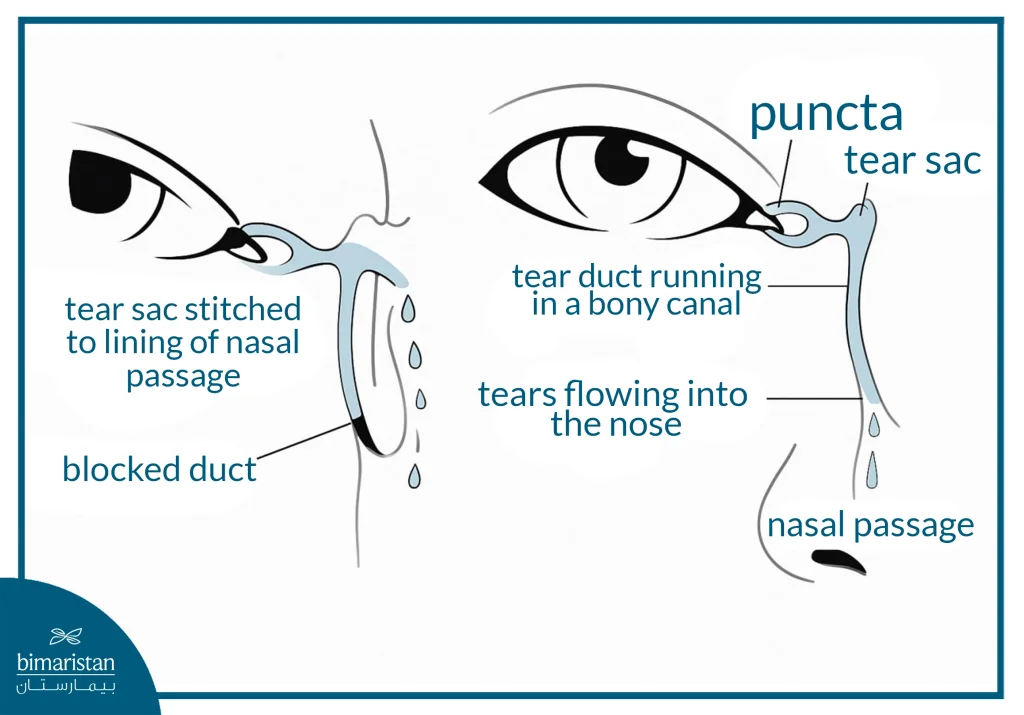
Tear duct obstruction is one of the most common causes of excessive tearing and occurs when the pathway that drains tears from the eye to the nose becomes blocked, often requiring tear duct obstruction surgery in persistent cases. The lacrimal gland, located beneath the outer corner of the upper eyelid, produces tears to lubricate and protect the eye. These tears then drain through small openings called lacrimal puncta at the inner eyelid margins, pass through fine channels into the lacrimal sac, and finally flow through the nasolacrimal duct that carries tears into the nose.
In normal conditions, there is a balance between the amount of tears produced and drained, but when any part of this pathway is blocked, tears collect and spill out of the eye, causing what is known as a watery eye, and this may be accompanied by sticky discharge or recurrent infections due to the stagnation of tears in the lacrimal sac.
What is a blocked tear duct?
Tear duct obstruction is a narrowing or closure of the tear duct that prevents the normal drainage of tears from the eye to the nose, leading to pooling and recurrent eye infections. The obstruction can be congenital in children or acquired in adults, resulting from chronic infections or age-related changes in ductal structure. In this case, the patient experiences persistent watery or sticky discharge from the inner corner of the eye.
When drug therapy or simple massage fails, a surgical procedure known as dacryocystorhinostomy (DCR) is performed to create a new pathway for tears to drain from the lacrimal sac directly into the nasal cavity, either through a small external incision or an endoscopic endonasal approach with no visible incision.
Causes of blocked tear ducts
Tear duct obstruction occurs when the pathway through which tears flow from the eye to the nose is blocked, and the exact cause is often unknown. However, there are several factors that can lead to a narrowed or blocked tear duct, including:
- Chronic infections in the nose or sinuses that cause swelling of the lining of the nasal canal
- Congenital abnormalities in the structure of the tear duct from birth
- Blockage caused by a tumor pressing on the tear duct
- Chronic inflammation of the conjunctiva of the eye(conjunctivitis)
- Injuries or fractures to the nose or eye area, leading to narrowing of the canal
- Narrowing of the duct as a result of aging or recurrent infections of the lacrimal sac
Symptoms of a blocked tear duct
Symptoms of tear duct obstruction vary according to each patient:
- Persistent watery eyes even without an obvious cause
- Mucous or purulent discharge from the inner corner of the eye
- Pain or swelling in the area of the lacrimal sac near the nose
- Recurrent redness around the eye or chronic eyelid irritation
- Temporary blurred vision due to tears collecting on the surface of the eye
Diagnosis of tear duct obstruction
The diagnosis of a blocked tear duct is based on a careful clinical examination by an ophthalmologist to assess the flow and drainage of tears. The doctor starts by noticing a runny tear or swelling in the inner corner of the eye, then performs a tear drainage test by placing a safe dye on the surface of the eye and following its path to see if it reaches the nose normally or collects on the eye. The lacrimal duct lavage test is used to determine the location and degree of blockage, where a small amount of solution is injected through the tear duct to see if the duct is open or closed.
In some cases, radiography or dye imaging is performed to clarify the exact shape of the duct, and the doctor may also resort to a nasal endoscopic examination to rule out any blockage inside the nose that prevents the drainage of tears. Together, these tests help to pinpoint the exact location of the blockage and choose the most appropriate treatment method for each patient.
Treatment options for tear duct obstruction
Treatment for tear duct obstruction depends on the location, cause, and severity of the obstruction. In minor or temporary cases, warm compresses and massage of the lacrimal sac area can help improve drainage, especially in children with mild congenital obstruction. Anti-inflammatory drops, ointments, or antibiotics are also used when there is an accompanying infection.
In cases that do not respond to conservative treatment, lacrimal duct dilation, a simple procedure that temporarily or permanently opens the blocked duct, may be performed. When the blockage is complete or chronic, corrective surgery, dacryocystorhinostomy (DCR), is the most effective solution for restoring normal tear flow.
Dacryocystorhinoplasty (DCR Surgery)
Dacryocystorhinoplasty (DCR) aims to create a new pathway for tears to drain from the lacrimal sac directly into the nasal cavity, bypassing the blocked portion of the duct. The procedure is performed in two ways: Externally through a small incision next to the nose or endoscopically inside the nose with no visible incision.
In both cases, a small portion of the bone that separates the lacrimal sac from the nasal cavity is removed, and then the lining of the sac and the nose are opened and joined together to form a new tear duct. A temporary silicone tube is usually placed inside the duct to keep the passage open during healing and is removed after 6 to 8 weeks. The procedure is performed under general or local anesthesia and usually takes between 45 and 90 minutes.
Difference between external tear duct obstruction surgery and endoscopic tear duct obstruction surgery
External tear duct obstruction surgery: A small incision is made on the side of the nose to access the lacrimal sac. A small section of bone is removed to connect the sac to the nasal lining, then the skin layers are closed with fine sutures, which are removed after about a week. A temporary silicone tube is placed to ensure the duct remains open. A small scar may appear at the incision site, but this will gradually disappear over a few months.
Endoscopic tear duct obstruction surgery: It is performed from inside the nose using a tiny endoscope without the need for any external incision. The bone that separates the lacrimal sac from the nose is removed in much the same way, and a new channel is created to drain tears. No sutures or nasal fillers are usually needed, and a silicone tube is left in for a similar period of time. This method is quicker and leaves no external scar, with success rates comparable to external tear duct obstruction surgery.
Recovery period after tear duct obstruction surgery
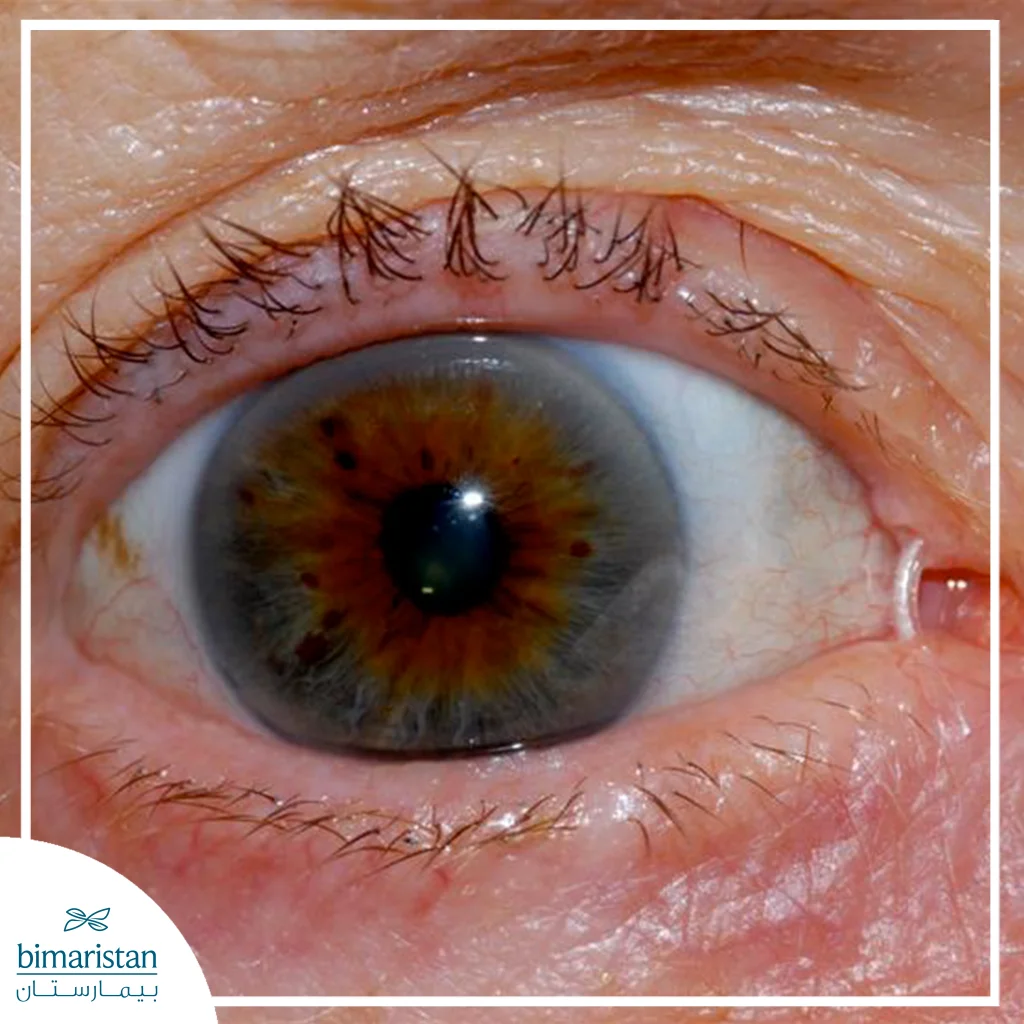
After surgery, the operation site is covered with a light bandage, and eye drops and ophthalmic ointments are used to reduce inflammation and prevent infection. The patient may feel a little swelling or mild bruising around the eye, which will gradually go away within two weeks. It is advised to avoid rubbing the eye, blowing your nose, or blowing hard during the first week to avoid moving the tube or opening the wound. Light daily activities can be resumed after a few days, while it is recommended to stay away from strenuous exercise and swimming for the time being.
The stitches are removed after about a week in outpatient surgery, while the silicone tube is removed after about 6 weeks in both methods. Adherence to the doctor’s instructions and follow-up appointments is essential to ensure the success of the procedure and complete healing of the canal.
Success rates and possible complications of tear duct obstruction surgery
Tear duct obstruction surgery is one of the most successful procedures in ophthalmology, with success rates ranging from 90-95% for outpatient surgery and 85-90% for endoscopic surgery. The procedure allows for normal tear drainage and provides significant symptom relief in most patients. Minor complications may occur: Temporary eyelid swelling or bruising, mild nosebleeds for a few days, or minor irritation from the silicone tube.
Rare complications include infection, recurrent duct obstruction due to internal fibrosis, or a mild external surgical scar. Excessive nasal bleeding or tube slippage may occur if post-operative instructions are not followed, but most of these cases can be easily treated with no lasting effect on the final result.
Tear duct obstruction surgery cost in Turkey compared to other countries
The cost of tear duct obstruction surgery in Turkey compared to other countries varies according to the type of technique, the surgeon’s experience, and the medical center’s equipment.
| State | Average cost in dollars |
|---|---|
| Turkey | 1,000 – 1,800 |
| Germany | 3,000 – 5,000 |
| United Kingdom | 3,500 – 6,000 |
| United States | 4,000 – 7,000 |
Why Turkey is an ideal destination for tear duct obstruction surgery
Turkey is one of the leading countries in ocular microsurgery, thanks to its state-of-the-art technology for endoscopic nasal lacrimal cystoplasty without external incision, with doctors specialized in lacrimal and nasal surgery. Treatment costs are up to 60% lower than in European countries, with comprehensive medical care and international escort services through Bimaristan Medical Center, which connects patients with the best specialized hospitals.
Tear duct obstruction is a common condition that causes constant discomfort and irritating tearing, but thanks to advances in modern surgical techniques, it can be treated with high success and restore normal tear drainage without scarring or complications. Bimaristan Medical Center in Turkey offers the latest endoscopic and outpatient surgery techniques by a group of distinguished ophthalmologists, with careful follow-up to ensure the best results and restore eye comfort and quality of life.
Sources: