
Intraocular lens implantation in Turkey is one of the most advanced medical solutions for correcting vision issues that cannot be treated with LASIK or glasses. With advances in ophthalmic surgery techniques, this procedure has become a safe and effective option for many patients with severe nearsightedness, farsightedness, or corneal issues.
The combination of medical expertise, state-of-the-art technology, and affordability has made Turkey a favorite destination for intraocular lens implants. In this article, we review everything a patient should know about this procedure, from the definition and steps to the results and cost.
What is intraocular lens implantation in Turkey?
Intraocular lens implantation is an advanced surgical procedure in ophthalmology that aims to correct vision issues or restore clarity of vision by implanting a tiny artificial lens inside the eye. This technique is used either as an alternative to laser surgery in people who do not qualify for it due to corneal thickness or high degrees of visual impairment, or as part of cataract treatment by replacing the opaque natural lens with a clear lens.
The implanted lens is precisely placed inside the eye to properly focus light onto the retina, resulting in clearer, more stable vision. Intraocular lens implantation is a safe, effective, long-lasting and, in some cases, reversible procedure, with a noticeable improvement in visual quality within a short period of time after the procedure.
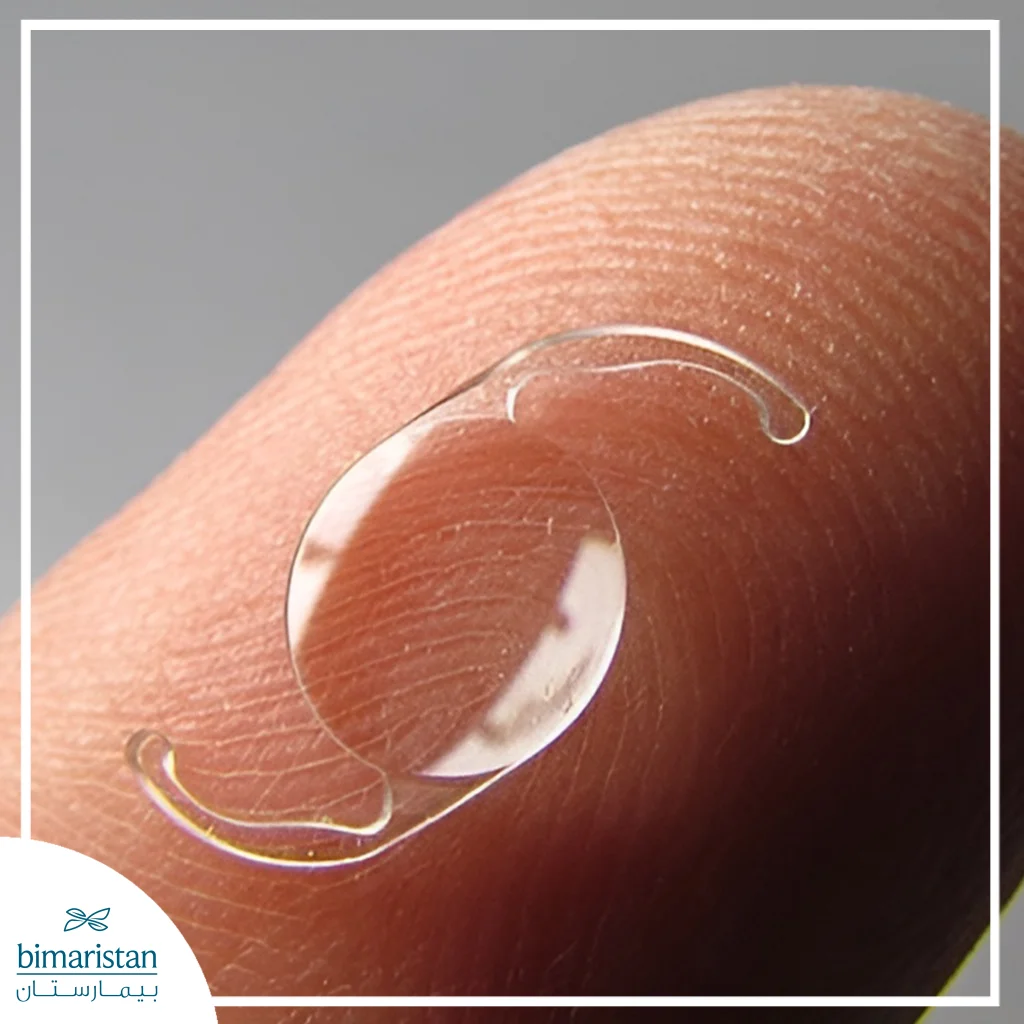
Types of intraocular lenses in Turkey
There are several types of intraocular lenses (IOLs), and the most appropriate type is determined for each patient based on vision status, eye health, and daily lifestyle. Here are the main types of lenses used with a brief explanation of each type:
- Monofocal IOLs: The most common, they provide clear vision for only one distance and are often adjusted for distance vision. Most patients then need glasses for reading or close activities.
- Monovision monofocal lenses: Each eye is set at a different distance, one for far vision and one for near vision, helping to reduce dependence on glasses, although some patients need an adjustment period.
- Multifocal IOLs: These lenses have multiple areas of focus that allow for near and far vision, and may significantly reduce the need for glasses, but some patients may notice glare or halos around lights at night.
- Extended Depth of Field (EDOF) lenses: Provide an extended field of view instead of multiple focal points, and provide excellent vision for long and medium distances, such as computer use, with the possibility of needing glasses for fine reading.
- Accommodative IOLs: Move or change slightly inside the eye to mimic the action of the natural lens, helping to improve vision at more than one distance and reduce reliance on reading glasses.
- Toric IOLs: Designed to correct astigmatism, they help improve visual acuity and reduce visual distortions, and are available in several categories such as monofocal, multifocal, and EDOF.
- Light-Adjustable Lenses: Their corrective power is precisely adjusted after surgery using special light sessions, allowing for the best possible visual outcome.
- Phakic IOLs: Implanted with the preservation of the natural lens, they are often used in patients who do not qualify for laser surgery due to high degrees of visual impairment or thin corneas.
Who are the candidates for intraocular lens implantation in Turkey?
Intraocular lens implantation in Turkey is recommended for people who meet one or more of the following criteria:
- People with refractive defects such as nearsightedness, farsightedness, or astigmatism to degrees that cannot be corrected by laser
- Patients with cataracts that affect the clarity of vision and hinder daily activities
- Patients who do not qualify for laser vision correction surgery due to thin corneas or high degrees of visual impairment
- Those with age-related farsightedness who want to reduce their reliance on reading glasses
- People looking for a permanent solution to improve the quality of vision and minimize the need for glasses or contact lenses
The patient’s suitability for this procedure is confirmed after comprehensive eye examinations and a thorough evaluation of the patient’s condition by a specialized ophthalmologist.
Steps of intraocular lens implantation in Turkey
Intraocular lens implantation in Turkey goes through several successive and precise stages, and is usually performed as a short procedure without the need for anesthesia, and includes the following steps in order:
- Preoperative examinations and preparation: The patient undergoes a comprehensive eye examination that includes measuring visual acuity, corneal shape and eye length to accurately determine the type and strength of the intraocular lens (IOL).
- Local anesthesia: The eye is anesthetized using special topical drops, and the patient may be given a mild sedative to help relax without pain.
- Making a tiny incision: The doctor makes a very small incision in the cornea, often a few millimeters long, which is self-closing and requires no stitches.
- Natural lens removal: An opaque or ill-fitting natural lens is removed using ultrasound technology, where the lens is broken up and then gently withdrawn from the inside of the eye.
- Intraocular lens implantation: The folded artificial lens is inserted through the same incision, which automatically opens inside the eye and locks into position.
- Finish the procedure and protect the eye: The incision is left to close on its own, and a clear protective shield may be placed over the eye to protect it after surgery.
- Follow-up immediately after the procedure: The patient remains under observation for a short period of time before leaving the medical center, with care instructions and necessary medications.
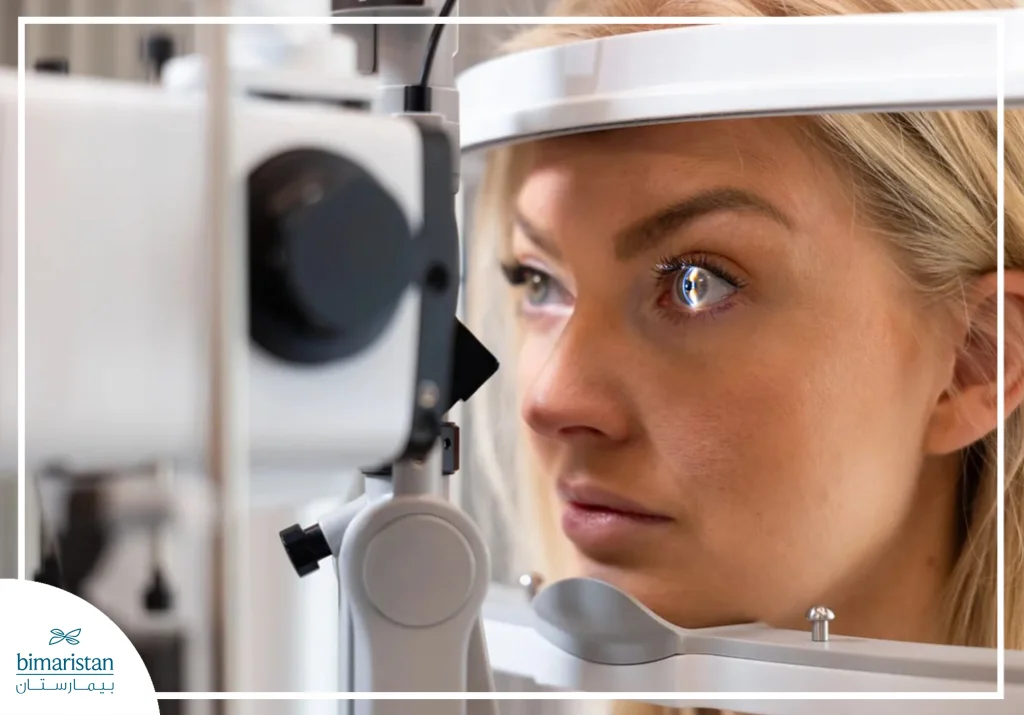
After intraocular lens implantation in Turkey
After the completion of intraocular lens implantation in Turkey, the patient can return home the same day with a noticeable improvement in vision within a short period of time, and some may notice a clear difference within the first day. Medicated drops are prescribed to help reduce inflammation and prevent infection, and it is advisable to adhere to the doctor’s instructions strictly. Recovery is quick in most cases, and you can return to light daily activities within a few days, while avoiding rubbing the eye or heavy physical exertion in the first period.
Some temporary symptoms such as glare or light halos may occur, especially with some types of lenses, but they often improve gradually with visual adaptation. Regular medical follow-up after surgery is essential to ensure that the lens remains stable and that the best possible visual outcome is achieved.
The results of intraocular lens implantation in Turkey and success rates
Intraocular lens implantation in Turkey achieves excellent results in terms of improving the quality of vision and high success rates, especially when performed by specialized doctors and advanced centers. Most patients notice a clear improvement in visual acuity shortly after the procedure, both in distance and near vision, depending on the type of lens implanted. In many cases, the patient is able to reduce their dependence on eyeglasses or do without them altogether.
The intraocular lenses are permanent and remain effective for life, with a stable quality of vision as long as no other ocular diseases develop later. The final result is visible within the first few days after surgery, while full improvement and stabilization of vision usually happens within several weeks as visual adaptation is completed.
Risks and potential complications of intraocular lens implantation
Although intraocular lens implantation in Turkey is considered a safe procedure, any surgical intervention may carry some risks, but complications remain very rare when performed in specialized centers and under careful medical supervision. Possible complications include
- The need to modify or replace the implanted lens: May be performed in exceptional cases as a result of subsequent changes in the eye or failure to achieve the desired visual outcome, and can be handled surgically when needed.
- Temporary high eye pressure: It may occur immediately after the operation, and is often mild and controlled with medication drops and regular medical follow-up.
- Intraocular infections: This is a rare complication and can be largely avoided by adhering to sterilization instructions and using protective drops after surgery.
- Lack of visual adaptation to the lens: Some patients may experience visual discomfort in the initial period, which often improves with time and gradual adaptation.
Why is intraocular lens implantation in Turkey an excellent option?
Turkey is one of the leading destinations for intraocular lens (IOL) implants thanks to the significant progress it has made in ophthalmology in recent years. The country has specialized medical centers equipped with the latest technology and ophthalmologists with extensive experience in advanced vision correction procedures. Turkey is also characterized by providing the latest types of internationally approved intraocular lenses, while adhering to high-quality medical standards.
In addition to the advanced medical level, the affordable cost compared to many other countries is a key factor in patients’ preference for Turkey, in addition to the ease of travel and the availability of integrated medical services that combine treatment, follow-up and comfort during the period of stay.
Table showing the cost of intraocular lens implantation in Turkey compared to other countries
| Type of intraocular lens | Turkey | United States | Gulf States |
|---|---|---|---|
| Monofocal lenses | 1,500 – 2,000 USD | 4,000 – 6,000 USD | 3,000 – 4,500 USD |
| Toric lenses | 1,800 – 2,500 USD | 5,000 – 7,000 USD | 3,500 – 5,500 USD |
| Multifocal lenses | 2,500 – 3,500 USD | 6,000 – 8,500 USD | 4,500 – 6,500 USD |
| Extended Depth of Field (EDOF) lenses | 2,800 – 3,800 USD | 6,500 – 9,000 USD | 5,000 – 7,000 USD |
| Adaptive lenses | 3,000 – 4,000 USD | 7,000 – 10,000 USD | 5,500 – 8,000 USD |
| Intraocular lenses (ICL) | 2,000 – 3,000 USD | 5,000 – 7,500 USD | 4,000 – 6,000 USD |
The difference between intraocular lens implants and LASIK
IOLsand LASIK differ in terms of the mechanism of correction. IOLs involve inserting an artificial lens into the eye to correct refraction, while LASIK involves reshaping the surface of the cornea using laser beams. In terms of accuracy of results, both procedures produce excellent results, but in cases of severe low vision or thin corneas, IOLs are a more accurate and stable option.
LASIK is best suited for people with a healthy cornea and sufficient thickness, while intraocular lens implants are ideal for those who are not suitable for lasers or are looking for a permanent and flexible solution for vision correction.
In conclusion, intraocular lens implantation in Turkey is an advanced and effective medical solution to improve the quality of vision in people who do not qualify for laser surgery or have complex visual issues. With the advancement of ophthalmic technologies and the many types of lenses available, it is possible to achieve accurate and stable results that meet the needs of different patients.
Thanks to the expertise of the doctors, the sophistication of the medical centers, and the affordable cost compared to many other countries, Turkey is a great choice for this type of surgery. Careful medical evaluation and selection of a specialized center are the most important factors to ensure the best results, a clearer vision and a better quality of life in the long run.
Sources:
- Beiko GH, Grzybowski A. Intraocular lens implants: Do they come with a life time guaranty? Saudi J Ophthalmol. 2015 Oct-Dec;29(4):247-8. doi: 10.1016/j.sjopt.2015.10.002. Epub 2015 Oct 24. PMID: 26586972; PMCID: PMC4625136.
- American Academy of Ophthalmology. (n.d.). Cataracts and intraocular lens (IOL) implants.
- HealthLink BC. (n.d.). Intraocular lens (IOL) implants.