
Thyroidectomy is the total or partial removal of the thyroid gland from the patient’s neck. The most skilled doctors have successfully performed many thyroid operations in Turkey.
Definition of Thyroidectomy
The thyroid gland is a non-renewable, butterfly-shaped endocrine gland located in the front of the neck that produces and secretes hormones that control many essential functions throughout the human body, such as regulating heart rate and fat-burning speed.
The amount of resection during the procedure depends on the reason for the procedure, as the gland may maintain normal function in a partial resection, while in a total resection, you will need daily thyroid hormone replacement therapy to restore gland function.
Thyroidectomy is a simple surgery performed through a small horizontal incision in the front of the neck, and has been performed in Turkey through a 3-4 cm incision using minimally invasive techniques, including laparoscopic thyroidectomy and robotic thyroidectomy.
Reasons for performing thyroidectomies in Turkey
Your doctor may suggest thyroid resection surgery in Turkey if you have one of the following conditions:
- Thyroid cancer: The most common reason for thyroid surgery is the removal of the gland along with the tumor cells, which is the primary treatment for thyroid cancer.
- Hyperthyroidism: A condition of excessive thyroid hormones in the blood due to Graves’ disease, nodules, a healthy tumor in the gland, or other causes that is associated with a permanent increase in the amount of thyroid hormone; removing part of the gland reduces the overactivity of the gland.
- Goiter: A swollen thyroid gland may make it difficult for you to breathe or swallow food normally.
- Multinodular polyp: This leads to excessive thyroid hormone secretion as well as issues related to its large size and the possibility of it becoming cancerous.
A scientific study has proven that total thyroidectomies are safe procedures for treating these conditions.
How to perform a thyroidectomy in Turkey
Thyroidectomies are often performed under general anesthesia, and the patient is prepared in a supine or semi-sitting position with his chin up, as the patient will be asleep and will not feel anything during the procedure.
After anesthesia, a small transverse incision is made in the skin crease at the base of the neck to minimize the postoperative scar’s visibility.
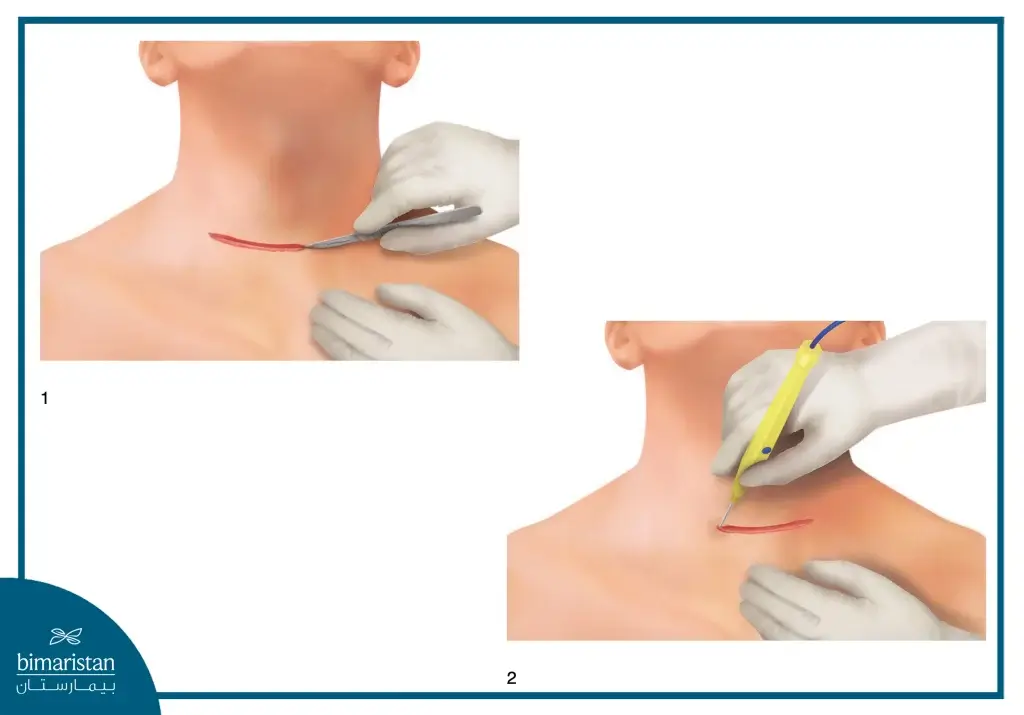
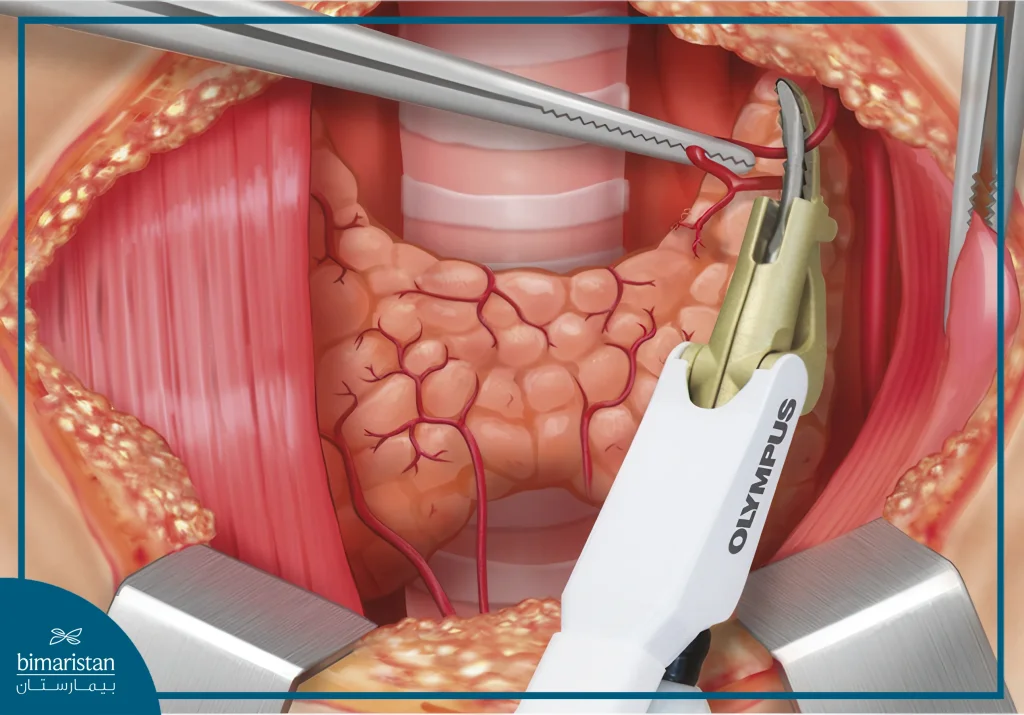
The surgeon will then remove one or both lobes, depending on the patient’s situation and the reason for the procedure.
In the case of thyroid cancer, surgeons will examine and remove the cancerous lymph nodes around the gland.
In the end, the incision is closed with sutures. Thyroid resection surgery in Turkey usually takes one to two hours, but it may take less or more depending on the size of the thyroid tissue to be removed.
Methods available for thyroid resection surgery in Turkey
- Traditional thyroidectomy: The gland is accessed directly from the neck and is suitable for most people.
- Transoral (scarless) thyroidectomy: A modern method that does not require an incision in the neck, but rather the gland is accessed through an incision inside the patient’s mouth.
- Laparoscopic Thyroidectomy: A minimally invasive technique using special surgical instruments and a laparoscope that guides the surgeon through the procedure.
- Robotic Thyroidectomy: This is the best way to remove the gland without scars through robotic arms controlled remotely by the surgeon.
Complications of thyroidectomy
Thyroid resection surgery in Turkey is a safe procedure that does not carry a risk to patients’ lives like other major surgeries, but it may lead to complications or symptoms after thyroid surgery.
Risks of thyroid resection surgery are rare:
- Bleeding and thrombus formation
- Sepsis or sore throat
- Blocked airways due to bleeding
- Airway injury during surgery
- Voice changes or hoarseness may be due to damage to the laryngeal nerve
- Hyperthyroidism due to a spike in thyroxine levels during or shortly after the procedure
- Damage to the parathyroid glands and low levels of parathormone (which controls blood calcium levels)
Life after thyroidectomy in Turkey
In some cases, the patient goes home the same day after a total or partial thyroid resection surgery in Turkey, but in other cases, the patient has to spend a night in the hospital, where the medical team monitors them and their blood calcium levels.
The patient may feel some pain during the days following the procedure, and any oral pain reliever can be used if needed; the patient will be able to eat as much as they want the day after the procedure, usually.
After surgically removing the entire thyroid gland, the body will need thyroid hormone to perform its vital functions normally, and this hormone can be obtained through medications containing synthetic thyroid hormones (levothyroxine) or natural thyroid hormones available in the form of tablets.
If only one lobe is removed, the other lobe will take over hormone production and may not need to be decompensated, so the thyroid gland should be analyzed after a partial thyroid resection surgery.
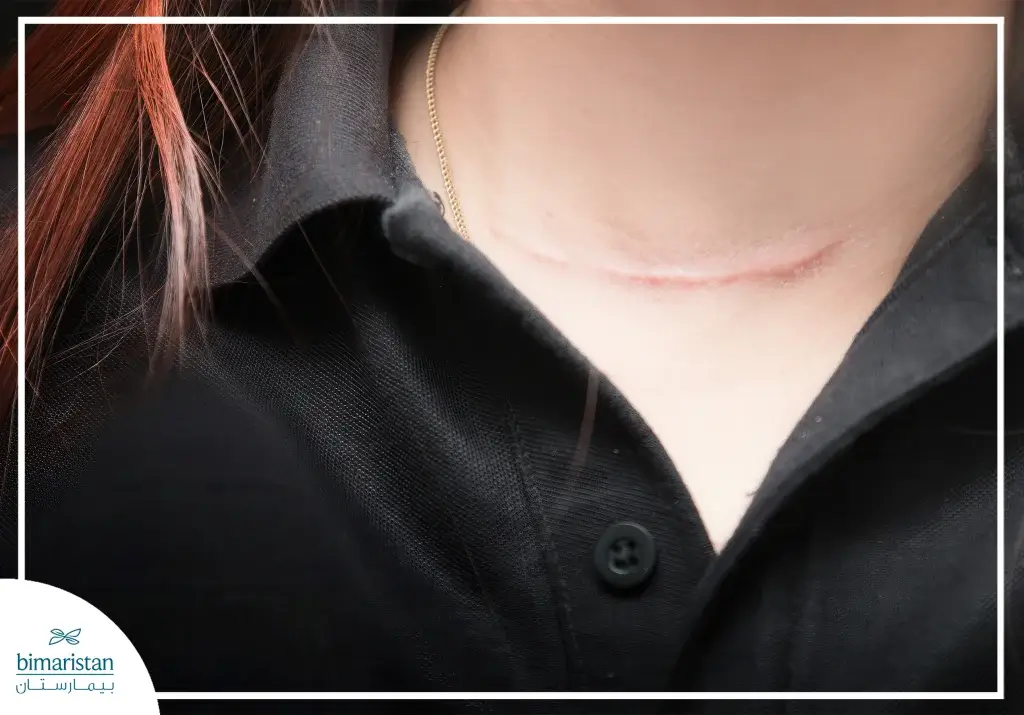
It may take up to a year for the scar to fade, and your doctor may prescribe some creams to minimize the visibility of the scar during that time.
Tips after thyroidectomy
Here are the most important tips and advice after thyroid resection surgery:
- When you return home, you will be able to do your normal daily chores right away, but it is best not to engage in strenuous activities such as heavy lifting until a few weeks after surgery.
- Avoid wiping or washing the operation site with water for at least a week to avoid contamination and infection.
- Contact your doctor immediately if you notice swelling in your neck and the pain persists for a long time after surgery; these may be signs of infection at the surgical site.
- Make regular visits to the doctor’s office several times after the procedure to analyze thyroid hormone levels and make sure your recovery is progressing.
Need Thyroidectomy?
At Bimaristan Medical Center in Turkey, we connect you with top thyroid surgeons, arrange appointments, translation, and accommodations, and offer free 24/7 consultations.
Your journey to a safe Thyroidectomy starts here.
Sources: