
Certain sudden neurological disorders serve as early warning signs that should not be ignored, even if their symptoms disappear quickly. In many cases, the patient may think that what happened was a minor episode or temporary fatigue, when in fact it is an indication of impaired blood flow to the brain that requires attention and medical evaluation.
Estimates indicate that a large number of patients who experience transient neurological episodes do not seek immediate medical consultation, even though a significant proportion of them may be at risk of having a stroke shortly thereafter. Data also show that the risk of stroke is highest in the first days and weeks following these episodes, highlighting the importance of early diagnosis and close follow-up to reduce potential complications.
What is a transient ischemic attack?
A transient ischemic attack (TIA) is a set of symptoms that affect a person and resemble those of a stroke; it results from a blockage in one of the arteries supplying the brain, but this blockage is temporary and does not last long, as a TIA usually lasts no more than a few minutes and does not cause any long-term damage.
Nevertheless, it is important to note that a transient ischemic attack (TIA) can be a serious warning sign, as a significant percentage of people experience a stroke within a certain period of time after having a TIA, Some statistics indicate that about half of those who have had a transient ischemic attack go on to have a stroke within just one year of the attack, so it should not be ignored.
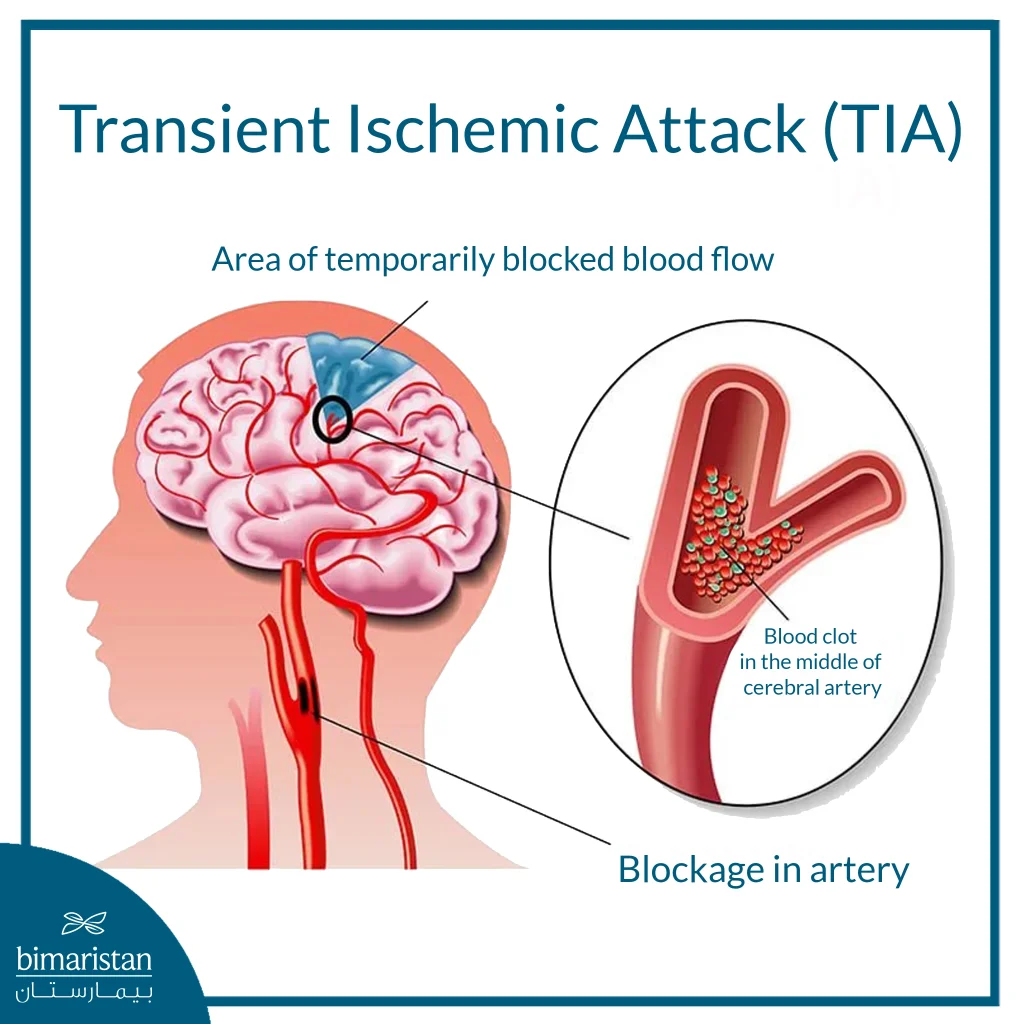
Possible causes of a transient ischemic attack
The causes of transient ischemic attacks are numerous and not fully understood; they are similar to the causes of ischemic stroke, but the difference in this case is that in a transient ischemic attack, the cause may resolve spontaneously within a short period, whereas an ischemic stroke may lead to death if the patient is not treated, even though the cause is the same in both cases. In general, the possible causes of a transient ischemic attack can be summarized as follows:
- Narrowing of the carotid arteries due to the buildup of fatty plaques (atherosclerosis)
- A blood clot forms in a blood vessel in the brain or travels there from elsewhere
- Heart conditions, such as atrial fibrillation, that increase the risk of blood clots
- Uncontrolled high blood pressure
- High blood cholesterol levels
- Diabetes and Its Effect on Blood Vessels
- Smoking and the damage it causes to blood vessel walls
- Excessive alcohol consumption
- Use of illicit drugs such as cocaine
- Obesity and physical inactivity
- Blood clotting disorders
- COVID-19 is rare
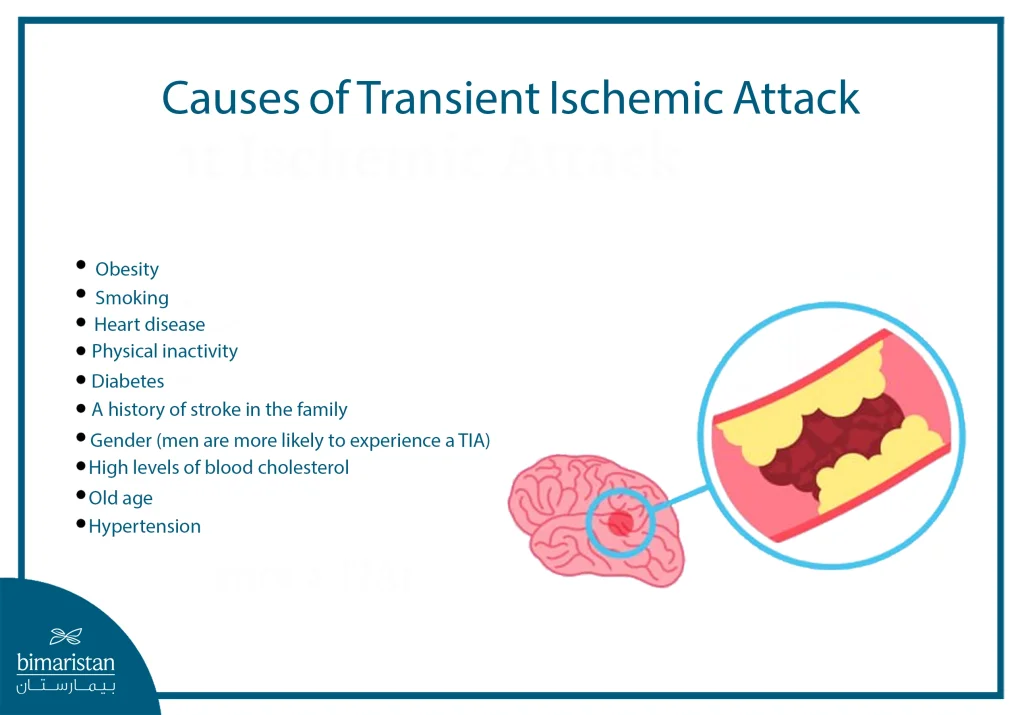
The presence of one of these risk factors does not necessarily mean that a transient ischemic attack will occur, but if they are present, you should exercise caution, see your doctor regularly, and try to address or avoid these factors whenever possible. Unfortunately, there are some risk factors that cannot be controlled or changed because they may be genetic or age-related, such as:
- Family history: If a family member has previously had a transient ischemic attack, their children or siblings are at increased risk of having a transient ischemic attack or even a stroke.
- Age: Due to an increase in vascular risk factors, especially after age 55.
- Gender: Men are slightly more likely to experience transient ischemic attacks and strokes, but the rates for men and women become very similar after age 55.
- Previous ischemic stroke: It is important to note that a previous ischemic stroke increases the risk of a life-threatening stroke.
- Sickle cell disease: Stroke is a common complication among patients with sickle cell disease, as these cells carry less oxygen and frequently stick to arterial walls, leading to partial blockages that, if a carotid artery becomes blocked, can result in stroke. Fortunately, with appropriate treatment for this condition, the risk of stroke can be significantly reduced.
Although these factors cannot be changed, there are steps patients can take to significantly reduce their risk of developing the condition.
Symptoms of a transient ischemic attack
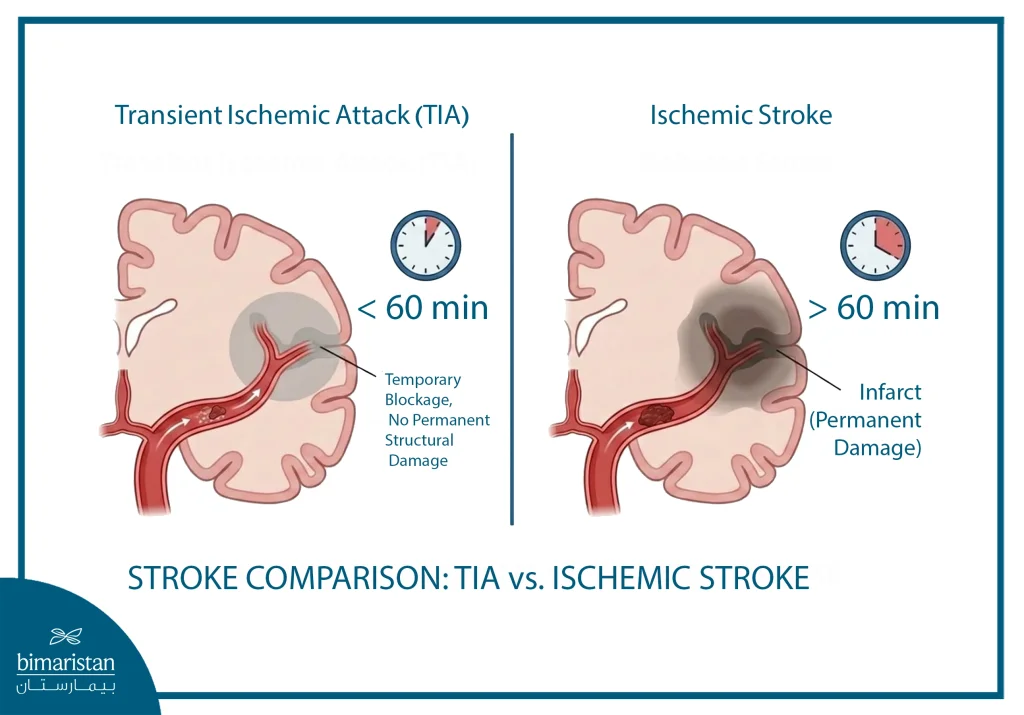
The symptoms of a transient ischemic attack do not last long; most resolve within about an hour, but in very rare cases, some symptoms may last up to 24 hours. The symptoms are very similar to those of an early-stage stroke, making diagnosis difficult for the paramedic. In both cases, the patient must be transported to the hospital by ambulance to determine whether it is a transient ischemic attack or a stroke. The symptoms of a transient ischemic attack are summarized as follows:
- Sudden weakness or numbness in the face, arm, or leg, usually on one side of the body
- Difficulty speaking, sudden stuttering, or an inability to understand speech
- Sudden loss of vision in one or both eyes, or blurred vision
- Sudden dizziness or loss of balance and coordination
- Difficulty walking or a feeling of unsteadiness
- A sudden, unusual headache, which may be severe in some cases
These symptoms may disappear very quickly (within a few minutes), leading most patients to ignore them, even though some may assume they are a normal reaction to physical fatigue or mental exhaustion. However, it does no harm to consult a specialist to determine the cause and address it, so that it does not later develop into a condition that could lead to the patient’s death.
How is the condition diagnosed?
The diagnosis of a transient ischemic attack relies on a rapid clinical evaluation along with a series of tests designed to confirm the cause and rule out similar conditions. The key steps include the following:
- Carefully take the patient’s history, focusing on the nature, duration, and timing of symptoms, as well as any accompanying factors
- Conduct a comprehensive neurological examination to assess strength, sensation, balance, and language skills
- Brain imaging, such as an MRI or CT scan, to ensure there is no permanent damage or stroke
- Vascular imaging (such as carotid Doppler) to detect narrowing or blockages
- An electrocardiogram (ECG) is used to detect arrhythmias such as atrial fibrillation
- Blood tests to assess risk factors such as diabetes, cholesterol, and blood-clotting disorders
- In some cases, an echocardiogram (echo) may be ordered to look for a cardiac source of blood clots
This comprehensive assessment helps confirm the diagnosis and determine the severity of the condition, thereby contributing to the development of an appropriate plan to prevent future strokes.
What is the difference between a transient ischemic attack and a hemorrhage or stroke?
| Point of comparison | Transient ischemic attack | Stroke (Ischemic) | Cerebral hemorrhage |
|---|---|---|---|
| Definition | Temporary reduction in blood flow to the brain without permanent damage | Permanent blockage in a cerebral artery | Rupture of a blood vessel and bleeding within the brain |
| Duration of symptoms | Minutes to less than 24 hours (usually less than an hour) | lasts for more than 24 hours or results in permanent disability | Sudden and continuing, with a rapid deterioration |
| Effects on the Brain | It does not cause permanent damage | It causes permanent damage to brain tissue | It causes pressure and damage due to bleeding |
| Severity of symptoms | Mild to moderate and disappears completely | Moderate to severe and may worsen | Often severe and sudden |
| Headache | Rare | Uncommon | Common and often severe |
| Loss of consciousness | Rare | It is possible in some cases | Common in severe cases |
| The danger | Warning of a Future Stroke | Medical emergency | A serious medical emergency |
| The need for immediate treatment | Essential for assessment and prevention | urgently needed | Urgently needed |
Treatment and Follow-up
Treatment for a transient ischemic attack focuses on preventing recurrence and reducing the risk of a future stroke, along with close medical follow-up.
Drug therapy
Drug therapy focuses on reducing the risk of blood clots and preventing recurrent strokes; antiplatelet agents such as aspirin are commonly used, and anticoagulants may be prescribed in certain cases, particularly when there are heart rhythm disorders. Cholesterol-lowering medications are also used to help stabilize fatty plaques within blood vessels.
Identifying risk factors
Controlling risk factors is a key step in treatment, which includes managing blood pressure, controlling blood sugar levels, and lowering cholesterol. It is also recommended to quit smoking and adopt a healthy lifestyle that includes regular physical activity and a balanced diet.
Medical procedures
In some cases where there is significant narrowing of the carotid arteries, procedures such as angioplasty or stenting, or even surgery to remove the blockage, may be recommended to improve blood flow to the brain and reduce the risk of stroke.
Periodic follow-up
Regular medical follow-up is an integral part of the treatment plan, as it allows for the continuous assessment of the patient’s response to treatment and monitoring of risk factors. Follow-up includes periodic checkups and adherence to prescribed medications, with the need to see a doctor immediately if any new or similar symptoms appear.
Is a transient ischemic attack dangerous?
Yes, a transient ischemic attack (TIA) is a serious condition in terms of its implications, even if its symptoms are temporary and disappear quickly, as the danger lies in the fact that it is considered an early warning sign of a subsequent stroke, indicating an abnormality in blood flow to the brain. And estimates suggest that a significant proportion of patients may suffer a stroke within a short time after the attack.
Although it does not always cause permanent damage on its own, ignoring it can lead to serious consequences because the underlying cause (such as narrowed arteries or heart conditions) remains untreated. Therefore, a transient ischemic attack should be treated as a medical condition requiring urgent evaluation and close follow-up, not merely a passing symptom that can be ignored.
Ultimately, a transient ischemic attack (TIA) is an important warning sign that should not be ignored, as it indicates a temporary disruption in blood flow to the brain and may precede a more serious stroke. Early diagnosis and management of risk factors help reduce the likelihood of recurrence and improve long-term outcomes, and regular follow-up and adherence to treatment play a key role in prevention. In this context, the Bimaristan Center provides comprehensive care, including thorough evaluation, appropriate treatment, and ongoing follow-up to ensure the best possible outcomes for patients.
Sources: