
When thyroid cancer is diagnosed, the treatment journey can seem filled with questions and decisions, especially after undergoing surgery. Is treatment complete after removing the gland? Can it eliminate any cancer cells that may remain in the body? This is where radioactive iodine (I-131) therapy for thyroid cancer comes in as one of the key treatments for certain types of thyroid cancer.
Treatment of thyroid cancer with radioactive iodine (I-131) is based on the ability of normal thyroid cells and some differentiated thyroid cancer cells to absorb iodine. This property allows for radiation to be delivered from within the cells. Radioactive iodine may be administered after surgery to eliminate any remaining thyroid tissue or cancer cells that can still absorb iodine. The decision depends on the type and stage of the tumor, as well as the risk of recurrence. In this article, we will guide you through the journey of I-131 radioactive iodine treatment step by step, starting from the determination of the patient’s eligibility to post-treatment follow-up.
What is the treatment for thyroid cancer using radioactive iodine (I-131)?
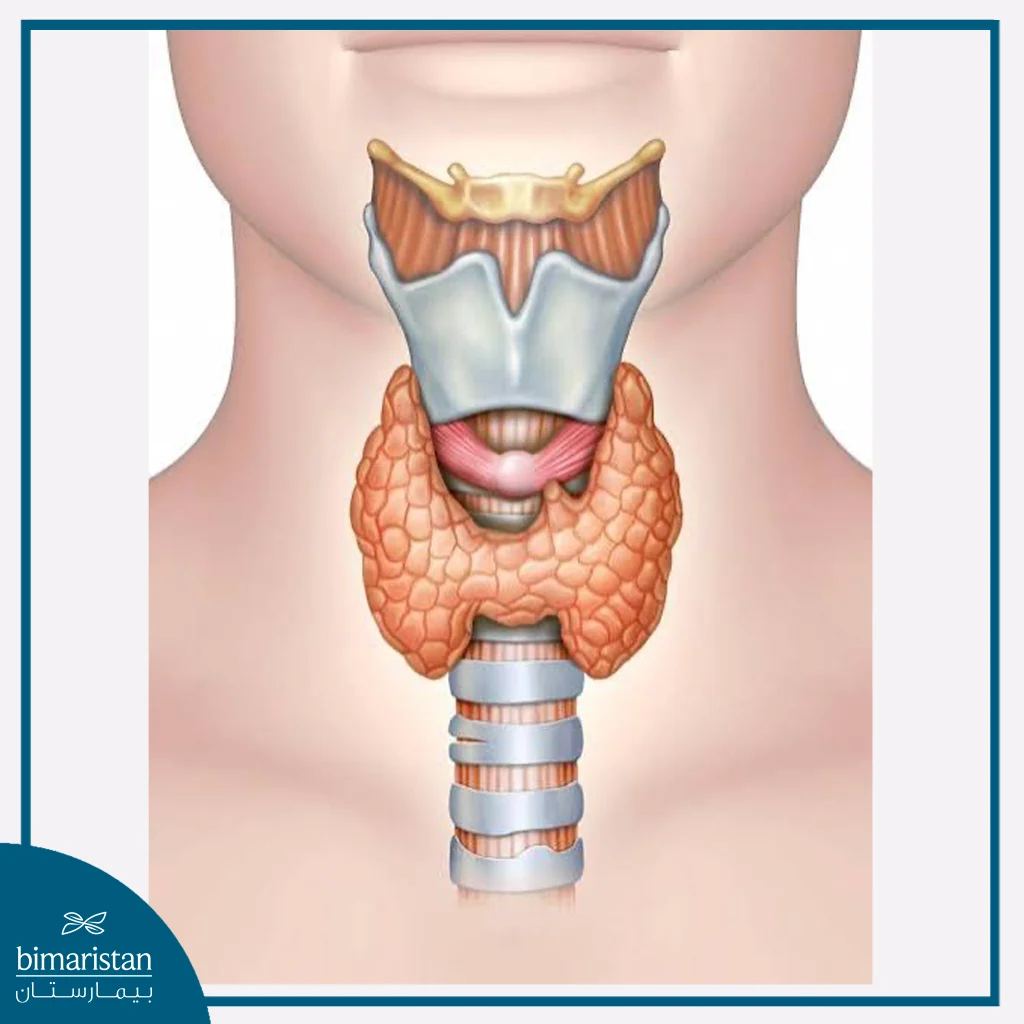
Iodine is an important element for the body; thyroid cells absorb iodine and use it to produce their hormones (T3 and T4). These hormones play a major role in regulating the body’s metabolic processes, and the body obtains its required iodine from certain foods, such as fish and eggs.
The treatment of thyroid cancer using radioactive iodine (I-131) involves administering the radioactive isotope to the patient. Thyroid cells absorb and store this radioactive iodine, which then emits high-energy radiation that destroys both normal thyroid cells and cancerous cells. Radioactive iodine differs from the regular iodine in our daily diet; the key difference is its atomic structure, which allows it to emit certain forms of radiation. This radiation is utilized in various fields, most notably in medicine, to treat certain types of tumors and to eliminate cancerous cells that have spread and cannot be addressed through surgery.
What types of thyroid cancer can be treated with radioactive iodine (I-131)?
There are a variety of treatment options available for thyroid cancer; surgical removal is the preferred option when feasible in certain cases of thyroid cancer. Chemotherapy and radiation therapy may also be used in some cases. Despite these options, each patient’s situation is unique, and the best treatment plan depends on the type of thyroid cancer (follicular, papillary, medullary), its stage, and the patient’s overall condition.
Treatment of thyroid cancer with radioactive iodine (I-131) is effective in destroying thyroid tissue that cannot be surgically removed and eliminating cancerous metastases that cannot be detected through various imaging methods. Doctors may use it as adjuvant therapy after surgical resection in well-differentiated thyroid cancers, whereas in undifferentiated thyroid cancers, such as medullary thyroid carcinoma (MTC), cancer cells cannot take up iodine; therefore, radioactive iodine-131 is not beneficial. In such cases, other treatment options may be considered. Among the well-differentiated thyroid cancers are:
- Papillary Thyroid Carcinoma (PTC): This is the most common type of thyroid cancer. It is associated with BRAF mutations and has an excellent prognosis. It can metastasize to the lymph nodes, causing cervical lymph node enlargement. Cancer cells can take up and store iodine.
- Follicular Thyroid Carcinoma (FTC): It is similar to papillary thyroid carcinoma, except it may invade adjacent tissues and blood vessels and metastasize via the bloodstream to various organs. It has a good prognosis, and cancer cells can take up and store iodine.
How is thyroid cancer treated with radioactive iodine (I-131)?
Treatment of thyroid cancer with radioactive iodine (I-131) requires several preparatory steps before treatment begins to ensure the desired results are achieved. The treatment process can be broken down as follows:
Preparations before starting treatment
The start date for radioactive iodine therapy is usually scheduled at least 3 weeks after surgery, and the patient is asked to do the following:
- Discontinuation of levothyroxine (a medication that mimics the action of thyroid hormones) in order to raise the level of thyroid-stimulating hormone (TSH), which increases the uptake of iodine by thyroid cells; alternatively, TSH levels can be raised through injections
- Discontinuation of any medication that inhibits thyroid hormone function, such as propylthiouracil (PTU) or methimazole
- Cessation of breastfeeding by nursing mothers at least 6 weeks prior to the start of radioactive iodine therapy
- Following a low-iodine diet
Procedures during treatment
For patients at low risk of cancer recurrence, a dose of approximately 30 millicuries (mCi) of radioactive iodine is usually sufficient to effectively ablate residual thyroid tissue. The dose can be increased to a maximum of about 250 millicuries (mCi) in moderate- and high-risk patients. The process is as follows:
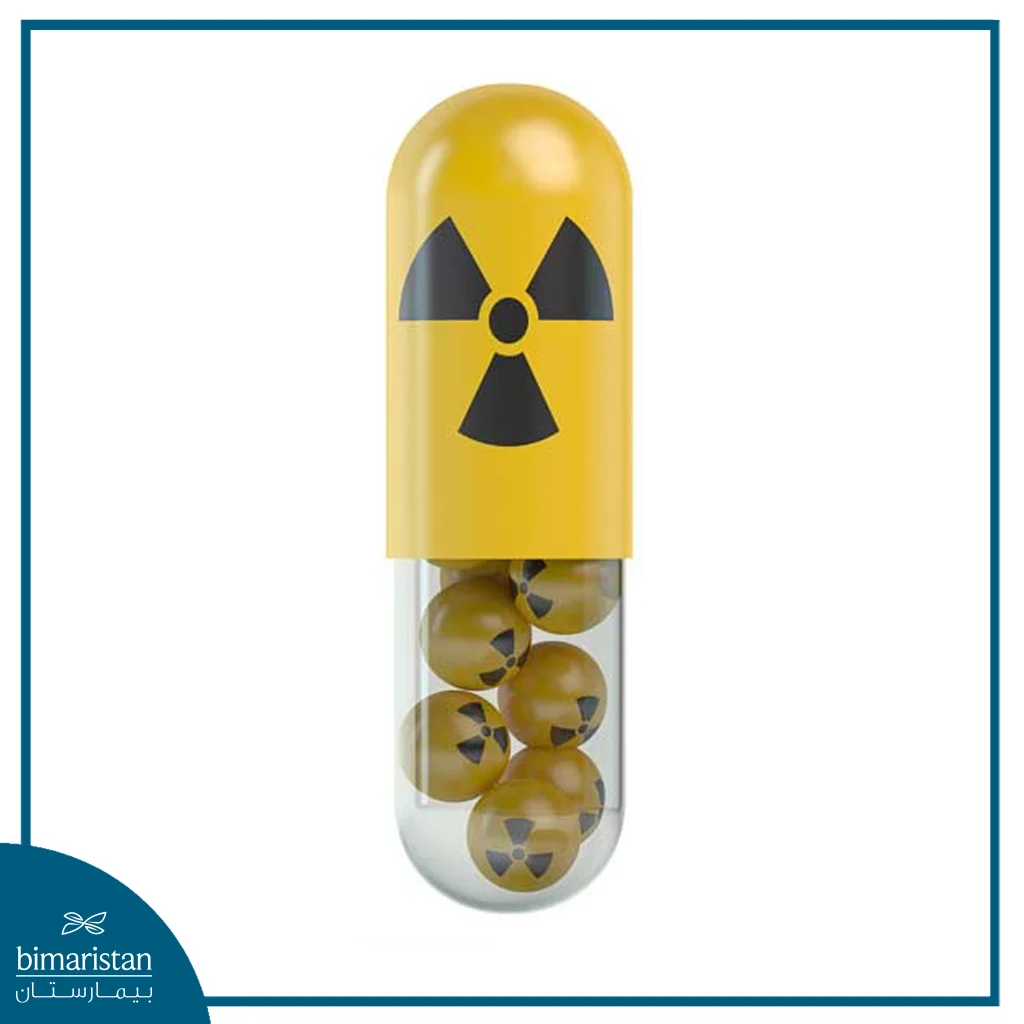
- Radioactive iodine is usually administered orally in capsule form, but it can also be administered intravenously
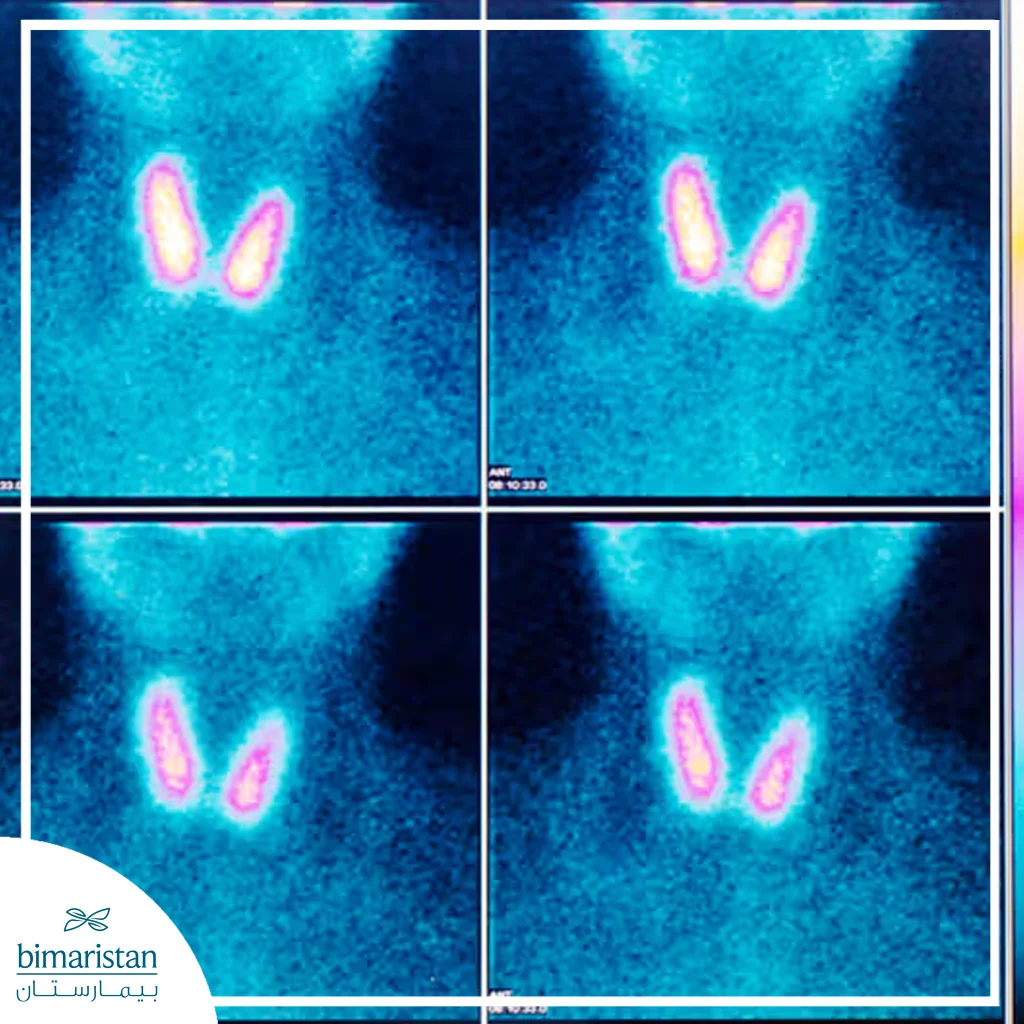
- Radioactive iodine travels through the bloodstream to the thyroid gland and to cancerous thyroid cells that have spread throughout the body
- These cells take up radioactive iodine and store it
- The iodine nucleus emits radiation as it attempts to return to its stable state
- Radiation energy destroys cancer cells
Post-treatment procedures
Radioactive iodine has a half-life of about 8 days (the time required for half the element’s nuclei to decay from the unstable form to the stable form), so post-treatment measures are needed to protect the patient’s health and minimize radiation exposure for the patient and others. These measures are:
- Maintain a safe distance between the person receiving treatment and others (approximately half a meter to one meter), especially during the first 8 hours after treatment
- Drink enough fluids to help speed the elimination of radioactive substances from the body
- Sleep alone
- Try to avoid public transportation
- Wash your hands frequently and take a shower every day
- The patient is advised to follow up with an endocrinologist for long-term hormone replacement therapy
Side effects of thyroid cancer treatment with radioactive iodine (I-131)
The destruction of the thyroid gland during radioactive iodine therapy results in numerous side effects, in addition to the effects of the radiation therapy itself. A person who has undergone radioactive iodine therapy may experience the following effects:
- Pain and swelling in the neck
- Swelling of the salivary glands
- Dryness in the mouth
- Inflammation of the stomach lining
- Dryness in the eyes
- Nausea and vomiting
- Long-term hormone replacement therapy
What are the risks associated with treating thyroid cancer with radioactive iodine (I-131)?
Exposure to radiation from various sources is extremely dangerous, including in medical applications of radiation, such as the treatment of papillary thyroid cancer. Therefore, it is important to ensure that patients’ radiation exposure remains within permissible limits, as radiation therapy carries numerous risks, including:
- Reduced sperm count in males: As radioactive iodine is excreted through urine, the testes may be exposed to radiation. This can affect sperm count and motility, thereby impacting fertility. In most cases, this effect is temporary, and the symptoms gradually subside after treatment concludes.
- Menstrual irregularities in females: During excretion, radioactive iodine can affect the ovaries, causing hormonal disturbances.
- Secondary cancers: Individuals who have undergone radioactive iodine treatment for thyroid cancer may face a slightly increased risk of developing certain types of cancer later in life, including leukemia, stomach cancer, and salivary gland cancer. While the exact magnitude of this increased risk remains uncertain, most large-scale studies have found that such complications are extremely rare.
In what cases is radioactive iodine therapy contraindicated?
Radioactive iodine therapy is contraindicated during pregnancy and breastfeeding, as radioactive iodine can cross the placenta and reach the fetus, which may cause damage to the fetus’s thyroid gland. Therefore, women of childbearing age must confirm that they are not pregnant before treatment. Breastfeeding should also be discontinued prior to treatment for the period specified by the doctor, as I-131 is excreted in breast milk and may expose the infant to radiation.
It is also preferable to postpone treatment if the patient vomits or has diarrhea, as these may affect absorption and increase the risk of radiation contamination in the surrounding area. Patients must inform their doctor of any medications that may interfere with treatment or any recent use of iodine-containing contrast agents. The doctor should also assess the patient’s ability to follow radiation safety instructions. A thorough medical evaluation before treatment is essential to ensure patient safety and minimize radiation exposure to family members and others nearby.
What are the other uses of radioactive iodine?
Radioactive iodine is not limited to treating thyroid cancer; several isotopes of iodine have distinct properties and medical applications. Iodine-131 (I-131) is the most well-known for therapeutic purposes; it is used to treat conditions that cause an overactive thyroid, such as Graves’ disease and certain types of toxic thyroid nodules.
Iodine-123 (I-123) is primarily used for diagnostic thyroid imaging and to measure the thyroid’s iodine-uptake capacity, as its radiological properties are well suited for imaging. Iodine-124 (I-124) can be used in positron emission tomography (PET) scanning for specific diagnostic and specialized applications. Meanwhile, Iodine-125 (I-125) has different therapeutic uses, most notably localized radiation therapy (brachytherapy) for certain types of cancer, along with various other medical and laboratory applications. Consequently, the choice of iodine isotope depends on the intended objective, whether diagnosis, imaging, or treatment.
What is the average cost of thyroid cancer treatment in Turkey?
Turkey is a popular destination for patients with thyroid cancer who wish to undergo treatment with radioactive iodine (I-131), thanks to the comprehensive diagnostic and therapeutic services provided by its specialized nuclear medicine centers. Treatment costs vary by case, depending on the required iodine dose, hospital stay length, and the tests and imaging associated with the treatment. Current market rates indicate costs may start at around $5,000 and reach $8,000 or more for cases requiring higher doses, additional services and tests, or a longer hospital stay.
In conclusion, radioactive iodine (I-131) therapy is an important treatment option for some patients with thyroid cancer, particularly in cases where the cancer cells retain their ability to absorb iodine. In appropriate patients, this treatment may eliminate residual thyroid tissue or remaining cancer cells and reduce recurrence risk. However, not all patients need radioactive iodine; the decision depends on the cancer type and stage, tumor size, recurrence risk, and the cells’ response to iodine.
Sources: