
Around 18 million people worldwide suffer from symptoms of rheumatoid arthritis, with 70% of them being women and in 55% of the cases, they are over 50 years old. Women are more commonly affected by rheumatoid arthritis compared to men
This disease has gained widespread importance globally due to its prevalence and its impact on patient’s quality of life. Symptoms of rheumatoid arthritis significantly limit daily activities and habits, affecting overall well-being and enjoyment of life.
(Rheumatoid Arthritis (Rheumatism
Rheumatoid Arthritis is a type of chronic systemic inflammatory joint disease that progresses with age. Symptoms of rheumatoid arthritis primarily affect various joints in the body and can involve any synovial joint. It may also affect many other tissues in the body, such as the heart, lungs, skin, and even the nervous system, increasing the risk of various medical conditions such as heart failure and osteoporosis. It can also cause several syndromes, such as carpal tunnel syndrome.
Its mechanism involves the immune system attacking the body’s own cells and tissues due to some error in the body, classifying rheumatoid arthritis as an autoimmune disease.
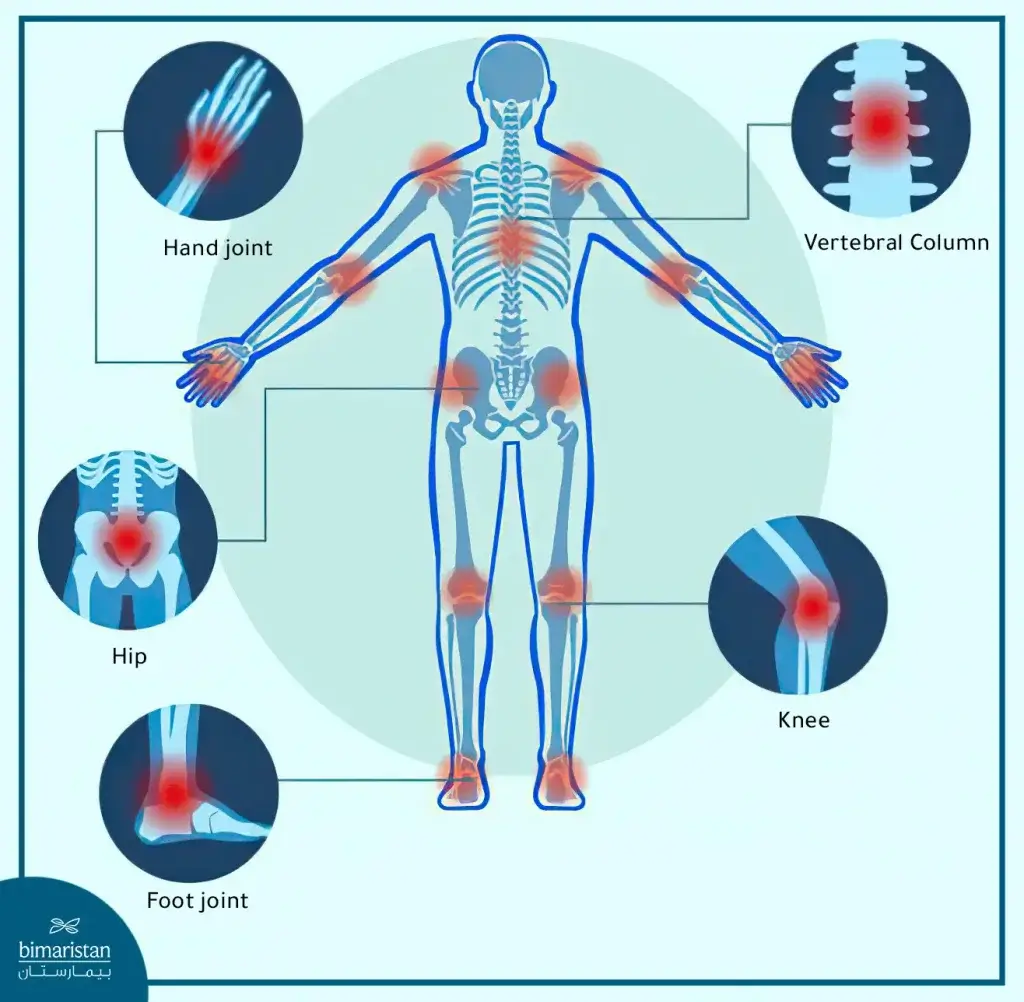
Common Joints Affected by Rheumatoid Arthritis
Joints are usually affected symmetrically. However, it can initially affect joints on one side of the body without the other. The most common joints affected include the:
- Metacarpophalangeal joint (finger joint)
- Wrists and elbows
- Proximal interphalangeal joints (first joints of the fingers)
- Knees, ankles, and small joints in the feet
Additionally, many other joints can be affected, such as the shoulders, hips, temporomandibular joint, and even the vertebrae of the spine.
Symptoms of Rheumatoid Arthritis
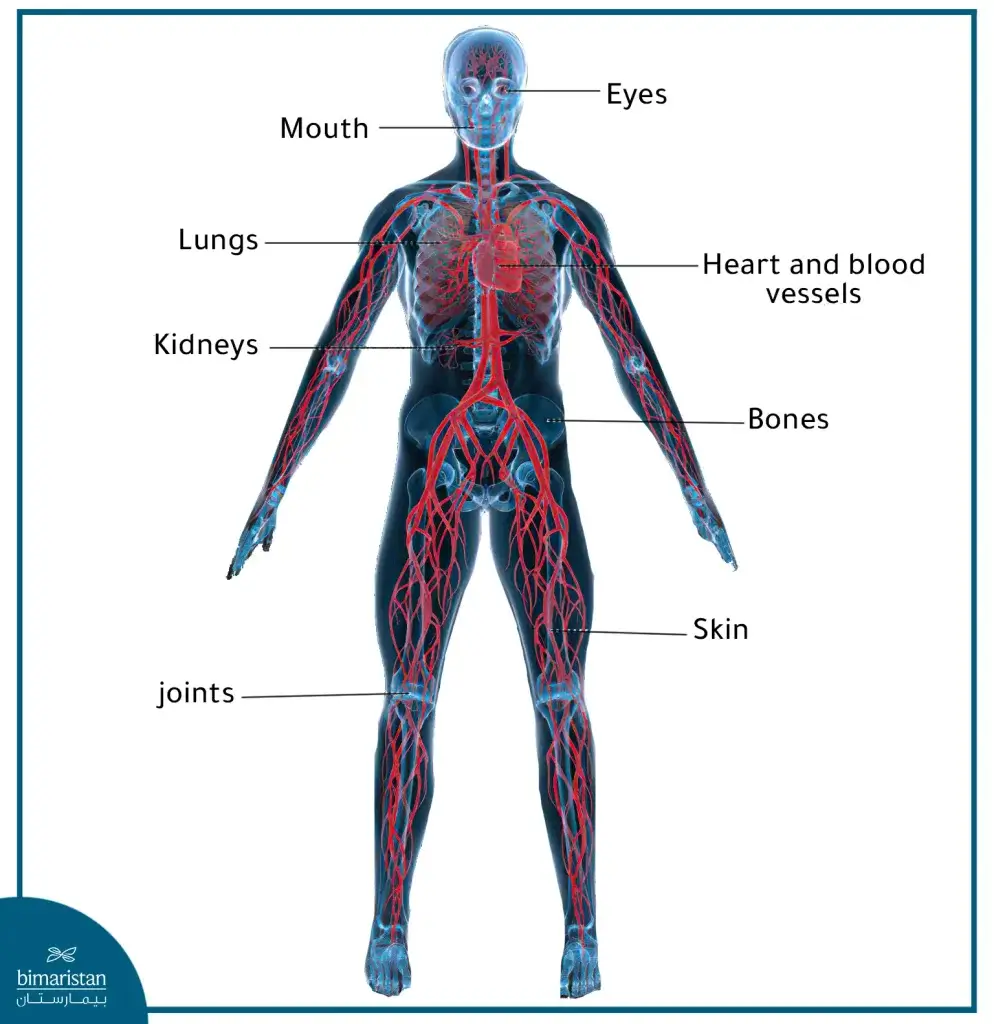
Symptoms of rheumatoid arthritis vary depending on the location of the affected area. They typically start in the joints and then potentially occur in the heart, lungs, skin, nervous system, blood vessels, eyes, mouth, and the body in general.
Symptoms of Rheumatoid Arthritis in Joints
When immune system cells invade and proliferate within the joint, they release immune-inflammatory chemicals such as cytokines, causing the entry of more inflammatory immune cells and fluids into the joint. Consequently, signs and symptoms of rheumatoid arthritis appear in the joint, including:
- Joint pain, an early symptom
- Swelling and redness in the joint
- Limitation in joint movement
- Tenderness when touching or moving the joint
- Joint stiffness in the morning, lasting over 30 minutes
- Joint stiffness that may last up to six weeks
- Deformity and damage in the joint, a late symptom
- In extremely rare cases, the cricoarytenoid joints may be affected, potentially impacting the patient’s voice. Even rarer cases may result in loss of voice due to this condition.
Symptoms of Rheumatoid Arthritis in Heart
The risk of developing cardiovascular diseases is increased by 50% to 70% in individuals with rheumatoid arthritis compared to healthy individuals. Women with rheumatoid arthritis are also three times more likely to develop heart failure than women without rheumatoid arthritis. Rheumatoid arthritis can lead to inflammation of the pericardium and affect the heart muscle, causing myocarditis. Additionally, it increases the likelihood of heart failure, atrial fibrillation, and stroke. Therefore, rheumatoid arthritis causes some specific symptoms related to the cardiovascular system, including:
- Chest pain or discomfort
- Shortness of breath worsens when lying down
- Increased heart rate
- High blood pressure
- Dizziness and lightheadedness
- Palpitations
- Excessive nervousness
- Jugular vein distention
- using more pillows while sleeping
- Swelling and edema in the lower legs
Symptoms of Rheumatoid Arthritis in the Lungs
Rheumatoid arthritis can sometimes inflame the lungs, leading to various respiratory conditions, including bronchitis, bronchial obstruction, pleurisy, pulmonary hypertension, and pulmonary nodules. This inflammatory process may progress to fibrosis.
Symptoms may include:
- Cough and fever
- Shortness of breath
- Chest pain
- mucus discharge
Rheumatoid Arthritis and Skin Symptoms
Rheumatoid arthritis can affect the skin in various ways, leading to different dermatological conditions such as:
- Rheumatoid nodules: These are among the most common non-joint symptoms in rheumatoid arthritis patients, occurring in 35-40% of patients, especially Caucasian males. They appear as solitary or multiple skin-colored subcutaneous nodules that can reach several centimeters in size. They usually occur at pressure points or areas of frequent contact, such as the elbows, forearms, fingers, and heels.
- Rapidly developing nodules: These nodules appear quickly, especially on the hands and feet of rheumatoid arthritis patients. Studies indicate that 8-11% of patients taking methotrexate may develop these small, multiple nodules.
- Neutrophilic dermatosis: This is a very rare skin condition seen in patients with severe rheumatoid arthritis, more commonly in women than in men. It manifests as a rash with many white blood cells (neutrophils) or as raised skin lesions on the legs, face, or chest. In some cases, it can appear as large, inflamed sores.
- Vascular skin lesions: These lesions present as purpura or skin ulcers.
- Pyoderma gangrenosum
Neurological Symptoms of Rheumatoid Arthritis
Rheumatoid arthritis can damage peripheral nerves, which are crucial for the peripheral nervous system’s function in helping the central nervous system receive and transmit information from all over the body. This damage can lead to a condition known as peripheral neuropathy, resulting in various neurological symptoms, including:
- Burning sensation and tingling
- Pain that worsens at night
- Excessive sweating
- Muscle cramps and weakness
- Numbness and phantom sensations
Symptoms of Rheumatoid Arthritis in The Eyes
Some patients with rheumatoid arthritis may develop various eye conditions, including:
Scleritis: This serious condition occurs when inflammation causes thinning of the sclera, the white outer layer of the eye, leading to persistent redness, pain, and high sensitivity to light.
Uveitis: Another condition associated with rheumatoid arthritis, uveitis causes eye pain, blurred vision, and light sensitivity.
Glaucoma: Fluid accumulation in the front part of the eye can increase intraocular pressure, potentially damaging the optic nerve. Symptoms of glaucoma tend to appear later and include seeing colored halos around lights and experiencing blurry vision.
Symptoms of Rheumatoid Arthritis in Back
Rheumatoid arthritis can sometimes cause a condition known as spinal arthritis, which can affect any part of the spine but is most common in the cervical (neck) region and lower back. Symptoms include:
- Swelling and pain in the affected joints
- Difficulty moving the spine
- General fatigue and weakness
- Headaches if the cervical joints are affected
- Inability to maintain a straight posture in the back and neck
Symptoms of Rheumatoid Arthritis in Women
Women are more likely to have the symptoms of rheumatoid arthritis, as previously mentioned. Research indicates that women experience more severe symptoms of rheumatoid compared to men. Symptoms common to both men and women but more serious in women include:
- Joint pain
- General fatigue and weakness
- Swelling and redness of the joint
- Tenderness, especially during movement
- Inflammation-related tissue damage in various parts of the body (such as skin, heart, and lungs)
Risk Factors of Rheumatoid Arthritis in Women and Men
Rheumatoid arthritis occurs when the body’s immune system mistakenly attacks its own healthy cells. This autoimmune response is triggered by an error that causes the immune system to perceive normal body cells as foreign and dangerous, leading to an immune attack.
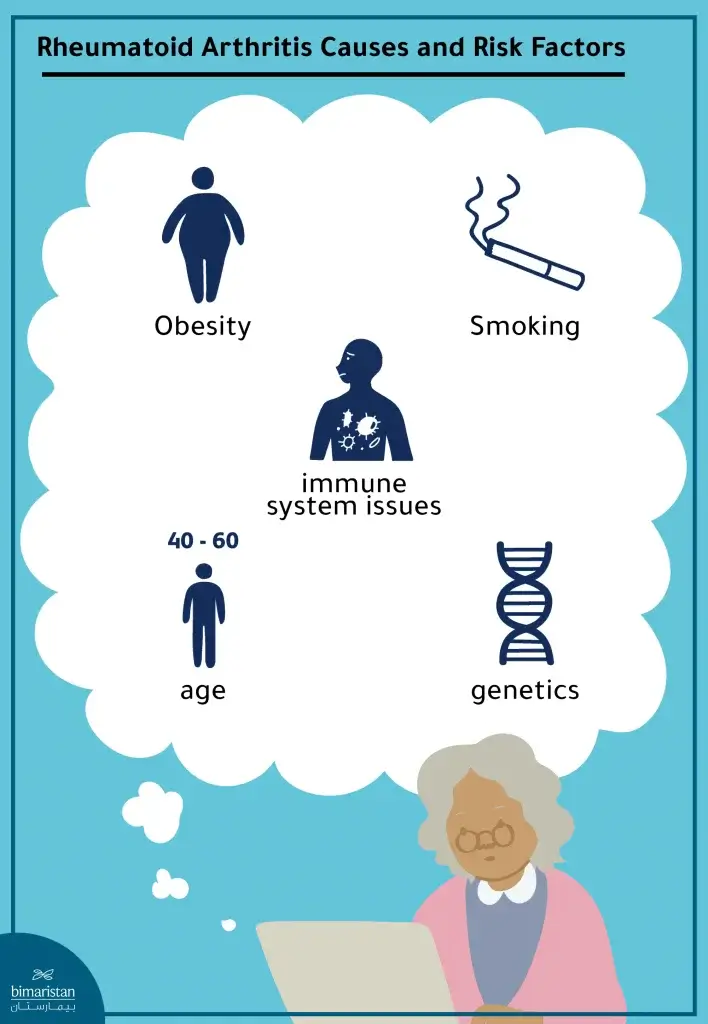
While the exact causes of rheumatoid arthritis remain unknown, several risk factors—genetic, environmental, and lifestyle-related are known to increase the likelihood of developing this autoimmune disease. These include:
Age: Although Symptoms of rheumatoid arthritis can develop at any age, it is most commonly diagnosed in people between 40 and 60. The risk increases with age.
Gender: Women are more likely to develop rheumatoid arthritis compared to men.
Smoking: Smoking increases the risk of developing rheumatoid arthritis and can also exacerbate the severity of the symptoms of rheumatoid arthritis.
Weight: Being overweight or obese increases the risk of developing rheumatoid arthritis.
Genetic Factors: Certain genetic markers, such as human leukocyte antigens (HLA), put individuals at a higher risk of developing rheumatoid arthritis. These genes can also influence the severity of the disease in some cases.
Other Factors: Studies suggest that women who have never given birth may be at a higher risk of developing rheumatoid arthritis. Additionally, women who smoke may double the risk of their children developing rheumatoid arthritis in adulthood.
The symptoms and causes of this autoimmune disease vary significantly from person to person and case to case. Symptoms of rheumatoid arthritis may be confined to joint pain and general joint issues, or they may extend to affect various organs and tissues throughout the body.
Understanding the underlying causes of this disease and recognizing its potential symptoms is crucial for early diagnosis and the initiation of appropriate treatment. Early diagnosis and a comprehensive understanding of the disease’s effects and symptoms can significantly reduce and manage the severity of rheumatic symptoms, thereby greatly improving patients’ quality of life.
.
Resources:
- Medscape
- Arthritis Foundation