
A hammertoe is a common toe deformity that manifests as an abnormal bending of one of the toes, usually at the middle joint, causing the toe to adopt a raised or curved position instead of its natural straight alignment. The deformity may start out mild and flexible, allowing the toe to be straightened, but it becomes stiffer over time if pressure on the joint and tendons continues. It most often affects the second toe or one of the other small toes and may appear in one foot or both feet.
The treatment of a hammertoe depends on the degree of deformity, the flexibility of the joint, and the severity of symptoms; so surgical treatment is not necessary in all cases. Appropriate footwear, pads, splints, toe exercises, and conservative treatment may help relieve pressure and pain and improve the position of the toe, especially in the early stages. However, severe cases—or those in which symptoms interfere with walking and daily life—may require surgical intervention to correct the deformity. Turkey offers advanced options for the diagnosis and treatment of foot deformities through specialized physicians and modern techniques, making it a destination of choice for some patients seeking specialized care.
What is a hammer toe?
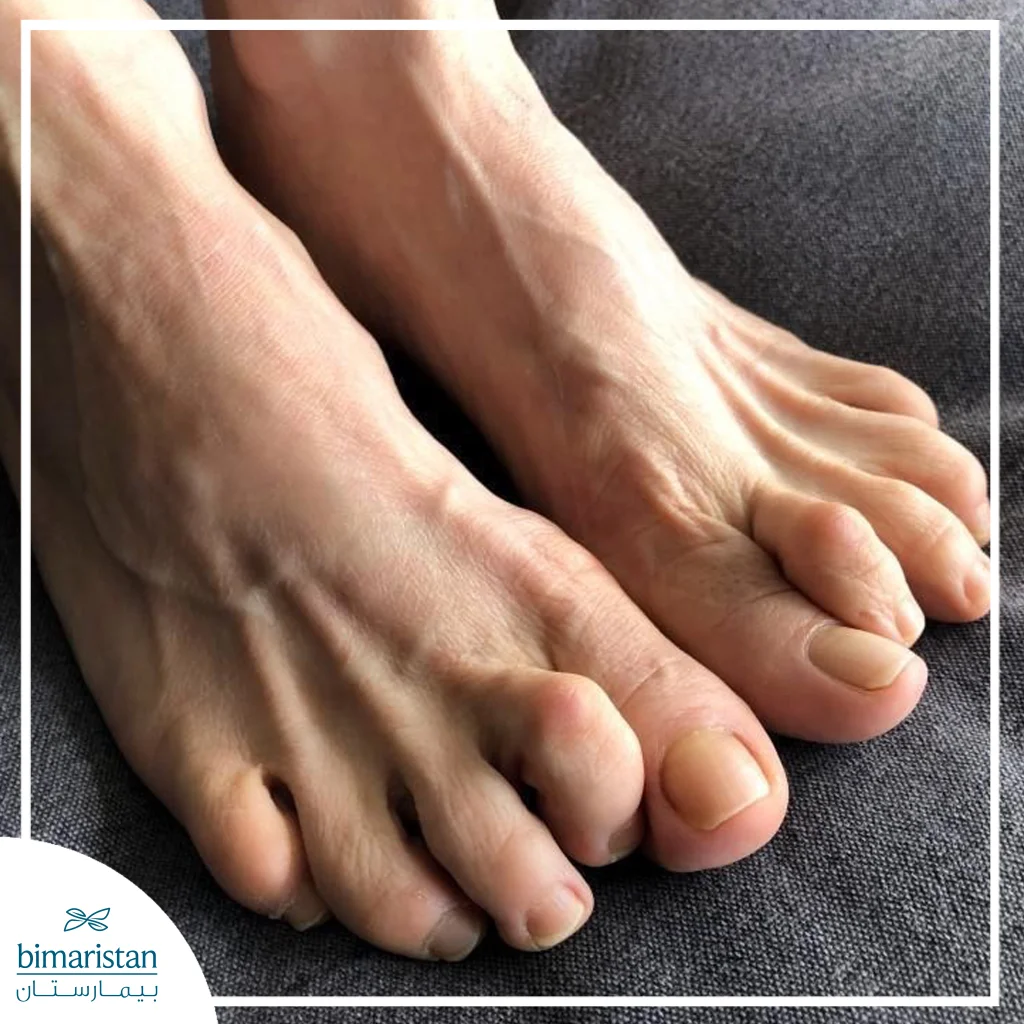
A hammertoe is a deformity that affects one of the toes; it is characterized by an abnormal bending of the middle joint of the toe, causing it to appear curved upward at that joint while the tip of the toe points downward, The deformity most often appears in the second, third, or fourth toe and may begin mildly, with the joint remaining flexible and correctable; however, it gradually becomes stiffer as pressure continues and the surrounding muscles and tendons become imbalanced. The deformity may be limited to one foot or may appear in both feet.
A hammertoe differs from some other toe deformities depending on the joint affected; a hammertoe affects the middle joint, while a distal hammertoe affects the joint closest to the toenail, whereas claw toe involves multiple joints of the toe. As the deformity progresses, the protruding part of the toe may rub against the shoe, causing pain and leading to the development of corns or areas of thickened skin. The severity of the condition varies from person to person; therefore, its assessment depends on the degree of bending, joint flexibility, and accompanying symptoms.
Types of hammer toes
The severity of hammertoe varies from case to case, and its classification depends primarily on the flexibility of the joint and the patient’s ability to return the toe to its normal position. As the deformity progresses, the toe may transition from a state that can be easily corrected to a stiffer, more fixed state; therefore, identifying the type of deformity helps in selecting the most appropriate treatment method. The types include:
Flexible Hammer Toe
At this stage, the toe is mobile and can be straightened and returned to a more upright position through movement or gentle pressure, The deformity is often in its early stages and may not cause severe symptoms, except for friction with the shoe or pain when wearing tight shoes. Detecting the condition at this stage provides a good opportunity to benefit from nonsurgical treatment, such as changing the type of shoes, using pads or splints, and performing exercises and stretching the toes.
Semi-rigid hammer toe
In this type, the toe becomes stiffer and is less able to return to its normal position compared to the flexible type; however, it is not completely fixed in place. Pain and friction may increase due to joint protrusion and finger bending inside the shoe, with the potential for corns or calluses to develop. Some nonsurgical options can continue to relieve symptoms and improve the position of the toe, but the response to treatment depends on the degree of stiffness and the extent of the deformity.
rigid Hammer Toe
This type represents the most advanced stage of the deformity, in which the joint becomes fixed in a bent position and the toe cannot be fully straightened. This can lead to constant friction and pressure on the protruding part of the toe, causing pain, corns, and problems when wearing shoes or walking. When symptoms are severe and do not respond to nonsurgical treatment, a doctor may recommend surgery to correct the deformity and relieve pressure on the toe.
Causes of hammer toe
A hammertoe develops as a result of the toe being subjected to constant pressure or an imbalance in the muscles and tendons that keep it straight, which gradually leads to a change in the joint’s position and causes it to remain bent. There are several factors that may increase the likelihood of this deformity or contribute to its development, the most important of which are:
- Wearing tight shoes: Tight shoes put pressure on the toes and force them into an unnatural position; if worn over time, the muscles and tendons may adapt to this position, contributing to the development of the deformity.
- Wearing high-heeled shoes: High heels shift body weight toward the front of the foot and increase pressure on the toes; furthermore, high-heeled shoes may be tight in the toe box, which increases the likelihood of this condition.
- Muscle and Tendon Imbalance in the Foot: When an imbalance occurs between the muscles and tendons responsible for toe movement, the joints may be subjected to uneven forces that, over time, cause the toe to bend.
- Toe length: Some toes may be longer than usual, making them more prone to pressure inside shoes, especially when the toe box does not provide enough space to accommodate them comfortably.
- Foot shape: Certain foot shapes, such as flat feet or high arches, can alter the distribution of pressure on the toes and increase the likelihood of deformities.
- Deformity of the big toe: A deviation of the big toe or the presence of a bunion may narrow the space available for the adjacent toes and push them out of their natural alignment, which may contribute to the development of a hammertoe.
- Toe Injuries: Injuries such as a forceful blow to the toe, a crushed toe, or a broken toe can lead to changes in the toe’s alignment or joint function, increasing the likelihood of deformity.
- Arthritis: Certain types of arthritis, including rheumatoid arthritis, can affect the joints of the foot and the balance of tendons and muscles, increasing the risk of toe deformities.
- Diabetes Nerve Disorders: Diabetes and certain conditions that cause nerve damage or alter the function of the foot muscles may be associated with an increased risk of toe deformities. Additionally, impaired sensation may make it more difficult to detect pressure and friction in the early stages.
Symptoms of hammertoe
The symptoms of a hammertoe vary depending on the degree of deformity and the flexibility of the joint, They may be mild in the early stages but worsen as the toe continues to bend and rub against the shoe. The patient may notice a change in the toe’s shape before pain sets in, while symptoms become more apparent when walking or wearing tight shoes. The most common symptoms include:
- Finger Curvature: The finger appears abnormally curved, with the middle joint protruding upward and the fingertip pointing downward; the deformity may become more pronounced as the condition progresses.
- Finger pain: The patient may experience pain in the finger, especially when wearing shoes or while walking, due to constant pressure on the joint and the surrounding tissues.
- Finger Stiffness: As the deformity progresses, the finger may lose some of its flexibility, and it may become more difficult to move it or return it to a straight position, especially once the deformity becomes permanent.
- Difficulty moving the finger: Finger movement may become limited due to changes in joint position and increased tension in the muscles and tendons; this may be more noticeable in advanced cases.
- Calluses and thickened skin: Friction between a bent toe and a shoe or the ground can lead to calluses or areas of thickened skin, especially over the protruding joint.
- Swelling and skin discoloration: Swelling may appear around the affected finger, and skin discoloration may also occur as a result of repeated friction and pressure.
- Difficulty Putting on Shoes and Walking: Putting on shoes may become painful or uncomfortable due to the protrusion and deformity of the toe, and in more severe cases, the pain and stiffness may affect the ability to walk normally.
How is a hammertoe diagnosed?
The diagnosis of hammertoe relies primarily on a clinical examination, with X-rays used as needed to evaluate the bones, joints, and the degree of deformity. The most important diagnostic methods include:
- Clinical Examination: The doctor examines the foot and toes to assess the shape of the toe and the degree of its curvature, as well as the joint’s flexibility, range of motion, and ability to return to a straight position. The doctor may ask the patient to stand or walk to assess the foot’s position and will ask about pain, the shoes the patient wears, and factors that worsen the symptoms.
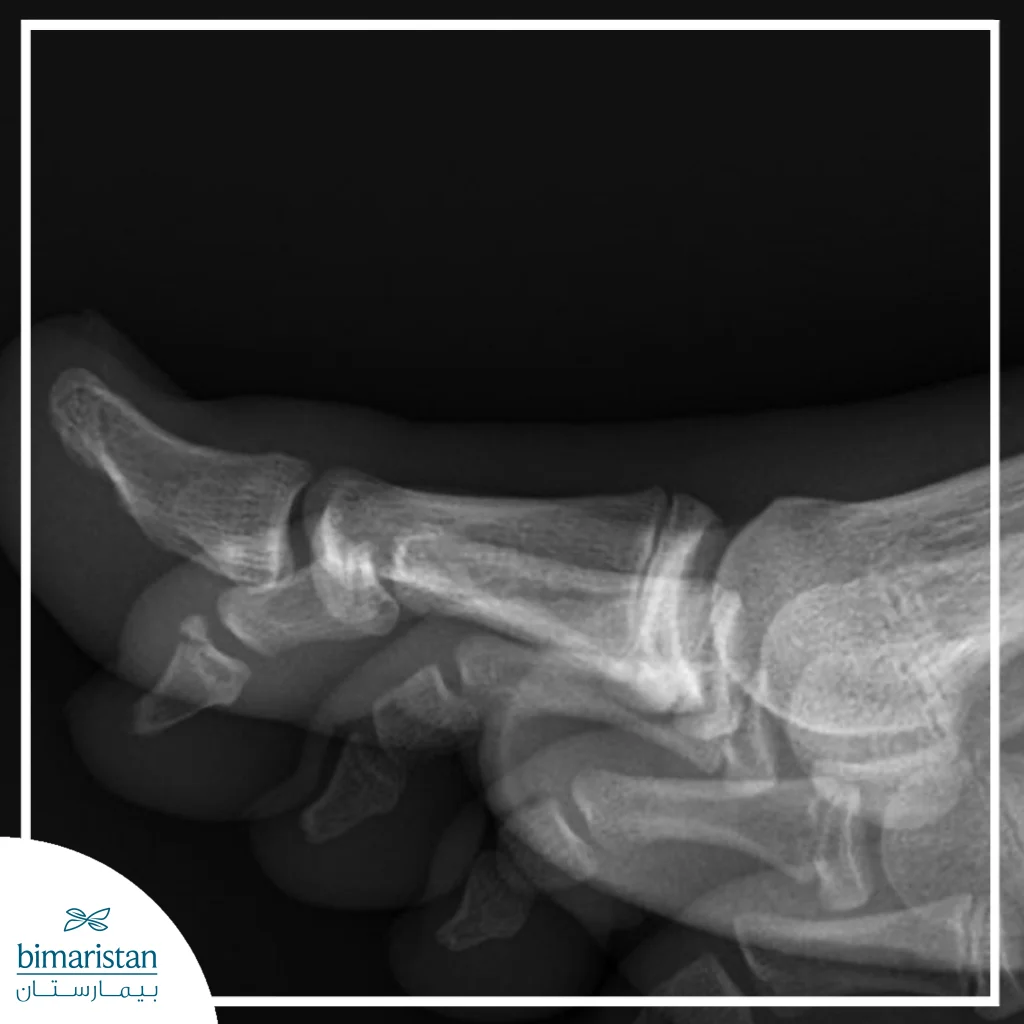
- X-rays: An X-ray of the foot may be performed to obtain a clear image of the bones and joints and to assess the degree of deformity. It also helps detect associated bone or joint changes and is particularly useful when evaluating advanced cases or planning surgical treatment.
The diagnosis of hammertoe is usually straightforward and does not require a wide range of tests or advanced imaging in typical cases; the doctor will determine the need for any additional tests only if there are symptoms or signs suggesting a concurrent problem.
Treatments for hammer Toe
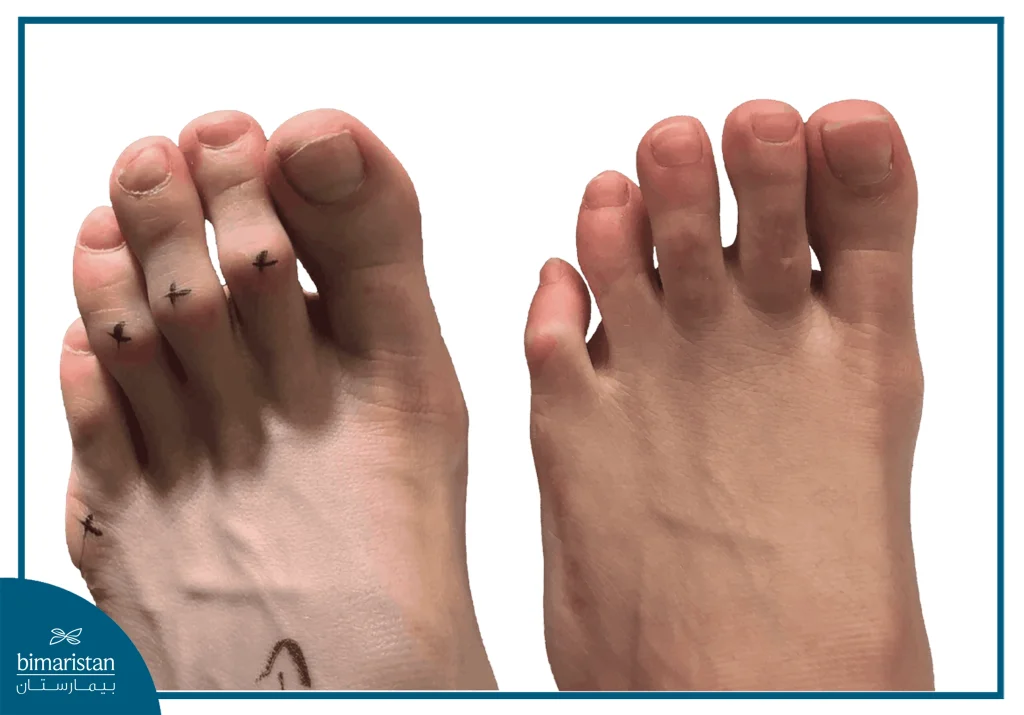
Treatment for hammertoe varies depending on the stage of the deformity, the degree of joint flexibility, and the severity of symptoms. In the early stages, especially when the toe is flexible and can be straightened, non-surgical treatment is usually used to relieve pressure and pain and help maintain the toe’s flexibility. However, when the deformity becomes more advanced and the toe becomes semi-rigid or rigid, or when symptoms that affect walking and daily life persist despite conservative treatment, surgery may be an appropriate option to correct the deformity. This includes:
Non-surgical treatment
Non-surgical treatment aims to relieve pressure on the finger, reduce pain and friction, and preserve its mobility. The most common options include:
- Changing Shoes: Choose comfortable shoes with a wide, deep toe box that provide enough space for your toes and reduce pressure and friction on the protruding joint.
- Pads and Toe Protectors: Pads made of gel, foam, or felt help protect protruding areas from friction with the shoe and relieve pressure on the toenail or thickened skin.
- Splints and Finger Immobilization: Splints can be used in mild cases to help keep the finger in a straighter position and reduce friction; they should be selected according to the doctor’s recommendation.
- Toe Exercises and Stretching: Appropriate movement and stretching exercises help maintain joint flexibility and improve toe mobility, and may be most beneficial in the early stages before the deformity becomes permanent.
- Pain relievers and anti-inflammatory medications: Certain pain relievers, including nonsteroidal anti-inflammatory drugs (NSAIDs), can be used to relieve pain and swelling as needed, provided you follow the contraindications and your doctor’s instructions.
Surgical Treatment
Surgical treatment is considered when the deformity is severe or fixed, or when pain and difficulty walking persist despite appropriate non-surgical treatment. The doctor determines the type of surgery based on the degree of deformity and the flexibility of the affected joint, tendons, and bones. Options include:
- Tendon correction: Certain procedures may be performed on the tendons to adjust the forces that pull the finger into a flexed position, particularly in cases of deformities that still retain some degree of flexibility.
- Bone Correction: In more advanced deformities, the surgeon may need to reshape or remove a portion of the bone to help realign the finger.
- Joint Fusion: When a joint is stiff and the deformity is permanent, fusing the joint in a straighter position may be appropriate in some cases, with the goal of correcting the deformity and relieving pain.
The choice of surgical procedure depends on each patient’s individual condition, so there is no single surgery that is suitable for all cases of hammertoe.
The cost of hammertoe treatment in Turkey compared to other countries
The cost of treating a hammertoe varies depending on the severity of the deformity, the type of treatment, and the procedures required; however, the cost of treatment in Turkey is relatively low compared to many European countries, while maintaining a high standard of medical care and offering modern equipment and specialized expertise in foot and ankle treatment and surgery, making it a suitable option for patients seeking a combination of affordability and quality of care. The approximate costs are as follows:
| The State | Cost |
|---|---|
| Turkey | $3,500–$7,000 |
| Germany | $7,000–$12,000 |
| France | $7,000–$10,000 |
| United Kingdom | $9,000–$14,000 |
| Spain | $6,500–$10,000 |
Why is Turkey your best option for hammertoe treatment?
Turkey combines medical expertise with modern technology and offers a variety of treatment options for hammertoe, along with affordable treatment costs compared to many other medical destinations. The key features include:
- Doctors Specializing in Foot and Ankle Surgery
- Hospitals equipped with state-of-the-art medical technology
- Accuracy of Diagnosis and Assessment of the Degree of Finger Deformity
- Offers a variety of non-surgical and surgical treatment options
- Affordable medical care compared to many European countries
- Comprehensive Services for International Patients and Medical Follow-up
In conclusion, early treatment of a hammertoe may help limit the progression of the deformity and reduce problems caused by pressure and friction while walking or wearing shoes. The impact of the condition is not limited to the shape of the toe; but may also extend to daily comfort and how the foot functions. Therefore, the appearance of a noticeable curvature, recurrent pain, or stiffness in one of the toes warrants a proper medical evaluation to determine the degree of the deformity and the factors that contributed to its development. Furthermore, choosing appropriate footwear and avoiding shoes that put pressure on the forefoot are important aspects of foot care, especially for people with risk factors that increase the likelihood of developing this deformity.
The treatment plan varies from person to person; conservative measures may be sufficient for early-stage and flexible cases, while fixed or painful deformities may require surgical intervention to improve the finger’s position and restore greater comfort and function. Turkey offers a treatment environment that combines specialized expertise, modern medical equipment, and a variety of treatment options, along with relatively affordable costs compared to many European countries. Therefore, it can be a suitable option for patients seeking specialized care for hammertoe, although a thorough medical evaluation is essential before determining the most appropriate procedure for each individual case.
Sources: