
You will experience pain and difficulty moving your arm and shoulder when you have shoulder tendonitis. Tendinitis of the shoulder usually occurs due to repetitive activities that excessively strain the shoulder joint tendons.
Tendinitis in shoulder is not uncommon, and athletes often suffer from shoulder tendonitis. However, it is not limited to athletes, as anyone can experience a sudden injury that causes inflammation in one of the shoulder tendons.
The tendon connects muscles to bones to ensure coordinated movement and protect the joint from injuries. However, tendons are susceptible to inflammation. Follow along to learn about shoulder tendonitis’s causes, symptoms, and healing time.
Overview of shoulder tendonitis
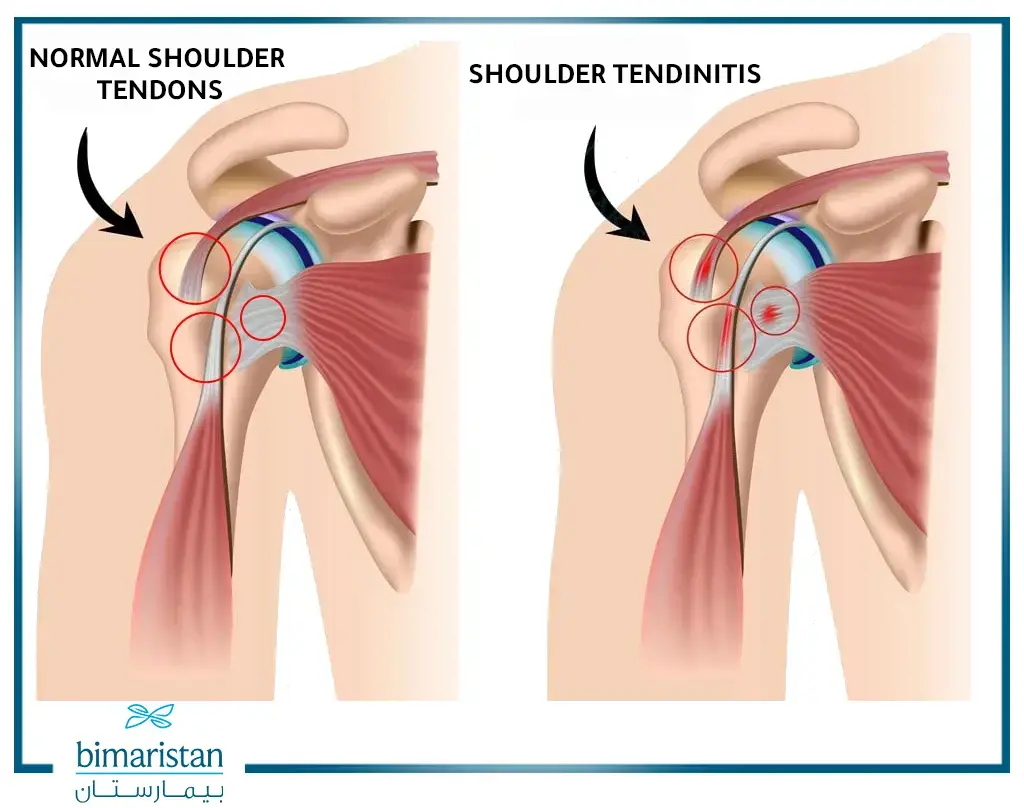
The human shoulder joint consists of muscles and tendons that stabilize it during movement. This is achieved through solid connections between the shoulder and the upper arm.
There are primarily two groups of tendons in the shoulder: the tendon of the front arm muscle, also known as the biceps tendon, and the tendons of the shoulder muscles, known as the rotator cuff muscles. Inflammation can affect any of these tendons.
Shoulder tendonitis is one of the most common inflammations of the body’s tendons. The shoulder joint is responsible for many movements and participates in most upper limb movements.
If left untreated, inflammation can lead to tendon tears, which may require surgical intervention for repair. Therefore, it is advisable to consult a specialist early on when symptoms of shoulder tendonitis appear.
Symptoms of shoulder tendonitis
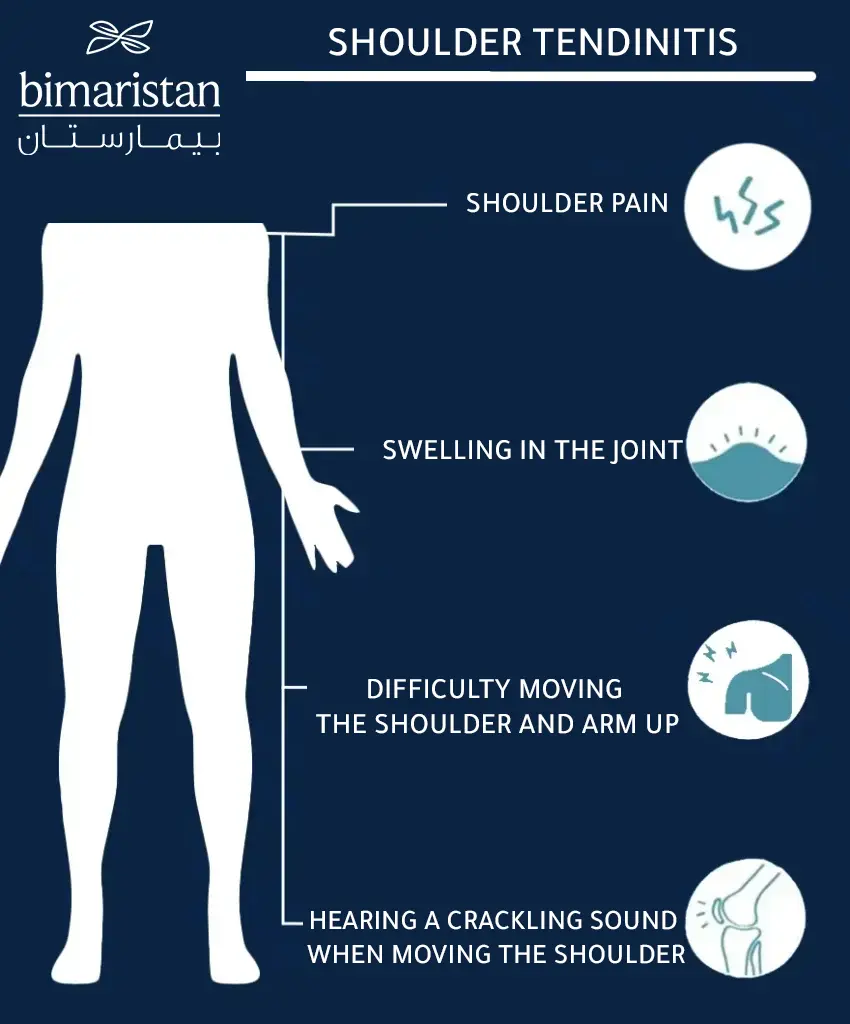
The symptoms tend to worsen over time. Initially, the affected person may notice that their symptoms occur with movement and decrease with rest. However, as the condition progresses, the symptoms may become apparent even during rest periods. The signs and symptoms of tendonitis can vary from person to person, but commonly include:
- Increased pain when moving the shoulder and arm.
- Stiffness and rigidity in the shoulder joint.
- Mild swelling in the joint.
- Hearing a clicking sound in the shoulder when moving it.
- Difficulty in keeping the arm raised upwards.
Often, the first symptom that prompts a patient to visit a joint specialist is the intensified pain when lifting the shoulder or arm.
Causes of shoulder tendonitis
Shoulder tendonitis is caused by overloading the tendon, leading to inflammation over time. In other cases, severe injuries can occur, affecting one of the tendons and causing tearing or sudden inflammation of the tendon.
Overloading occurs due to excessive use of the shoulder and its tendons, especially when engaging in activities that require it, such as tennis, golf, and other similar practices. An athlete doesn’t need to develop inflammation; it can also occur in individuals with occupations that involve lifting heavy weights and raising the shoulders upwards. Additionally, experiencing a traumatic injury, such as falling on your shoulder, can also result in tendon inflammation in the shoulder.
Diagnosis of shoulder tendonitis
The specialist will ask you about your symptoms in detail and then perform a physical examination by performing specific movements, such as raising your arms above your head, which usually elicit joint pain in patients with tendonitis.
Often, a joint doctor can diagnose based on the physical examination alone. However, they may also conduct other tests to rule out other causes with similar symptoms to shoulder tendonitis. Some of these tests include:
X-ray imaging
This imaging technique shows the structure and internal tissues, such as bones, to search for problems or abnormalities, such as fractures or other conditions, that may be causing the symptoms.
MRI (Magnetic Resonance Imaging)
This technique provides a clearer view of the internal tissues in the body using magnetic waves that penetrate the tissues and organs, producing clear images displayed on a computer screen.
The treatment of shoulder tendonitis
The main goal of shoulder tendonitis treatment is to relieve pain, reduce inflammation, improve the range of motion and shoulder joint function in patients with tendonitis, and prevent complications.
The choice of appropriate treatment for tendonitis depends on the severity of inflammation, the degree of tendon damage, the patient’s age, and overall health. In mild cases, the doctor may recommend rest, avoiding shoulder movements and arm lifting, and using home remedies to alleviate pain, such as applying ice packs and warm compresses to the affected area.
Medications for treating shoulder tendonitis
Nonsteroidal anti-inflammatory drugs (NSAIDs) are beneficial in treating and relieving pain associated with tendonitis. Examples of NSAIDs include ibuprofen and aspirin. However, it’s essential to be aware of possible side effects, such as kidney toxicity or the formation of gastrointestinal ulcers like duodenal ulcers.
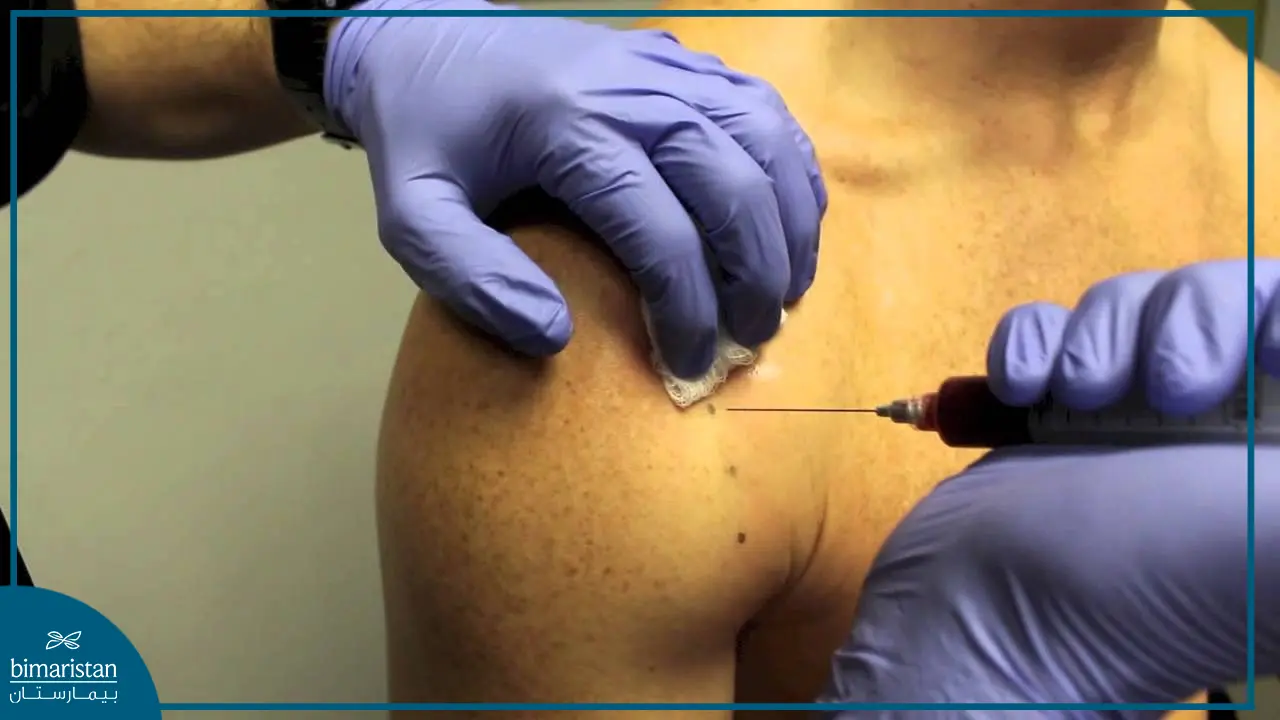
Corticosteroids are also beneficial in treating tendonitis. They can be administered orally or directly injected into the shoulder joint. They are considered one of the most effective anti-inflammatory drugs available. However, long-term use of corticosteroids may weaken the tendons and increase the risk of tendon rupture.
Treating shoulder tendonitis with plasma injections
A new method for treating joint diseases and osteoarthritis involves obtaining a human plasma sample extracted from the person’s own blood, which is later injected into the affected joint. This method is considered a promising treatment that has shown benefits in treating various knee and joint problems. Read more about the benefits of plasma injections for the knee.
Exercises for treating shoulder tendonitis
Physical therapy is beneficial in strengthening the muscles and tendons in the shoulder area to accelerate inflammation healing and prevent its recurrence. The physical therapist will teach you some exercises that contribute to lengthening and strengthening your tendons, such as inducing muscle contraction. At the same time, it is stretched, as it helps strengthen the tendons in your shoulder.
Shoulder tendonitis surgery
When one of the tendons in the shoulder joint suffers a partial tear, and the patient’s symptoms do not improve after trying previous treatments, surgical intervention may be necessary to repair the tendon damage and alleviate symptoms.
Shoulder arthroscopy, which is minimally invasive and relatively safe, can be used for the surgery. The surgeon makes small incisions through which instruments are inserted to remove the inflamed parts of the tendon or repair them.
Shoulder arthroscopy is usually the preferred option for surgery, but in cases of severe tendonitis injuries, the surgeon may recommend traditional surgery.
Prevention of shoulder tendonitis
Since the most common cause of shoulder tendonitis is attributed to excessive joint loading and stress, inflammation can be avoided and prevented as much as possible by following these tips:
- Avoid carrying excessively heavy weights above shoulder level.
- Make sure to maintain proper form and posture when exercising.
- Warm up properly before starting any physical activity.
- Do not strain the joint suddenly, and gradually increase your athletic activity.
- Regularly strengthen and stretch your shoulder through stretching exercises.
In conclusion, shoulder tendonitis is a common condition and one of the most common types of tendon inflammation in the human body. The patient initially experiences increased joint pain with movement, which can become severe enough to restrict shoulder movement. The treatment for this condition varies depending on the degree and severity of inflammation. Rest may be sufficient, but surgical intervention may be recommended in advanced stages to repair the tendons.
References: