
Maintaining mobility and independence is critical as we age, as it plays a key role in ensuring the quality of life of the elderly. Aging, with its accompanying physical and functional changes, leads to an increased risk of muscle weakness, joint pain, and frequent falls. Geriatric physiotherapy is an effective solution to these challenges, as it helps strengthen muscles, improve balance, and minimize physical complications, enabling older people to continue living their daily lives more independently and comfortably. The World Health Organization (WHO) has emphasized the importance of geriatric physiotherapy, noting its vital role as an essential component of elderly care
What is geriatric physiotherapy?
Geriatric physiotherapy in general is a form of health care based on the principle of restoring movement and improving performance, through exercise and manual therapies, and may resort to the use of special devices, which leads to reducing pain and increasing strength and flexibility, without any surgical or pharmacological intervention, while geriatric physiotherapy directed at the elderly, especially those aged 60 and above, is based on meeting their unique needs that they gradually lose with age, such as increasing muscle strength, flexibility, endurance and balance, to perform daily activities such as walking and climbing stairs.
Here’s a table that explains the difference between general physical therapy and geriatric physiotherapy:
| Side | General Physical Therapy | Geriatric Physiotherapy |
|---|---|---|
| Age group | All ages | Older adults (usually 60 years and older) |
| The main goal | Restoring mobility after an injury or surgery | Improve functional ability and reduce fall risk |
| Targeted Problems | Muscular, neurological, and sports injuries | Osteoporosis, falls, muscle weakness, lack of flexibility |
| Long-term goals | Recovery and return to full activity | Maintaining independence and improving quality of life |
What are the benefits of geriatric physiotherapy?
Geriatric physiotherapy has many benefits, including:
- Reduce pain and improve balance and muscle strength: This improves the ability to perform daily activities without difficulty.
- Reduce the risk of falls and fractures: By strengthening muscles and improving balance.
- Improves heart and lung function and flexibility: This increases the body’s ability to breathe efficiently and reduces the exertion caused by movement.
- Reduce reliance on painkillers: This helps avoid potential side effects.
The main conditions that physical therapy treats in the elderly
Geriatric physiotherapy can be effective in treating a variety of conditions, including:
- Osteoporosis, arthritis, falls and fractures, and strokes.
- Parkinson’s, low back pain, and post-operative issues.
- Rehabilitation after stroke or cardiac surgery.
Physical therapy techniques used with the elderly
Physical therapy techniques for the elderly include several effective methods, such as:
- Therapeutic exercises (movement, balance, stretching): Aimed at strengthening muscles, improving balance to avoid falls, and increasing flexibility.
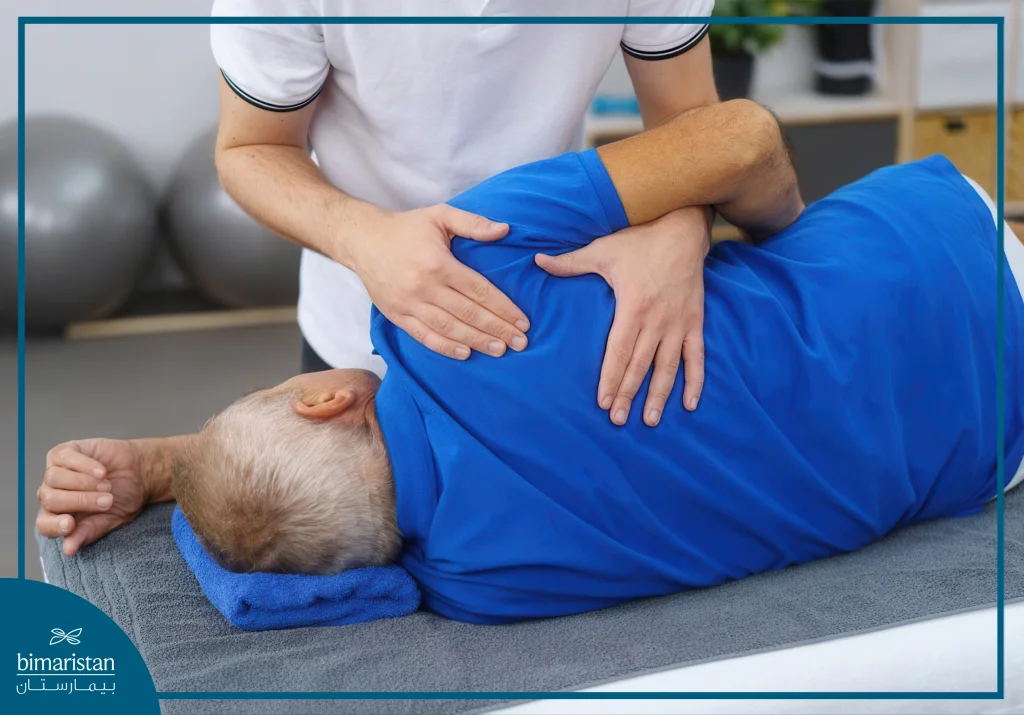
- Manual therapy and massage: Aimed at relieving muscle pain and stiffness, and improving joint mobility.
- Water exercises: Reduce stress on the joints during exercise, resulting in easier and safer movements.
- Use assistive devices and walkers: They help with safe mobility and independence for those who have trouble with balance or walking.
- Electrical stimulation of muscles: Stimulates muscle contraction and strengthening, and promotes recovery after injury or surgery.
How to start a physical therapy plan for seniors?
The treatment plan for the elderly begins with a thorough initial assessment of the patient’s condition by a physiotherapist, such as assessing mobility, balance, and pain level. Based on the initial assessment, individualized goals are set based on the patient’s condition, such as muscle strengthening or the ability to walk. The specialist periodically monitors the patient’s condition in cooperation with the family, and makes alternative plans or modifies the plan in accordance with the development of the patient’s condition and his response to treatment, emotional support is an essential aspect of treatment because it motivates and supports the patient to continue and adhere to the treatment to achieve the required results.
Is geriatric physiotherapy safe?
Physical therapy is generally considered safe, but it is best done under the supervision of a professional, especially for people with chronic diseases or disabilities. The specialist will usually reduce the intensity of the exercises to suit the patient’s age and health condition. Therefore, body-weight-based exercises or exercises with light resistance, such as rubber bands, are used, which leads to muscle activation without fatigue, keeping vital signs such as pulse and blood pressure within normal limits.
Tips to maximize the effectiveness of geriatric physiotherapy
The patient must adhere to several tips to maximize the effectiveness of the treatment and achieve the expected result, including:
- Stick to the treatment plan: By maintaining regular exercise.
- Good nutrition and adequate sleep: They boost your body’s energy.
- Staying away from a sedentary lifestyle: By increasing daily movement and activity.
- Family involvement and patient motivation: Through constant support and encouragement of the patient.
In conclusion, the role of geriatric physiotherapy has emerged as an essential pillar in supporting the patient’s healthy life, as it works to improve mobility, strengthen muscles, and promote daily independence, and early intervention is essential in detecting physical changes resulting from aging, which differ from one person to another. Therefore, specialist supervision is required to provide an individualized treatment plan that suits each case, with the aim of achieving the best results, reducing complications, and contributing to effectively improving the patient’s quality of life.
Sources:
- Agency for Healthcare Research and Quality. (n.d.). Physical therapy: Evaluation in older adults. Retrieved June 16, 2025, from:
- Centers for Disease Control and Prevention. (n.d.). Physical activity basics: Guidelines for older adults. U.S. Department of Health & Human Services. Retrieved June 16, 2025, from: