
Respiratory diseases are among the most prevalent health conditions, especially in older adults and smokers, significantly impacting their quality of life. One of the most serious and widespread of these conditions is chronic obstructive pulmonary disease (COPD), ranked among the top three global causes of death, highlighting its severity. Early detection and awareness of available COPD treatment options are crucial for preventing symptom progression and improving outcomes.
What is chronic obstructive pulmonary disease (COPD)?
Chronic obstructive pulmonary disease (COPD): COPD is a long-term condition characterized by lung inflammation, airway damage, and narrowing, which makes it harder for air to flow in and out of the lungs. The term COPD encompasses a group of respiratory disorders, primarily chronic bronchitis and emphysema, with many patients experiencing both. Smoking remains the leading cause of COPD. While the disease cannot be fully cured, medical therapies and lifestyle adjustments can significantly relieve symptoms and improve breathing.
Pharmacologic and conventional COPD treatments
COPD cannot be completely cured, but symptoms can be controlled by:
Non-pharmacological treatments
These include:
- Quit smoking: For smokers, this is the best way to improve symptoms and relieve seizures.
- Pulmonary rehabilitation: A program of muscle-strengthening exercises and breathing exercises can help improve symptoms.
In addition to some supportive therapies that include:
- Gaseous respiration: A device that reduces carbon dioxide gas, used in hospitals.
- Home oxygen therapy: A device used for patients with hypoxia that helps reduce fatigue and increase stamina, and is administered under medical supervision.
Pharmacological treatments
Inhalations
- Short-acting bronchodilators: These are used to relieve symptoms and rapid attacks, including ipratropium and salbutamol.
- Long-acting bronchodilators: Salmeterol and formoterol are two of the most important long-acting bronchodilators for ongoing symptom relief and long-term airway dilation.
- Steroid sprays: Used to reduce inflammation in the airways in individuals with frequent attacks
Tablets
- Oral corticosteroids: Used for short periods of time during exacerbations.
- Sputum solvents: Carbocysteine and acetylcysteine are used to reduce the viscosity of phlegm, dissolve it, and facilitate its excretion.
- Antibiotics: Used to treat bacterial infections during an exacerbation and crisis.
- Roflumilast: Used to reduce inflammation and lower the risk of severe exacerbations of recurrent seizures.
Modern COPD treatment: Pulmonary valves
Pulmonary valves are a non-surgical COPD treatment that involves placing small, one-way valves inside the lungs to reduce pulmonary hyperinflation. These valves function by allowing trapped air in the damaged lung areas to escape, thereby increasing airflow and capacity in the healthier regions of the lungs.
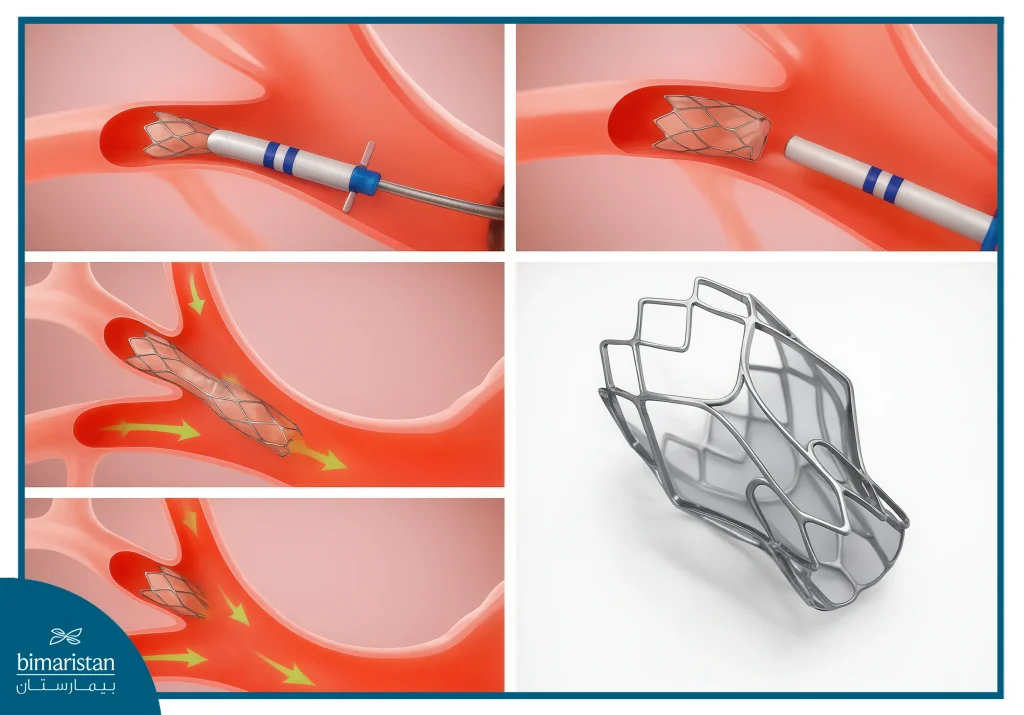
The therapeutic procedure is done by placing valves using a small bronchoscope with a camera that passes through the nose or mouth into the lungs. Typically, 3 to 5 valves are placed in the affected lobe of the lung.
When should surgery be considered as COPD treatment?
Surgical treatment involves reducing the size of the lung by removing the most affected parts, thereby improving the function of the healthy parts and facilitating gas exchange or breathing. Surgery is performed using laparoscopic techniques with small incisions and a camera, under general anesthesia.
Surgery should be considered as a COPD treatment when the patient has:
- Completed the pulmonary rehabilitation program
- Severe shortness of breath despite rehabilitation
- Not smoked in almost four months
- A healthy and ideal weight
- Tests show that the air trapped in the lungs is high, and lung function is very low
Comparison of valves and surgery procedures for COPD treatment
The following table shows the main differences between these two procedures:
| Side | Pulmonary valves (EBVs) | Surgical procedure (LVRS) |
|---|---|---|
| Type of procedure | Non-invasive (bronchoscopy) | Surgical (thoracotomy or surgical incisions) |
| Recovery time | Shorter (2-3 weeks) | Longer |
| Complications | Pneumothorax, infection, and pain | Surgical complications, need for additional oxygen |
| Effectiveness | Effective and safe | Effective and safe |
| Success condition | No side ventilation between the lobes | Does not rely on the presence of side ventilation |
In conclusion, effective COPD treatment plays a crucial role in enhancing patients’ quality of life and alleviating distressing symptoms, such as breathlessness and limited physical activity. Treatment options vary according to disease severity and individual needs, ranging from medications and pulmonary rehabilitation to advanced interventions such as pulmonary valves or surgery. With ongoing medical advancements, patients can experience notable improvements in breathing and daily function when the appropriate COPD treatment is selected through thorough evaluation by the healthcare team.
Sources: