
Pulmonary emphysema is a chronic respiratory disease that can significantly affect lung function and the ability to perform daily activities, particularly in advanced stages. Although medications and pulmonary rehabilitation help relieve symptoms for many patients, some cases require more advanced treatment options to improve lung function and reduce shortness of breath.
Lung Volume Reduction Surgery (LVRS) for emphysema is one of the treatment options used for a selected group of patients with emphysema. The procedure aims to improve breathing efficiency and quality of life by reducing the impact of the most damaged areas of the lungs. The success of LVRS depends on careful evaluation of the patient’s overall health and suitability for the procedure.
What Is Emphysema?
Emphysema is a chronic respiratory disease that falls under the umbrella of Chronic Obstructive Pulmonary Disease (COPD). It primarily affects the alveoli (air sacs) within the lungs. Under normal conditions, these air sacs are elastic, expanding during inhalation and returning to their normal size during exhalation, allowing efficient exchange of oxygen and carbon dioxide. In emphysema, the walls of the alveoli become damaged and gradually lose their elasticity. The air sacs may also break down or merge together, forming larger but less efficient air spaces. As a result, air becomes trapped inside the lungs, making it difficult to exhale completely. This leads to shortness of breath and reduces the body’s ability to receive sufficient oxygen.
Smoking is the most common cause of emphysema. However, other factors, such as long-term exposure to air pollutants or certain rare inherited disorders, can also increase the risk of developing the disease. Emphysema is a progressive condition, meaning it tends to worsen over time. Nevertheless, appropriate treatment can help relieve symptoms and improve breathing ability.
What Is Lung Volume Reduction Surgery (LVRS)?
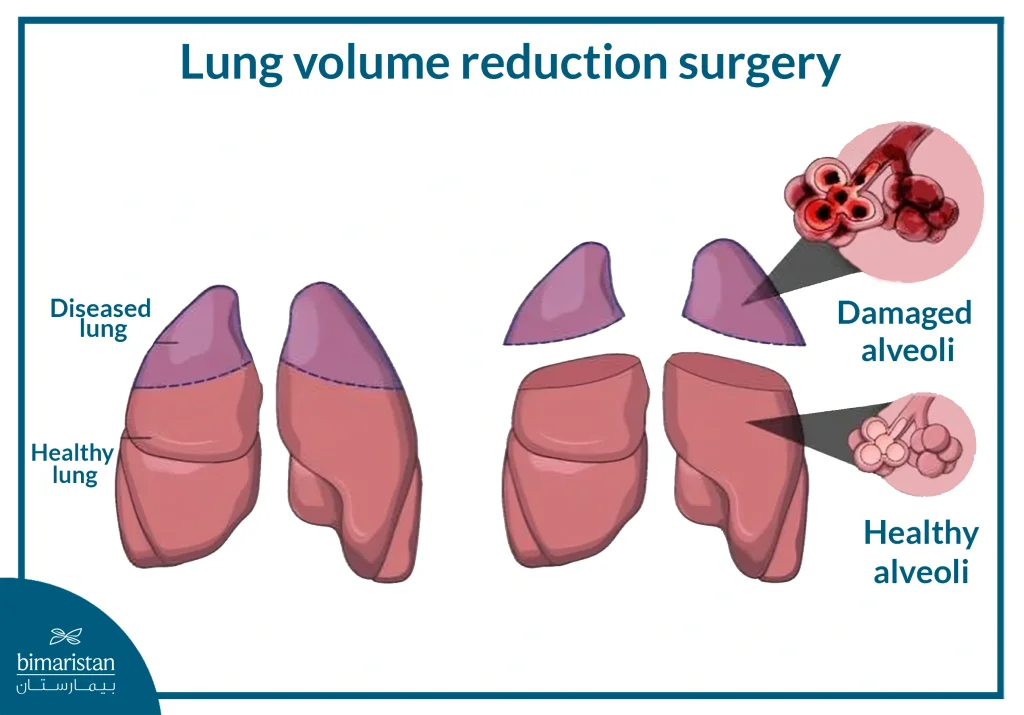
Lung Volume Reduction Surgery (LVRS) is a surgical procedure performed to help improve breathing in selected patients with severe emphysema. The operation involves removing the most damaged portions of the lungs that contribute to air trapping, allowing the relatively healthier lung tissue to function more efficiently.
LVRS helps reduce lung hyperinflation and relieve pressure on the diaphragm, which may improve airflow and increase the amount of oxygen reaching the bloodstream. This procedure is generally considered only after other treatment options—such as medications, pulmonary rehabilitation, and smoking cessation—have been tried. It is important to note that LVRS is not a cure for emphysema but rather a treatment designed to improve respiratory function and quality of life in carefully selected patients.
Who Is a Candidate for Lung Volume Reduction Surgery (LVRS) for Emphysema?
Lung Volume Reduction Surgery (LVRS) is not suitable for all patients with emphysema. Instead, it is recommended only for carefully selected individuals with advanced disease who continue to experience significant breathing difficulties and limitations in daily activities despite receiving optimal medical treatment. Patients who may be suitable candidates for LVRS generally include those who have:
- Severe emphysema, particularly when the damage is predominantly located in the upper lobes of the lungs
- Persistent severe shortness of breath despite medications and participation in pulmonary rehabilitation
- Significant lung hyperinflation and air trapping
- Stopped smoking for at least 4 to 6 months before surgery
- The ability to complete a pulmonary rehabilitation program before and after surgery
- An overall health condition that makes surgery appropriate following a comprehensive medical evaluation
Other factors, such as age, body mass index (BMI), and pulmonary function, are also taken into consideration. Therefore, selecting appropriate candidates for LVRS requires a thorough assessment by a specialized multidisciplinary medical team.
Preparing for Lung Volume Reduction Surgery
Patients undergo a comprehensive evaluation before Lung Volume Reduction Surgery to determine whether they are suitable candidates and to minimize the risk of potential complications. This assessment includes several tests to evaluate the severity of emphysema as well as the function of the lungs and heart. Preoperative evaluation for LVRS may include:
- Pulmonary function tests to assess breathing capacity and airflow
- Chest computed tomography (CT) scans to identify the most severely affected areas of the lungs and evaluate the degree of air trapping
- Exercise tolerance and functional capacity testing
- Arterial blood gas analysis to measure oxygen and carbon dioxide levels in the blood
- Electrocardiography (ECG) and echocardiography to evaluate heart function
- A six-minute walk test to assess the patient’s functional capacity
Patients are also typically evaluated by pulmonologists and thoracic surgeons. They should follow all preoperative instructions provided by the medical team, including fasting before surgery, temporarily stopping certain medications when necessary, and informing their physician about all medications and dietary supplements they are taking.
How Is Lung Volume Reduction Surgery Performed?
Lung Volume Reduction Surgery is performed under general anesthesia, meaning the patient is completely asleep and connected to a mechanical ventilator throughout the procedure. The goal of the operation is to remove the most severely damaged portions of the lungs, improving breathing efficiency by reducing air trapping. The procedure typically includes the following steps:
- Administration of general anesthesia and placement on mechanical ventilation
- Creating one or more surgical incisions, depending on the surgical technique used
- Identifying the most damaged lung tissue and removing the affected portions
- Closing the remaining lung tissue using specialized surgical instruments to minimize air leakage
- Placing chest tubes to drain air and fluid from the chest after surgery
- Closing the surgical incisions and applying appropriate dressings
Lung Volume Reduction Surgery generally takes between one and three hours, although the exact duration depends on the patient’s condition and the surgical approach used.
Surgical Techniques Used for Lung Volume Reduction Surgery
LVRS can be performed using various surgical techniques, depending on the patient’s condition and the distribution of emphysema in the lungs. The most commonly used approaches include:
Video-Assisted Thoracoscopic Surgery (VATS)
Video-Assisted Thoracoscopic Surgery (VATS) is a minimally invasive technique in which the surgeon makes three to five small incisions between the ribs. A tiny camera and specialized surgical instruments are inserted through these incisions to access the lungs and remove the damaged tissue. Compared with open surgery, this approach requires much smaller incisions and is associated with less surgical trauma.
Open Surgery Through Median Sternotomy
In this technique, the surgeon makes an incision through the breastbone (sternum) to access the lungs. This approach provides access to both lungs through a single incision and may be preferred in selected cases that require a wider surgical field.
Robotic Lung Volume Reduction Surgery
In some specialized centers, LVRS can be performed using robotic-assisted surgical systems. Robotic arms and a high-definition camera enable the surgeon to perform the procedure with enhanced precision through small incisions. Robotic surgery is a minimally invasive approach that may improve surgical control and reduce tissue trauma in carefully selected patients.
Benefits of Lung Volume Reduction Surgery
The primary goal of Lung Volume Reduction Surgery is to improve breathing efficiency in patients with severe emphysema by reducing lung hyperinflation and removing the least functional areas of the lungs. Clinical studies have shown that some patients experience significant improvements in breathing ability and physical activity compared with conservative treatment alone. Potential benefits of LVRS include:
- Improved breathing and reduced shortness of breath
- Improved lung function with reduced hyperinflation and air trapping
- Increased ability to perform daily activities and exercise
- Improved diaphragm function and more efficient gas exchange
- Enhanced quality of life and, in some cases, reduced strain on the heart
The degree of improvement depends on the severity of the disease, the distribution of emphysema within the lungs, and the patient’s overall health. Consequently, outcomes vary from one patient to another.
Risks and Complications of Lung Volume Reduction Surgery
As with any major surgical procedure, Lung Volume Reduction Surgery carries certain risks and potential complications. Patients are carefully evaluated before surgery to minimize these risks, and the likelihood of complications depends largely on the patient’s overall health and the severity of emphysema. Potential complications following LVRS include:
- Persistent air leakage from the lungs, which is the most common complication and may require prolonged chest tube drainage
- Pneumonia or other chest infections
- Lung collapse (atelectasis) or pneumothorax
- The need for prolonged mechanical ventilation after surgery
- Blood clots or pulmonary embolism
- Cardiac arrhythmias or heart attack
- Bleeding during or after surgery
- Fluid accumulation within the chest
- Surgical wound infections
Although death following Lung Volume Reduction Surgery is uncommon, the risk may be higher in patients with severe coexisting medical conditions or significantly impaired lung and heart function. Careful patient selection and close postoperative monitoring play a crucial role in minimizing complications.
Recovery After Lung Volume Reduction Surgery
Recovery following Lung Volume Reduction Surgery requires close medical supervision and a structured rehabilitation program to help patients gradually regain their breathing capacity and physical function. Recovery time varies depending on the patient’s overall health, the surgical technique used, and whether postoperative complications occur.
Most patients remain in the hospital for approximately three to ten days after LVRS. Some may require mechanical ventilation for a short period following surgery. During hospitalization, the medical team focuses on pain management, monitoring lung function, and encouraging early mobilization and gradual walking.
Pulmonary rehabilitation usually begins within the first few weeks after surgery and is an essential component of recovery. It helps improve breathing efficiency and increase exercise tolerance. Patients should also attend regular follow-up appointments and carefully follow their physician’s instructions regarding physical activity, medications, and postoperative care. Many patients experience noticeable improvements in symptoms and quality of life after Lung Volume Reduction Surgery, and these benefits may last for several years in appropriately selected individuals. However, it is important to remember that LVRS is not a cure for emphysema.
Lung Volume Reduction Surgery is an advanced treatment option for carefully selected patients with severe emphysema. When appropriate, it can improve breathing capacity and reduce symptom severity, leading to a better quality of life. The success of LVRS depends largely on careful patient selection, the choice of the most appropriate surgical technique, and comprehensive postoperative follow-up. For this reason, the procedure should always be performed at specialized centers with extensive experience in thoracic surgery and the management of complex lung diseases to achieve the best possible outcomes.
sources: