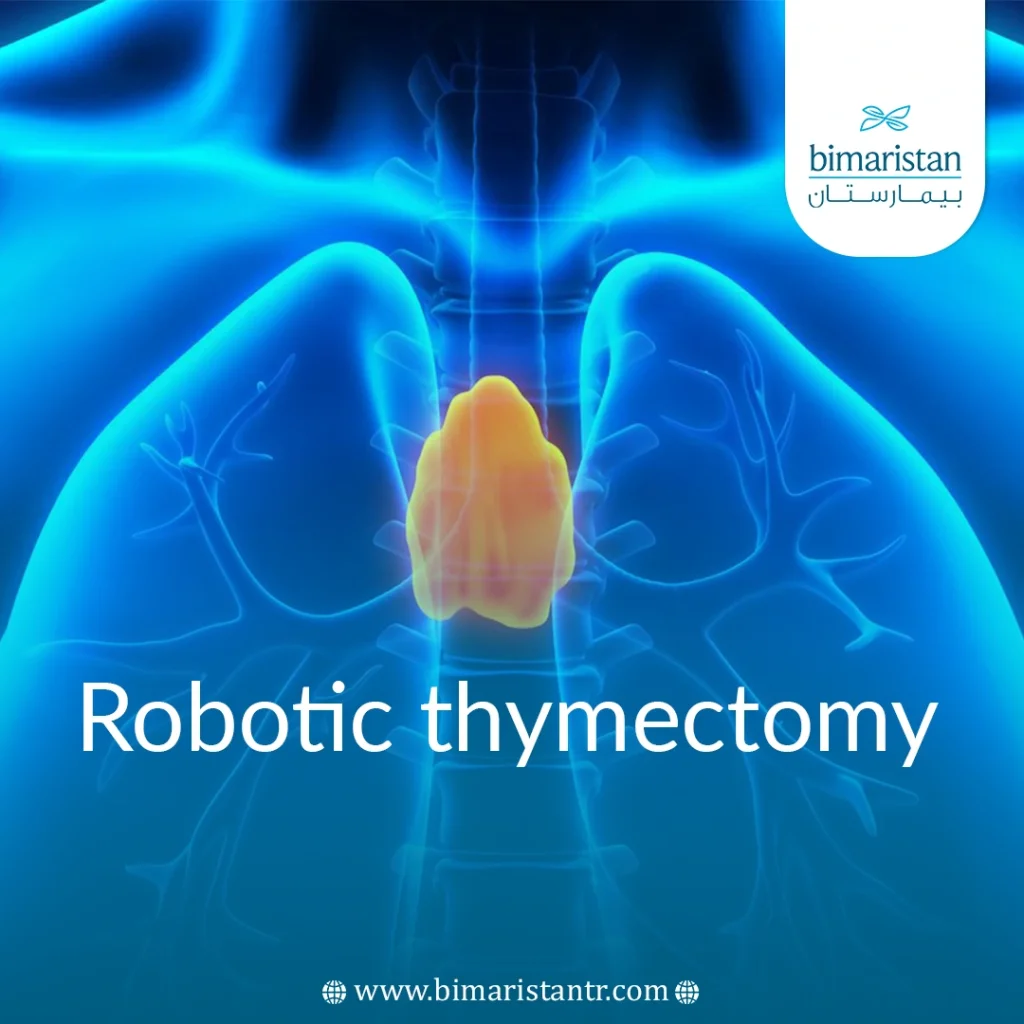
Certain medical conditions related to the thymus gland may require surgical intervention as part of the treatment plan, following a thorough assessment of the condition and its impact on the patient’s health. Thymus gland removal is considered an approved medical procedure for managing these conditions in specific situations.
With advances in surgical techniques, robotic thymectomy has become a modern approach to this surgery, as it allows surgeons to use precise instruments and advanced control within a limited surgical field.
What is the thymus gland, and what is its function?
The thymus is a small gland that is part of the lymphatic system, which in turn is part of the immune system, responsible for defending against infections and diseases. This gland plays a key role in regulating immune function, helping the body distinguish between harmful agents and normal cells.
The primary function of the thymus is to train a specific type of white blood cell known as T-cells, which originate in the bone marrow and then migrate to the thymus to mature and become capable of performing their immune function. These cells then travel to the bloodstream and lymph nodes to help fight disease. The thymus also secretes hormones that help regulate the immune system; it is most active during childhood, after which its size and function gradually decline.
In what cases is a thymectomy indicated?
Thymectomy is performed in a number of medical conditions—which may be neoplastic or non-neoplastic—with the aim of treating the underlying problem or alleviating associated symptoms. The decision to perform surgery depends on the nature of the condition and the extent to which it affects the patient.
The most common conditions that may require removal of the thymus gland include the following:
- Myasthenia gravis: This is one of the most common causes, and surgery is used to improve symptoms, especially in generalized cases or those that do not respond to medication; it may also reduce the need for medication in the long term.
- Thymic tumors, such as thymoma and thymic carcinoma, for which surgical resection is considered the primary treatment option in many resectable cases.
- Pancreatic neuroendocrine tumors: These are rare conditions that may require surgical removal to treat the tumor and control symptoms.
- Cysts or benign tumors: especially if they cause symptoms, are growing in size, or there are concerns about their nature.
- Thymus gland enlargement: In some cases, this causes pressure on surrounding tissues or is associated with immune system disorders.
In less common cases, thymectomy may be performed for diagnostic purposes when a tissue sample is needed to determine the nature of certain diseases.
What is robotic thymectomy?
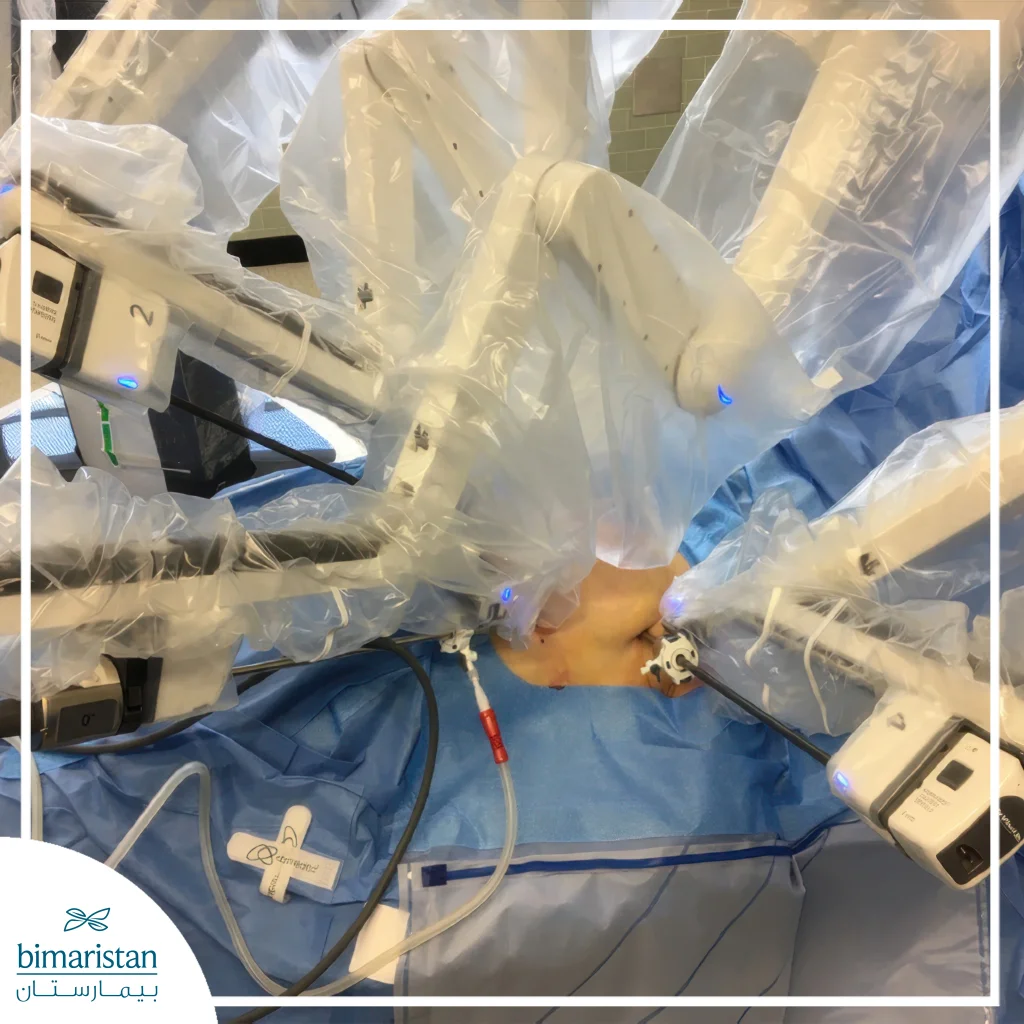
Robotic thymectomy is a minimally invasive surgical procedure designed to remove the thymus gland using an advanced surgical system based on robotic technology, such as the da Vinci system. This type of surgery is performed through several small incisions rather than open surgery and relies on a system that provides high-resolution 3D visualization and gives the surgeon greater control over surgical instruments, while the surgeon retains full control throughout the procedure.
This approach differs from traditional surgery, which requires a larger incision to access the gland; using a robot allows the procedure to be performed within a limited surgical field with greater precision in movement and control.
How is a robotic thymectomy performed?
Robotic thymectomy is performed according to precise steps designed to remove the gland while preserving the integrity of the surrounding tissues, using advanced surgical instruments that are remotely controlled by the surgeon.
The steps in the process include the following:
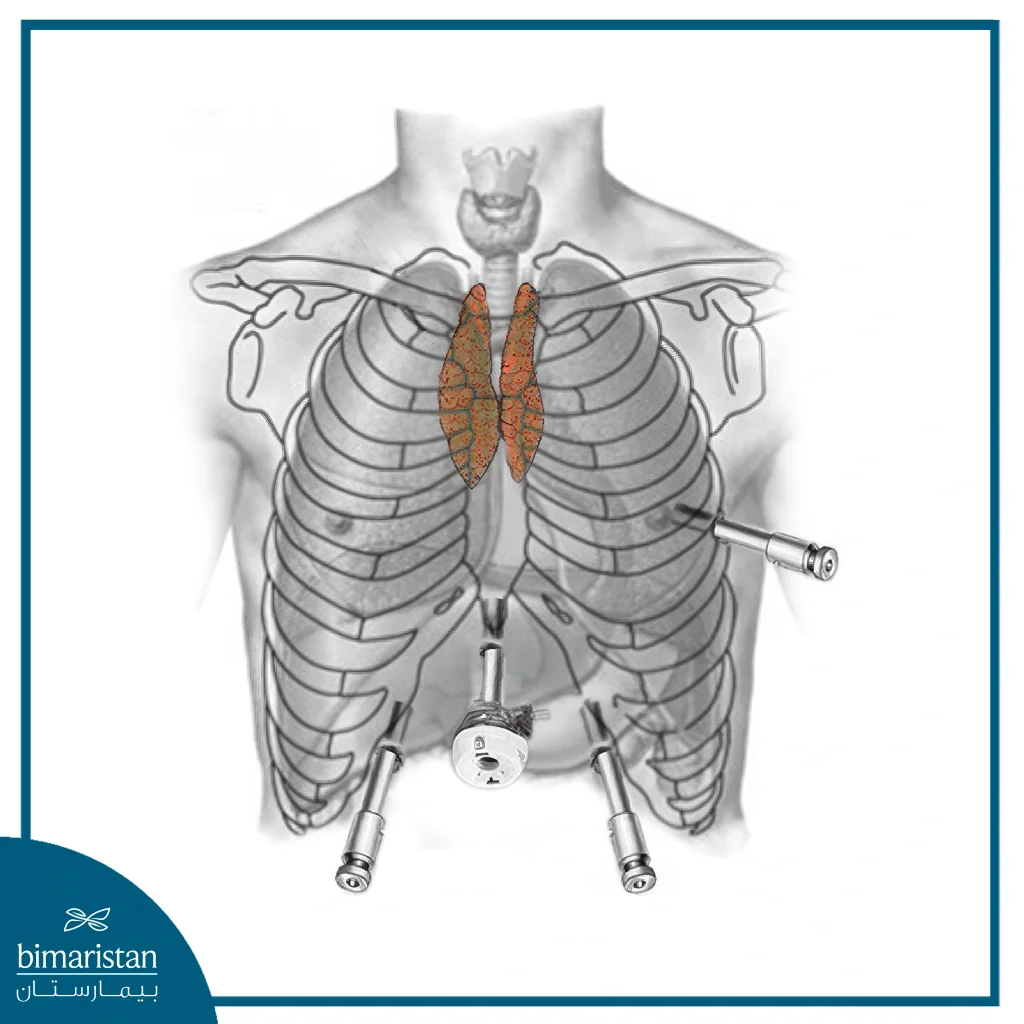
- Several small incisions are made in the chest wall to insert the camera and specialized surgical instruments
- These instruments are mounted on the robotic system’s arms, and the surgeon controls their movement using a control unit that provides a magnified 3D view
- The surgeon begins by carefully separating the thymus gland from the surrounding tissues and structures inside the chest
- After the gland has been completely removed, it is placed inside a special pouch and pulled out of the body through one of the small incisions
- One or more tubes may be placed inside the chest to drain fluid after the procedure
- Finally, the surgical incisions are closed after confirming that the procedure has been successfully completed
These steps are performed with great precision under the surgeon’s constant supervision throughout the procedure, which helps ensure that the resection is performed within a limited surgical field.
Benefits of Robotic Thymectomy
Robotic thymectomy offers a number of advantages over traditional surgical methods, thanks to its minimally invasive nature and the use of precise, advanced technologies. The most notable of these advantages include the following:
- less pain and less blood loss during the procedure
- Smaller scars due to minimal surgical incisions
- Shorter hospital stays
- Faster recovery and an early return to daily activities
- The procedure is performed without the need to cut through the sternum, thereby minimizing damage to tissues and bones
- Greater precision of movement, combined with enhanced 3D visualization, helps improve control during surgery
Together, these factors contribute to improved surgical outcomes and reduced postoperative effects compared to traditional methods.
Risks and Complications of Robotic thymectomy
Although robotic thymectomy is considered a relatively safe procedure, like any surgical procedure, it may be associated with certain risks and potential complications, the severity of which varies depending on the patient’s health status and the experience of the surgical team. The most notable of these risks include the following:
- Injury to adjacent tissues, such as the vagus nerve, the laryngeal nerve, the lungs, or nearby blood vessels
- Respiratory problems such as pneumothorax (collapsed lung) or pneumonia
- Lymphatic fluid leakage into the chest cavity
- Bleeding or infection may occur after the procedure, although the incidence is lower than with open surgery
- The need to switch to open surgery in rare cases where complications arise or resection is difficult
- Possible long-term changes in the immune system resulting from the removal of the gland, although the extent of these effects remains a matter of debate
In general, these complications are uncommon, especially when the procedure is performed at specialized centers by an experienced surgical team.
Recovery Period After Robotic Thymectomy
The recovery period following robotic thymectomy varies from patient to patient depending on their overall health and the nature of the procedure, but it is usually shorter than that of open surgery. The patient stays in the hospital for a short time for monitoring, and a temporary chest tube may be inserted to drain fluid or air from the chest cavity.
During the first few days after the procedure, the patient may experience some chest pain or discomfort, but this can usually be managed with appropriate medication. It is recommended to resume movement gradually and avoid strenuous physical activity during the initial phase; patients can typically return to their daily activities within a relatively short period of time. Full recovery depends on the patient’s adherence to medical instructions and regular follow-up after the procedure.
In conclusion, robotic thymectomy is a modern surgical procedure that has made it possible to treat thymus disorders with greater precision and using a minimally invasive approach. This advancement has improved the patient experience by reducing surgical trauma and accelerating recovery compared with traditional methods.
However, the decision to undergo this type of surgery depends on an individual assessment of the case by a specialist, taking into account the nature of the condition and the patient’s overall health, to ensure the best possible outcomes.
Sources: