
A hydrocele is a sac filled with fluid that can cause swelling in the scrotum. Treatment typically involves draining the fluid from the affected testicle.
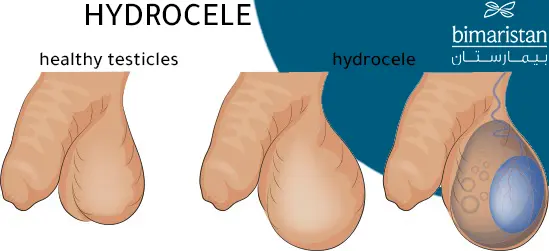
Hydrocele meaning: a testis hydrocele is a type of swelling in the sac surrounding the testicle due to fluid accumulation (fluid in scrotum). It occurs outside the testicle, so the size of the testicle remains normal. It is common in newborns (hydrocele in newborns) and often resolves without treatment by age one.
Hydrocele balls are usually not serious, but visiting a doctor to monitor the condition is recommended. it can be a bilateral hydrocele in some cases.
Hydrocele types
There are two types of hydrocele medical condition (fluid in testes):
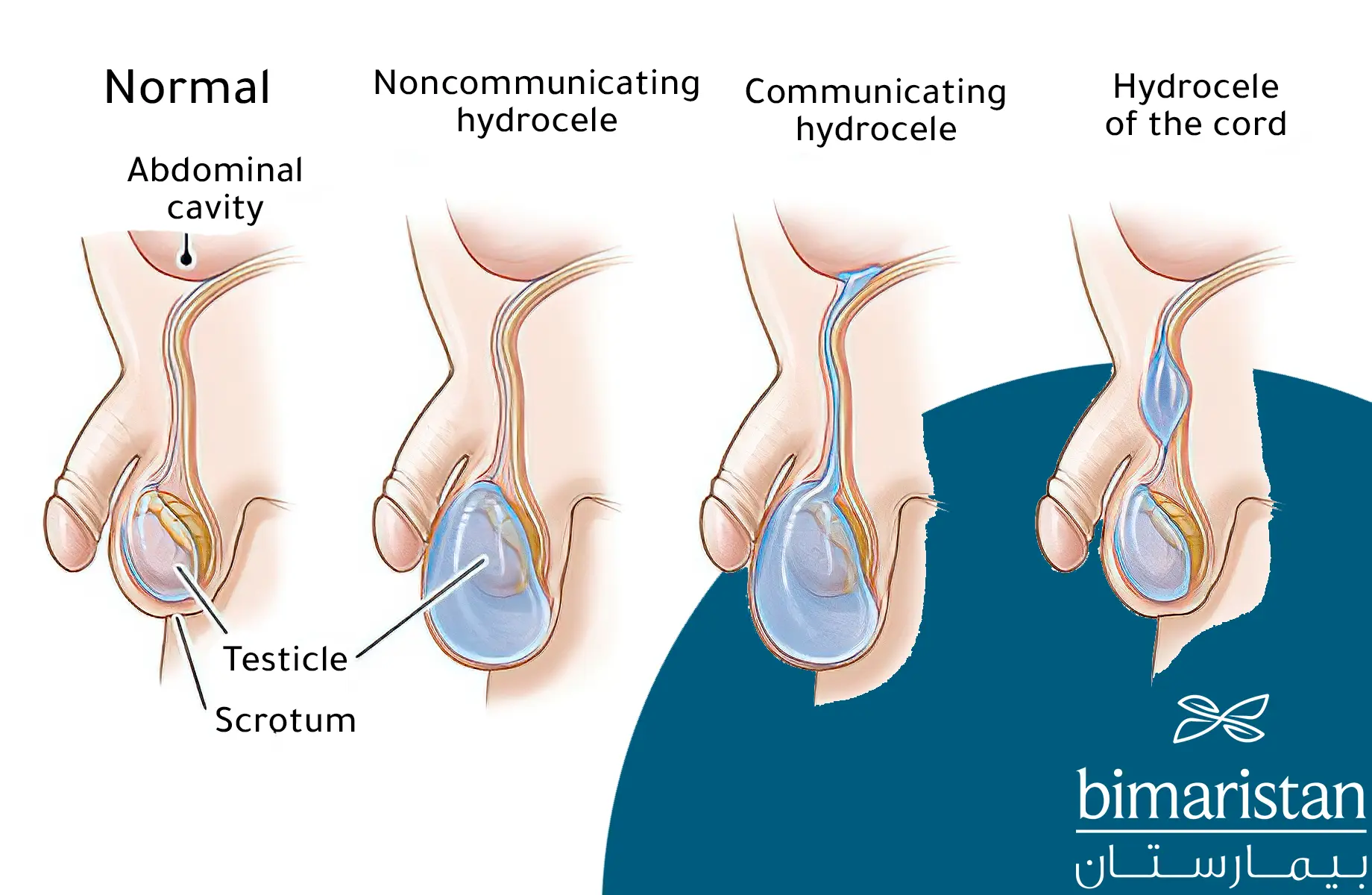
Communicating hydrocele
In the third trimester of pregnancy, the testicles descend from the abdominal cavity into the scrotum. During this descent, they are surrounded by a protruding process that descends with them and then closes after descent (failure of descent results in undescended testes).
This type of hydrocele occurs when the protruding process surrounding the testicle remains open, leading to a connection between the scrotum and the abdominal cavity. This allows fluid from the abdominal cavity to leak into the scrotum, resulting in a communicating hydrocele. This condition is present at birth.
Non-communicating hydrocele
In this type, fluid accumulates in the scrotum, but there is no connection between it and the abdominal cavity. This condition can occur at birth or in adults for various reasons.
Hydrocele causes
Hydrocele is swelling inside the scrotum due to fluid accumulation. This accumulation occurs due to the following reasons:
- Persistence of communication between the cavity surrounding the testicle and the peritoneum (persistence of the protruding process). Hydroceles in newborns are often communicating, as the open channel allows fluid from the peritoneum to pass into the scrotum.
- Increased production of fluid in the scrotum or failure to absorb fluid from it. The most common cause of hydrocele in adults is infection with filariasis, a parasitic infection. However, this condition only occurs in areas where the disease is endemic.
- Obstruction of the lymphatic drainage of structures within the scrotum. Hydrocele may occur after varicocele surgery due to damage to the lymphatic drainage during varicocele removal, leading to fluid accumulation in the scrotum.
Also, learn about how to treat varicocele.
Hydrocele disease symptoms
Hydroceles around the testicle are usually small and asymptomatic. However, hydrocele symptoms may appear when it becomes larger and cause noticeable swelling or enlargement on one side or both sides of the scrotum. The patient may feel a sense of heaviness in the scrotum due to fluid accumulation. However, this swelling is usually not painful.
The size of the swelling in the scrotum increases when the pressure inside the abdomen increases in communicating hydroceles, while it remains the same in non-communicating hydroceles.
If the swelling is painful, suspecting an indirect inguinal hernia (protrusion of the intestines through the inguinal canal into the scrotum) is necessary. Pain is often the difference between hydrocele and indirect inguinal hernia, and they can be differentiated using ultrasound.
Hydrocele Diagnosis
Hydrocele is diagnosed clinically, but other diagnostic procedures exist for certain clinical findings. These hydrocele medical tests include:
- Palpation: The testicles should be well palpated.
- Localized pain, fever, and gastrointestinal symptoms (such as vomiting).
- Shadows inside the sac during transillumination.
Additional diagnostic tests that help diagnose hydrocele include:
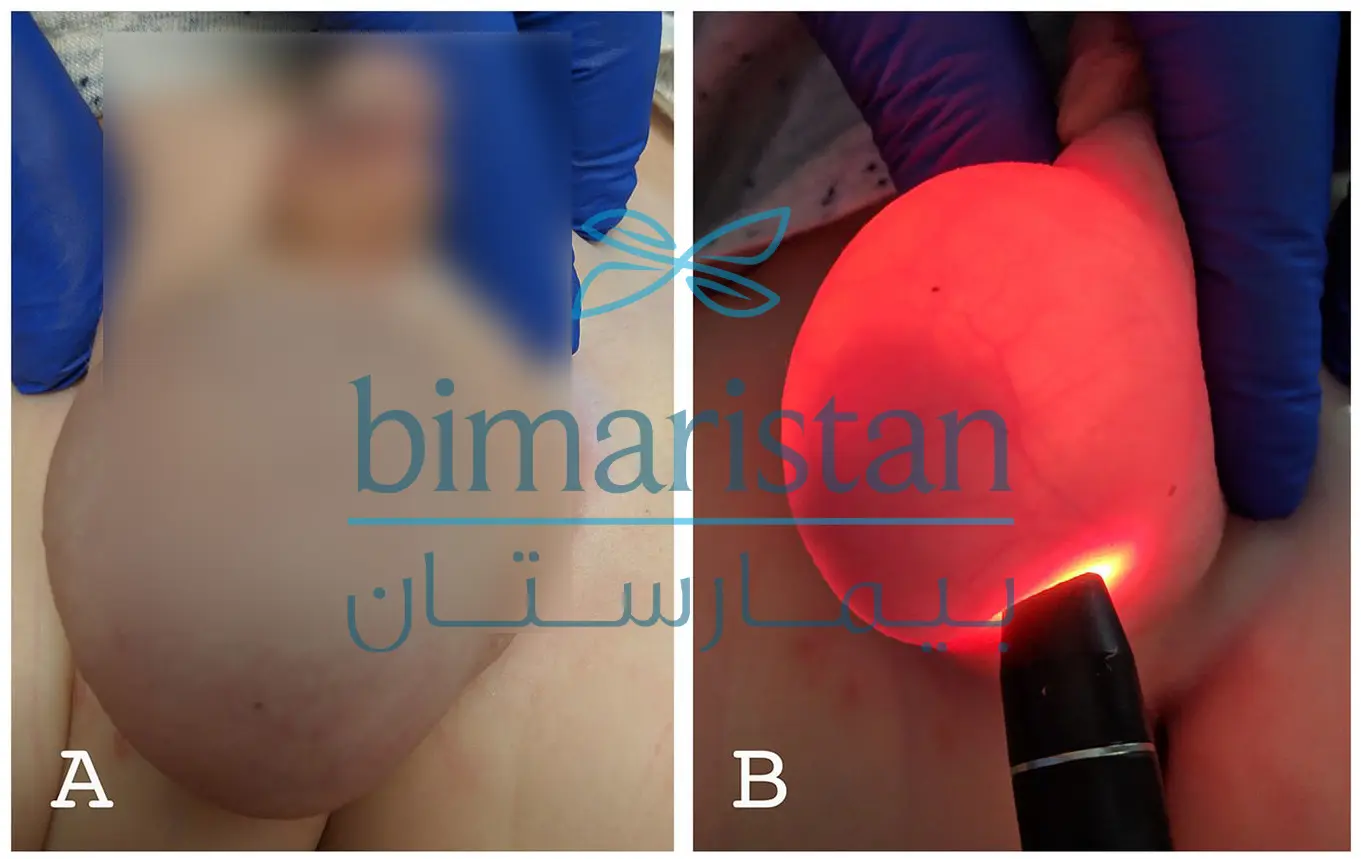
Transillumination test
Transillumination involves shining a light on the scrotum and observing the shadow from the other side. If the shadow is transparent, it suggests the presence of a hydrocele. If there is a shadow inside the scrotum, it may be due to testicular swelling, which differentiates hydrocele from testicular cancer. Hydroceles do not occur in the testicle itself but outside it, so there is no swelling in the testicle itself, and it remains its normal size.
Laboratory tests
Hydrocele can occur around the testicle due to inflammation of the testicle or epididymis. To differentiate this condition from spontaneous hydroceles, some laboratory tests are performed to determine if the cause of the hydrocele is inflammatory or another type.
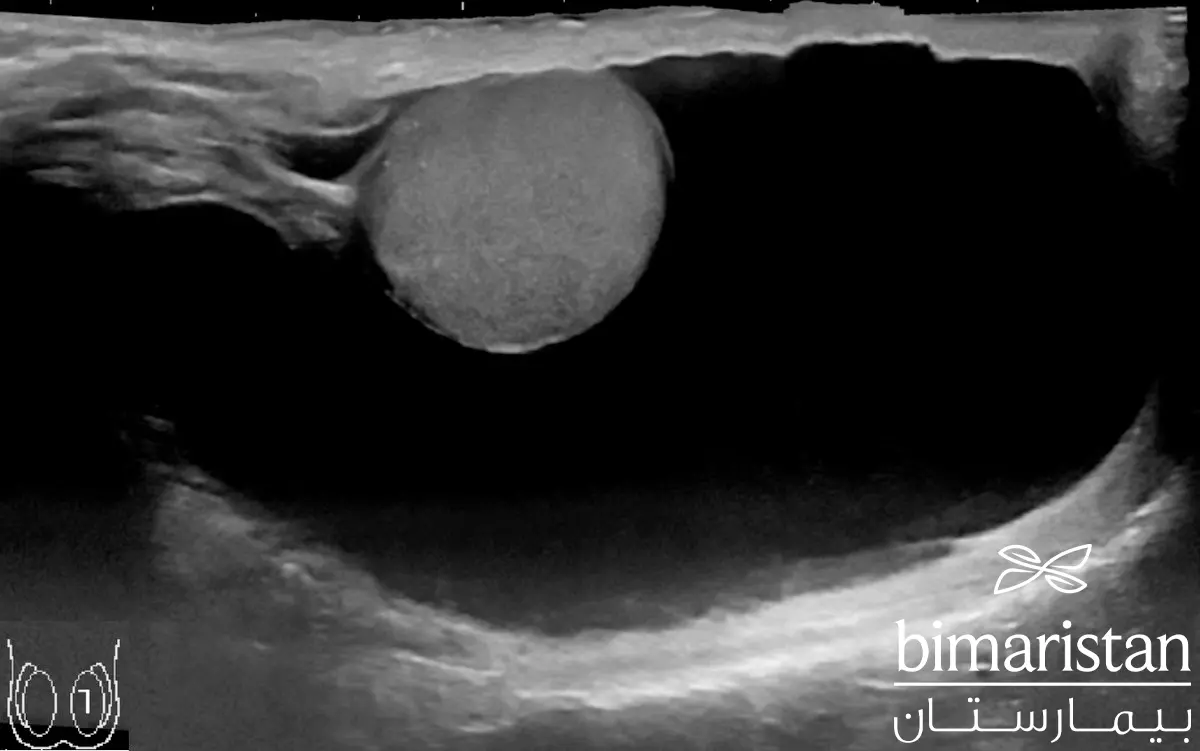
Ultrasound imaging
Ultrasound can differentiate between hydroceles, spermatoceles, and testicular tumors.
It may be necessary to perform an ultrasound when the testicle is not palpated on clinical examination, as the echo may show testicular atrophy that may be due to chronic torsion of the spermatic cord that has led to testicular infarction.
Finally, the pain requires a Doppler echogram of the testicular arteries, as the pain may be evidence of the presence of a testicular infarction.
X-ray abdominal image
A simple abdominal image is used to differentiate a hydrocele from an inguinal hernia. The abdominal image may show the presence of gases in the scrotum, indicating herniation of the intestine into the scrotum, which requires emergency intervention. Also, the intestine can be palpated in the scrotum, indicating an inguinal hernia.
Hydrocele Complications
Hydroceles are usually not dangerous and do not cause any problems with reproduction and sexual ability. Still, they may predispose to the occurrence of some problems in the future, such as:
- Infection: It may affect the testicles and cause the inability to form sperm, thus affecting reproduction.
- A communicating hydrocele may predispose to the entry of a piece of intestine and the development of an inguinal hernia.
Hydrocele treatment
Non-communicating hydrocele in adults does not require treatment unless symptoms appear but rather constant monitoring. When symptoms of hydrocele appear, it is treated surgically if we are unable to treat the cause.
Hydrocele in infants does not usually require treatment because it is of the continuous type and disappears spontaneously by the age of one or two years. Treatment of hydrocele in adults is usually surgical. Hydrocele cannot be treated with herbs.
Hydrocele surgery in Türkiye
There are three ways to treat hydroceles surgically in Türkiye (surgery hydrocelectomy):
Inguinal method
The process of removing water from the testicle through the inguinal method seems to be preferred in children who have an attached hydrocele, as it enters from above the scrotum and connects the process of the intestine that connects the abdomen and the scrotum and leads to leakage of peritoneal fluid into the scrotum.
It is preferable to perform this method when there is suspicion of testicular cancer in order to connect the spermatic cord before performing any intervention on the tumor so that the tumor does not spread to other places in the body.
Through the scrotum
This approach is preferably performed with resection of the tunica tunica or reversal of its edges and suturing in chronic non-communicating hydroceles. This procedure should be avoided if there is any suspicion of a tumor.
Sclerotherapy
Sclerotherapy should remain the last option in patients who are not candidates for surgery as a hydrocele therapy.
The method is done by suctioning water from the scrotum and injecting a sclerosing substance such as tetracycline into it. Repeating this process is common, and complications may occur, such as severe pain or blockage of the epididymal ducts.
The success rate of peri-testicular hydrocele surgery is very high, with a recurrence rate of less than 1% when using the inguinal approach, as well as through the scrotum. However, the recurrence rate when using the sclerosing method is higher.
Hydrocele surgery follow-up
You should visit your doctor at least once after your surgical procedure to ensure complete recovery, and a review may be warranted more than once a month or every two weeks.
Tips after hydrocele surgery
- The wound should be kept clean and dry for at least 24 hours, and then the wound should be cleaned with a small amount of water for a week.
- Wear tight pants for at least a week
- Avoid submerging the operation area with water, even in a bathtub, for a full week
- If you feel pain at the site of the operation, contact your physician
Hydrocele surgery complications
Caution must be taken when handling tissue, especially in the inguinal manner, so as not to injure one of the structures of the spermatic cord, as it may lead to another hydrocele or cause injury to the vas deferens and lead to infertility.
A simple hydrocele often occurs after the procedure but usually goes away within a week.
Finally, having a hydrocele is not a cause for concern, but it is preferable to go to the doctor to detect the hydrocele and distinguish it from testicular tumors. Often, the appearance of symptoms of hydrocele around the testicle requires treatment through hydrocele surgery, which is a very simple surgical procedure with great results. Note that the Bimaristan Center offers the best doctors and surgical procedures to deal with and treat hydroceles in Turkey.
Sources:
- Mayo Clinic
- Cleveland Clinic
- Medscape