Laparoscopic varicocele surgery is one of the latest medical techniques that has revolutionized the treatment of varicocele, a common condition that affects a large percentage of young men and directly affects fertility and the health of the reproductive system. This procedure is characterized by its high effectiveness and its ability to reduce pain and recovery time compared to traditional surgery, as it allows the doctor to accurately treat dilated veins through small incisions using a surgical laparoscope.
With the development of modern technologies, laparoscopic varicocele surgery has become a preferred option for patients looking for a safe and quick recovery, as the importance of this procedure lies in its ability to restore normal blood flow to the testicle and improve its function, which reflects positively on reproductive health and quality of life in general.
What is a varicocele?
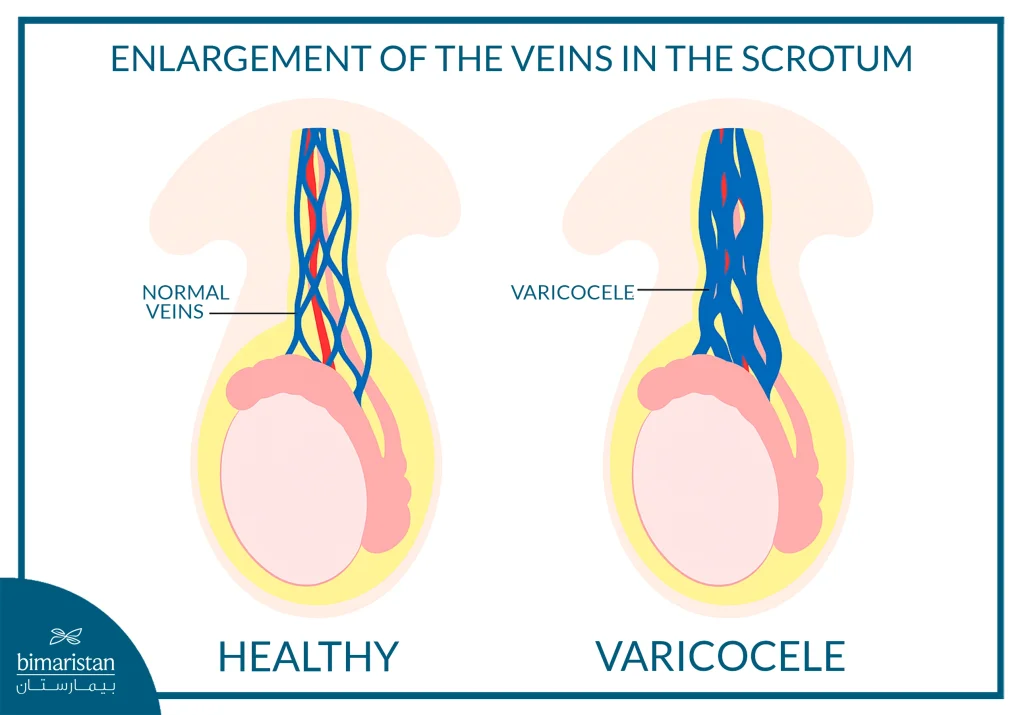
Varicocele is an enlargement of the veins inside the soft skin sac that holds the testicles (scrotum), similar in nature to varicose veins in the legs, but it affects the veins responsible for draining the blood from the testicle, so varicocele occurs when blood collects in the veins instead of flowing efficiently out of the scrotum.
This condition is caused by a weakness in the valves of the veins, which is the most important cause of varicocele, leading to reflux and accumulation of blood in the area, increasing the pressure inside the veins, and gradually increasing their size. Varicoceles usually form during puberty and develop over time, and varicoceles often appear on the left side more often than the right.
They may not cause any symptoms at first, but over time, the patient may experience pain or heaviness in the scrotum, poor testicular development, decreased sperm production, or other issues that may lead to infertility. Surgical intervention is recommended when varicose veins lead to chronic pain, small testicles, or disrupted semen analysis in men with delayed fertility. In these cases, laparoscopic varicocele surgery may be the most effective solution to restore normal testicular function and improve the chances of conception. Clinically, there are three degrees of varicocele:
- First degree: Varicocele is seen while the patient is standing, palpating the scrotum, and performing the Valsalva maneuver.
- Grade 2: Varicocele is seen during scrotal palpation without performing the Valsalva maneuver.
- Third degree: The varicocele appears like a bag of worms while the patient is standing, without performing the Valsalva maneuver or palpation.
Why is laparoscopic varicocele surgery used?
Laparoscopic varicocele surgery is one of the latest surgical methods that aims to treat varicose veins more accurately and safely than traditional methods. In open surgery, a larger incision is made in the area to access the affected veins, while laparoscopic surgery relies on very small incisions through which the doctor inserts precise instruments and a high-resolution camera that enables him to see the veins clearly and treat them with precision. Laparoscopic surgery has several advantages that make it the preferred option in many cases, including:
- High accuracy in identifying and ligating dilated veins without affecting healthy tissue
- Faster recovery and earlier return to daily activity compared to traditional surgery
- Smaller wounds minimize post-operative pain and speed healing
- Reduced likelihood of complications such as infections or swelling
Laparoscopic surgery is especially preferred in cases where varicose veins are bilateral (on both sides) or in patients who need a quick return to normal life and work, as well as when the doctor wants to thoroughly evaluate the abdomen or pelvis during the same procedure.
Laparoscopic varicocele surgery steps
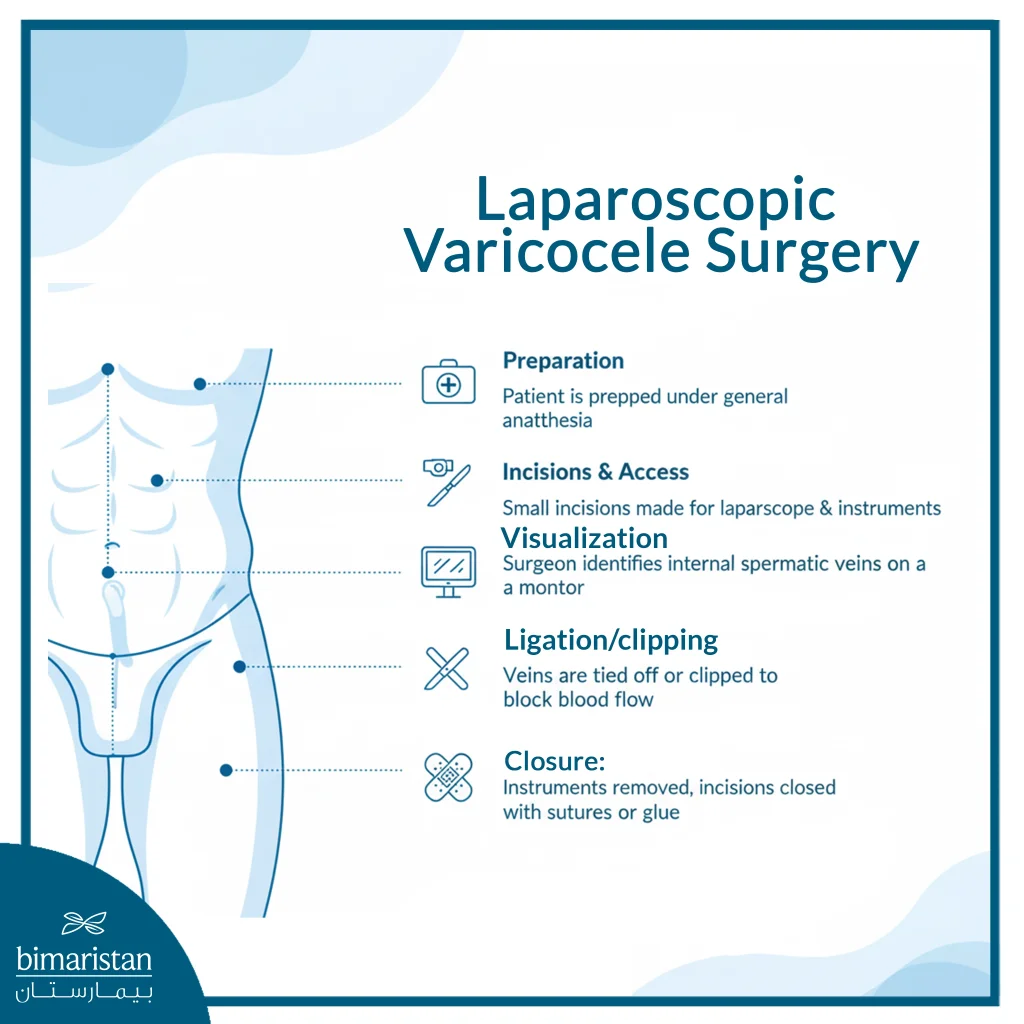
Before laparoscopic varicocele surgery, the patient is required to undergo a series of tests, such as semen analysis, blood tests, and an ultrasound of the testicles, to determine the degree and exact location of the varicose veins. The patient is advised to fast for several hours before the procedure, and to stop certain blood-thinning medications if recommended by the doctor. The details of the procedure are also explained to the patient to ensure full psychological readiness.
Laparoscopic varicocele surgery is often performed under general anesthesia to ensure that the patient is comfortable and does not feel any pain during the procedure, and in some special cases, spinal anesthesia may be used according to the doctor’s assessment. After sterilizing the surgical area, CO₂ gas is injected, which is used to expand the abdominal cavity and create enough space for the surgeon to see the organs and work safely. The surgeon then makes three very small incisions in the abdominal wall (between 0.5 and 1 cm in length) to insert the laparoscope and surgical instruments without causing visible scars.
The surgeon inserts a high-definition camera through one of the openings, allowing the surgeon to clearly see the dilated veins on the screen and pinpoint their exact locations. The surgeon then ligates or cauterizes the affected veins using clips, threads, or the Harmonic Scalpel, taking care to preserve the testicular artery, the vas deferens, and the lymphatic channels to avoid complications. Once hemostasis has been achieved, the instruments are removed, and the small openings are closed with fine cosmetic sutures, giving the patient an almost scar-free skin appearance and excellent cosmetic results.
Duration of laparoscopic varicocele surgery
Laparoscopic varicocele surgery usually takes only 30 to 60 minutes and is a relatively short procedure. In most cases, the patient can leave the hospital on the same day or after a maximum of 24 hours, depending on the speed of recovery. After the procedure, the patient is transferred to an observation room for a few hours until he/she is fully awake and his/her vital signs are stabilized.
The patient may feel a slight swelling or discomfort in the scrotum, which is normal and will gradually disappear within a few days. The patient is advised to rest completely for a few days, avoid lifting weights or practicing strenuous physical activity, and adhere to the medications prescribed by the doctor to relieve pain and accelerate healing. It is often possible to return to regular daily activity within one week, while sports activity and marital relations should be postponed until authorized by the doctor after the examination.
Possible complications and when to see a doctor
Although laparoscopic varicocele surgery is considered a safe and modern procedure, some complications may occur in rare cases, and it is important for the patient to be aware of them to monitor any changes that may require medical intervention. Here are the most important potential complications:
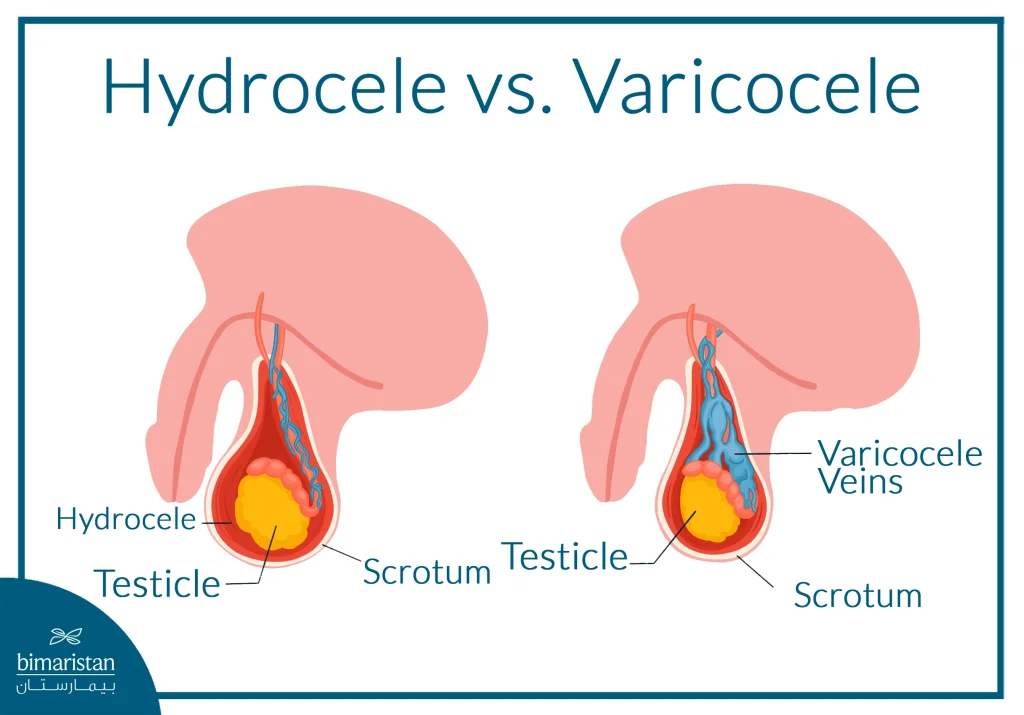
- Peritesticular hydrocele: A noticeable swelling of the scrotum may occur as a result of fluid accumulation after the operation, often temporary, but in some cases may require minor medical drainage.
- Persistent pain or discomfort: Pain or heaviness in the testicle may last longer than expected if inflammation or irritation of the blood vessels or surrounding tissue occurs.
- Significant swelling or bruising: Some mild bruising is normal, but severe swelling or increased puffiness may indicate an issue that needs immediate evaluation.
- Scrotal distension: This is mainly caused by the carbon dioxide (CO₂) gas used during the procedure leaking into the scrotum.
- Infection: Although rare, there may be signs of inflammation, redness around the incision site, or a high temperature.
- Bleeding: Any bleeding from surgical incisions or from surrounding tissues should be carefully monitored.
- Vasal injury or transection of the femoral genital nerve
- Damage to blood vessels in the area, such as the inferior epigastric artery, inferior mesenteric vein, or seminal vessels
- In very rare cases, varicose veins may return if not all affected veins are treated or due to poor vessel healing after the procedure
When should you see a doctor immediately?
- If the pain persists severely despite the use of prescribed medications
- Increased swelling or redness in the scrotum
- Sudden change in testicle size or the appearance of new lumps
- Any sudden or unexpected bleeding from the incision site
- High temperature or fever after surgery, which may indicate an infection
Laparoscopic varicocele surgery results
Laparoscopic varicocele surgery shows positive results in improving fertility and testicular function in most patients, especially when performed at the right time and by a competent physician. After surgery, many men notice a marked improvement in sperm count, motility, and shape in the following months, positively impacting the chances of natural conception.
The success rates of laparoscopic surgery are very high, ranging from 90% to 95% in the successful removal of varicose veins, with an improvement in semen parameters in about 70% of patients, results that are better or similar to open surgery, but with fewer complications and faster recovery.
Results usually begin to appear 3 to 6 months after the procedure, which is the time it takes for the testicle to regain its activity and improve sperm production, and the doctor may recommend a repeat analysis after this period to objectively assess the improvement.
Recovery period after laparoscopic varicocele surgery
Laparoscopic varicocele surgery is characterized by a relatively short recovery period compared to traditional methods, allowing patients to return to their daily activities quickly. After the operation. Here are some tips to optimize and speed up recovery:
- Adhere to prescribed medications to relieve pain and prevent infections
- Rest for a few days and avoid physical exertion or heavy lifting for the first few days
- Regular follow-up with the doctor to conduct the necessary tests and ensure the success of the operation
- Use recommended scrotal supports or compression garments to minimize discomfort and bloating
- Avoid sex or vigorous physical activity for about a week, or as recommended by your doctor
In most cases, patients can return to work and normal daily activity in about one week, although the timing varies depending on the nature of the work and the patient’s health status. It is often observed that the discomfort and swelling disappear within a few days, while testicular function gradually improves over the following months.
Laparoscopic varicocele surgery cost
The cost of laparoscopic varicocele surgery varies widely by country and surgical technique. Below is a table comparing the price of laparoscopic varicocele surgery.
| States | Average Cost (USD) |
|---|---|
| Turkey | 1500-2000 USD |
| Germany | 4000 – 6000 USD |
| Britain | 5000 – 10000 USD |
| United States | 7000 – 12000 USD |
Factors affecting the price
- Costs for tests before surgery or anesthesia
- Whether the process is unilateral or bilateral
- The experience of the surgeon and the hospital (is it a specialized center, does it have international accreditation)
- Costs for hospitalization, post-operative care, and ancillary facilities (accommodation and transportation)
- The country or city where the surgery is performed, where costs are usually lower in countries that attract medical tourism
Finally, laparoscopic varicocele surgery is one of the safest and most effective modern methods of treating varicocele and improving male fertility. With its high accuracy and short recovery period, it has become the preferred choice for many patients around the world who are looking for guaranteed results and fewer complications compared to traditional surgery.
Because the success of the procedure depends on the skill of the doctor and the experience of the medical center, it is recommended to perform it in specialized medical institutions that have an expert team and advanced equipment, such as Bimaristan Medical Center in Turkey, which is a leading destination in the field of laparoscopic surgery and provides patients with comprehensive care starting from accurate diagnosis to post-operative follow-up to ensure the best results.
Sources:
- Kachrilas S, Popov E, Bourdoumis A, Akhter W, El Howairis M, Aghaways I, Masood J, Buchholz N. Laparoscopic varicocelectomy in the management of chronic scrotal pain. JSLS. 2014 Jul-Sep;18(3):e2014.00302
- ClinSurgery Journal. (n.d.). Laparoscopic varicocelectomy: Surgical technique and outcomes. Annals of Surgery and Clinical Research
- Hassan JM, Adams MC, Pope JC, Demarco RT, Brock JW. Hydrocele Formation Following Laparoscopic Varicocelectomy