
Radiation therapy for prostate cancer is one of the most important modern treatment options that has proven to be highly effective in controlling the disease and preserving quality of life. Radiation therapy for prostate cancer is characterized by its ability to precisely target cancer cells using ionizing radiation, destroying them and preventing them from dividing while minimizing damage to surrounding healthy tissue.
What is radiation therapy for prostate cancer?
Radiation therapy for prostate cancer is a method of delivering measured doses of radiation to the prostate gland to kill cancer cells or limit their growth. This treatment is used either as a main alternative to surgery or after surgery if there is a risk of tumor recurrence, and can be used to relieve symptoms in advanced stages of the disease.
Radiation destroys the genetic material inside cancer cells (DNA), making them unable to divide and reproduce. Since cancer cells divide more quickly than normal cells, the effect of radiation is more intense on them, and over time, the tumor is gradually eliminated.
When is radiation therapy recommended for prostate cancer?
Radiation therapy is recommended in the following cases:
- After a prostatectomy, if there is a possibility of tumor recurrence
- In the diffuse stages, to relieve pain or control symptoms (palliative treatment)
- When the tumor is confined to the prostate gland and has not spread to neighboring organs
- As an alternative to surgery in patients who cannot undergo surgery due to age or comorbidities
Advantages of radiation therapy for prostate cancer
This type of therapy is characterized by the following:
- No general anesthesia or surgery required
- Effective in eliminating the tumor and reducing the risk of recurrence
- Keeps the prostate in place without having to remove it
- The recovery period is short, and the patient can go about their daily life during treatment
Studies have shown that prostate cancer control rates with radiation therapy are comparable to those achieved with surgery, especially in the early stages of the disease. Cure rates reach more than 90% for limited intraglandular cases, with very low recurrence rates when the technique is accurately applied.
Preparing for radiation therapy for prostate cancer
The patient must undergo some procedures before starting treatment, such as:
- The patient’s position is stabilized with a special device to ensure stability during each session
- CT scan or MRI to precisely locate the prostate
- Radiation planning to evenly distribute the dose and avoid sensitive tissues such as the rectum and bladder
Types of radiation therapy for prostate cancer
Radiation therapy is divided into the following types:
External beam radiation therapy
This type is the most commonly used to treat prostate cancer. Radiation is delivered from an external machine that directs a precise beam of radiation to the tumor site from outside the body. The treatment is performed in repeated sessions, usually lasting 4 to 8 weeks, with one session per day (5 days per week). Types of external beam radiation therapy include
- High-dose fractionated radiation therapy: The number of sessions is reduced and the dose per session is increased to minimize the overall treatment time.
- Image-guided radiation therapy: This uses daily imaging to pinpoint the exact location of the prostate before each session to ensure the tumor is completely targeted.
- Intensity-modulated radiation therapy: The intensity of the radiation to each part of the tumor is precisely adjusted to avoid over-irradiating healthy tissue.
- Multi-Intensity Rotational Radiation Therapy: A new technology that allows radiation to be delivered as the machine rotates around the patient, shortening the session time and increasing the accuracy of guidance.
Brachytherapy (internal radiation)
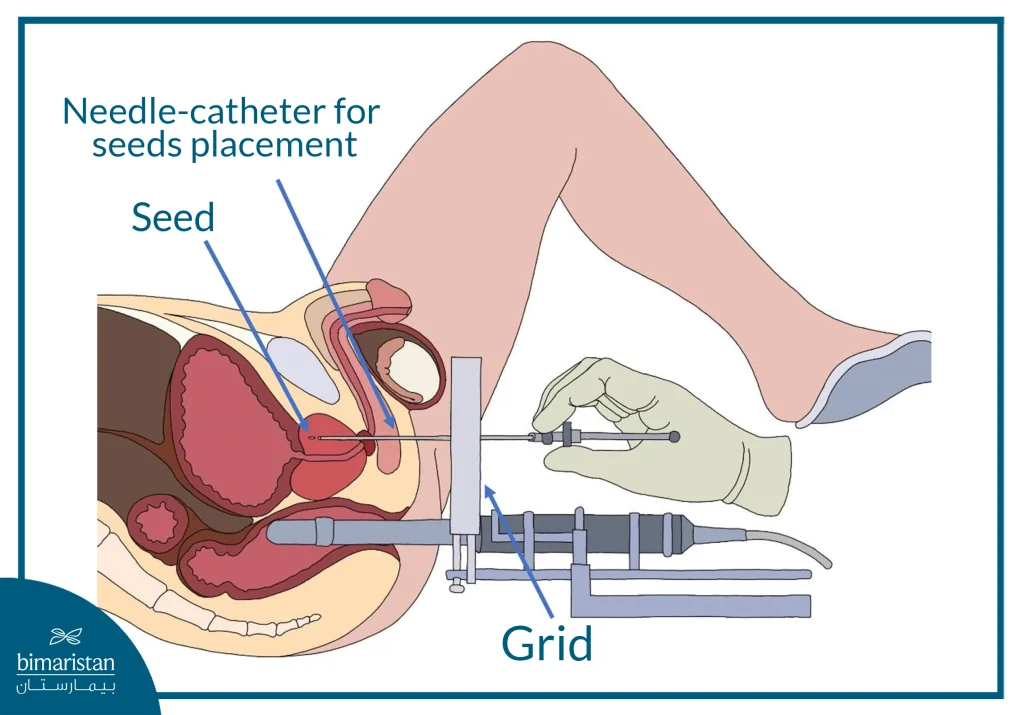
Also known as brachytherapy, this technique involves the implantation of small radiation sources directly into the prostate gland, delivering a concentrated dose of radiation to the tumor from within. It is divided into two types:
- Permanent brachytherapy: Small seeds containing a radioactive substance are implanted inside the prostate and gradually lose their activity over weeks or months. This type is suitable for low- to moderate-risk cases.
- Temporary brachytherapy: Small tubes are placed inside the prostate for several minutes or hours, through which high-dose radiation is delivered and then removed. This technique is usually used for advanced cases or in combination with external therapy.
Proton radiation therapy
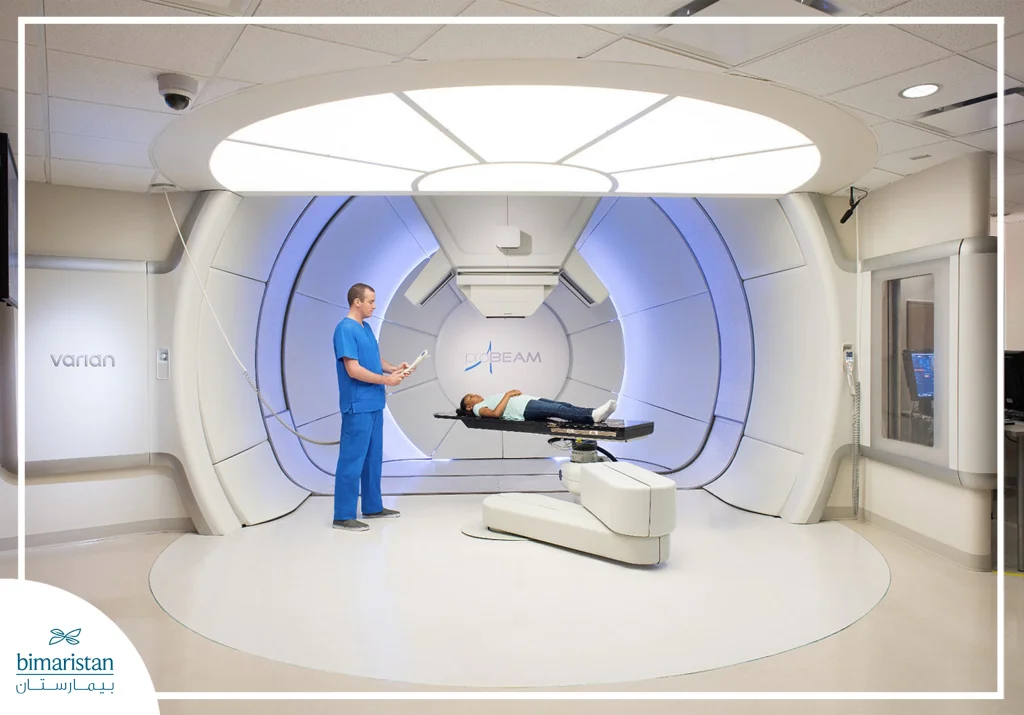
Proton radiation therapy is one of the latest advanced radiation methods for treating prostate cancer. It is distinguished from conventional radiation by its ability to precisely concentrate the radiation dose within the tumor, thanks to a property known as Bragg Peak. This feature allows high doses of radiation to be delivered to targeted cancer cells, while significantly reducing radiation exposure to surrounding healthy tissue and sensitive organs such as the bladder and rectum. Proton therapy is characterized by the following:
- Minimizes damage to healthy tissue: Minimizes long-term side effects compared to conventional radiation.
- Dose control: Allows for very precise dosing, increasing the likelihood of complete tumor eradication.
- Highly effective against complex tumors: Especially useful for tumors near vital organs or for patients who have already received radiation therapy.
This type is usually used in specialized and advanced centers due to the need for highly sophisticated equipment and infrastructure. The cost is much higher than conventional radiation therapy, so it is often reserved for patients who need special protection for sensitive organs or have complex conditions.
Follow-up after radiation therapy for prostate cancer
After the end of treatment, the patient undergoes periodic follow-ups, including:
- X-rays as needed to make sure the tumor is gone
- Monitor and treat urinary and sexual symptoms as needed
- Analyze the prostate-specific antigen (PSA) level to monitor the effectiveness of treatment
Possible side effects of radiation therapy for prostate cancer
Although radiation therapy is relatively safe, it may cause some temporary or long-term effects, including
- Early effects (during or immediately after treatment)
- General fatigue or exhaustion
- Burning or difficulty urinating
- Rectal irritation with possible mild diarrhea or minor bleeding
- Delayed effects (months or years later)
- Narrowing of the urethra or bladder
- Minor disturbances in bowel movements
- Erectile dysfunction due to nerve damage
Most of these symptoms can be controlled with medication or supportive therapy and gradually improve over time.
Cost of radiation therapy for prostate cancer in Turkey
At Bimarestan Center in Turkey, we offer the highest quality prostate cancer treatment at globally competitive prices. With the use of the latest radiotherapy techniques and specialized medical staff, we can provide you with excellent results at a lower cost than in many other countries. Approximate price table for radiation therapy for prostate cancer in Turkey:
| Type of therapy | Approximate Price Range (USD) | Notes |
|---|---|---|
| External beam radiation therapy (full course) | $3,500 – $6,500 | Includes most localized cases |
| Brachytherapy (internal isotope implantation) | 4,000 – 8,000 dollars | Depends on the technology (permanent or temporary) |
| Advanced technologies such as proton therapy | 15,000 – 20,000 dollars | Used for selected cases and cost more |
Radiation therapy for prostate cancer is an advanced and effective treatment option that combines safety and the ability to achieve high cure rates while preserving the quality of life. Choosing the right type of radiation depends on the stage of the disease and the patient’s general condition, and is determined by the specialized doctor within an integrated treatment plan that guarantees the best results with the least possible side effects.
Sources: