
The retina is the sensitive part at the back of the eye responsible for receiving light and transmitting images to the brain, and any damage to its blood vessels can lead to a gradual loss of central vision. In recent years, advanced medications known as intraocular injections for the treatment of retinal diseases (Anti-VEGF) have emerged as one of the most effective treatments in preserving vision and preventing the progression of retinal damage.
This type of treatment is used to control fluid leakage and abnormal vessel growth that causes damage to the macula, which is responsible for seeing fine details such as reading and recognizing faces.
What is Anti-VEGF treatment and how does it work?
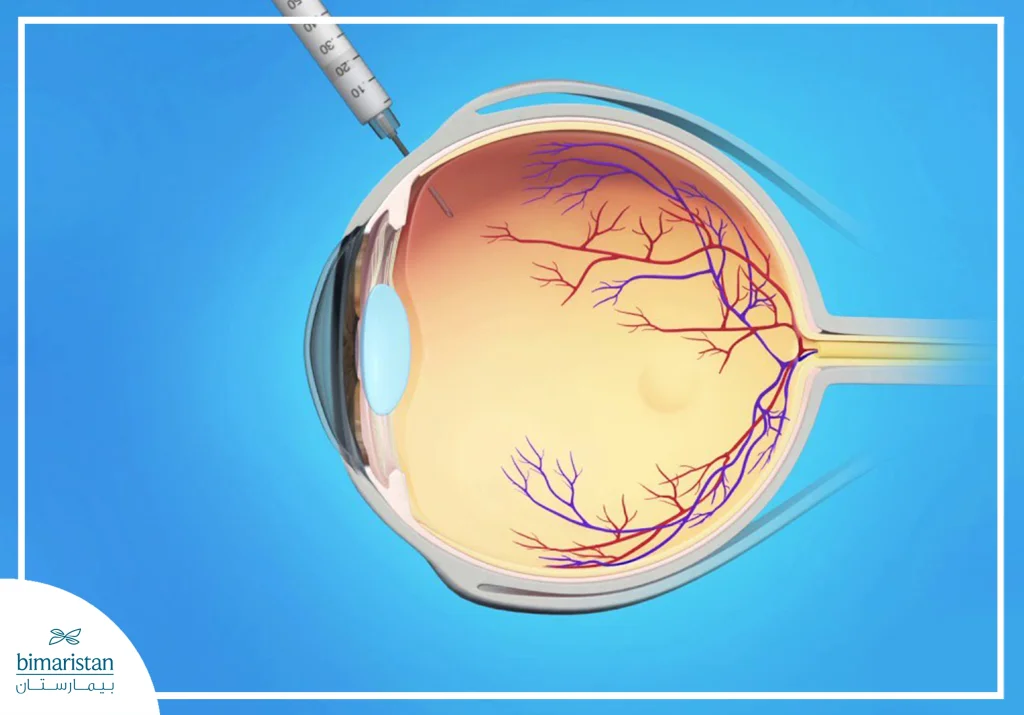
Anti-VEGF therapy is a medical procedure that involves injecting a drug into the eye that targets a substance called vascular endothelial growth factor (VEGF), a protein produced by diseased cells in the retina that stimulates the formation of abnormal blood vessels underneath. These vessels lead to fluid leakage or bleeding, causing blurred vision and vision loss over time.
Medication works by inhibiting the activity of this protein and preventing the formation of new vessels, reducing swelling and stabilizing or gradually improving vision. The treatment is usually given as a series of intravitreal injections at close intervals for the first few months, and then the sessions are reduced according to the eye’s response.
Research Overview of Intraocular Anti-VEGF Therapy
Recent studies, such as the review by Hang and peers (2023), have shown that intraocular anti-VEGF injection therapy is the first line of treatment for many retinal diseases that involve abnormal blood vessel growth or fluid leakage within the macula. Research has shown that this treatment not only stops the progression of the disease but can also improve visual acuity in a significant proportion of patients when adhering to a regular treatment plan.
The review also showed that the efficacy of modern drugs such as Ranibizumab, Aflibercept, and Bevacizumab is very similar, with different durations of action and frequencies of injections required for each drug. These findings confirm that intraocular injections for the treatment of retinal diseases have become a global standard for preserving vision in patients with maculopathies or diabetic retinopathy.
Diseases for which intraocular injections are used
Intraocular injections are used to treat retinal diseases associated with fluid leakage or abnormal vessel growth:
- Wet age-related macular degeneration (Wet AMD): Occurs when abnormal blood vessels grow under the macula and cause bleeding or leakage that deteriorates central vision.
- Diabetic Macular Edema: Caused by damage to the tiny vessels due to high blood sugar, which causes fluid to leak into the macula.
- Retinal Vein Occlusion: Blocked veins cause blood and fluid to pool inside the retina, causing swelling in the center of vision.
- Choroidal neovascularization in severe myopia (Myopic CNV): The growth of abnormal vessels under the retina in patients with severe myopia can lead to vision loss.
- Proliferative Diabetic Retinopathy: The retina is stimulated to grow fragile, bleeding vessels inside the eye.
- Other cases of Idiopathic Neovascularization: These can be associated with various retinal diseases and are also treated with intraocular injections.
Intraocular injection procedure steps
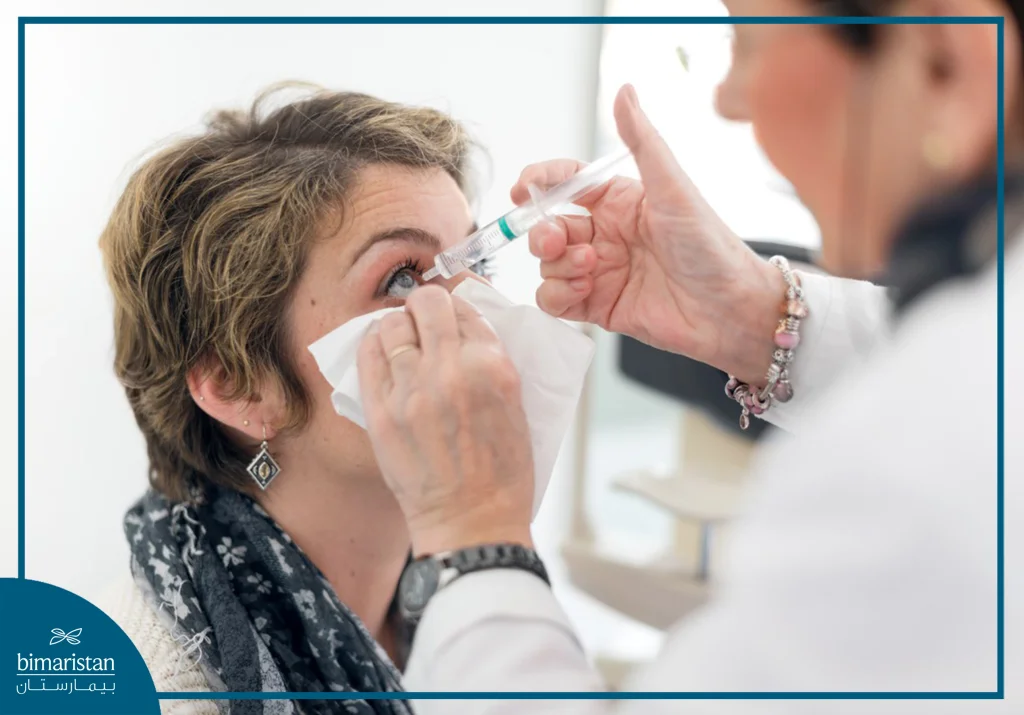
Intraocular injections for the treatment of retinal diseases are performed in the clinic under strict sterilization conditions to ensure patient safety. Before the procedure, anesthetic drops are applied to reduce discomfort. The eye is cleaned with an antiseptic solution to reduce the risk of infection, the doctor uses a very fine needle to inject the medication into the vitreous, the gelatinous material inside the eye. The injection takes only a few seconds, and the patient often only feels a slight pressure.
After the injection, the eye is temporarily covered or an antibiotic drop is applied to prevent infection, the patient is advised to avoid touching or rubbing the eye on the same day, and can return to their usual activities within a few hours with adherence to the doctor’s instructions.
Number of intraocular injections and duration of treatment
The treatment plan usually starts with several closely spaced injections (one every 4 to 6 weeks) to stabilize the condition and prevent worsening of retinal damage. Next, the doctor evaluates the retinal response through OCT imaging to determine the need for additional injections or to gradually reduce the number of sessions. The number of sessions varies from patient to patient, but most patients require a series of injections over 6 to 12 months to achieve long-term vision stabilization.
Expected results after intraocular injections
Clinical studies show that intraocular injections successfully prevent vision loss in more than 90% of cases, and may even improve vision in some patients when used regularly. Improvement usually begins after the first or second injection, and is more pronounced with regular follow-up and adherence to treatment. The procedure helps reduce retinal swelling, stop bleeding, and improve fine detail vision, such as reading and recognizing faces.
Possible side effects and complications after intraocular injections
Although intraocular injections are a safe and common procedure, there may be some minor and temporary symptoms such as:
- Mild eye redness or irritation
- Seeing small floating objects for a few hours
- A slight sensation of a foreign body inside the eye
Serious complications after intraocular injections
- Endophthalmitis: This is characterized by severe pain, increased redness, or sudden loss of vision and requires urgent treatment.
- Temporary increase in intraocular pressure after injection
- Minor superficial bleeding at the needle site
See your doctor immediately if you experience unusual symptoms such as severe pain, discharge, or a sudden deterioration in vision.
Why is Turkey an advanced destination for treating retinal diseases?
Medical centers in Turkey have access to the latest retinal imaging technologies (OCT and Fluorescein Angiography) and extensive experience in administering modern anti-VEGF therapies. All globally approved medications, such as Lucentis, Eylea, and Avastin, are available under the supervision of ophthalmologists specialized in retinal and vitreoretinal surgery. At Bimaristan Medical Center in Turkey, treatment is coordinated in hospitals equipped with state-of-the-art sterile injection rooms to ensure the best results at competitive prices compared to European countries.
Intraocular injections to treat retinal diseases (Anti-VEGF) are one of the most effective treatments for preserving vision and preventing vision loss caused by diseases such as macular degeneration or diabetic retinopathy. Keeping regular injection schedules and following your doctor’s instructions ensures the best results and preserves the health of the macula, which is responsible for accurate vision. At Bimaristan Medical Center in Turkey, this treatment is available under the supervision of experienced retina specialists and with the latest sterile injection techniques to ensure safety and the highest success rates.
Sources:
- Moorfields Eye Hospital NHS Foundation Trust. (2023). Anti-VEGF intravitreal injection treatment.
- University Hospital Southampton NHS Foundation Trust. (2023). Anti-VEGF injection treatment – Patient information leaflet (Ref 1331-PIL).
- American Academy of Ophthalmology. (2023). Anti-VEGF Treatment for Retinal Conditions.
- National Health Service (NHS). (2024). Anti-VEGF eye injections.