
The back wall of the eye plays a vital role in converting light into nerve signals that travel to the brain to form clear images. When the delicate blood vessels that supply the retina become damaged, retinopathy develops—a group of conditions that may cause gradual vision loss or even complete blindness in severe cases.
Laser treatment for retinopathy is among the most advanced methods to protect eyesight. Using precise medical lasers, doctors can seal leaking vessels and stop the growth of abnormal new ones. This approach has shown particular success in patients with high blood pressure, diabetes, or chronic eye inflammation.
What is retinopathy?
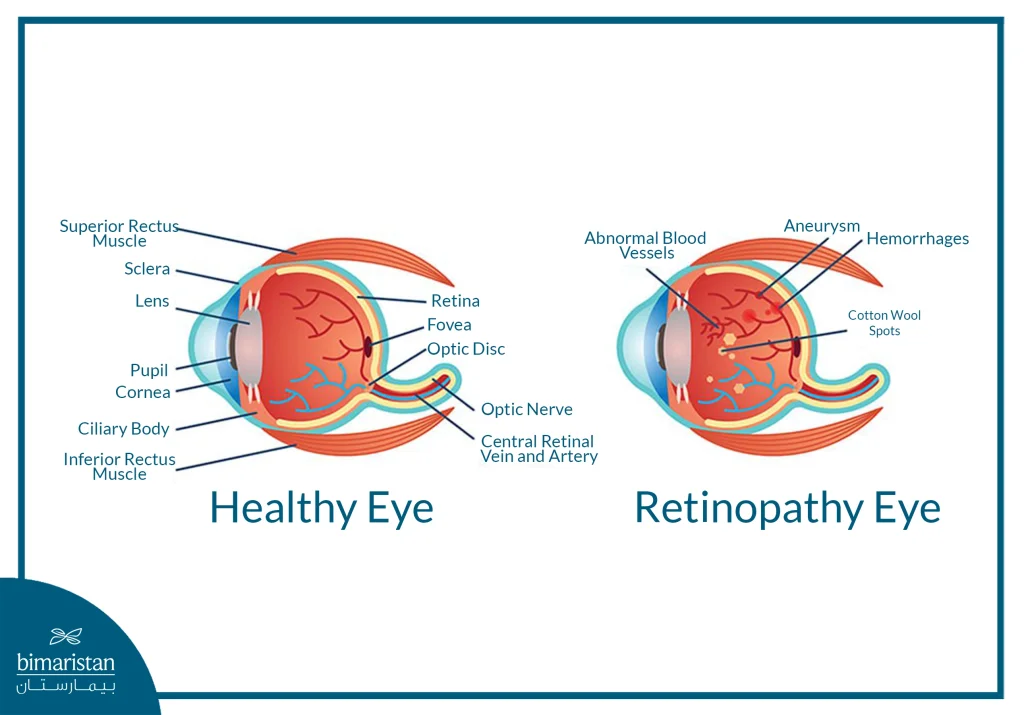
Retinopathy is a term for any disorder of the retinal blood vessels, the layer of the eye responsible for receiving images. Damage to these vessels results in impaired retinal perfusion and nutrition, leading to fluid leakage, bleeding, or the formation of abnormal blood vessels.
Signs of retinopathy can be detected when the fundus is examined with a specialized ophthalmoscope, which reveals changes in vessel morphology and tiny hemorrhages within the retina. It is often an indicator of vascular damage elsewhere in the body, such as the heart or kidneys, particularly in patients with hypertension and diabetes.
Types of retinopathy
There are several forms of retinopathy, depending on the cause and the pattern of damage to the blood vessels:
1. Hypertensive retinopathy
It occurs when chronic high blood pressure causes retinal blood vessels to narrow and rupture. In the early stages, it may not cause noticeable symptoms, but over time, it can lead to retinal bleeding or edema and may indicate widespread vascular damage throughout the body.
2. Diabetic retinopathy
Diabetic retinopathy is the most common form and is caused by prolonged hyperglycemia, which leads to leakage of fluid from or obstruction of microvessels. It is divided into two types:
- Non-proliferative retinopathy: Characterized by microvascular leakage and minor bleeding, and is often treatable without major intervention.
- Proliferative retinopathy: Abnormal new vessels grow to compensate for ischemia, but they are fragile and bleed quickly, and can lead to fibrosis or retinal detachment and vision loss.
3. Inflammatory or Infectious Retinopathy
It is caused by viral, bacterial, or immune-mediated infections of the retinal and choroidal layers, such as chorioretinitis. It can cause retinal scarring and blurred central vision.
When is laser treatment for retinopathy recommended?
Laser treatment for retinopathy is recommended when eye exams show signs of blood or fluid leaking from the retinal vessels, or when abnormal new blood vessels are forming that threaten the integrity of the retina. Laser therapy is the treatment of choice in cases that don’t respond to drug therapy, such as:
- The emergence of new, fragile blood vessels that leak into the eye, as seen in proliferative retinopathy
- Edema in the macula that affects central vision
- Chronic fluid leakage, which leads to retinal swelling
- The risk of bleeding or retinal detachment due to the dilation of blood vessels
Early intervention aims to prevent vision deterioration and stabilize the retina before it reaches stages that are difficult to treat surgically.
How does laser treatment for retinopathy work?
Laser treatment for retinopathy involves delivering focused light beams to damaged areas of the retina under local ocular anesthesia. The laser’s energy is converted into precisely controlled heat that coagulates leaky or abnormal vessels, thereby closing them and preventing further bleeding or fluid leakage.
In some cases, lasers are used more extensively in a procedure known as Panretinal Photocoagulation (PRP) to reduce the retina’s oxygen demand and prevent the growth of new, abnormal vessels. The procedure is performed with high precision using modern equipment that enables the surgeon to target only the affected areas, preserving healthy tissue and protecting central vision. The procedure is safe and quick and is often performed on an outpatient basis without hospitalization.
Types of lasers used to treat retinopathy
The laser technology used varies depending on the type and severity of the disorder and the location of the retinal lesion. Here are the most common types used in modern practice:
Focal Laser Photocoagulation
This technique is used when retinal damage is localized and limited, such as fluid leaking from small vessels or macular edema. The doctor targets small leaks and seals them with laser energy, preventing fluid buildup and improving visual acuity.
Focal Laser Photocoagulation procedure steps
- Pupil dilation and local anesthesia
- The doctor shines hundreds of tiny laser pulses on the peripheral (not central) parts of the retina
- Treatment may be staged across two or more sessions to reduce patient discomfort
- After the session, anti-inflammatory drops are recommended
When to Use a Focal Laser Photocoagulation
- Proliferative diabetic retinopathy (Proliferative DR)
- Abnormal new vessels inside the eye
- Retinal hemorrhage or risk of retinal detachment due to the growth of unstable vessels
Results and features of the Focal Laser Photocoagulation
- Reduces the risk of retinal hemorrhage by more than 70%
- Prevents fibrosis or detachment in advanced stages
- The procedure is simple, safe, and performed in the clinic without the need for general anesthesia
After the session, the patient may notice a slight decrease in lateral or night vision, which is an expected and temporary effect compared to the benefit of maintaining central vision.
Micropulse Laser Therapy
It is the newest and gentlest laser on retinal tissue. Instead of delivering continuous energy, the laser emits very short, intermittent pulses, giving the retina time to dissipate heat between pulses and sealing off leaky vessels without damaging healthy tissue.
Micropulse Laser Procedure steps
- Dilates the pupil and anesthetizes the eye locally
- The doctor uses a specialized device to adjust the energy so that very short pulses are sent
- The laser focuses on the area affected by edema or leakage without leaving a visual trace or scar
- The session can be repeated weeks later as needed without risk to the retina
Suitable cases for Micropulse Laser Therapy
- Mild to moderate macular edema
- Early retinopathy before new vessels appear
- Patients who require repeated treatment without scarring or tissue damage
Results and features of Micropulse Laser Therapy
- Absence of grid‑pattern scarring
- Can be safely replicated
- Keeps the central vision intact
- The recovery period is very short, and the patient returns to activity the same day
Selective Laser Photocoagulation
This laser is highly selective, targeting only the cells lining the walls of the affected blood vessels without affecting the surrounding tissue. Specific wavelengths are used to ensure that laser energy is absorbed only by the targeted cells, minimizing the risk of scarring or loss of healthy tissue.
Steps of Selective Laser Photocoagulation
- Careful examination to identify areas of weakness or leakage in the microvessels
- Delivery of selective laser pulses at tailored optical frequencies
- Selective closure of the affected vessels occurs without any visible thermal effect on the retina
- The session usually takes 15-20 minutes and is considered painless
Suitable cases for Selective Laser Photocoagulation
- Chronic or immune-mediated retinitis
- Micro-leaks in vessels that can’t be treated with conventional lasers
- Patients who require high therapeutic precision to avoid scarring
Results and features of Selective Laser Photocoagulation
- Very high selectivity and precision in treatment
- Superior safety for healthy tissue
- Effective in controlling stubborn micro-leaks
- Minimizes the need for surgery or intraocular injections in some cases
Laser treatment for retinopathy steps
Laser treatment for retinopathy is performed in the ophthalmologist’s clinic without general anesthesia and typically takes 15 to 30 minutes per session. The procedure is carried out in the following steps:
- Careful examination of the fundus using OCT imaging or fluorescein dye to locate leaks or abnormal vessels
- Pupil dilation with special drops that allow the doctor to see the retina clearly
- Local eye anesthesia with eye drops to avoid pain and discomfort during the session
- The special lens is positioned in front of the eye to precisely direct the laser beam to the targeted area
- Firing focused laser pulses at the affected points, whether they are leaky vessels, areas of angiogenesis, or macular edema
- Follow-up after the procedure through periodic retinal examinations to ensure the effectiveness of the treatment and the stability of vision
Laser treatment for retinopathy is a safe procedure that does not require hospitalization; patients can return to normal activity on the same day by following the physician’s instructions and using the prescribed drops.
Laser treatment for retinopathy benefits and possible complications
Laser treatment of retinopathy is one of the most successful medical procedures that has helped reduce the rate of vision loss associated with chronic diseases such as hypertension, diabetes, and chronic inflammation. Here are some of the benefits of this treatment:
Benefits of laser treatment for retinopathy
- Stopping disease progression: The laser prevents disease progression and stabilizes vision in more than 80% of patients.
- Closes leaky vessels: Reduces the leakage of blood and fluid into the retina and improves visual clarity.
- Prevent the growth of new, abnormal vessels: This is the main cause of intraocular bleeding in advanced cases.
- Minimize the need for surgery: Thanks to early control of the condition, and avoiding fibrosis or retinal detachment.
- Safe and rapid recovery: The session is brief and painless, and the patient can resume activities within a few hours.
Possible complications of laser treatment for retinopathy
Although laser treatment for retinopathy is considered very safe, some patients may notice:
- Temporary foggy vision during the first day
- Sensitivity to light that lasts a few hours
- Slightly reduced lateral or night vision in diffuse lasers
- Rarely, minor localized bleeding or scarring of the retina may occur
Most of these effects are temporary and go away gradually with the use of the prescribed drops and follow-up with your doctor.
Laser treatment for retinopathy results
Clinical studies indicate that laser treatment for retinopathy is highly effective in controlling visual decline and preventing permanent vision loss. In most cases, patients experience gradual improvement in visual acuity in the weeks following treatment, with retinal stabilization and prevention of vessel hemorrhage or fluid accumulation. Vision stabilization rates reach more than 80-90% when treatment is performed in the early stages of the disease. With continued control of blood pressure or diabetes and regular follow-up, normal vision can be maintained for many years after treatment.
Care after laser treatment for retinopathy
After undergoing laser treatment for retinopathy, the patient needs to follow simple instructions to ensure the best possible outcome, including:
- Rest for a few hours after the session and avoid driving or working in front of screens during the first day
- Wear sunglasses to protect the eye from intense light and temporary glare after treatment
- Use the prescribed drops to relieve irritation and prevent inflammation
- See your doctor regularly to re-evaluate the retina and make sure the blood vessels are stabilized
- Paying attention to chronic diseases such as diabetes and hypertension to maintain treatment results and prevent relapse
Adhering to these guidelines will help speed up recovery and minimize the likelihood of needing additional sessions.
In conclusion, laser treatment for retinopathy has become a cornerstone in preventing vision impairment associated with hypertension, diabetes mellitus, and chronic ocular infections. This treatment is distinguished by its high accuracy, safety, and ability to preserve vision in millions of patients worldwide. At Bimaristan Medical Center, we provide state‑of‑the‑art laser technology for retinal disease management, under the care of Turkey’s leading ophthalmologists who combine extensive expertise with consistently excellent outcomes.
Sources: