
—
Teeth discoloration is one of the most common issues affecting a smile’s appearance and a person’s self-confidence, and it is not always linked to tooth decay, as many people believe. Stains or discoloration can result from smoking, certain foods and beverages, aging, or even certain medications and medical conditions. The colors and degrees of staining vary, and treatment methods differ depending on the cause and type of staining, ranging from simple teeth cleaning to whitening, veneers, and other restorative treatments.
What are dental stains?
Teeth discoloration refers to changes in tooth color that may appear on a single tooth or multiple teeth; these changes can be either superficial, affecting the outer layer of the tooth, or intrinsic, affecting the tooth’s deeper structure. Teeth discoloration refers to changes in tooth color that may appear on a single tooth or multiple teeth; these changes can be either superficial, affecting the outer layer of the tooth, or intrinsic, affecting the tooth’s deeper structure.
Causes of Teeth discoloration
There are many reasons that can cause teeth to discolor, the most common of which are:
- Smoking and tobacco products: Smoking increases the buildup of yellow and brown stains on the teeth.
- Aging: As we age, the enamel layer gradually wears away, making the yellowish dentin more visible.
- Tartar and plaque buildup: Neglecting to brush your teeth leads to tartar and plaque buildup, which causes yellow or brown stains, especially near the gums.
- Fluorosis (dental fluorosis): Excessive exposure to fluoride during childhood may cause white or brown spots to appear on permanent teeth.
- Tooth injuries and nerve death: Contusions, fractures, and nerve infections can cause a tooth to turn gray or black due to the death of the inner nerve.
- Tooth Decay: Tooth decay is one of the most common causes of black stains, as bacteria and food debris accumulate on the teeth and produce acids that erode the enamel, leading to dark spots or small holes.
- Colored foods and beverages: Excessive consumption of certain foods and beverages contributes to the buildup of stains on the surface of the teeth, such as:
- Coffee
- Tea
- Coke
- Chocolate
- Red wine
- Dark sauces
- Certain medical conditions and treatments: Some medical conditions or treatments may affect the structure and color of teeth, such as:
- Chemotherapy
- Radiation Therapy for the Head and Neck
- Some genetic disorders
- Diseases that affect the formation of the port
- Certain medications: Some medications may cause teeth discoloration, especially when used during the period of tooth development in children, such as:
- Tetracycline
- Doxycycline
- Some antihistamines
- Some blood pressure medications
- Certain psychiatric medications
Types of Teeth Stains
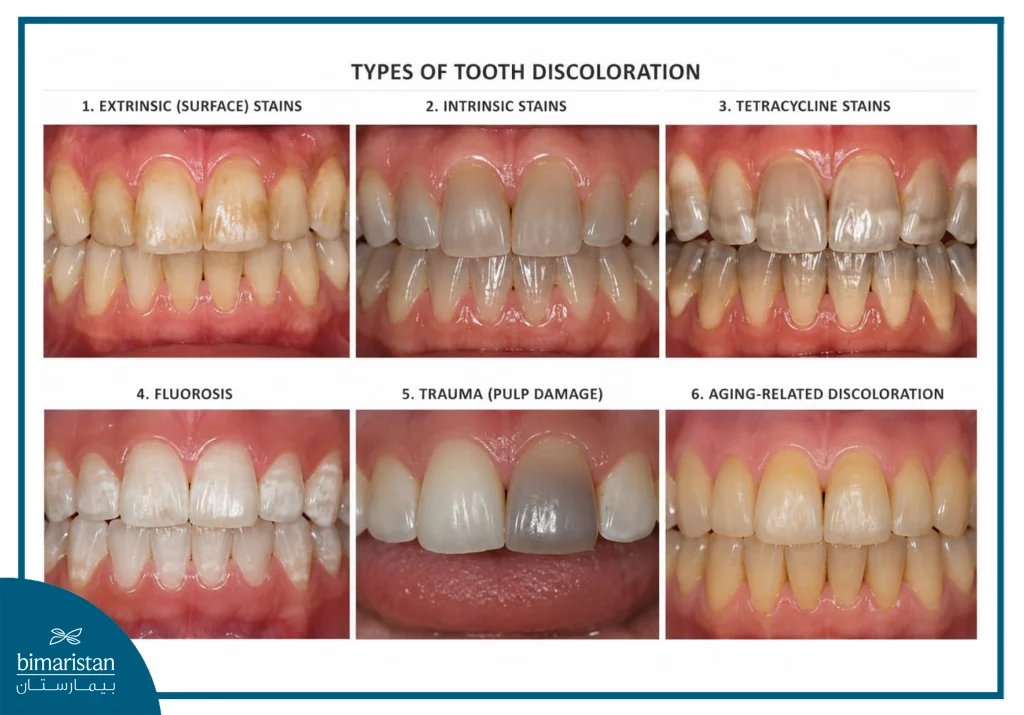
Teeth discoloration is divided into three main types:
First: External pigmentation
They appear on the outer layer of the teeth (enamel) and are most often caused by:
- Smoking
- Coffee and Tea
- Poor dental hygiene
Appropriate treatment:
- Bleaching
- Descaling
- Professional teeth cleaning
Second: Internal pigmentation
It occurs within the tooth structure, so it often does not respond to surface whitening.
Causes:
- Injuries
- Certain medications
- Dental Fluoride
- Nerve death
Appropriate treatment:
- Nerve Treatment
- Internal bleaching
- Veneers or crowns
This is caused by enamel erosion as we age and the appearance of the underlying dentin.
Teeth discoloration: What might it indicate?
The color of tooth stains can reveal a lot about the cause of the problem; some colors are linked to simple daily habits like coffee and smoking, while others may indicate cavities or internal tooth problems that require medical treatment. Understanding the significance of these stains helps determine when the issue is purely cosmetic and when a visit to the dentist is necessary.
| Color | Possible causes | Treatment |
|---|---|---|
| Yellow | Smoking, coffee, poor cleaning | Cleaning and Bleaching |
| Brown | Lime, smoking, colored foods | Scale Removal and Bleaching |
| Black | Tooth decay, nerve death, severe tartar buildup | Treating the Cause and Fillings |
| Gray | Nerve damage or certain medications | Root Canal Treatment |
| Chalk white | Fluoride deficiency or excess | Cosmetic treatments tailored to individual needs |
Treatments for teeth discoloration
Treatment depends on the cause and severity of the pigmentation.
1. Teeth cleaning and tartar removal
Used to remove superficial pigmentation caused by:
- Smoking
- Coffee
- Accumulation of dandruff
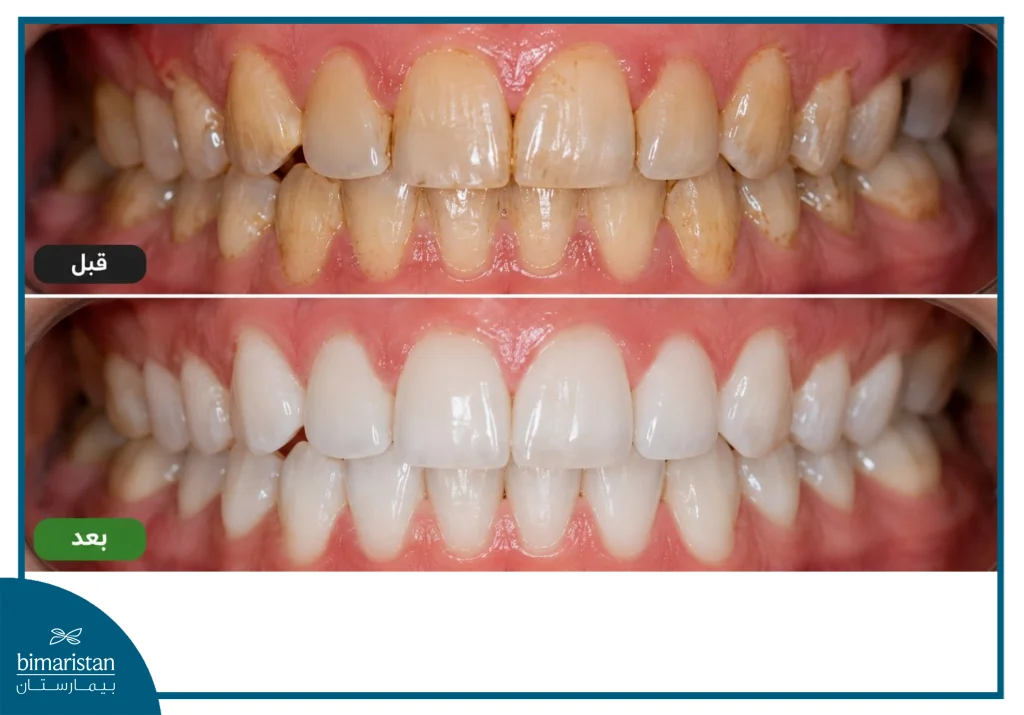
2. Teeth Whitening
It is used to treat yellowing and superficial to moderate pigmentation. Among the most well-known techniques are:
- At-home teeth whitening under a doctor’s supervision
- In-office teeth whitening
- Laser Teeth Whitening
| The element | In-office teeth whitening | Teeth Whitening at Home |
|---|---|---|
| Quick results | Results are usually available within one or two sessions | It takes several days or weeks |
| Bleaching Power | Stronger and more effective | Relatively limited effectiveness |
| Safety | Safer when used correctly | May cause irritation or corrosion if misused |
| Cost | Highest cost | Lowest cost |
| Duration of the session | Approximately 30–60 minutes | Daily use for specific periods |
| Results for severe pigmentation | more effective | Limited impact |
| The Risk of Tooth Sensitivity | Present but under medical supervision | It may be higher due to indiscriminate use |
| Who is it for? | Moderate to severe pigmentation | Mild and superficial pigmentation |
3. Fillings and Cavity Treatment
If the discoloration is caused by tooth decay, the following steps are taken:
In advanced cases, the patient may need:
4. Replace old fillings
Some older metal fillings may cause gray or black discoloration, so they can be replaced with modern cosmetic fillings.
5. Veneers
Veneers are thin cosmetic shells bonded to the front surfaces of the teeth. They are an effective solution for severe or permanent discoloration, as they improve:
- Color
- Figure
- Size
- Lining up
Can tooth stains be removed at home?
Some at-home whitening products may help remove minor surface stains, but the indiscriminate use of charcoal and abrasive whitening agents can cause long-term damage to your teeth. Therefore, it is always advisable to consult a dentist before using any at-home whitening product. Excessive or improper use can lead to problems such as:
- Gum irritation
- Erosion of the port’s surface
- Increased tooth sensitivity
- Ineffectiveness of internal pigmentation
When should you visit the dentist?
It is recommended that you see a dentist if:
- Pain or tenderness
- Chronic bad breath
- Only one tooth has changed color
- Sudden appearance of black spots
- Cracks or holes in the teeth
- Stains remain despite cleaning
Tips for Preventing Tooth Stains
To maintain your teeth’s natural color and reduce staining, you should follow certain guidelines, the most important of which are:
- Flossing daily
- Visit the dentist every 6 months
- Cut back on coffee, tea, and smoking
- Drinking water after colored beverages
- Using a straw with dark-colored drinks
- Use toothpaste containing fluoride
- Brush your teeth twice a day for two minutes
- Get your teeth professionally cleaned on a regular basis
Ultimately, tooth discoloration is not just a cosmetic issue; it can sometimes be a sign of an underlying health problem that requires early diagnosis and treatment. The causes of discoloration and their treatments vary depending on the type and severity, ranging from teeth cleaning and whitening to veneers and modern restorative treatments. With significant advancements in cosmetic dentistry techniques in Turkey, patients can now access cutting-edge treatments and exceptional cosmetic results at affordable prices and high quality. Furthermore, maintaining good oral hygiene and regular check-ups with a dentist remain the most important steps in preventing stains and maintaining a healthy, bright smile.
Sources: