



.floating_btn{ display:none !important; } .println-contact-form-button-element{ display:none !important; }
Elbow joint pain is a common complaint that can arise from various causes, ranging from simple conditions that resolve within a few days to more complex issues requiring long-term medical intervention. The most common cause is inflammation or strain of the surrounding tissues, such as tendons and muscles, resulting from overuse or repetitive movements. This is often seen in sports that heavily involve the arms, like tennis, leading to conditions like “tennis elbow” or “golfer’s elbow.”
Conversely, elbow joint pain may sometimes be associated with more complicated causes such as fractures, rheumatoid arthritis, or osteoarthritis, necessitating precise diagnosis to determine appropriate treatment. For instance, pain resulting from a fracture may require joint immobilization with a splint or even surgical intervention, with recovery potentially taking several months. In contrast, pain from tendon strain typically improves within a few days with rest and simple treatments.
This article will examine the anatomical structure of the elbow joint, common pathological conditions that lead to pain, and various diagnostic and treatment methods, ranging from conservative approaches, such as rest and analgesics, to advanced options, including surgical procedures and rehabilitation.
Understanding the elbow joint
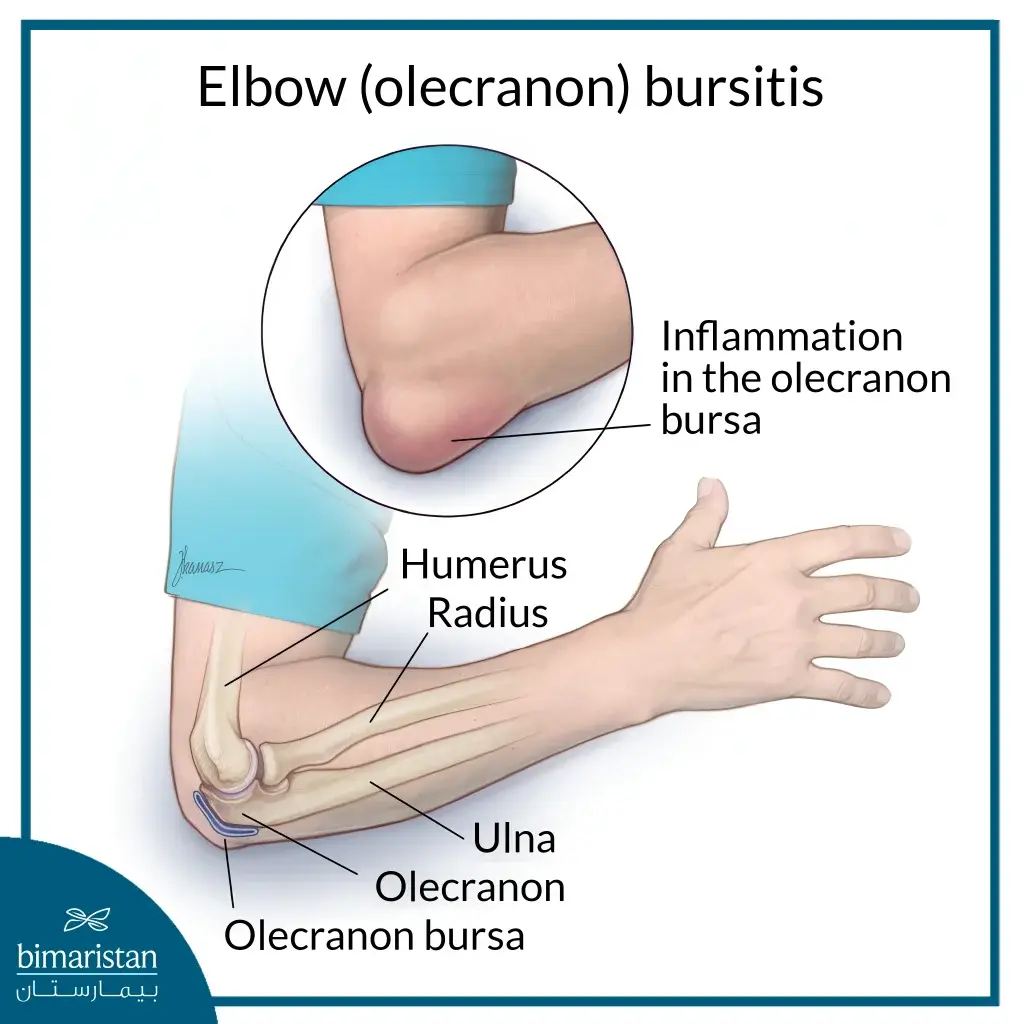
To understand the nature of elbow joint pain and its common causes, it is essential to examine the joint’s structure and anatomical complexities. The elbow joint is a complex hinge joint formed by the meeting of three primary bones: the humerus (upper arm bone), the radius, and the ulna (forearm bones). This joint facilitates two main movements: flexion and extension of the arm, along with forearm rotation, thanks to the rotation of the upper part of the radius around the ulna.
At the distal end of the humerus, two prominent bony protrusions can be palpated when the elbow is flexed:
- Lateral epicondyle: Located on the outer side of the elbow, it serves as the attachment point for forearm muscles responsible for extending the wrist and fingers. The radial nerve innervates these muscles. Injury to the tendons attached here leads to a condition known as lateral epicondylitis, also commonly referred to as “tennis elbow.” This condition affects individuals who engage in repetitive arm movements, such as tennis players or workers involved in fine manual tasks. This area is more susceptible to injury due to its relatively poor blood supply, resulting in a slower healing process.
- Medial epicondyle: Situated on the inner side of the elbow, it connects to muscles responsible for flexing the wrist and fingers, innervated by the median nerve. Injury to these tendons causes medial epicondylitis, also known as “golfer’s elbow,” which is prevalent among individuals who perform repetitive wrist movements or use improper lifting techniques.
The ulnar nerve runs along the inner side of the elbow, supplying small hand muscles responsible for fine movements, such as finger dexterity and grasping small objects. Compression of this nerve, as in the case of hitting the elbow, results in sharp tingling or an electric shock-like sensation radiating to the fingers—a familiar yet bothersome phenomenon.
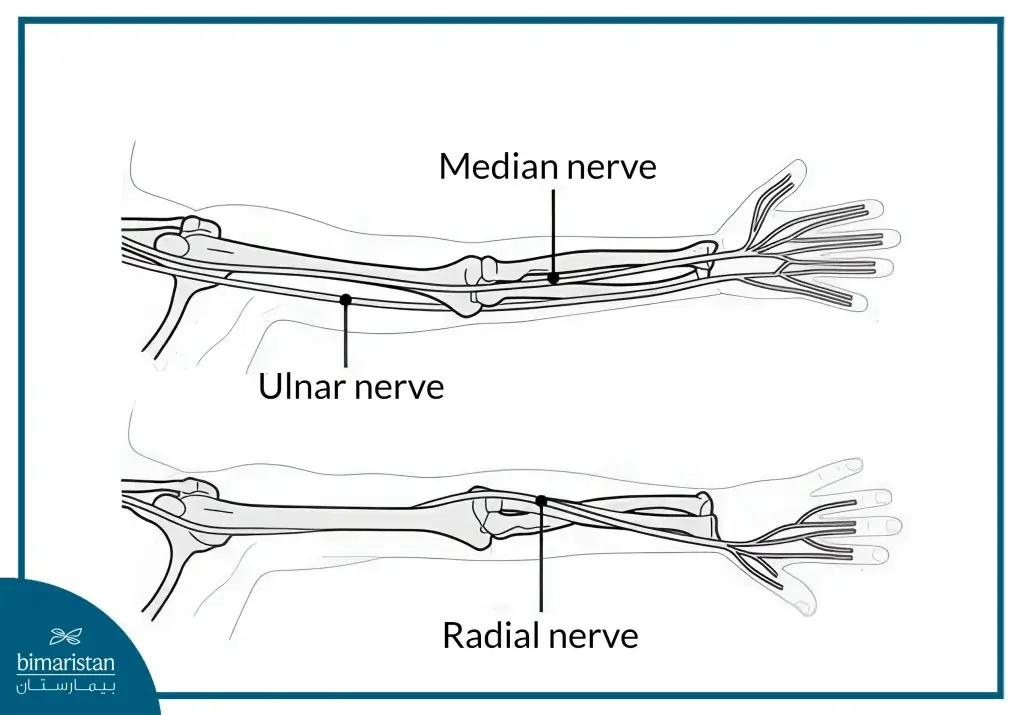
Ligaments and tendons are crucial in supporting the joint; tendons connect muscles to bones, while ligaments bind bones together to stabilize the joint and prevent dislocations or abnormal movements.
Elbow joint pain can arise from injury to any of these components, whether due to overuse during daily activities or sports, or from inflammatory diseases like elbow bursitis or degenerative disorders. Pain often manifests in conditions like tennis elbow or golfer’s elbow immediately after exercise or when lifting objects.
Causes of elbow joint pain
Several factors can lead to elbow joint pain, categorized into internal or external elbow joint pain. Key potential causes include:
- Cubital tunnel syndrome: Occurs when the median nerve is compressed between the fibrous ligament and surrounding ligaments at the elbow, causing pain, numbness, and weakness in the hand, especially in the thumb, index finger, and middle finger. This condition is widespread among women.
- Tennis elbow and golfer’s elbow.
- Rheumatoid arthritis: An autoimmune disorder leading to severe joint inflammation, causing noticeable pain and swelling. The affected joints may appear red, swollen, and feel warm to the touch, with significant stiffness and pain upon palpation. This occurs when the immune system mistakenly attacks healthy tissues, leading to inflammatory reactions that damage joints and various organs.
- Gout: A type of arthritis occurring when uric acid crystals accumulate in joints, especially in the feet, knees, and other joints like the elbows. This accumulation causes acute inflammation, leading to severe pain, swelling, and redness in the affected area. The skin around the joint may become shiny and warm due to inflammation.
- Osteoporosis: A condition characterized by weakened bones, increasing the risk of fractures.
- Degenerative arthritis (Osteoarthritis): A chronic condition that gradually develops over time, where the cartilage acting as a cushion between bones wears down due to continuous use and aging. As the cartilage erodes, direct bone-on-bone contact occurs in the joint, causing severe pain, stiffness, and reduced joint mobility.
- Systemic lupus erythematosus is a chronic autoimmune disease in which the immune system mistakenly attacks healthy tissues. It primarily affects joints such as the hands and feet, but can also involve the elbows, resulting in swelling, pain, and redness in these areas. Skin symptoms, such as a butterfly-shaped rash on the face, may accompany this condition.
- Psoriatic elbow arthritis: A type of autoimmune disease associated with psoriasis and joint inflammation. It causes pain, stiffness, swelling, and skin symptoms. It occurs when the immune system simultaneously attacks both the joints and the skin.
- Lyme disease: A bacterial infection transmitted by deer ticks, affecting various organs, including the heart and nervous system, but joint involvement—especially in the elbows and knees—is among the most common symptoms.
- Elbow fractures: These occur due to trauma or direct impact to the elbow, resulting in bone fractures that cause pain and reduced mobility.
- Elbow dislocation (Dislocated elbow): This occurs when one of the elbow joint bones is forced out of its normal position, often due to trauma.
Symptoms of elbow joint pain
Symptoms of elbow joint pain provide essential clues for identifying the underlying cause, whether it’s due to tendinitis, muscle injury, nerve disorders, or joint pathology. The pattern of symptoms depends on the affected structure, such as a tendon, muscle, nerve, or joint. Common symptoms include:
- Mild pain at rest: Indicates chronic inflammation or persistent soft tissue injury (such as tendon or joint inflammation), often due to nerve hypersensitivity caused by prolonged inflammation.
- Pain when gripping: Often associated with medial epicondylitis, which affects the inner elbow tendons used in wrist and finger flexion.
- Pain when extending fingers: Typically related to lateral epicondylitis, caused by damage to the tendons that control wrist and finger extension, located on the outer elbow.
- Localized pain near a bony prominence: Pain around one of the elbow’s bony projections, such as the epicondyles, may indicate localized tendon or bone inflammation, possibly accompanied by swelling or warmth if the inflammation is active.
- Weak grip strength: Could be an early sign of tendon damage or nerve compression (e.g., radial or median nerve). Chronic tendinitis can weaken muscles, while nerve compression may reduce nerve signaling to the muscles that control grip.
- Pain and difficulty holding objects, especially when the arm is extended.
Diagnosing the cause of elbow joint pain
Diagnosing the cause of elbow joint pain begins with a clinical history, including onset, duration, and activity-related factors. A physical examination is followed, assessing for pain, swelling, and range of motion, while checking for systemic symptoms suggestive of autoimmune or inflammatory diseases.
Imaging tests—such as X-rays—often identify joint space narrowing, foreign bodies (like bone fragments), or improper healing from a past injury.
Laboratory tests may help diagnose conditions such as gout (characterized by high uric acid levels) or autoimmune arthritis (characterized by the presence of autoantibodies). Nerve conduction studies or biopsies may be indicated in specific cases, though they are less common.
Non-surgical treatment of elbow joint pain
Treatment of the elbow joint pain depends on the cause and severity of symptoms. Pain that persists or worsens, especially with signs of joint inflammation like swelling and redness, may require the following:
- Physical therapy: Strengthening exercises targeting muscles and tendons around the elbow; useful when pain stems from weakness in the joint’s supportive structures.
- Corticosteroid injections: Injected locally for severe pain or conditions like psoriatic arthritis, offering rapid relief from inflammation.
- Rest and activity modification: Avoid activities that strain the elbow during the recovery period. However, prolonged rest may lead to stiffness and muscle atrophy, so light range-of-motion exercises are advised once acute pain subsides.
- Anti-inflammatory and pain medications: Including paracetamol or NSAIDs. Topical ointments may also help reduce localized inflammation.
- Joint immobilization: Using a splint or brace can offload pressure on the joint surfaces, particularly helpful in minor fractures or overuse injuries.
- Cold therapy (Ice): Apply an ice pack for 10–15 minutes, several times daily, to reduce swelling and pain. Always wrap ice to prevent damage to skin or tissue.
These conservative methods are effective in mild to moderate cases, and if applied correctly under medical supervision, may prevent the need for surgery.
Surgical treatment of elbow joint pain
Most cases of elbow joint pain can be effectively treated without the need for surgery. However, severe or chronic conditions that have not responded to conservative management for over a year or cases of advanced arthritis may require surgical intervention.
The two main surgical options include:
- Elbow arthroscopy: A minimally invasive procedure used to remove damaged tissue or loose bone fragments. It involves making a small incision and inserting specialized instruments to visualize and treat the joint. Arthroscopy offers faster recovery and reduced postoperative pain.
- Elbow joint replacement: Used in advanced arthritis with significant functional limitation. The damaged joint is replaced with a prosthetic joint to restore mobility and alleviate pain.
In conclusion, most causes of elbow joint pain can be easily identified, with arthritis being a common culprit, especially when accompanied by joint swelling and stiffness. Accurate diagnosis is the cornerstone of effective treatment, often supported by advanced imaging techniques such as X-rays, CT scans, or MRIs.
Conservative treatment, including rest, joint protection, and appropriate medication, is usually the first-line approach. Surgery is reserved for refractory or severe cases.
In this regard, Bimaristan Center in Turkey stands out for its expertise and advanced capabilities in diagnosing and treating elbow joint pain and disorders. The hospital offers both non-surgical and advanced surgical options, including arthroscopy and total joint replacement. With a team of internationally trained orthopedic surgeons and access to cutting-edge diagnostic tools, Bimaristan Center ensures excellent treatment outcomes and a fast return to daily life for its patients.
References: