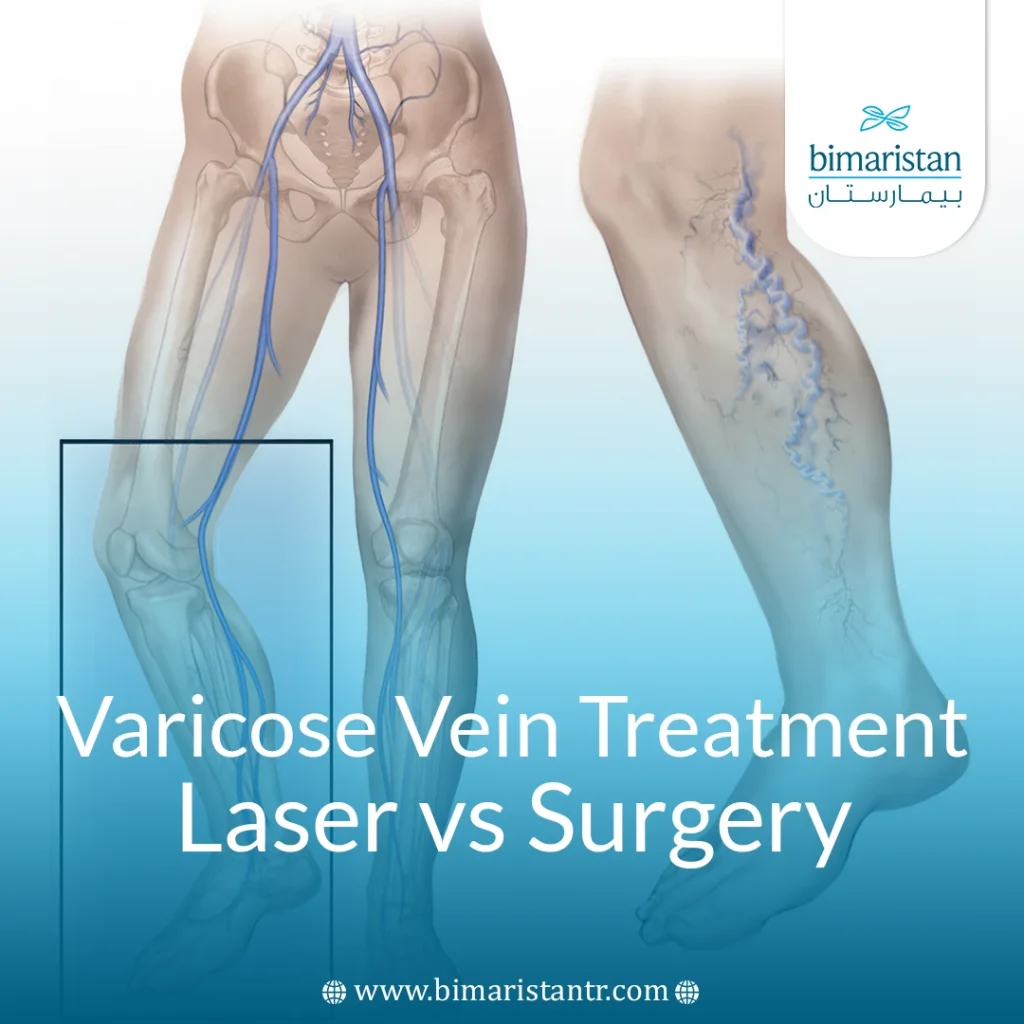
A large number of people suffer from varicose veins, which represent both a medical and cosmetic concern. With the development of modern techniques, the central question has become: Is laser or surgical treatment for varicose veins the most effective solution? In this article, we provide a detailed comparison between the two approaches in terms of effectiveness, safety, recovery period, and cost, helping you select the treatment that best suits your condition.
What are varicose veins, and why do they occur?
Varicose veins are enlarged, swollen veins that often appear under the skin in the legs. They are caused by weak vein valves that prevent the return of blood, leading to blood pooling and increased pressure inside the veins. There are many causes of varicose veins, including genetic factors, pregnancy, prolonged standing or sitting, and aging. Varicose veins vary from small colored veins (known as reticular or capillary varicose veins) to large, prominent veins.
Although varicose veins may be a cosmetic concern for many people, they can sometimes cause unpleasant symptoms such as pain, swelling, a heavy feeling in the feet, and itching. In severe cases, they can lead to health complications such as blood clots and skin ulcers.
Laser treatment of varicose veins
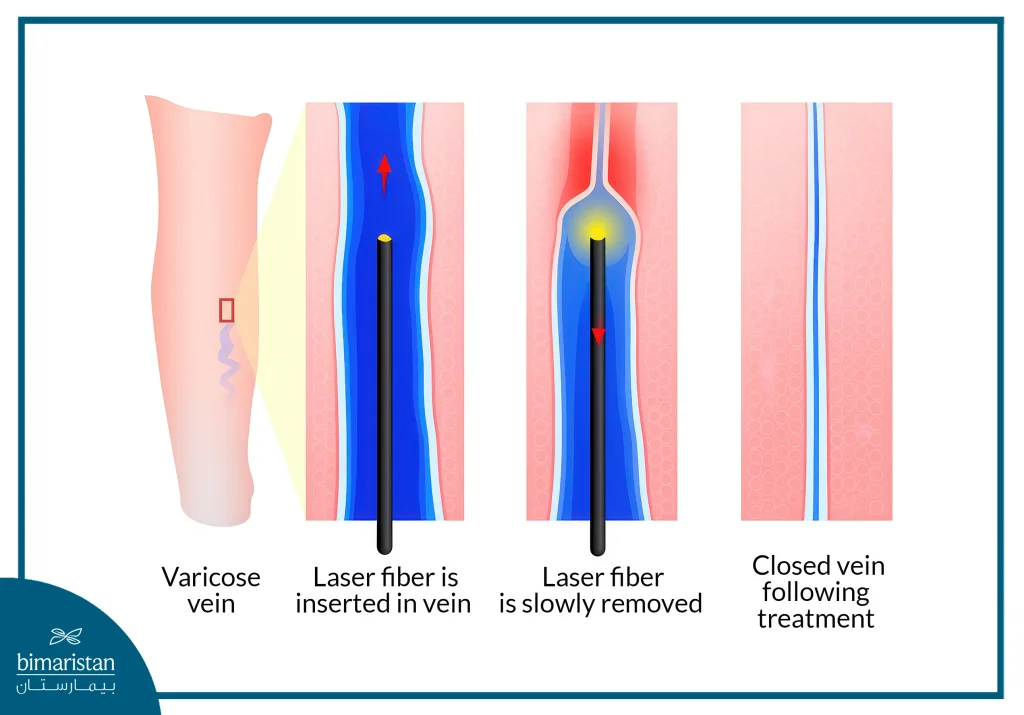
Laser treatment of varicose veins, medically known as Endovenous Laser Treatment (EVLT), is a minimally invasive procedure designed to treat varicose veins in the legs. This term generally refers to two heat‑based techniques with comparable outcomes: laser ablation and radiofrequency coagulation. Both methods work by delivering thermal energy inside the vein, causing it to collapse and seal shut, thereby eliminating the need for conventional open surgery.
The procedure is performed by inserting a tiny catheter into the affected vein through a small incision in the leg, then sending heat energy (laser or radio waves) through the catheter to heat the vein wall and permanently close it, forcing blood to flow back through healthy veins. The treatment is typically carried out under local anesthesia, often accompanied by mild sedatives to alleviate pain and anxiety. An ultrasound device is used to accurately locate the vein, and in many cases, no stitches are needed. The incision site is usually covered with just a small bandage.
Advantages of laser treatment
- A simple, non-invasive procedure that reduces pain compared to conventional surgery
- Does not leave visible scars due to small incisions
- Recovery time is quicker, and you can often return to daily activities quickly
- It takes place in a clinic or outpatient treatment center and does not require hospitalization
When is laser treatment recommended?
Laser varicose vein treatment is recommended for moderate-to-large varicose veins, especially for patients who are not eligible for surgery or prefer less invasive procedures. It is also a suitable option for those who experience unpleasant symptoms such as pain, heaviness, or swelling caused by varicose veins.
Surgical treatment of varicose veins
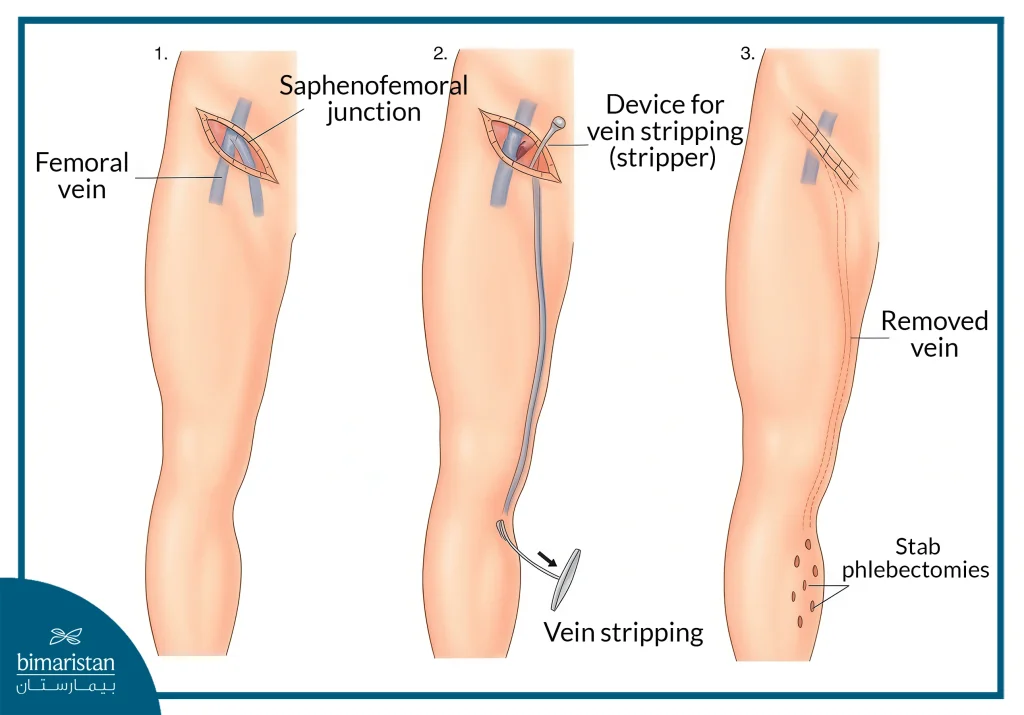
Surgical treatment of varicose veins is a medical procedure that aims to remove or permanently close the affected veins to improve blood flow and eliminate uncomfortable symptoms such as pain, swelling, and an unsightly appearance. Surgery is usually performed when conservative treatments fail or in cases of severe varicose veins that cause complications. It relies on techniques such as ligation, excision, or laparoscopic surgery, in which the damaged vein is targeted and treated to allow healthy veins to regain normal drainage. The following is a simplified explanation of the types of surgery:
- Ligation: A procedure in which the affected vein is identified and tightly ligated to stop the blood flow, causing it to shrink gradually. This method is usually used when the vein is partially damaged or in the early stages of the disease, and may be performed alone or in combination with stripping.
- Stripping: In this method, the surgeon ties the vein at two points, then pulls it out and removes it completely from the body. Often used to treat large veins or severe varicose veins and is characterized by the fact that the affected vein is permanently removed, minimizing the chance of recurrence.
- Laparoscopic surgery: Laparoscopic surgery involves inserting a surgical scope with a camera through a small incision in the skin to see the inside of the vein, and then closing or removing it using precise instruments. This technique is usually used in complex cases, especially when skin ulcers or venous obstructions are associated with varicose veins, and is less invasive than conventional excision.
Advantages and disadvantages of surgical treatment
Surgery to treat varicose veins is highly effective, especially in severe cases or those involving large and damaged veins. One of its most prominent advantages is that it permanently removes the affected vein, reducing the likelihood of recurrence and providing precise, quick results for symptom relief and improved aesthetic appearance. In addition, it is a suitable option when other treatments such as lasers or injections have failed.
Despite these advantages, surgery has some disadvantages and potential risks, such as the need for general or regional anesthesia, a longer recovery period compared to minimally invasive treatments, possible swelling, bruising, or scarring at the incision site, and rare complications such as infection, blood clots, or nerve irritation that may cause temporary numbness or pain.
Laser or surgical treatment for varicose veins?
When considering treatment for varicose veins, you may be wondering: Is laser or surgical treatment the best option? Each method differs in the extent of invasion, the type of anesthesia, the recovery time, and the effectiveness. This comparison helps clarify the differences between the two treatments so you can choose the most appropriate one for your situation:
| Comparison | Laser therapy | Surgery |
|---|---|---|
| Degree of penetration | A few | Medium to high |
| Type of anesthesia | Often localized | Localized or general |
| Recovery period | Faster | Longer |
| Effectiveness | Excellent for mild to moderate cases | Best for advanced cases |
| the presence of scars | Rare | Possible |
How do you choose the most appropriate treatment for you?
The choice between laser and surgical treatment for varicose veins depends on several factors, including the size and severity of the varicose veins, as well as general health status and age. After a clinical examination and a Doppler evaluation of the veins, the doctor determines the most appropriate treatment based on the severity of the symptoms and the extent of the affected veins. The patient’s preferences, including whether they want to avoid surgery or long recovery period, are also taken into account. Therefore, it is important to consult with a vascular specialist to accurately assess your condition and choose a treatment that suits your health and cosmetic needs.
In conclusion, obtaining an accurate diagnosis and consulting a vascular specialist is essential to determine the most appropriate laser or surgical treatment for varicose veins. The choice of technique depends on the individual’s overall health and the severity of the vein disorder, supporting effective results while addressing both medical and cosmetic concerns. Early intervention and adherence to treatment significantly reduce the risk of complications and enhance overall quality of life.
Sources: