يُعد فشل القلب من الحالات القلبية المزمنة التي تؤثر في كفاءة ضخ الدم إلى أعضاء الجسم، وقد يظهر بشكل تدريجي أو يحدث بصورة مفاجئة بحسب السبب وشدة الإصابة. تؤثر هذه الحالة في قدرة المريض على ممارسة نشاطاته اليومية، لذلك يحتاج التشخيص المبكر والمتابعة الطبية إلى دور أساسي في ضبط المرض والحد من تدهوره.
يعتمد علاج فشل القلب على معرفة السبب والنوع ودرجة تأثر وظيفة القلب، لذلك تختلف الخطة العلاجية من مريض إلى آخر. تشمل خيارات العلاج تعديل نمط الحياة، استخدام الأدوية المناسبة، والمتابعة المنتظمة، وقد يحتاج بعض المرضى إلى أجهزة قلبية أو تدخلات متقدمة عندما لا تكفي العلاجات الدوائية وحدها. تساعد الخطة العلاجية الصحيحة على تخفيف الأعراض، تحسين جودة الحياة، وتقليل خطر تدهور الحالة أو تكرار دخول المستشفى.
ما هو فشل القلب؟
فشل القلب هو حالة لا يستطيع فيها القلب ضخ الدم بكفاءة كافية لتلبية احتياجات الجسم، ولا يعني ذلك أن القلب توقف عن العمل أو أنه على وشك التوقف. قد يحدث فشل القلب عندما تصبح عضلة القلب ضعيفة فلا تضخ الدم بشكل جيد، أو عندما يصبح القلب قاسياً وغير قادر على الامتلاء بالدم كما يجب. نتيجة لذلك قد يتراجع وصول الدم الغني بالأكسجين إلى أعضاء الجسم، وقد يتراكم الدم والسوائل في الرئتين أو الأطراف. يُعد فشل القلب حالة جدية تحتاج إلى رعاية طبية ومتابعة مستمرة، وقد يتطور تدريجياً مع الوقت خاصة عند وجود أمراض قلبية مثل تضيق شرايين القلب أو ارتفاع ضغط الدم.
أعراض فشل القلب وعلاماته
قد تظهر أعراض فشل القلب تدريجياً مع مرور الوقت، وقد تبدأ أحياناً بصورة مفاجئة. يُعد ضيق النفس من أبرز الأعراض، إذ قد يشعر به المريض في البداية عند صعود الدرج أو القيام بالنشاطات اليومية، ثم قد يظهر لاحقاً أثناء الجهد البسيط أو عند الاستلقاء. تشمل علامات فشل القلب الشائعة ما يلي:
- التعب العام والضعف السريع بعد الحركة أو الجهد
- تورم القدمين أو الكاحلين أو الساقين
- تسارع ضربات القلب أو عدم انتظامها
- تراجع القدرة على ممارسة الرياضة أو أداء النشاطات اليومية
- السعال المستمر أو السعال الليلي، وقد يترافق أحياناً مع بلغم رغوي وردي أو أبيض
- انتفاخ البطن، نقص الشهية أو زيادة سريعة في الوزن بسبب احتباس السوائل
- الدوخة أو صعوبة التركيز، خاصة عند بعض كبار السن
تحتاج بعض الأعراض إلى طلب المساعدة الطبية بشكل عاجل، خاصة عند حدوث ألم صدري، إغماء، ضعف شديد، ضيق نفس مفاجئ وشديد، أو اضطراب في ضربات القلب مع ألم صدري أو ضيق نفس. لا تكفي الأعراض وحدها لتشخيص فشل القلب، لأن حالات أخرى قد تسبب أعراضاً مشابهة، لذلك يحتاج المريض إلى تقييم طبي لتحديد السبب بدقة.
أسباب فشل القلب وعوامل الخطر
يحدث فشل القلب عندما تصبح عضلة القلب ضعيفة أو متضررة أو قاسية، مما يمنعها من ضخ الدم أو الامتلاء به بالشكل الكافي بين الضربات. قد يظهر فشل القلب بشكل مفاجئ بعد أذية حادة في عضلة القلب، مثل النوبة القلبية أو الالتهابات الشديدة، لكنه يتطور غالباً بصورة تدريجية نتيجة أمراض مزمنة تضع عبئاً مستمراً على القلب.
تشمل أهم أسباب فشل القلب ما يلي:
- مرض الشريان التاجي والنوبة القلبية، إذ يقل تدفق الدم إلى عضلة القلب وقد يحدث تلف دائم فيها
- ارتفاع ضغط الدم، لأنه يجبر القلب على العمل بجهد أكبر لفترة طويلة
- أمراض صمامات القلب، حيث يضطر القلب إلى بذل جهد إضافي لضخ الدم
- التهاب عضلة القلب أو اعتلال عضلة القلب
- اضطرابات نظم القلب، سواء كانت سريعة أو بطيئة
- العيوب القلبية الخلقية
- أمراض مزمنة مثل السكري، أمراض الكلى، فقر الدم واضطرابات الغدة الدرقية
- بعض علاجات السرطان، مثل العلاج الكيميائي أو الإشعاعي
تزداد احتمالية الإصابة بفشل القلب عند كبار السن، والمدخنين، كما ترتفع لدى المصابين بالسمنة ومن لديهم قلة في النشاط البدني أو الإفراط في شرب الكحول أو استخدام بعض المواد المخدرة. لا تعني هذه العوامل أن فشل القلب سيحدث حتماً، لكنها قد تزيد العبء على القلب أو ترفع احتمال الإصابة بأمراض تؤدي إليه مع الوقت.
أنواع فشل القلب
تختلف أنواع فشل القلب بحسب الجهة المتأثرة من القلب، وسرعة ظهور الأعراض، وطريقة تأثر وظيفة البطين الأيسر. يساعد تحديد النوع على فهم آلية المرض واختيار الخطة العلاجية المناسبة، لأن العلاج قد يختلف بين مريض وآخر حسب قدرة القلب على الضخ أو الامتلاء بالدم.
فشل القلب الأيسر وفشل القلب الأيمن
يُعد فشل القلب الأيسر أكثر شيوعاً، ويحدث عندما لا يستطيع البطين الأيسر ضخ كمية كافية من الدم الغني بالأكسجين إلى الجسم. قد يؤدي ذلك إلى رجوع السوائل نحو الرئتين، مما يسبب ضيق النفس خاصة أثناء الجهد أو عند الاستلقاء. أما فشل القلب الأيمن فيحدث عندما يضعف البطين الأيمن عن ضخ الدم إلى الرئتين، وقد يؤدي إلى تراكم السوائل في البطن أو الساقين أو القدمين. يمكن أيضاً أن يتأثر الجانبان معاً، وتسمى هذه الحالة فشل القلب ثنائي البطين.
فشل القلب الانقباضي وفشل القلب الانبساطي
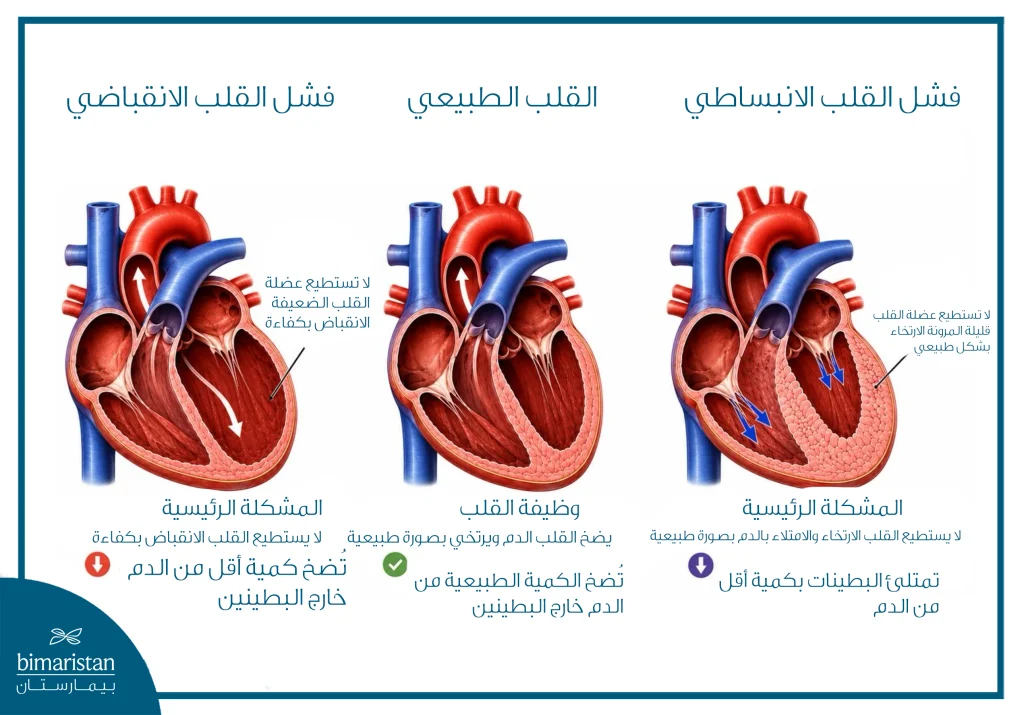
يُصنّف فشل القلب الأيسر أيضاً بحسب الكسر القذفي إلى فشل القلب الانقباضي وفشل القلب الانبساطي. يحدث فشل القلب الانقباضي، أو فشل القلب مع انخفاض الكسر القذفي، عندما يصبح البطين الأيسر ضعيفاً وغير قادر على الانقباض بقوة كافية لضخ الدم إلى الجسم. أما فشل القلب الانبساطي، أو فشل القلب مع الكسر القذفي المحفوظ، فيحدث عندما يصبح البطين الأيسر قاسياً أو غير قادر على الارتخاء والامتلاء بالدم بشكل كافٍ بين الضربات. قد تتشابه الأعراض بين النوعين، لكن طريقة العلاج قد تختلف بحسب طبيعة الخلل في وظيفة القلب.
فشل القلب الحاد وفشل القلب المزمن
قد يظهر فشل القلب بشكل حاد ومفاجئ، وتكون الأعراض شديدة وتحتاج إلى تقييم طبي سريع، مثل ضيق النفس الشديد أو تراكم السوائل المفاجئ أو تسارع ضربات القلب. أما فشل القلب المزمن فهو أكثر شيوعاً، ويتطور عادةً بشكل تدريجي مع الوقت، حيث تبدأ الأعراض ببطء ثم تزداد مثل التعب، ضيق النفس، السعال، تورم القدمين أو اضطراب ضربات القلب.
فشل القلب الاحتقاني
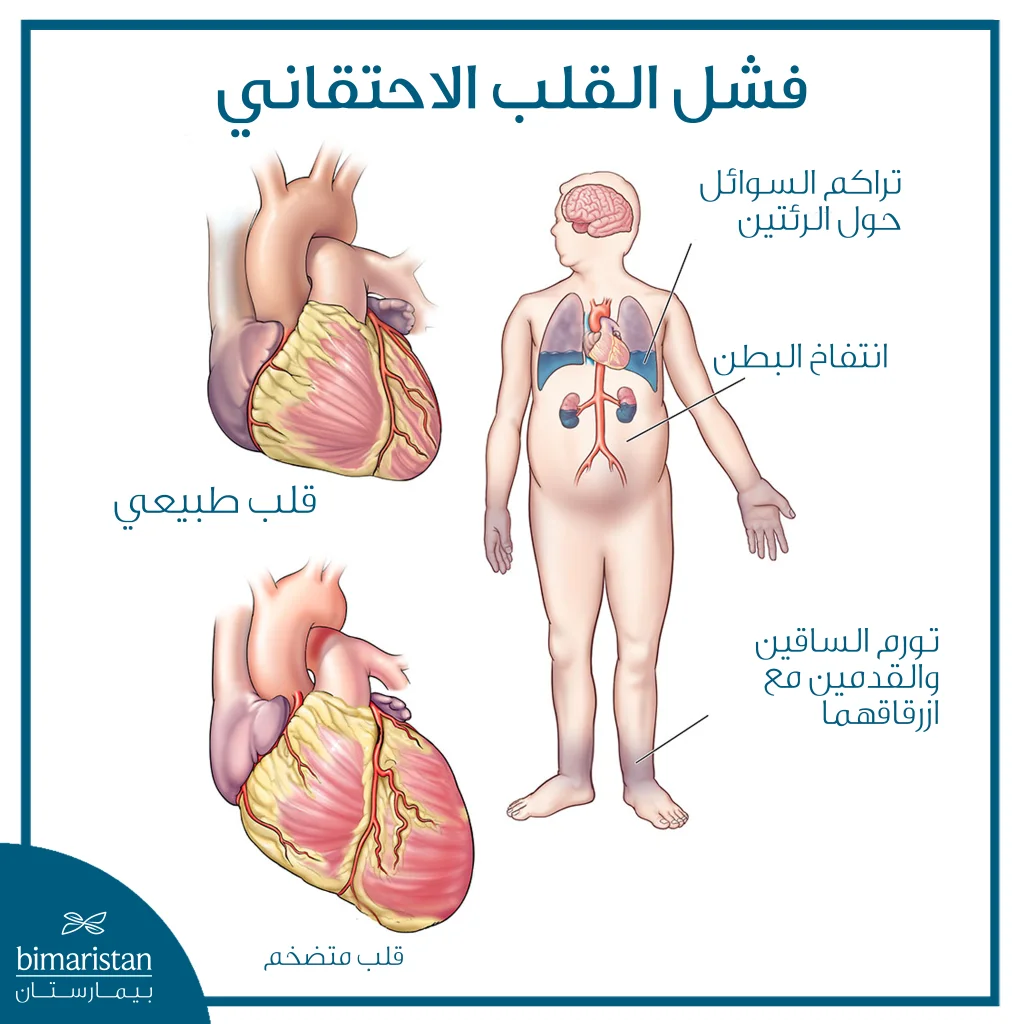
يشير مصطلح فشل القلب الاحتقاني إلى فشل القلب المترافق مع تراكم السوائل في الجسم، يحدث ذلك عندما يتراجع ضخ القلب للدم فيرجع الدم والسوائل إلى الأنسجة أو الرئتين، مما يسبب التورم وضيق النفس واحتباس السوائل. لذلك يحتاج فشل القلب الاحتقاني إلى متابعة طبية مناسبة لتخفيف الاحتقان ومنع تفاقم الأعراض.
تشخيص فشل القلب
يعتمد تشخيص فشل القلب على تقييم الأعراض التي يعاني منها المريض، ومراجعة تاريخه المرضي، وإجراء الفحص السريري للبحث عن علامات احتباس السوائل أو ضعف ضخ الدم. لا يكفي وجود الأعراض وحدها لتأكيد التشخيص، لأن ضيق النفس أو تورم القدمين قد يحدثان لأسباب أخرى. لذلك يطلب الطبيب عادةً فحوصات تساعد على تقييم وظيفة القلب وتحديد السبب، مثل إيكو القلب، تخطيط القلب، تحاليل الدم، وصورة الصدر أو فحوصات إضافية عند الحاجة. يساعد التشخيص الدقيق على اختيار خطة علاج فشل القلب المناسبة لكل مريض.
علاج فشل القلب
يعتمد علاج فشل القلب على السبب المؤدي إلى الحالة، ونوع الفشل القلبي، وشدة الأعراض، والحالة العامة للمريض. لا يوجد علاج شافٍ تماماً لفشل القلب في معظم الحالات، لكن الخطة العلاجية المناسبة تساعد على تخفيف الأعراض، إبطاء تدهور المرض، تقليل الحاجة إلى دخول المستشفى، وتحسين قدرة المريض على ممارسة حياته اليومية. قد يتحسن فشل القلب أو ينعكس في بعض الحالات إذا كان ناتجاً عن مشكلة قابلة للعلاج، مثل انسداد الشرايين أو أمراض صمامات القلب أو اضطرابات نظم القلب.
تغيير نمط الحياة وإعادة التأهيل القلبي
تُعد تغييرات نمط الحياة جزءاً أساسياً من علاج فشل القلب، سواء استُخدمت وحدها في الحالات الخفيفة أو إلى جانب الأدوية والإجراءات الطبية. قد يوصي الطبيب بتقليل تناول الملح لأن الصوديوم يزيد احتباس السوائل، كما قد ينصح بعض المرضى بتحديد كمية السوائل بحسب شدة الحالة. يساعد الوصول إلى وزن صحي على تخفيف العبء عن القلب، بينما يساهم النشاط البدني المناسب أو برامج إعادة التأهيل القلبي في تحسين القدرة على الحركة وتقليل عوامل الخطر.
تشمل التعليمات المهمة أيضاً الإقلاع عن التدخين، تجنب الكحول أو الحد منه، ضبط ضغط الدم واضطرابات النظم وفقر الدم، وتحسين جودة النوم خاصة عند وجود اضطرابات مثل انقطاع النفس أثناء النوم. كما يمكن أن تساعد برامج التأهيل القلبي في تقديم إرشادات آمنة للتمارين، ودعم المريض في التغذية الصحية وتغيير العادات اليومية والتعامل النفسي مع المرض.
أدوية فشل القلب
تُستخدم أدوية فشل القلب عادةً ضمن خطة مشتركة يحددها الطبيب بحسب نوع الحالة وسببها وشدة الأعراض، ولا يعتمد العلاج غالباً على دواء واحد فقط. تهدف هذه الأدوية إلى تخفيف احتباس السوائل، تقليل العبء على القلب، تحسين تدفق الدم، ضبط ضغط الدم ونبض القلب، وتقليل احتمال تدهور الحالة أو دخول المستشفى.
تشمل الأدوية المستخدمة مدرات البول التي تساعد على التخلص من السوائل الزائدة، وأدوية إرخاء الأوعية الدموية مثل مثبطات الإنزيم المحول للأنجيوتنسين أو حاصرات مستقبلات الأنجيوتنسين، وحاصرات بيتا التي تساعد القلب على العمل بكفاءة أفضل، إضافةً إلى أدوية أخرى قد تُستخدم في حالات محددة مثل مثبطات SGLT2، مضادات الألدوستيرون، الديجوكسين أو بعض الأدوية الوريدية داخل المستشفى عند تفاقم الأعراض.
يحتاج العلاج الدوائي إلى متابعة دورية، لأن الطبيب قد يعدل الجرعات أو يراقب وظائف الكلى ومستوى الأملاح في الدم بحسب نوع الدواء وحالة المريض.
علاج السبب المؤدي إلى فشل القلب
لا يقتصر علاج فشل القلب على تخفيف الأعراض، بل يجب علاج السبب عندما يكون قابلاً للتدخل. إذا كان فشل القلب ناتجاً عن انسداد شديد في الشرايين التاجية، فقد يحتاج المريض إلى جراحة مجازة الشريان التاجي لتحسين تدفق الدم إلى عضلة القلب. أما إذا كان السبب تلفاً في أحد صمامات القلب، فقد يوصي الطبيب بتغيير الصمام أو إصلاحه، سواء بالجراحة المفتوحة أو بالتداخلات محدودة التوغل بحسب نوع المرض وحالة المريض. في بعض الحالات قد يكون علاج اضطراب النظم أو إصلاح عيب قلبي خلقي جزءاً من الخطة العلاجية.
الأجهزة والتدخلات المتقدمة في علاج فشل القلب
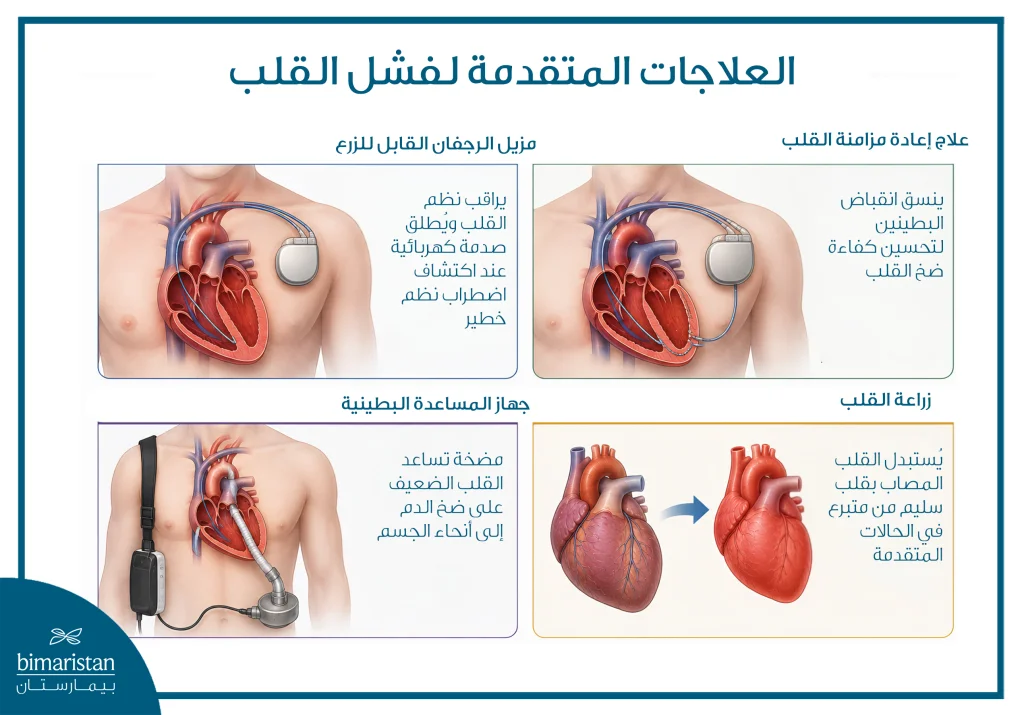
قد يحتاج بعض المرضى إلى أجهزة قلبية أو إجراءات متقدمة عندما لا تكفي الأدوية وحدها أو عندما توجد اضطرابات في النظم أو ضعف شديد في وظيفة القلب. من هذه الخيارات:
- مزيل الرجفان القابل للزرع: لا يعالج فشل القلب نفسه، لكنه يساعد على الوقاية من بعض المضاعفات الخطيرة، إذ يراقب ضربات القلب ويتدخل عند حدوث نظم قلبي خطير.
- علاج إعادة التزامن القلبي: يُستخدم عند بعض المرضى الذين لا تنقبض البطينات لديهم بتناسق كافٍ، حيث يرسل الجهاز إشارات كهربائية تساعد حجرات القلب السفلية على الانقباض بطريقة أكثر تنسيقاً.
- جهاز دعم البطين: يساعد على ضخ الدم من البطين إلى باقي الجسم، وقد يُستخدم مؤقتاً لدى المرضى المنتظرين لزراعة القلب أو كعلاج طويل الأمد عند غير المرشحين للزراعة.
- زراعة القلب: تُطرح في الحالات الشديدة جداً عندما لا تفيد الأدوية أو الجراحة أو الأجهزة الأخرى، لكنها لا تناسب جميع المرضى وتحتاج تقييماً دقيقاً من فريق متخصص.
في حالات تفاقم الأعراض قد يحتاج المريض إلى دخول المستشفى لتلقي أدوية تخفف الاحتقان، أو أدوية تساعد القلب على الضخ، أو الأكسجين عند الحاجة. أما في المراحل المتقدمة جداً، فقد تُستخدم الرعاية التلطيفية لتحسين جودة الحياة وتخفيف الأعراض، وقد تُناقش رعاية نهاية الحياة عندما لا تعود الأدوية أو الزراعة أو الأجهزة خياراً مناسباً.
ما هي مضاعفات فشل القلب عند إهمال العلاج؟
قد يؤدي إهمال علاج فشل القلب أو عدم الالتزام بالخطة العلاجية إلى تدهور الأعراض وزيادة احتباس السوائل، مما يرفع احتمال الحاجة إلى دخول المستشفى. تختلف المضاعفات بحسب شدة الحالة وسببها، لكنها قد تشمل:
- زيادة ضيق النفس بسبب تراكم السوائل في الرئتين
- تورم الساقين أو البطن نتيجة احتباس السوائل
- اضطرابات في نظم القلب
- تراجع القدرة على الحركة وبذل الجهد
- تأثر وظائف الكلى بسبب ضعف ضخ الدم واحتباس السوائل
- زيادة خطر تدهور الحالة في المراحل المتقدمة
قد تكون هذه المضاعفات تدريجية في بعض المرضى ومفاجئة في حالات أخرى، لذلك تُقيّم خطورتها بحسب الأعراض ونتائج الفحوصات واستجابة المريض للعلاج.
في الختام، يعتمد علاج فشل القلب على خطة متكاملة تبدأ بتحديد السبب والنوع وشدة الحالة، ثم اختيار العلاج المناسب. لا يهدف العلاج فقط إلى تخفيف الأعراض، بل إلى تحسين قدرة القلب على العمل، تقليل تدهور المرض، والحد من المضاعفات التي قد تؤثر في حياة المريض اليومية. لذلك يُعد الالتزام بالخطة العلاجية والمتابعة مع الطبيب خطوة أساسية للسيطرة على فشل القلب وتحسين جودة الحياة قدر الإمكان.
المصادر: