Heart rhythm disorders occur when electrical signals within the heart don’t travel normally, which can lead to a rapid heartbeat or a sudden, recurring sensation of palpitations. These episodes may be transient in some patients, but they require medical evaluation if they occur repeatedly or are accompanied by symptoms such as dizziness, shortness of breath, chest pain, or fainting.
Wolff-Parkinson-White syndrome is a heart rhythm disorder characterized by an extra electrical pathway that affects how signals are transmitted within the heart, potentially causing episodes of rapid heartbeat. Understanding the nature of this syndrome, its symptoms, diagnosis, and treatment helps in managing it more effectively, especially in patients experiencing frequent palpitations or unexplained rapid heartbeats.
What is Wolff-Parkinson-White syndrome, and how does it occur?
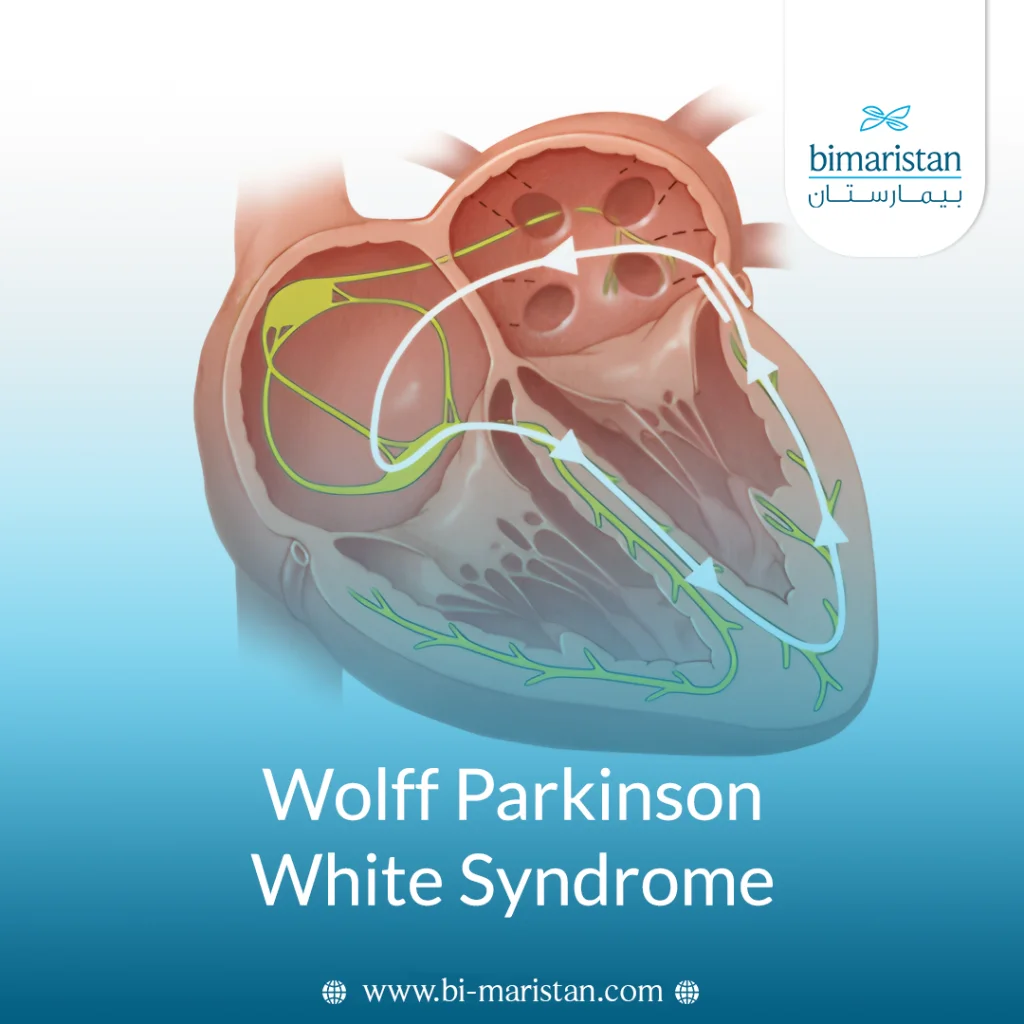
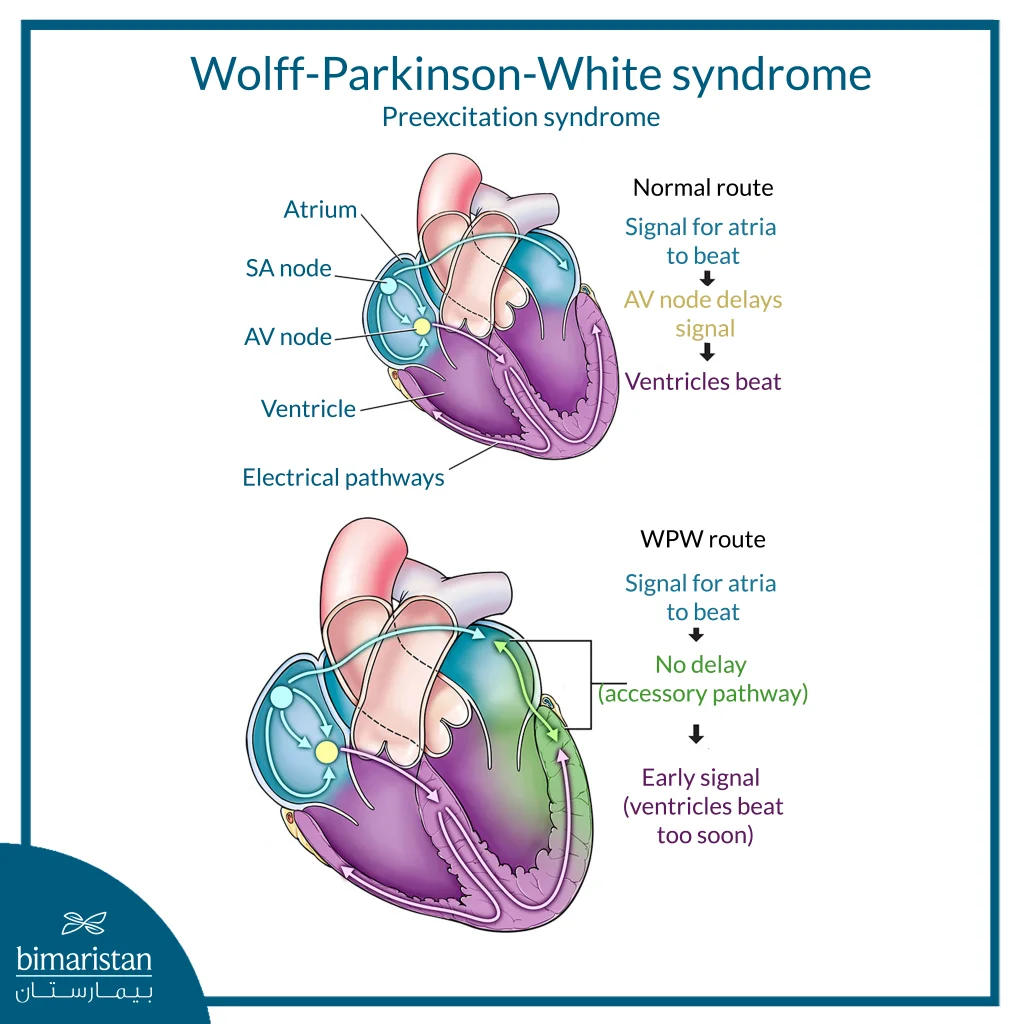
Wolff-Parkinson-White syndrome, also known as pre-excitation syndrome, is a congenital heart disorder caused by the presence of an additional electrical pathway between the upper and lower chambers of the heart. Normally, electrical signals travel along a specific pathway that helps regulate the heart’s speed and rhythm; these signals pass through the atrioventricular node, which delays them slightly before they reach the ventricles. In Wolff-Parkinson-White syndrome, however, the additional pathway allows the signals to travel via a shortcut, causing them to reach the ventricles earlier than normal.
This raises the likelihood of experiencing rapid heart rate or arrhythmia, such as supraventricular tachycardia and atrial fibrillation. While these episodes are not usually serious, their frequency or the presence of bothersome symptoms warrants medical evaluation to determine the appropriate course of action and minimize the risk of complications.
Symptoms of Wolff-Parkinson-White syndrome
Symptoms of Wolff-Parkinson-White syndrome appear when the heart beats too fast or irregularly, leaving insufficient time for the heart chambers to fill with blood before the next beat, which reduces the heart’s ability to pump blood to the body as needed. An episode of rapid heartbeat may begin suddenly and last from a few seconds to several hours; it may occur at rest or during physical exertion.
Episodes of Wolff-Parkinson-White syndrome vary from patient to patient in terms of severity and frequency; they may occur daily in some patients or only a few times a year in others, and may sometimes be triggered by strenuous exercise, stress, caffeine, alcohol, or other stimulants. Some people have no symptoms despite the presence of the extra electrical pathway, and the condition may be discovered incidentally during a heart examination for another reason. Symptoms of Wolff-Parkinson-White syndrome include the following:
- Heart palpitations, or the sensation of a rapid, strong heartbeat in the chest
- Sudden increase in heart rate
- Dizziness or a feeling of faintness
- Fainting
- Shortness of breath or difficulty breathing
- Chest pain or a feeling of pressure or discomfort in the chest
- Fatigue or general weakness
- Anxiety or, sometimes, sweating
In infants and young children, symptoms may present differently, such as poor feeding, irritability or restlessness, rapid breathing or difficulty breathing, as well as a bluish or grayish discoloration of the skin, lips, or nails.
Causes and risk factors for Wolff-Parkinson-White syndrome
The cause of Wolff-Parkinson-White syndrome is unknown in most cases; patients are born with an extra electrical pathway in the heart, though the cause is not always clear. However, doctors have identified certain genetic mutations that may be responsible for a small number of cases, such as mutations in the PRKAG2 gene.
Wolf-Parkinson-White syndrome is not a common genetic disorder, but it can run in families in rare cases; in such cases, it is referred to as familial or hereditary Wolf-Parkinson-White syndrome. The syndrome may also occur alongside other congenital heart defects, such as Ebstein’s anomaly, and hereditary cases are sometimes associated with thickening of the heart muscle.
How is Wolff-Parkinson-White syndrome diagnosed?
The diagnosis of Wolff-Parkinson-White syndrome typically begins with taking a medical history and asking the patient about the nature of their symptoms, such as episodes of palpitations, rapid heartbeat, or fainting. The doctor then conducts a physical examination and listens to the patient’s heart. To confirm the diagnosis, an electrocardiogram (ECG) is primarily used. The doctor may also order additional tests, if needed, to assess the heart’s rhythm, electrical activity, and the potential for more serious issues.
Electrocardiogram (ECG)
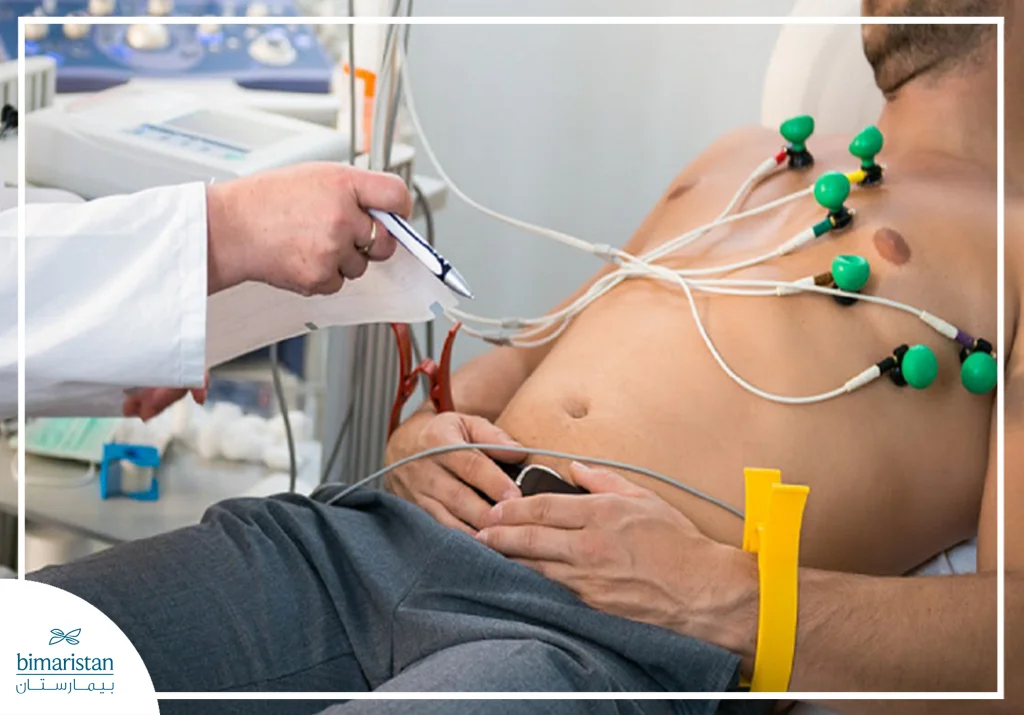
An electrocardiogram (ECG) is the most important test for diagnosing Wolff-Parkinson-White syndrome; it is a quick, painless test that measures the heart’s electrical activity using electrodes placed on the chest and, sometimes, on the arms and legs. The ECG helps the doctor detect an electrical pattern indicating an extra pathway in the heart; it may also show signs that the electrical signal reaches the ventricles earlier than normal. This pattern may be detected during a routine examination in some patients, or during an evaluation of episodes of palpitations and rapid heartbeat.
A doctor diagnoses Wolff-Parkinson-White syndrome when the characteristic pattern on an electrocardiogram is accompanied by symptoms of arrhythmia; however, the term “Wolff-Parkinson-White pattern” may be used when the electrical changes are present without symptoms.
Additional tests
Some patients may need additional tests if their symptoms are intermittent or if the doctor needs more detailed information about the heart’s rhythm and electrical activity, especially when planning treatment or assessing the likelihood of more serious disorders. These tests include the following:
- Holter monitoring: A small, portable device that records heart activity for one or two days while you go about your daily activities.
- Event recorder: A device similar to a Holter monitor but used for a longer period of time; it records the heart’s electrical activity when symptoms occur or when an irregular heartbeat is detected.
- Stress test: Monitors heart activity while walking on a specialized machine and helps assess heart rhythm during exercise.
- Echocardiogram: Used to assess the structure of the heart and detect any associated heart problems.
- Electrophysiology study: A procedure performed in a hospital using thin catheters that are guided to the heart to record the spread of electrical signals and accurately identify the accessory pathway.
Treatment of Wolff-Parkinson-White syndrome
Treatment for Wolff-Parkinson-White syndrome depends on the presence, severity, and frequency of symptoms, the type of arrhythmia causing the rapid heartbeat, and the results of cardiac tests. Some patients do not require immediate treatment, especially if they are asymptomatic or have mild and infrequent symptoms, but follow-up care remains important to assess the heart condition and determine the need for future treatment.
Treatment aims to slow down a rapid heart rate when it occurs, prevent recurrent episodes, reduce symptoms, and lower the risk of complications. Several treatment options are available for Wolff-Parkinson-White syndrome, and the doctor will choose the most appropriate method based on the patient’s condition, test results, and response to treatment.
1. Stopping an episode of rapid heartbeat
Treatment for an episode of rapid heartbeat can begin with vagal maneuvers, simple actions that help slow the heart rate by influencing the vagus nerve, which plays a role in regulating heart rhythm. A doctor may teach the patient how to perform these maneuvers when an episode occurs, such as coughing, the Valsalva maneuver, bringing the knees to the chest, or applying cold water or cold compresses to the face.
If these maneuvers fail to stop the episode, the patient may need intravenous medications to help restore a normal heart rhythm. In some cases, electrical cardioversion is used, in which electrodes or pads are placed on the chest to deliver an electrical shock that helps restore a normal heart rhythm; this is often used when maneuvers or medications are not sufficient.
2. Preventing recurring episodes
A doctor may prescribe antiarrhythmic medications to help patients reduce the frequency of rapid heartbeat episodes, alleviate daily symptoms, and lower the risk of complications. These medications are often used when a catheter procedure is not suitable or when the doctor determines that medication alone is sufficient based on the patient’s condition and test results.
Your doctor may also recommend avoiding certain factors that can trigger episodes in some patients, such as alcohol, caffeine, or strenuous exercise. The effect of these factors varies from patient to patient, so the decision depends on the patient’s observation of their symptoms and the cardiologist’s assessment.
3. Catheter ablation of the accessory electrical pathway
Catheter ablation is one of the most important treatment options for Wolff-Parkinson-White syndrome, especially in patients with documented episodes of tachycardia. In this procedure, the doctor inserts thin catheters through a blood vessel, usually in the groin, and guides them to the heart. The catheters use thermal energy, usually radiofrequency energy, or targeted cooling to create small scars that disrupt the accessory electrical pathway and prevent abnormal signals from traveling through it.
Catheter ablation helps prevent arrhythmias recurrence and may achieve a cure for Wolff-Parkinson-White syndrome in more than 94% of cases, according to some sources, while other sources report that the cure rate may exceed 96% in patients with documented tachycardia. Cauterization may sometimes be performed during an electrophysiological study if the results indicate that the accessory pathway can trigger dangerous episodes.
4. Surgical Treatment
Surgical treatment is not usually the first choice for Wolff-Parkinson-White syndrome, but it may be used in specific cases if catheter ablation is unsuccessful. Doctors may also consider it if the patient has another heart condition that requires surgical repair at the same time; therefore, the decision to proceed with surgery depends on the heart condition, test results, and the medical team’s assessment.
Recovery and follow-up after treatment for Wolff-Parkinson-White syndrome
Recovery after treatment for Wolff-Parkinson-White syndrome varies depending on the type of treatment used and the patient’s condition before intervention. However, many patients can lead normal lives after appropriate treatment. Catheter ablation can help treat the syndrome in a significant number of patients and reduce the risk of serious arrhythmias. Therefore, the doctor determines the follow-up plan based on symptoms, ECG results, and previous tests.
The most important post-treatment follow-up instructions include the following:
- Monitoring for recurrence of palpitations or episodes of rapid heartbeat
- Adhering to follow-up appointments with the cardiologist
- Reviewing & adjusting prescribed medications with the doctor
- Asking the doctor about appropriate physical activity
- Avoiding triggers that may cause episodes, such as caffeine, alcohol, nicotine, or strenuous activity
- Maintaining a healthy lifestyle that includes a proper diet, weight management, appropriate physical activity, and stress reduction
After catheterization, the patient may require a short period of rest and should avoid strenuous activities, as advised by the doctor. If palpitations recur, or if there is severe pain, swelling, bleeding, or redness at the catheter insertion site, the patient should contact a doctor. Parents of affected children should ask the physician about permitted physical activities and what steps to take if a heart palpitation episode occurs at school or while playing.
In conclusion, Wolff-Parkinson-White syndrome illustrates how a minor electrical abnormality in the heart can cause bothersome episodes of palpitations and rapid heartbeat. Although many cases can be effectively managed, accurately assessing symptoms and diagnosing the condition help in selecting the most appropriate treatment and reducing the likelihood of recurrent episodes or complications. Therefore, it is essential to consult a cardiologist if palpitations recur or are accompanied by dizziness, chest pain, shortness of breath, or fainting.
Sources:
- Johns Hopkins Medicine. (n.d.). Wolff-Parkinson-White syndrome.
- Vătășescu, R. G., Paja, C. S., Șuș, I., Cainap, S., Moisa, Ș. M., & Cinteză, E. E. (2024). Wolf–Parkinson–White syndrome: Diagnosis, risk assessment, and therapy—An update. Diagnostics, 14(3), 296.
- British Heart Foundation. (July 7, 2026). Wolff-Parkinson-White syndrome.