
Dental implants are considered one of the most effective solutions for replacing missing teeth and restoring the mouth’s aesthetic and functional health. With the continuous advancement of implant technology, Bego German dental implants have emerged as one of the most reliable options, combining high quality with sophisticated engineering design.
These implants are characterized by durable materials and precise manufacturing techniques that enhance implant stability and increase long-term success rates. In this article, we’ll review the key features of Bego German dental implants, how they work, the conditions for which they’re suitable, and the factors that make them the preferred choice for many dentists and patients.
What are Bego German dental implants?
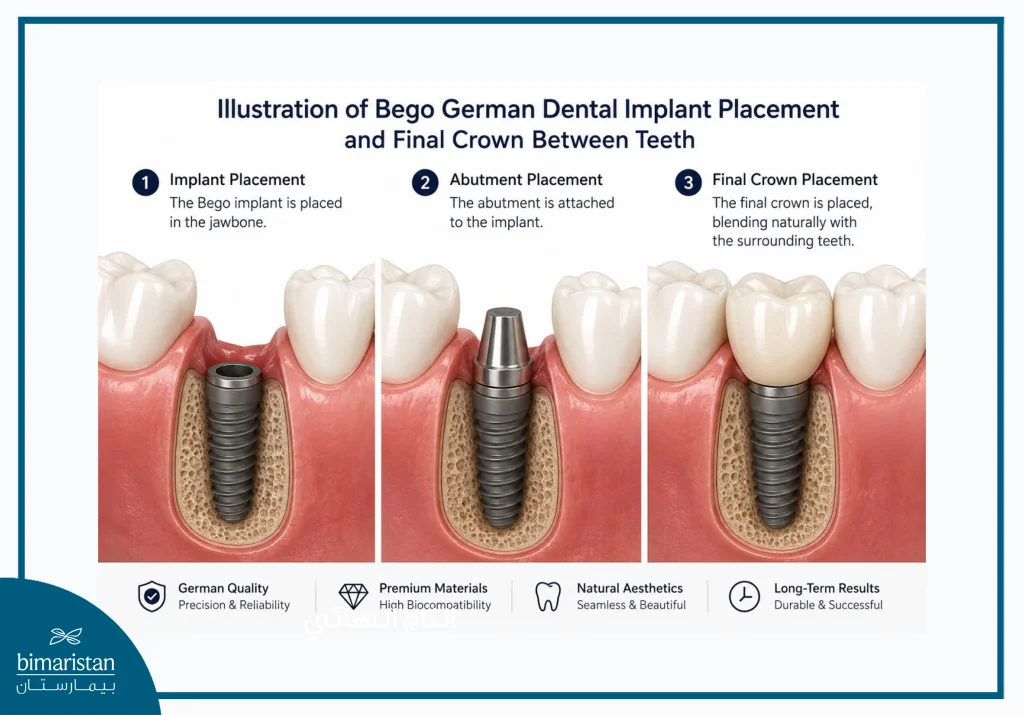
Bego German dental implants are one of the most advanced dental implant systems, designed to replace missing teeth in a way that mimics natural tooth roots. These implants are placed within the jawbone to form a stable, reliable foundation for attaching crowns, bridges, or even full dentures. This system is known for its high quality and is based on extensive scientific research that has informed the development of designs that help achieve greater implant stability and, in many cases, reduce treatment time.
Features of Bego German dental implants
The excellence of Bego German dental implants is not limited to the quality of the materials used in their manufacture; it also extends to their thoughtful design and the scientific research that underpins them. That is why many dentists rely on them to provide reliable treatment solutions that deliver stable, long-lasting results for patients.
German Quality and Precision
All stages of the manufacturing process for Bego German dental implants are subject to rigorous monitoring to ensure compliance with European and international medical device standards. This precision ensures that components are perfectly compatible with one another, facilitating installation and enhancing the stability of the final dental restorations. Furthermore, this ongoing commitment to quality standards is directly reflected in the clinical performance and success rates of the implants.
High Success Rates
The high success rates of Bego German dental implants are linked to several factors, most notably the quality of the materials used and the design that promotes osseointegration. When the procedure is performed by a qualified dentist as part of an appropriate treatment plan, the implant can function effectively for many years. Regular follow-ups and good oral hygiene also help maintain results and reduce the likelihood of any future problems.
Biocompatibility with Jawbones
Biocompatibility is one of the most important criteria determining the quality of an implant system. The titanium used in Bego German dental implants is characterized by its high capacity to integrate with bone tissue, with few adverse reactions in most patients. This biocompatibility allows for the formation of a strong bond between the bone and the implant, which is the true foundation for the success and longevity of the treatment.
Long-term stability
Bego German dental implants are designed to withstand the stresses of chewing and daily oral functions. The precise design of the threads on the implant body helps achieve good initial stability after surgery, which then transitions to permanent stability once osseointegration is complete. For this reason, many patients can rely on implants as an alternative that is very close to natural teeth.
Types of Bego German dental implants
The company offers a wide variety of implant systems, allowing the dentist to choose the most appropriate solution based on the patient’s condition, bone density, and dental restoration requirements. This variety helps provide flexible treatment options suitable for both simple and complex cases.
Traditional Crops
Traditional implants are the most commonly used option for single- or multiple-tooth loss. They are characterized by their ability to provide long-term stability and allow the dentist to precisely plan the implant’s placement, ensuring excellent aesthetic and functional results after the final crown is placed.
Immediate Implants
Immediate implantation is a suitable option for some patients who meet certain criteria, such as bone integrity and the absence of active inflammation in the extraction site. Among its key advantages are a shorter overall treatment time and the preservation of the natural shape of the gums and bone following tooth extraction.
Agricultural Solutions for Complex Situations
Some patients may face challenges such as bone resorption or prolonged tooth loss. In these cases, Bego offers specialized solutions that enable the dentist to address various anatomical conditions and achieve stable results, even when additional supportive procedures are required.
Steps for Dental Implant Surgery Using Bego German Dental Implants
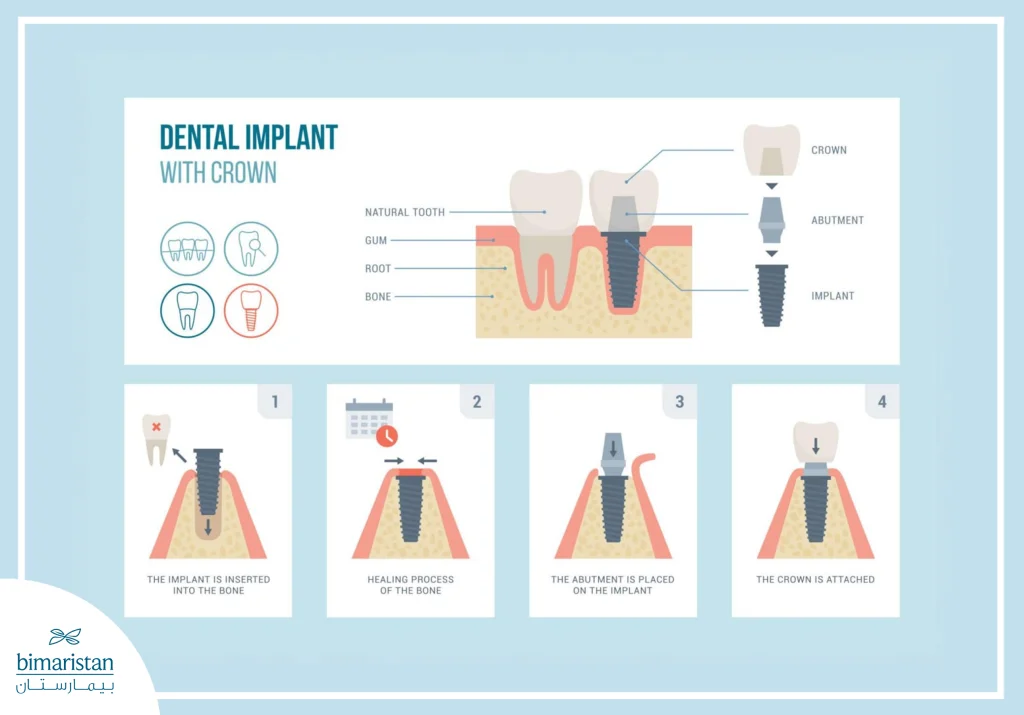
The success of dental implants depends on the careful and precise execution of each stage of treatment. That is why the treatment journey begins with a comprehensive evaluation of the patient’s condition and ends with the placement of the final restoration and the restoration of normal dental function. The steps include the following:
- Examination and Planning: At this stage, the dentist conducts a comprehensive evaluation of the patient’s condition, including an assessment of gum and bone health, as well as general medical factors that may affect treatment success. Modern imaging techniques are also used to determine the optimal implant location and to ensure a balance between function and aesthetics.
- Implant Placement: The implant is inserted into the jawbone during a surgical procedure typically performed under local anesthesia. The procedure takes relatively little time in most cases, and many patients can resume their daily activities shortly afterward, provided they follow their doctor’s instructions.
- Healing and Osseointegration Period: This stage is one of the most important phases of treatment, as bone begins to grow around the implant surface and gradually secures it in place. The duration of osseointegration varies from person to person depending on factors such as bone density, overall health, and the implant’s location in the jaw.
- Fitting the Final Crown: After confirming that osseointegration is complete, the necessary measurements are taken to fabricate the final crown. The crown is designed to match the color and shape of the adjacent teeth, giving the patient a natural-looking smile and effective chewing function that closely resembles that of natural teeth.
Who are the candidates for Bego German dental implants?
Most adults who have lost one or more teeth can benefit from dental implants, provided they meet the necessary health requirements. The dentist conducts a thorough evaluation to determine the suitability of the treatment on a case-by-case basis.
Conditions for Successful Cultivation
The key factors for successful farming include:
- Maintaining Gum Health
- Adherence to Treatment Guidelines
- An adequate amount of bone
- Managing Chronic Diseases
- Good oral hygiene plays a key role in protecting implants from infections and potential complications.
Cases Requiring Additional Action
In some cases, the bone structure may not be sufficient to support the implant directly; in such cases, procedures such as bone grafting or sinus lift surgery may be performed. These procedures aim to improve the environment supporting the implant and increase the chances of long-term treatment success.
A Comparison of Bego German Dental Implants with Other Types of Implants
When choosing the right farming system, it is important to compare several key factors.
- Quality and Technology: Peugeot vehicles are distinguished by their reliance on long-standing German expertise and advanced manufacturing technologies, making them a strong competitor to many global brands.
- Cost vs. Value: Although German implants may be more expensive than some other systems, their high quality and long-term durability make them a good investment.
- Success Rates and Durability: Peugeot implants achieve high success rates when the correct treatment protocols are followed, and post-implantation patient follow-up is maintained.
Tips for Caring for Dental Implants After Placement
The success of the implant depends not only on the quality of the system used or the doctor’s skill but also on the patient’s adherence to daily care. Therefore, it is recommended that:
- Regular Cleaning of Teeth and Implants
- Using Interdental Cleaning Tools
- Conduct periodic checkups for the early detection of any potential problems
- It is best to avoid smoking and make sure to follow a healthy lifestyle to maintain the health of your gums and the bone surrounding the implant
The Cost of Bego German dental implants in Turkey
The cost of Bego German dental implants varies from country to country depending on factors such as the surgeon’s experience, the clinic’s standards, any additional procedures required, and the number of implants to be inserted. The following are approximate averages for the cost per implant, including the abutment, in U.S. dollars:
| The State | Approximate cost in dollars |
|---|---|
| Turkey | $600–$1,000 |
| The United States of America | $3,000–$6,000 |
| Britain | $2,500–$5,500 |
| Germany | $2,000–$4,500 |
In conclusion, Bego German dental implants represent a reliable option for patients seeking high-quality, long-lasting results. Thanks to advanced technology, excellent biocompatibility, and high success rates, they have become the preferred system for many dentists worldwide. Turkey is also a premier treatment destination for Bego German dental implants, offering competitive pricing compared to the United States and Europe, while maintaining high standards of medical care and clinical expertise.
Sources: