
Dental implants have become one of the most advanced and successful solutions for replacing missing teeth, as they provide patients with fixed teeth that function naturally and have an aesthetic appearance similar to natural teeth. With continuous advancements in dental implant manufacturing technologies, numerous global brands have emerged that compete in quality, precision, and success rates, including French dental implants, which have earned a strong reputation for using the latest European manufacturing technologies and high-quality materials.
French dental implants are characterized by engineering precision and excellent biocompatibility with the jawbone, as well as designs that accelerate osseointegration and reduce the likelihood of complications. For this reason, they have become the go-to choice for many dentists and oral surgeons around the world.
What are French dental implants?
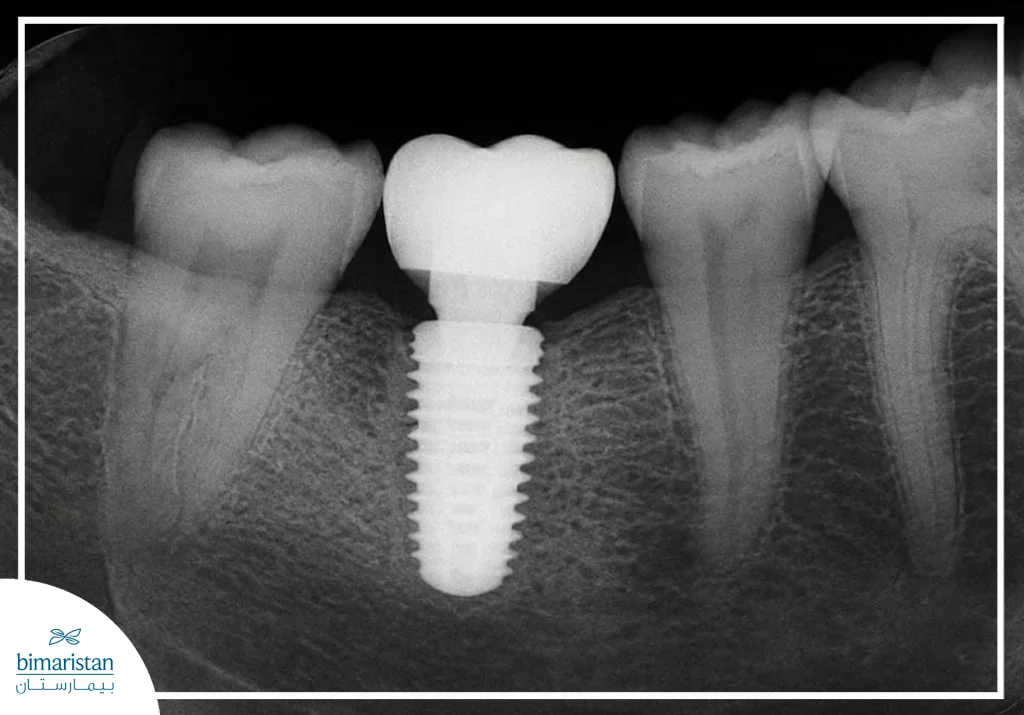
French dental implants are dental implants designed and manufactured in France in accordance with European medical device standards. They are intended to replace missing tooth roots with a metal implant anchored in the jawbone, on which a crown, bridge, or even a full set of dentures is then attached, depending on the patient’s condition.
Most French implants are made of pure titanium or titanium alloys, materials known for their high capacity to integrate with bone and, in most cases, for their low likelihood of causing immune reactions. The success of an implant is not limited to the quality of the product itself; it also depends on the dentist’s expertise, the condition of the jawbone, and the patient’s adherence to treatment instructions.
Materials Used in the Manufacture of French Dental Implants
French companies rely on materials that are strong and resistant to corrosion inside the mouth.
| Article | Usage | Features |
|---|---|---|
| Pure titanium | Most Commonly Used | High biocompatibility and excellent strength |
| Titanium alloys | For situations that require greater rigidity | Greater resistance to stress |
| Zirconia (in some systems) | For patients who care about their appearance | A white color similar to that of teeth |
Implant surfaces also undergo special treatments; these techniques are designed to increase the contact area between the bone and the implant, which helps accelerate the osseointegration process, such as:
- Sandblasting
- Acid etching
- Microscopic Surface Treatment
The Most Popular Types of French Dental Implants
The French market offers a number of dental implant systems developed by specialized companies that utilize the latest technologies in implant design and surface treatment. These systems differ in their engineering characteristics and clinical applications, allowing the dentist to choose the most appropriate option based on the patient’s condition, jawbone density, and treatment plan.
- ETK (Euroteknika): Features implants designed to provide good initial stability, with a wide range of sizes and diameters, making them suitable for both simple and complex cases.
- Global D: Offers a wide variety of implant systems suited to various clinical situations and is renowned for its manufacturing quality and reliance on state-of-the-art digital solutions that help improve treatment accuracy.
- Tekka: One of the well-known French systems that has earned a strong reputation for its engineering design and manufacturing quality; it has been used for years in many clinical practices to achieve stable, long-lasting results.
- Anthogyr: One of the most well-known French brands in dental implants, characterized by precise designs that enhance implant stability and promote rapid osseointegration. It is used in a wide range of both conventional and immediate implant cases.
- Biotech Dental: One of France’s leading companies that combines dental implant technology with digital solutions, offering advanced implant systems with surface treatments that help improve osseointegration and, in some cases, reduce recovery time.
It is worth noting that the choice of implant type does not depend solely on brand name, but rather on the dentist’s assessment of the patient’s condition, the quality of the jawbone, and the appropriate treatment plan, as more than one system can achieve excellent results when used correctly.
Advantages of French Dental Implants
French implants are characterized by several features that have made them a popular choice in many clinics worldwide. Among the most notable of these features are:
- Excellent biocompatibility
- Strong mechanical stability
- High corrosion resistance
- High-quality manufacturing
- Precise Engineering Designs
- Offers a variety of treatment options
- Long service life with proper care
- Scientific support through clinical studies
- Ease of integration with modern digital technologies
- High success rates when the right case is selected
Potential Drawbacks and Challenges
Despite their many advantages, French dental implants are not without their challenges. Among the most significant are:
- Their higher cost compared to some economic systems
- The need for a physician with experience in the system being used
- Treatment may take several months for osseointegration to be complete
- Sometimes additional procedures are needed, such as bone grafting or sinus lift surgery
- It is not suitable for all patients, especially those with severe bone loss or certain uncontrolled medical conditions.
It should be noted that these challenges are not exclusive to French implants; rather, they apply to most dental implant systems to varying degrees.
Who is a good candidate for French dental implants?
Dental implants are an effective treatment option for many patients, but their success depends on several general and oral health factors. A person is considered a suitable candidate if they:
- Have lost one or more teeth
- in generally good health
- Committed to periodic follow-up visits
- Do not have active gum disease
- Keep their mouth and teeth clean
- Has sufficient jawbone, or any deficiency can be corrected with a bone graft
Conversely, some patients may need to treat certain conditions before undergoing the implant procedure, such as controlling gum disease or improving blood sugar levels in patients with diabetes.
Steps for French Dental Implants
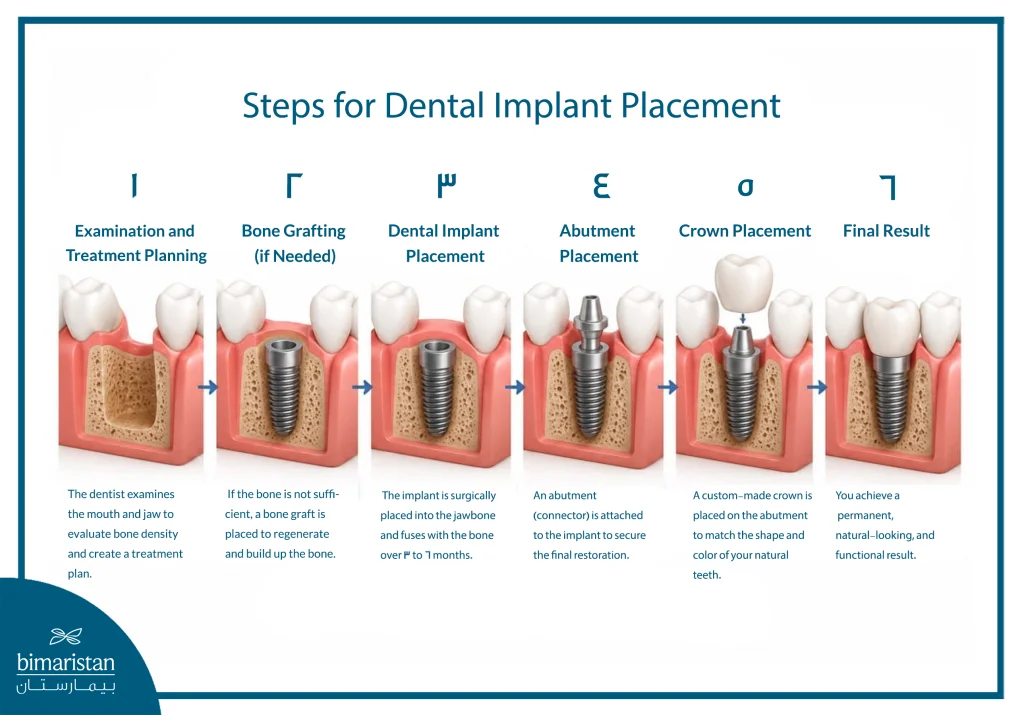
The French dental implant procedure involves several sequential stages. While the details may vary slightly depending on the patient’s condition and the type of implant used, the general principle remains the same.
1. Examination and Diagnosis
The process begins with a visit to the dentist for a comprehensive clinical examination, including imaging of the teeth and jaws using a panoramic X-ray or cone-beam computed tomography (CBCT), in order to assess:
- Jawbone Density
- Number of missing teeth
- Bone Height and Width
- Condition of the Gums and Surrounding Tissues
- Location of the Nerves and Sinuses
Based on this information, the doctor develops an appropriate treatment plan and determines the type of French implant best suited to the patient’s condition.
2. Preoperative Preparation
If oral health is good, the patient can proceed directly to implant placement. However, if problems such as gum disease, tooth decay, or bone loss are present, these must be treated first. The preparatory phase may include:
- Treatment of Infections
- Teeth Cleaning and Tartar Removal
- Bone Grafting When Necessary
- Extraction of Untreatable Teeth
- Maxillary Sinus Lift in Certain Cases of the Upper Jaw
3. Fixing the implant into the bone
The procedure is usually performed under local anesthesia, during which the dentist makes an incision in the gum, then prepares the implant site with precision surgical instruments before securing the implant in the jawbone. The gum is then closed, or part of the implant is left exposed, depending on the treatment plan. This stage usually takes between 30 and 90 minutes, depending on the number of implants and the complexity of the case.
4. The bone integration phase
This stage is one of the most important in treatment, as bone begins to grow around the implant surface and gradually fuses with it—a process known as osseointegration. Osseointegration typically takes between 3 and 6 months, though this duration may be longer or shorter depending on factors such as:
- Bone Quality
- Implant Type
- Implantation site
- The Patient’s Overall Health
- Follow the doctor’s instructions
5. Installation of the abutment and the crown
Once it has been confirmed that the integration was successful, the abutment—the component that connects the implant to the final crown—is placed. Precise impressions are then taken, or digital scanning devices are used, to design a crown that matches the color and shape of the patient’s natural teeth, giving the patient an appearance and function very close to that of their original tooth.
Factors Contributing to the Success of French Dental Implants
Modern dental implants have high success rates when used in appropriate cases, but treatment success depends not on the implant alone; it is influenced by several factors. Among the most important factors for success are:
- Gum Health
- Commitment to Oral Hygiene
- Available Bone Mass
- The Doctor’s and Surgeon’s Experience
- Avoid or cut back on smoking
- Adherence to Follow-up Visits
- Quality of the farming system used
- Managing chronic diseases such as diabetes
What factors could lead to crop failure?
Although failure is uncommon, it may occur in some cases as a result of:
- Heavy smoking
- Poor Oral Hygiene
- Impaired bone integration
- Inflammation of the Tissue Surrounding the Implant
- The presence of diseases that affect bone healing
- Errors in surgical planning or execution
- Excessive pressure on the implant before healing is complete
Therefore, choosing a qualified doctor and following post-operative instructions play a key role in reducing the likelihood of complications.
The Cost of French Dental Implants in Turkey
The following table shows the approximate average prices for a single-tooth implant using the French method. Prices may vary depending on the city, clinic, and services included.
| The State | Average cost per implant |
|---|---|
| Turkey | $500–$1,000 |
| France | $1,500–$3,000 |
| United Kingdom | $2,000–$4,000 |
| The United States of America | $3,000–$6,000 |
Tips After Dental Implants
Postoperative care plays an important role in the success of the treatment and the long-term survival of the implant. Therefore, the following is recommended:
- Not Smoking
- Use of mouthwash as prescribed
- Attend all follow-up appointments
- Take your prescribed medications regularly
- Avoid hard-to-chew foods during the first few days
- Gently brush your teeth with a soft-bristled toothbrush
- Use cold compresses during the first few hours if your doctor recommends it
- See a doctor if you experience severe pain, unusual swelling, or persistent bleeding
In conclusion, French dental implants are among the top choices in dental restoration, as they combine European manufacturing quality, high biocompatibility, and advanced technologies that contribute to stable, long-lasting results when implemented as part of an appropriate treatment plan. However, the success of an implant procedure does not depend solely on the type of implant; it also depends on the dentist’s expertise, the condition of the jawbone, and the patient’s commitment to daily care and regular follow-up visits.
When comparing treatment costs, we find that Turkey is among the destinations offering more competitive prices than France, the United Kingdom, and the United States, with many specialized medical centers that use international implant systems, including some French ones. However, price should not be the only factor in making a decision; one must also consider the quality of the materials used, the expertise of the medical team, and the level of care provided before and after treatment.
Sources:
- U.S. Food and Drug Administration. (n.d.). Dental Implants: What You Should Know
- Albrektsson, T., Dahlin, C., Jemt, T., & Sennerby, L. (2012). Is marginal bone loss around oral implants the result of a provoked foreign body reaction? Clinical Implant Dentistry and Related Research, 16(2), 155–165.
- Global D. (n.d.). Global D: Function and Aesthetics of the Jawbones – Dental Implants