
With rapid advancements in dental implants, treatment options have become more diverse and sophisticated than ever before, enabling patients to access permanent solutions that combine function and aesthetics. Among the dental implant systems that have established themselves globally, German Medentika dental implants stand out as one of the best options, combining German quality, precision engineering, and excellent biocompatibility with oral tissues.
Medentika dental implants have earned the trust of dentists in many countries around the world thanks to their advanced design, high success rates, and ability to deliver stable, long-lasting results. They are also a cost-effective option compared to some other international brands, without compromising on quality or clinical performance.
What are German Medentika dental implants?
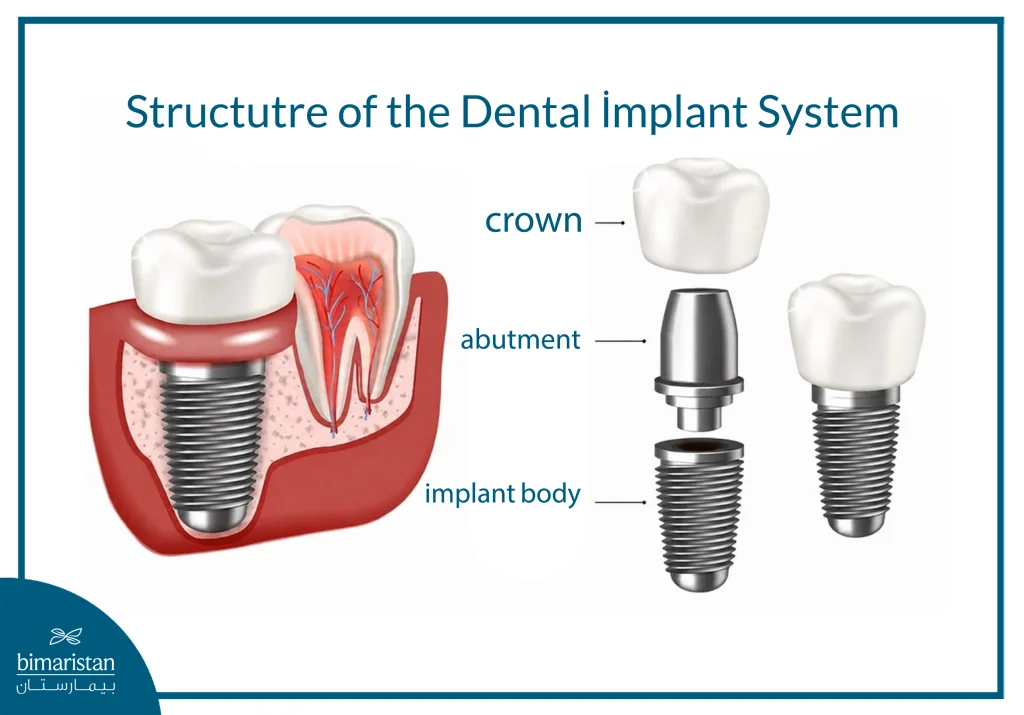
German Medentika dental implants are an advanced system for replacing missing teeth, developed by a German company specializing in manufacturing dental implant solutions to the highest standards of quality and engineering precision. These implants are compatible with many global implant systems, making them a preferred choice among dentists and dental laboratories worldwide.
Medentika dental implants rely on pure, medical-grade Grade 4 titanium or high-quality alloys that integrate well with the jawbone, a process known as osseointegration. This integration is one of the most important factors in the success of dental implants, as it allows the implant to function as a stable, natural root that can efficiently withstand daily chewing forces.
Features of German Medentika dental implants
GermanMedentika dental implants are among the most advanced implant systems on the European market, offering a wide range of benefits that make them a suitable choice for many patients and dentists alike. Among the most notable of these benefits are:
- High German Quality: Medentika dental implants are manufactured in Germany in accordance with strict manufacturing standards and the latest precision engineering technologies, ensuring consistent quality and high manufacturing precision—which directly contributes to successful treatment and stable results.
- Excellent biocompatibility: The implants are made of medical-grade titanium, which is known for its high capacity to integrate with bone without causing allergic reactions or rejection, thereby helping to speed up the healing process and increase the chances of a successful implant.
- Advanced Engineering Design: Medentika dental implants feature an advanced helical design that helps achieve high initial stability when placed in the jawbone, which is particularly important in cases requiring immediate implantation or early loading.
- Precision of the connection between the implant and the abutment: Medentika dental implants rely on precise internal connection systems that minimize microscopic movement between implant components, thereby reducing the likelihood of stent loosening or bacterial leakage into the implant and preserving the health of the surrounding gums and bone.
- A surface treated to promote osseointegration: Implant surfaces undergo special treatments that increase their microscopic roughness, which helps bone cells adhere to them more quickly and contributes to faster integration with the jawbone compared to traditional surfaces.
- Compatibility with Global Implant Systems: One of its key advantages is its compatibility with many of the world’s most popular dental systems, giving dentists greater flexibility in selecting appropriate restorative components and facilitating future maintenance or replacement of restorations as needed.
- Multiple options for various cases: The company offers a wide range of implants in different diameters and lengths, as well as a variety of abutments and fixtures for partial and complete tooth loss, making them suitable for a wide range of treatment needs.
- Natural-looking results: The precise design of the implant and abutments helps preserve the level of the surrounding gum tissue and bone, giving the final crown an appearance very similar to that of natural teeth, especially in the front of the mouth.
- Long-term durability: When implants are placed correctly and oral care instructions are followed, German Medentika dental implants can last for decades, with high success rates exceeding 95% in numerous clinical studies.
- Competitive Pricing: Despite their high German quality, Medentika dental implants are less expensive than some leading global brands, making them a suitable choice for patients seeking a balance between quality and price without compromising treatment effectiveness.
The Difference Between German Medentika Dental Implants and Other Types of Dental Implants
German Medentika dental implants are among the systems that have gained widespread popularity among dentists thanks to their precision manufacturing and reliance on the latest German engineering technologies. Although there are many international brands in the dental implant market, Medentika dental implants offer a unique balance of quality, clinical performance, and cost, making them a suitable choice for a wide range of patients.
One of the most notable features of Medentika dental implants is that they are manufactured to precise German standards using high-purity medical-grade titanium, with an engineering design that ensures a balanced distribution of chewing forces across the jawbone, helping reduce stress on the bone and increase the implant’s long-term stability. The company also employs advanced surface treatment technologies for implants, which increase the implant-bone contact area, thereby promoting faster osseointegration and improving treatment success rates compared with many traditional systems.
Another important advantage is that the components are compatible with a wide range of global implant systems, which gives the dentist greater flexibility in selecting appropriate dental implants and abutments and facilitates the maintenance or replacement of certain components should the need arise in the future. Compared with some budget-friendly systems, Medentika dental implants feature higher precision in manufacturing internal connections, reducing the likelihood of microscopic gaps that could allow bacteria to accumulate or compromise the implant’s stability over time.
Compared to high-priced international brands, they offer high quality and clinical performance at a relatively lower cost, making them an ideal choice for patients seeking a reliable German implant without incurring high costs. These implants also support digital planning and computer-guided surgery technologies, which help the surgeon precisely determine implant placement, reduce procedure duration, and increase the likelihood of achieving excellent aesthetic and functional results.
Thanks to these advantages, German Medentika dental implants have become a system relied upon by many dentists around the world, especially in cases that require high precision and long-term stability at an affordable cost.
Steps for Dental Implant Surgery Using Medentika Dental Implants
The dental implant procedure using German Medentika dental implants involves several carefully planned stages designed to achieve the highest success rates and ensure stable, long-lasting results.
- Clinical Examination and Initial Evaluation: The treatment process begins with a comprehensive examination of the mouth, teeth, and gums, along with an assessment of the patient’s overall health, to ensure there are no diseases or infections that could affect the success of the implant.
- Radiography and Digital Planning: The dentist performs a 3D scan of the jaws using cone-beam computed tomography (CBCT) to assess bone volume and density and determine the optimal placement of the implant, taking into account the nerves, sinuses, and adjacent teeth.
- Developing a Treatment Plan: After reviewing the test results, a treatment plan is developed that includes the number of implants required, their dimensions, the appropriate type of abutment and crown for each case, and a determination of whether the patient needs additional procedures such as bone grafting or sinus lift surgery.
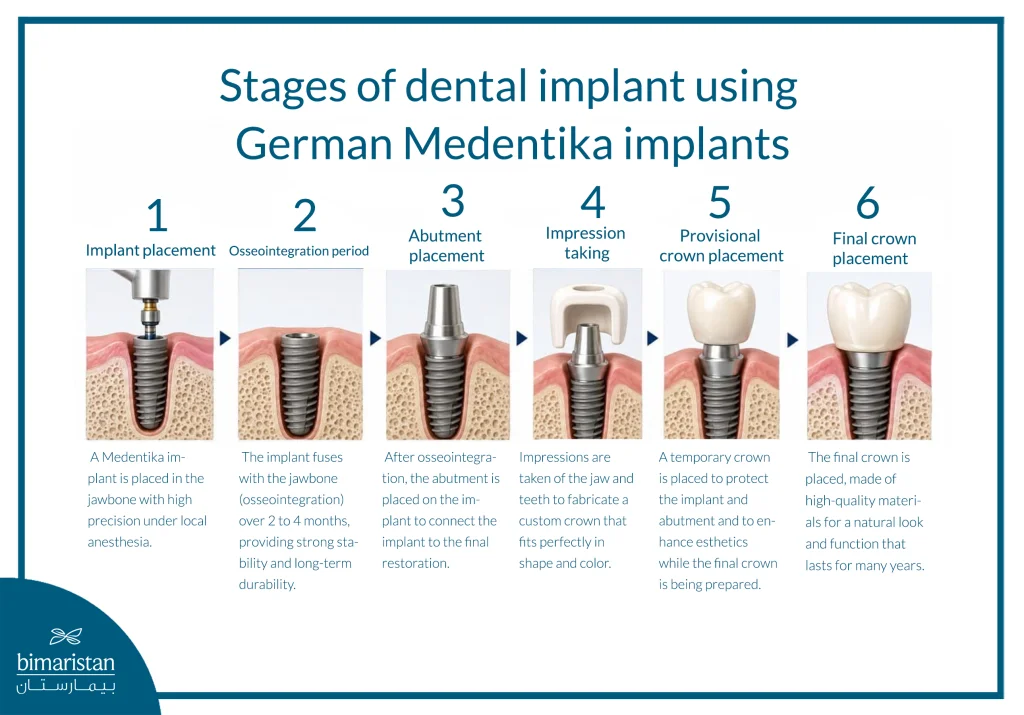
- Preparing the Implant Site: After administering local anesthesia, the dentist makes a small incision in the gum to access the jawbone. The site is then prepared using specialized instruments with progressively larger diameters corresponding to the size of the selected implant.
- Placement of a Medentika Implant: The implant is carefully secured within the jawbone using a specific torque setting to ensure high initial stability, which is one of the most important factors for the success of the implant procedure.
- The Osseointegration Phase: Over the next few weeks or months, bone cells begin to grow around the implant and fuse with it, forming a permanent bond with the jaw. The duration of this stage varies with bone density and the patient’s overall health, but it typically lasts two to four months.
- Abutment Placement: After confirming that osseointegration is complete, the abutment—the component that connects the implant to the final crown—is placed. Abutments are characterized by their high precision and secure connection to the implant.
- Taking Digital Impressions: Traditional or Digital impressions of the mouth are taken and sent to the laboratory, where the final crown is fabricated to match the color, shape, and size of the natural teeth.
- Final Crown Placement: Once the crown has been fabricated, it is cemented onto the abutment, providing the patient with a new tooth that functions normally for chewing and speaking and looks virtually indistinguishable from natural teeth.
- Follow-up Visits: After treatment is complete, your dentist will schedule regular follow-up appointments to monitor the condition of the implant and the health of the surrounding gums and bone, and to perform professional cleanings as needed to ensure the treatment’s long-term success.
Who are suitable candidates for Medentika dental implants?
German Medentika dental implants are a suitable option for a wide range of patients who wish to replace missing teeth in a permanent and safe manner. The success of the treatment depends on the dentist’s assessment of the patient’s overall health, the quality of the jawbone and gums, and adherence to post-implant care instructions. The following are the main cases considered suitable candidates for Medentika implants:
- Cosmetic Cases: Medentika dental implants deliver excellent aesthetic results, especially for front teeth, as they help preserve the natural shape of the gums and restore a smile that closely resembles natural teeth.
- Smokers: Although smoking increases the likelihood of complications, it does not absolutely preclude a transplant, especially if the patient commits to cutting back on smoking or quitting during the post-transplant healing period.
- Patients Seeking a Long-Term Solution: Medentika dental implants are a suitable option for those who wish to replace missing teeth with a fixed solution that will last for many years, rather than using removable dentures or traditional bridges.
- People who have lost one or more teeth: Whether tooth loss is caused by severe tooth decay, injury, gum disease, or tooth extraction, Medentika dental implants provide a permanent solution that restores natural tooth function and preserves the aesthetic appearance of your smile.
- Patients in good overall health: The chances of success with dental implants are higher for those without uncontrolled chronic diseases or conditions that affect bone and tissue healing.
- Patients with sufficient jawbone density: Strong, dense jawbone is one of the most important factors for implant success; however, in cases of bone deficiency, a bone graft or sinus lift can be performed prior to implant placement in many instances.
- Patients with stable diabetes: Diabetic patients who maintain their blood sugar levels within the normal range can successfully undergo dental implant surgery, provided they receive close medical monitoring and adhere to their doctor’s instructions before and after the procedure.
How long do German Medentika dental implants last?
German Medentika dental implants are known for their high durability and long lifespan; they can last for more than 20 years and may even last a lifetime for many patients, provided they maintain good oral hygiene and undergo regular checkups with their dentist. Clinical studies on dental implants generally indicate that success rates exceed 95% during the first 10 years, and a large percentage of implants continue to function effectively for decades without replacement. The lifespan of an implant depends on several factors, the most important of which are:
- Jawbone quality: The higher the bone density, the better the implant’s ability to integrate and remain stable over the long term.
- The dentist’s expertise: Proper planning, precise placement of the implant, and selection of the appropriate size play a major role in the treatment’s success and longevity over many years.
- Smoking: Smoking increases the risk of poor bone healing and raises the likelihood of developing gum disease; therefore, it is recommended that you quit or cut back as much as possible.
- Regular checkups: Regular visits to the dentist help detect problems early, which helps preserve the implant and extend its lifespan.
- Gum Health: Maintaining healthy, inflammation-free gums reduces the risk of peri-implantitis, a leading cause of dental implant failure.
- Chronic Diseases: Some uncontrolled conditions, such as diabetes or osteoporosis, may affect healing speed and implant stability; therefore, you should monitor your condition with your doctor.
- Daily Oral Hygiene: Brushing your teeth twice a day with a soft-bristled toothbrush, along with flossing or using interdental brushes, is one of the most important ways to prevent bacterial buildup and maintain the health of the gums around the implant.
The Cost of German Medentika dental implants
The cost of dental implants with German Medentika varies by country and depends on several factors, including operating costs, doctors’ fees, the quality of medical equipment, and the services included in the treatment plan. Turkey is considered one of the leading destinations in this field, as it offers the same original German implants used in Europe at a lower cost while maintaining treatment quality. The following is an approximate comparison of the cost per implant in several countries:
| The State | Average cost per implant (U.S. dollars) | What’s Included in the Cost |
|---|---|---|
| Turkey | $400 – $600 | Root + Stump + Crown |
| Germany | $2,200–$3,500 | Root + Stump + Crown |
| United Kingdom | $2,500–$4,000 | Root + Stump + Crown |
| The United States of America | $3,000–$6,000 | It’s usually just the implant, but the cost may increase if a post and crown are added |
In conclusion, German Medentika implants are dental implant systems that combine German quality, engineering precision, and clinical reliability, making them a suitable option for replacing missing teeth in a wide range of patients. Made from high-quality medical-grade titanium and designed to promote osseointegration and implant stability, they provide long-lasting results with a natural appearance and function similar to that of natural teeth.
With significant advancements in dentistry in Turkey, patients can now benefit from advanced technology at specialized centers that use the latest diagnostic tools and digital planning, while receiving high-quality treatment at a competitive cost compared to many European and American countries.
Sources: