Astigmatism is one of the most common vision disorders, as it affects visual acuity and blurs fine details, both near and far. With the development of vision correction techniques, astigmatism is no longer limited to glasses or contact lenses; it can now be permanently corrected during cataract surgery or other surgical procedures.
Among these advanced solutions, the toric lens has emerged as a precise and effective option for improving vision by correcting astigmatism directly within the eye.
What is a toric lens?
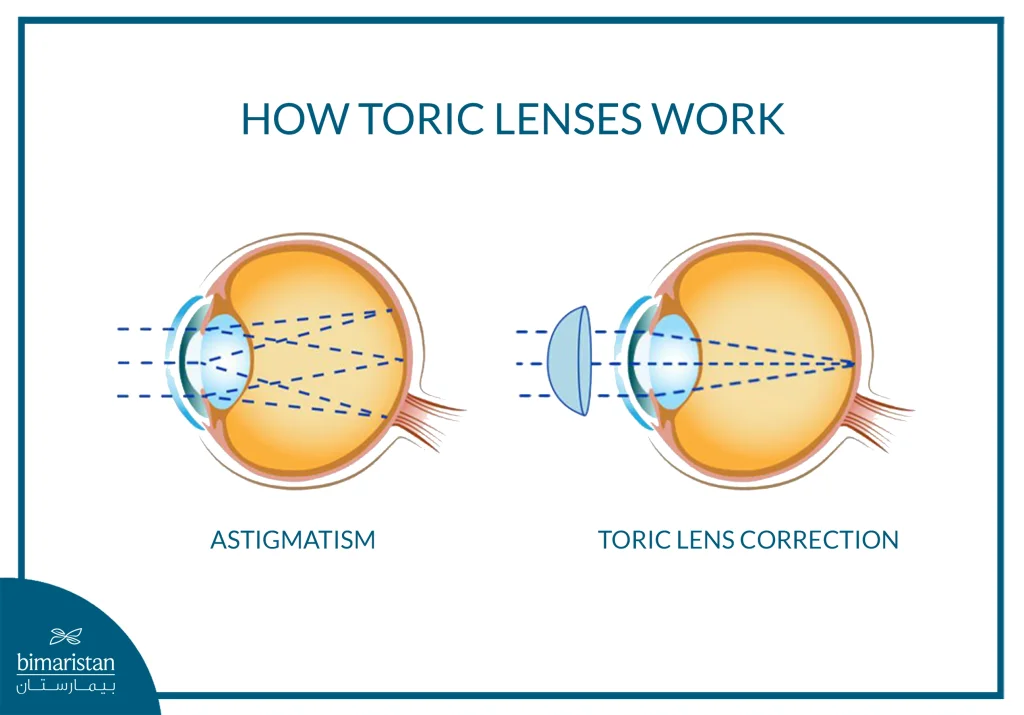
A toric lens is a special type of optical lens designed to correct astigmatism, either as a contact lens used on the surface of the eye or as an intraocular lens implanted in the eye as an intraocular lens. This lens has an aspherical geometry, with different refractive powers in two perpendicular directions, unlike traditional spherical lenses that have a uniform refractive power. This unique design enables the toric lens to compensate for the irregular convexity of the cornea or natural lens, thereby achieving a more precise focus of light on the retina.
What is astigmatism, and why does it need a toric lens?
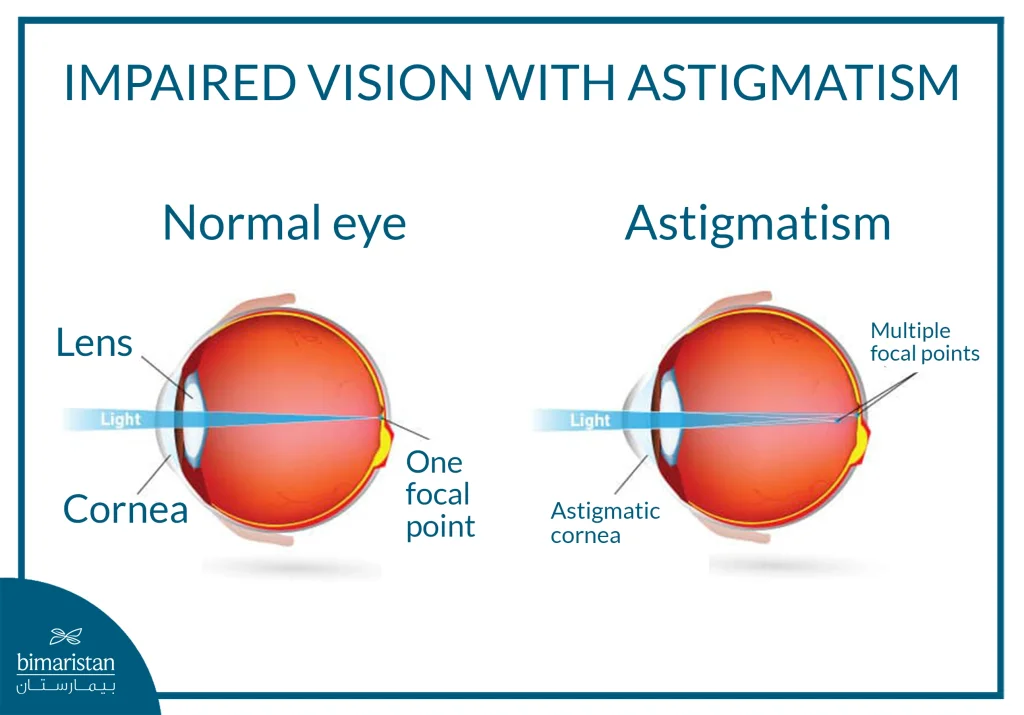
Astigmatism is a refractive defect that occurs when the cornea or lens inside the eye is irregularly shaped, so that the degree of curvature varies between the vertical and horizontal axis. This difference leads to uneven refraction of light within the eye, causing blurred vision and difficulty distinguishing details; straight lines may appear slanted or blurred. In such cases, traditional spherical lenses are not enough to fully correct the imbalance, because the issue is not related to one refractive power, but two different ones. This is where toric lenses come in, which are specifically designed to address this type of optical asymmetry.
How does a toric intraocular lens work?
A toric lens works by providing different refractive forces in two specific directions, allowing for precise correction of astigmatism. When the lens is implanted in the eye, it is fixed at a precalculated angle and axis based on corneal measurements, ensuring that it aligns with the patient’s axis of astigmatism. Maintaining this axis is critical, as even a slight rotation of the lens can affect the quality of the visual correction. When the lens is correctly positioned, it helps to even out the focus of light on the retina, resulting in clearer and more stable vision.
Types of Toric Lenses
Toric lenses are available in several types, and the appropriate type is chosen based on the patient’s visual needs, lifestyle, and the presence of other ocular diseases:
- Toric monofocal lens: Used to correct astigmatism and improve vision for only one distance. Distance vision is often the best after implantation, while the patient may need glasses for near vision. This type is the most common and most stable option in terms of visual outcomes.
- Multifocal toric lens: Combines astigmatism correction with clear vision over more than one distance, such as near, intermediate, and far, minimizing dependence on glasses after surgery. However, some patients may notice visual side effects such as glare or halos, especially in low light.
- Extended Depth of Field (EDOF) toric lens: Provides a progressive and continuous field of view rather than discrete foci, with a high degree of astigmatism correction. This type is preferred for patients who desire normal, balanced vision at multiple distances, while minimizing unwanted visual effects compared to multifocal lenses.
Who are candidates for toric lens implants?
Candidates for toric IOL implantation are determined based on the degree of astigmatism, general eye condition, and preoperative test results:
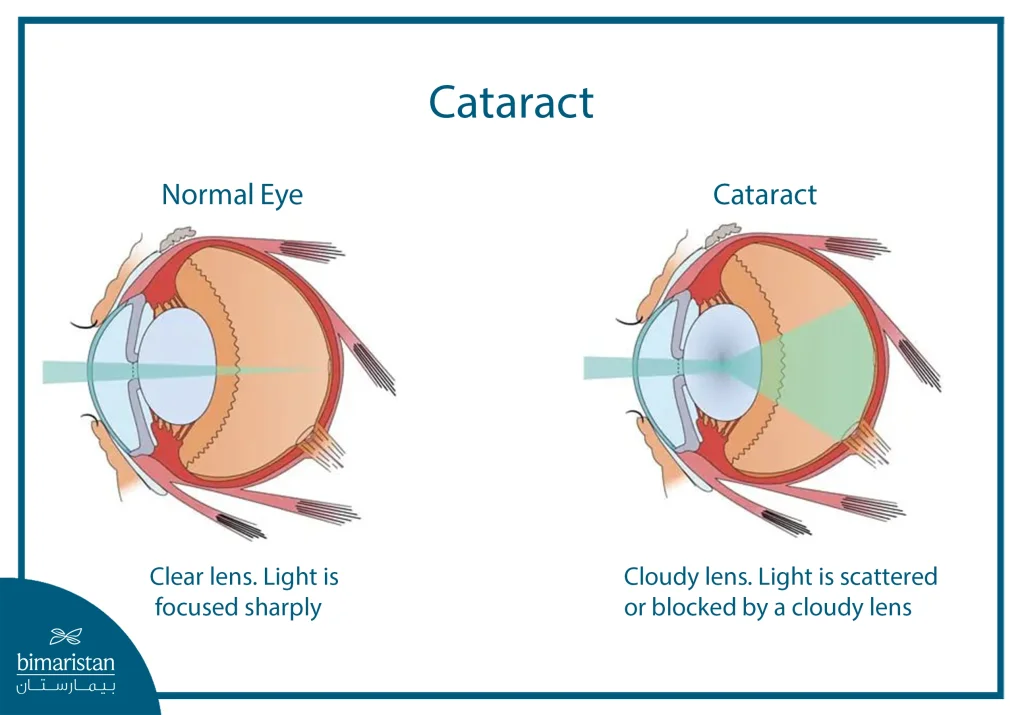
- Cataract patients with regular astigmatism: These patients are among the most likely to benefit from a toric lens, as it corrects natural lens opacity and astigmatism in a single surgical procedure, improving postoperative visual clarity.
- Patients seeking to minimize dependence on glasses after surgery: The toric lens provides clearer, more stable vision than standard lenses, reducing the need for glasses, particularly for distance vision.
- People with marked corneal astigmatism, especially when the degree of astigmatism is sufficient to affect the quality of vision and cannot be accurately corrected with a conventional monovision IOL.
- Patients with stable, unchanging astigmatism: Stable astigmatism is preferred over time, as stable measurements contribute to accurate and long-lasting visual outcomes.
- In individuals without advanced corneal disease, Tourette’s results are better when the cornea is intact and there are no irregularities or diseases that affect intraocular lens stability.
Tests required before toric lens implantation
The accuracy of the results of toric IOL implantation depends mainly on the quality of preoperative examinations, as these evaluations help determine the degree and axis of astigmatism and select the most appropriate lens for each patient.
- Accurately measure astigmatism: Determining the amount of astigmatism is critical, whether it comes from the cornea or the intraocular lens, as it determines the strength of the chosen toric lens.
- Corneal convexity test: Performed using advanced equipment, such as corneal maps, it assesses the shape and regularity of the corneal surface and detects abnormalities that may affect the accuracy of astigmatism correction.
- Determine the axis of the lens: The axis on which the lens should be implanted is determined with great precision, as any slight deviation from this axis may reduce the effectiveness of the optical correction.
- The importance of prior surgical planning: Planning includes selecting the lens type, calculating its power, and determining its final position within the eye, which helps minimize errors and achieve the best possible postoperative results.
Toric Lens Implant Steps
Toric IOL implantation is performed during standard cataract surgery, with additional steps to ensure proper intraocular lens alignment.
- Preoperative preparation: This includes sterilizing the eye, marking the axis of astigmatism on the cornea, and using local anesthetic drops to prepare the patient for surgery.
- Basic surgical steps: Begin by removing the opaque natural lens using phacoemulsification, preserving the lens capsule in which the new lens will be implanted.
- Lens fixation and alignment: The toric lens is implanted into the lenticular capsule and then precisely rotated until its markings align with the predefined axis of astigmatism.
- Duration of the procedure and anesthesia: The procedure typically takes no more than a few minutes and is performed under local anesthesia, without general anesthesia.
Toric Lens Implant Results
Toric IOL implantation shows good visual outcomes in most patients, especially when careful planning and correct surgical execution are adhered to.
- Improved visual acuity: Patients report a clear improvement, with a significant reduction in astigmatism-related blurring.
- Reduce dependence on glasses: The lens reduces the need for eyeglasses, especially for distance vision, and some patients may be able to do without them altogether.
- When the final results are visible, Vision begins to improve within the first few days after surgery, while final results usually stabilize within several weeks.
Toric Lens Features
The toric lens offers many visual benefits that make it a preferred choice for many patients with astigmatism, including:
- Precise correction of astigmatism: The lens is specifically designed to address irregularities in the refraction of light, resulting in more accurate optical correction than conventional lenses.
- Clearer vision compared to traditional lenses: Gives patients clearer and more stable vision, especially in daily activities that require good visual focus.
- Improved visual quality of life: Improved clarity of vision helps you perform daily activities more comfortably, with less reliance on external corrections.
Disadvantages and limitations of the toric lens
Despite its benefits, a toric lens may not be the best option for all patients, and there are a few points to consider.
- Higher cost: Toric lenses are typically more expensive than traditional monovision lenses, due to their advanced design and technology.
- Alignment sensitivity: The effectiveness of a lens depends heavily on the accuracy of its stabilization, as even a small deviation from the correct axis can degrade visual quality.
- Rarely, minor lens rotation may occur after surgery and may require additional follow-up or repositioning.
Comparison of the toric lens with other lenses and LASIK
This table presents the key differences among toric, monofocal, and other lenses with respect to the mechanism of astigmatism correction, visual quality, visual stability, the need for glasses after the procedure, and the suitability of each option for different cases, thereby helping to select the most appropriate solution for each patient.
| Criterion | Toric lens | Traditional Monocular Lens | Toric contact lenses | Lasik |
|---|---|---|---|---|
| Correction of astigmatism | Accurate and direct intraocular correction | Do not correct astigmatism | Good correction for astigmatism | Effective correction in selected cases |
| Correction mechanism | Different refractive forces with a specific axis | Single refractive force | Spherical and cylindrical forces with an axis | Reshaping the surface of the cornea |
| Optical stabilization | High on correct alignment | Limited with astigmatism | May be affected by lens rotation | Stabilized after recovery is complete |
| Relying on glasses | Low, especially for long-distance visibility | High when there is astigmatism | Low while wearing the lens | Low or not needed |
| Suitability for cataract patients | Very convenient and implanted during surgery | Suitable but without astigmatism correction | Not suitable | Not suitable |
| Surgical intervention | Yes, in cataract surgery | Yes, in cataract surgery | No | Yes |
| Long-term results | Stable and durable | Stabilized but still blurry | Young or not, candidates for surgery | Relatively permanent |
| The need for maintenance | Maintenance-free | Maintenance-free | Periodic cleaning and replacement | No |
| Cost | Higher than a conventional lens | The least expensive | Medium and frequent | Medium to high |
| The most suitable category | Cataract patients with astigmatism | Cataract patients without astigmatism | Young people or not suitable for surgery | Patients with stable vision without corneal disease |
Comparing the cost of toric lenses in Turkey and other countries
Prices varied significantly between countries, due to healthcare costs, doctors’ fees, and the level of services provided, as shown in the following table:
| State | Average cost of toric lens implants per eye |
|---|---|
| Turkey | 2,000 – 3,500 USD |
| United States | 4,000 – 6,500 USD |
| Gulf States | 3,500 – 5,500 USD |
Prices are estimated and may vary by lens type and medical center.
In conclusion, the toric lens is an advanced and effective option for correcting astigmatism, especially in patients undergoing cataract surgery or with visual distortion that cannot be accurately corrected with conventional lenses. The success of this type of lens relies heavily on accurate preoperative examinations, good surgical planning, and proper intraocular lens placement. As lens and ophthalmic surgery techniques continue to evolve, the results of toric lens implantation are becoming more stable and of higher quality in terms of visual acuity. It is advisable to discuss your options with your ophthalmologist to determine whether a toric lens is the best solution for achieving the best possible vision over the long term.
Sources:
- Thulasidas M, Kadam A. Toric intraocular lens: A literature review. Taiwan J Ophthalmol. 2021 Dec 10;14(2):197-208. doi: 10.4103/tjo.tjo_43_21. PMID: 39027059; PMCID: PMC11254006.
- American Academy of Ophthalmology. (n.d.). Toric intraocular lenses (Toric IOLs). EyeWiki.
- StatPearls Publishing. (n.d.). Toric intraocular lenses. In StatPearls. National Center for Biotechnology Information (NCBI).