
Ovarian cancer is one of the most important cancers affecting the female reproductive system. It usually begins in one of the ovaries, which produce eggs and female hormones. The danger of ovarian cancer lies in the fact that its symptoms may be mild or unclear in the early stages, such as abdominal bloating, menstrual irregularities, or pelvic pain. As a result, diagnosis is often delayed until the cancer has spread within the abdomen or to other organs.
Treatment for ovarian cancer depends on the stage of the disease and the patient’s overall health. It may include surgery, chemotherapy, and, in some cases, targeted therapy or immunotherapy, depending on the type of tumor. In this article, we explore the symptoms, stages, diagnostic methods, and treatment options for ovarian cancer in Turkey.
What are the ovaries and where are they located?
The ovaries are an essential part of the female reproductive system. They are two small organs located on either side of the uterus within the pelvis. Each ovary is about the size of a walnut and connects to the uterus through the fallopian tube, which helps transport the egg from the ovary to the uterus.
During the reproductive years, the ovaries produce eggs periodically and secrete important female hormones, such as estrogen and progesterone. Therefore, their role is not limited to reproduction alone; they also contribute to regulating the menstrual cycle and maintaining hormonal balance in women.
What is ovarian cancer and how does it develop?
Ovarian cancer develops when certain ovarian cells begin to grow and divide abnormally and uncontrollably. Under normal circumstances, body cells undergo a regulated cycle of growth, division, and eventual death after they complete their function. However, when mutations or genetic changes occur in these cells, they may keep dividing and fail to die at the appropriate time, eventually forming a mass or tumor.
Ovarian tumors may be benign or malignant. Benign tumors generally remain localized, grow slowly, and do not spread to other organs. Depending on their size and associated symptoms, the doctor may simply monitor them or recommend surgical removal. Malignant ovarian tumors, on the other hand, are more dangerous because they may grow rapidly, invade nearby tissues, and spread to other parts of the body. This condition is known as ovarian cancer.
Understanding the structure and location of the ovaries helps clarify the symptoms of ovarian cancer, particularly because some symptoms may be nonspecific or resemble those of other gynecological and digestive conditions.
What are the causes of ovarian cancer?
There is no single clearly established cause of ovarian cancer. The disease generally develops because genetic changes or mutations in ovarian cells cause them to grow and divide abnormally. However, several factors may increase the likelihood of developing ovarian cancer in some women. Having one or more of these risk factors does not necessarily mean that a woman will develop the disease. The main risk factors associated with ovarian cancer include:
- A family history of ovarian or breast cancer
- Inheritance of specific genetic mutations, particularly BRCA1 or BRCA2 mutations
- A personal history of breast, uterine, or colorectal cancer
- Advanced age, as the risk increases with age
- Never having been pregnant
- Presence of hereditary syndromes, such as Lynch syndrome, a condition that may increase the risk of various cancers, including colon, uterine, and ovarian cancer
- Belonging to families with a higher prevalence of certain genetic mutations, such as is the case for some women of Ashkenazi Jewish descent
When is genetic testing for ovarian cancer recommended?
Genetic testing should be discussed with a doctor when there is a strong family history of ovarian or breast cancer. Testing can help identify inherited mutations, such as BRCA1 and BRCA2, and determine whether appropriate surveillance or preventive measures are needed.
What are the symptoms of ovarian cancer?
Ovarian cancer often does not cause noticeable symptoms in its early stages, making early detection difficult. When symptoms do appear, they may include:
- Abdominal or pelvic bloating and pain
- Feeling full quickly or loss of appetite
- Digestive problems such as nausea, bloating, belching, or stomach pain
- Abnormal vaginal bleeding or unusual discharge, particularly between menstrual periods or after menopause
- Abdominal masses or an abnormal increase in abdominal size
- Frequent urination or urinary urgency
- Unexplained weight loss
How is ovarian cancer diagnosed?
There are currently no established screening tests for the early detection of ovarian cancer comparable to cervical screening tests or breast imaging. As a result, diagnosis often occurs after symptoms develop. It is important to consult a healthcare provider if symptoms persist for more than two to three weeks.
Steps in diagnosing ovarian cancer
- Medical history and physical examination: This includes a pelvic examination to check for any masses or enlargement of the ovaries or surrounding organs.
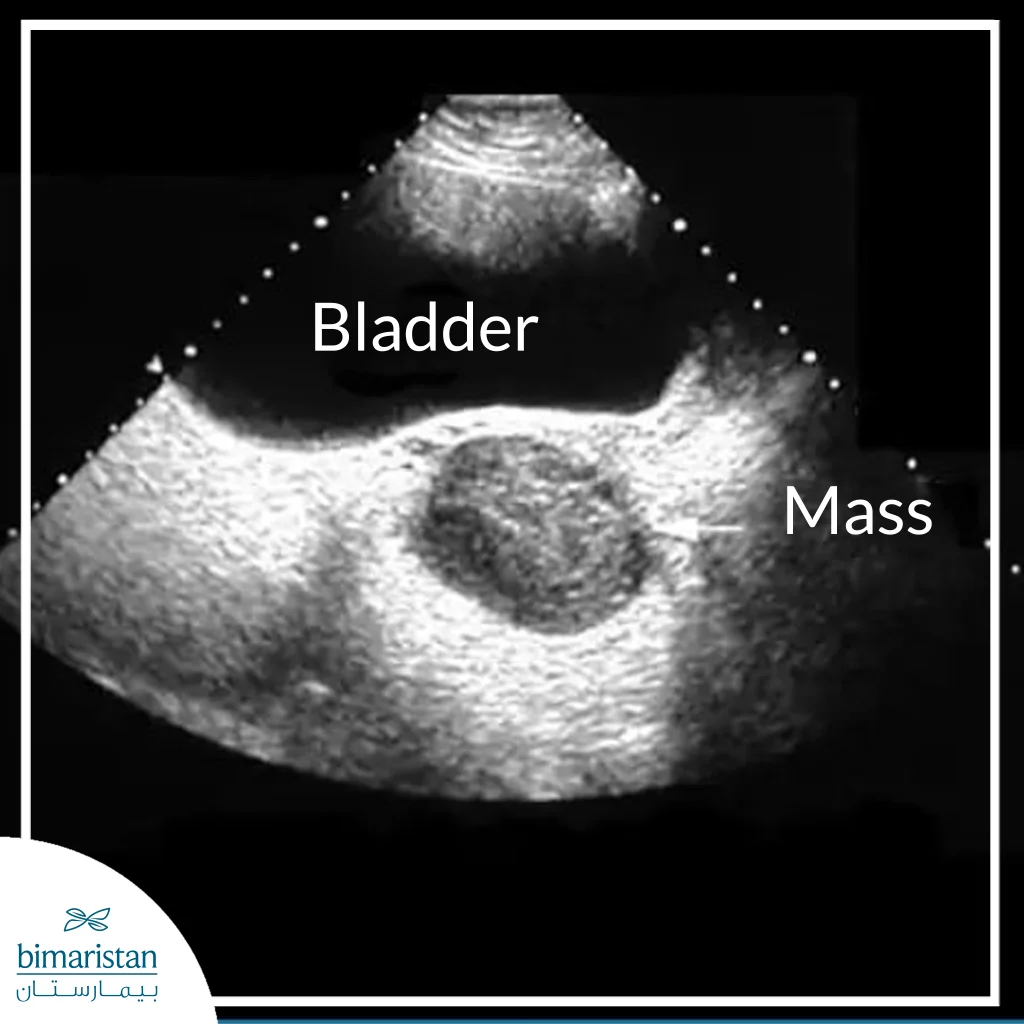
- Pelvic ultrasound: This can be performed transabdominally or transvaginally. It helps assess ovarian size and identify abnormal growths, whether cancerous or benign.
- Other imaging tests:
- Magnetic Resonance Imaging (MRI)
- Computed Tomography (CT)
- Positron Emission Tomography (PET)
- Chest X-ray
- Blood tests: Measuring CA-125 levels, which may be elevated. However, elevated CA-125 levels do not always indicate cancer, and this test is used alongside other diagnostic investigations.
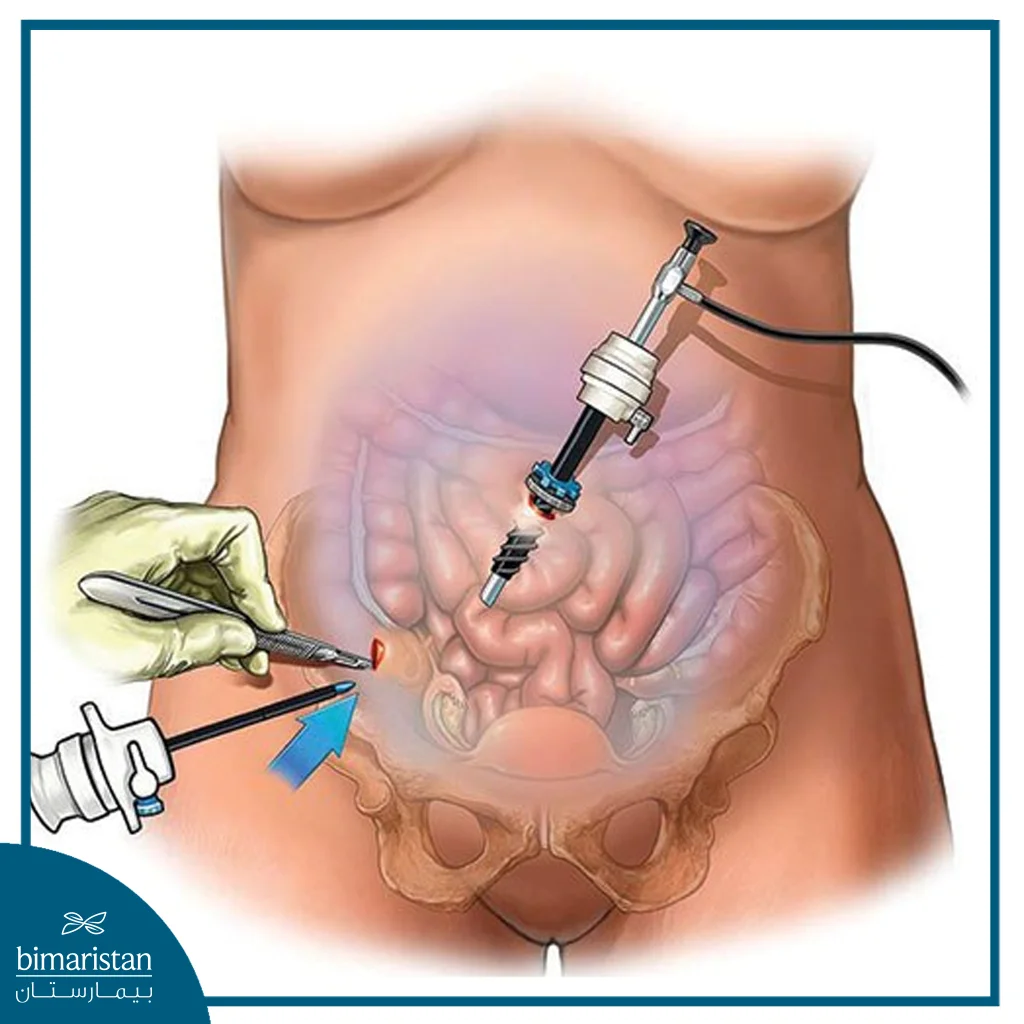
- Surgical evaluation and laparoscopy: The doctor may use laparoscopy to directly assess the condition, obtain biopsies, and, in some cases, remove tumors. It may also form part of the surgical treatment plan.
Together, these investigations help determine whether ovarian tumors are present, identify the tumor type, and assess the extent of its spread to establish an appropriate treatment plan.
What are the stages of ovarian cancer?
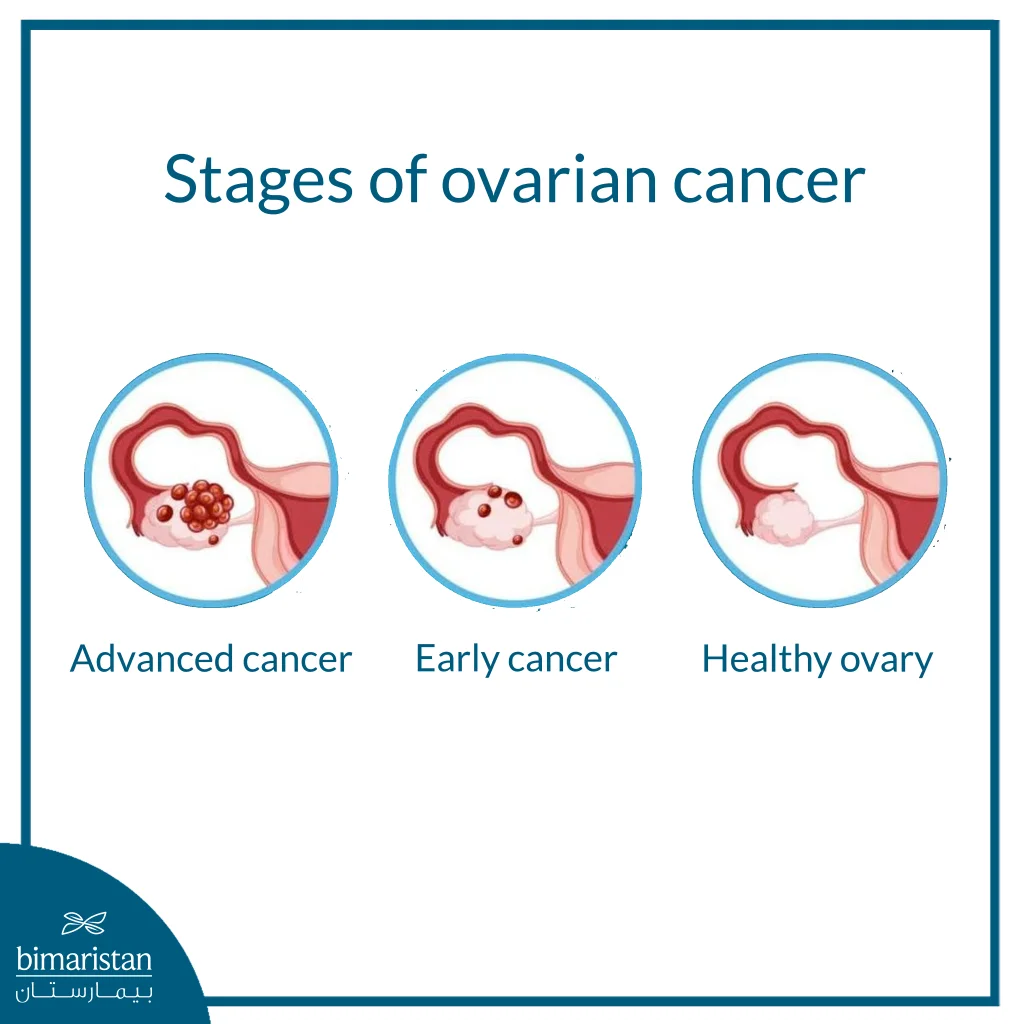
The stages of ovarian cancer help determine how far the tumor has spread and guide the selection of the most appropriate treatment. Doctors determine the stage based on the location of the cancer, whether it affects one or both ovaries, and whether it has spread to the pelvis, abdomen, lymph nodes, or distant organs. Ovarian cancer is divided into four main stages:
- Stage I: The cancer is confined to one or both ovaries, or one or both fallopian tubes, without evidence of spread to distant organs. This is the earliest stage of the disease.
- Stage II: The cancer spreads beyond the ovaries but remains within the pelvic region. It may involve the uterus, fallopian tubes, or nearby tissues and organs within the pelvis.
- Stage III: The cancer spreads beyond the pelvis and may reach the abdominal lining (peritoneum) or nearby lymph nodes. This is a more advanced stage, and cancerous deposits may develop within the abdomen.
- Stage IV: This is the most advanced stage, in which the disease spreads to distant organs, such as the liver or lungs, or to distant lymph nodes.
Determining the stage of ovarian cancer helps doctors select the most appropriate treatment plan, which may include surgery, chemotherapy, or targeted therapies, depending on the patient’s condition, tumor type, and extent of spread.
How is ovarian cancer treated in Turkey?
Treatment for ovarian cancer in Turkey depends on the stage of the disease, the type of tumor, and the extent of its spread, as well as the patient’s age and overall health. Treatment aims to remove as much of the tumor as possible and control cancer cells. Depending on the individual case, doctors may combine surgery with chemotherapy or newer treatment approaches. The main treatment options include:
- Surgery: This is the primary treatment option in most cases. It may involve removing the affected ovary or both ovaries, along with the uterus, fallopian tubes, omentum, and certain surrounding tissues or lymph nodes if the cancer has spread.
- Laparoscopy: This may be used in selected cases for diagnosis, obtaining biopsies, or removing specific tumors, particularly when minimally invasive surgery is appropriate.
- Open abdominal surgery (Laparotomy): This approach is used in advanced cases or when a large tumor needs to be removed, or when there is a need to remove cancerous deposits spread throughout the abdomen.
- Chemotherapy: This may be administered before surgery to shrink the tumor or after surgery to eliminate any remaining cancer cells and reduce the risk of recurrence.
- Targeted therapy or immunotherapy: These treatments may be used in certain advanced or recurrent ovarian cancers, depending on the genetic test results and tumor type.
After completing ovarian cancer treatment, patients require regular follow-up appointments, which may include physical examinations, blood tests such as CA-125 when indicated, and imaging studies to monitor treatment response and detect any potential recurrence.
How can ovarian cancer be prevented?
There is no guaranteed way to prevent ovarian cancer completely. However, certain measures may help reduce the risk in some women, including maintaining a healthy weight, exercising regularly, following a balanced diet, and avoiding unhealthy habits.
Prevention is particularly important for women with a family history of ovarian or breast cancer or those who carry inherited mutations such as BRCA1 and BRCA2. In these cases, doctors may recommend genetic testing and a carefully planned surveillance strategy. Preventive surgery involving the removal of both ovaries and fallopian tubes may also be considered in selected women at high risk.
Pregnancy and long-term use of oral contraceptives may be associated with a reduced risk of ovarian tumors in some women. However, no medication should be used for this purpose without consulting a doctor.
Follow-up after ovarian cancer treatment
After ovarian cancer treatment, patients require regular follow-up appointments to monitor their condition and detect any possible recurrence. Follow-up may include physical examinations, CA-125 testing when indicated, and imaging studies as considered appropriate by the doctor.
It is important to inform the doctor about any new or persistent symptoms, such as abdominal bloating, pelvic pain, loss of appetite, unexplained weight loss, or urinary and digestive problems. Regular follow-up helps identify and address any changes at an early stage.
Ovarian cancer treatment in Turkey with Bimaristan Medical Center
Bimaristan Medical Center in Turkey provides comprehensive support for patients seeking ovarian cancer treatment by referring them to specialized doctors and advanced medical centers and helping coordinate appointments, diagnostic investigations, and individualized treatment plans.
The center also helps patients traveling from abroad overcome language barriers and arrange medical appointments, accommodation, transportation, and other logistical needs, making the treatment journey clearer and easier from diagnosis through post-treatment follow-up.
Ovarian cancer can develop silently, making awareness of its symptoms and risk factors essential for timely diagnosis and treatment. Treatment depends on the patient’s condition and may involve surgery, chemotherapy, or targeted therapies. Bimaristan Medical Center in Turkey provides comprehensive support in coordinating diagnosis, treatment, and follow-up care with specialized doctors.
Sources: