
Dynamic lumbar stabilization is now offered as one of the surgical options aimed at treating lower back pain caused by lumbar spine problems while attempting to preserve some degree of spinal mobility, The importance of this type of procedure is growing alongside the rising prevalence of chronic back pain, as lower back pain is one of the most common reasons for visits to orthopedic and neurology clinics worldwide, and it is also a common cause of reduced ability to work and perform daily activities.
Global estimates indicate that lower back pain affects a large percentage of adults at some point in their lives, with some studies suggesting that as many as 60–70% of people will experience it. Although most cases improve with conservative treatment, some patients suffer from persistent pain, spinal instability, or nerve compression that requires more specialized intervention. This is where modern surgical techniques come into play, aiming to strike a balance between pain relief, spinal stabilization, and minimizing the impact on the natural movement of the lumbar region.
What is Dynamic lumbar stabilization?
Dynamic lumbar stabilization is a modern surgical technique used to treat certain lower back spine conditions, particularly those associated with vertebral instability, nerve compression, and chronic back pain. This procedure aims to support the affected vertebrae and relieve symptoms while preserving some natural movement in the lumbar region, unlike traditional fusion, which may further restrict vertebral movement.
This technique relies on flexible or dynamic stabilization systems implanted around the vertebrae to reduce pain-causing movement without completely eliminating it, thereby helping relieve pressure on the intervertebral discs and surrounding joints. Dynamic lumbar stabilization is used in select cases, such as recurrent herniated discs, lumbar stenosis, spinal degeneration, and certain mild-to-moderate cases of spondylolisthesis, following a thorough evaluation by a physician.
When does a patient need a Dynamic lumbar stabilization?
A patient may require Dynamic lumbar stabilization when lower back pain or leg pain caused by nerve compression persists despite medication, physical therapy, and lifestyle modifications. This procedure is not usually the first-line treatment, but it is considered when X-rays or MRI scans reveal a clear problem in the lumbar spine—such as spinal instability, spinal stenosis, or severe degeneration of the intervertebral discs—and symptoms interfere with walking, work, and daily activities.
The doctor prefers this type of stabilization in certain cases that require vertebral support without completely eliminating movement, particularly in patients who are expected to benefit from maintaining as much flexibility as possible in the lumbar region, The decision is made after evaluating the severity of pain, the degree of slippage or stenosis, the condition of the nerves, the patient’s age, their activity level, and the suitability of motion-preserving fusion compared to traditional fusion or other treatment options.
What conditions can be treated with Dynamic lumbar stabilization?
Dynamic lumbar stabilization can be used in selected cases of lower back conditions that require mechanical support for the vertebrae while attempting to preserve some of their natural mobility, The most common of these conditions include recurrent herniated discs, lumbar stenosis, spinal degeneration, and intervertebral instability, and some mild to moderate cases of spondylolisthesis, especially when symptoms are persistent and interfere with walking, sitting, or daily activities.
This procedure is not suitable for all patients with spinal conditions; the decision depends on the results of MRI or X-ray imaging, the extent of damage to the intervertebral disc, the condition of the facet joints, the presence of nerve compression, and the stability of the vertebrae during movement, Therefore, dynamic stabilzation is typically used when the doctor believes that preserving motion may be more beneficial to the patient than traditional total fusion.
The Difference Between Dynamic and Traditional Spinal Fusion
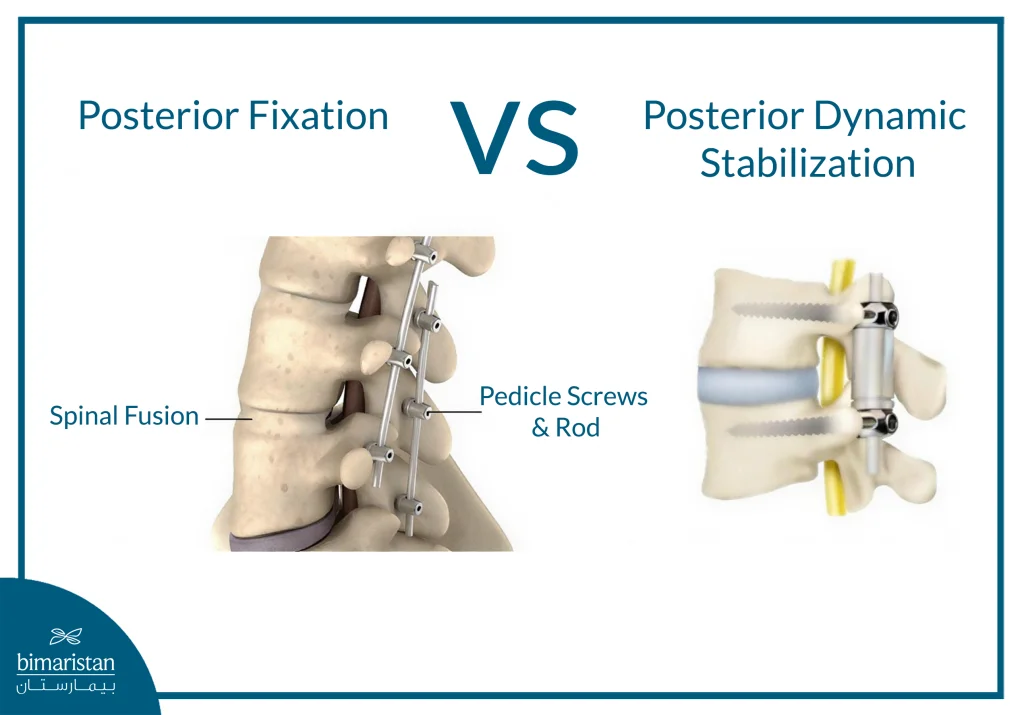
Both dynamic and traditional spinal fusion aim to relieve pain and improve spinal stability, but the key difference between them lies in how they address spinal movement. In traditional fusion, the affected vertebrae are fused together using screws, metal plates or rods, and bone grafts, so that the treated vertebrae eventually become a single bony mass with little or no movement.
In the case of motion-preserving lumbar spinal fusion, flexible or dynamic fusion systems are used to support the vertebrae and reduce excessive, pain-causing movement without completely eliminating mobility; Therefore, this procedure may help relieve pressure on adjacent vertebrae and maintain better flexibility in the lower back. However, in severe cases requiring strong, permanent stabilization, traditional stabilization may ultimately be more appropriate.
How is a Dynamic lumbar stabilization performed?
Anesthesia and Patient Preparation
Lumbar spinal stabilization is typically performed under general anesthesia, with the patient positioned on their stomach in a way that allows the surgeon to access the lumbar spine precisely. Before the surgery begins, MRI or CT scans are reviewed to determine the level of the affected vertebrae and identify the appropriate site for fixation.
Access to the Lumbar Vertebrae
The surgeon makes an incision in the lower back above the affected area, then carefully moves aside the surrounding tissues and muscles to access the targeted vertebrae. In some cases, less invasive techniques may be used to minimize muscle damage and speed up recovery after surgery.
Relieving Pressure on the Nerves
If the patient has spinal stenosis or pressure on the nerve roots, the surgeon may remove a small portion of bone or compressed tissue to relieve pressure on the nerve roots. This procedure helps alleviate leg pain, numbness, and muscle weakness caused by nerve compression.
Installation of the Dynamic stabilization system
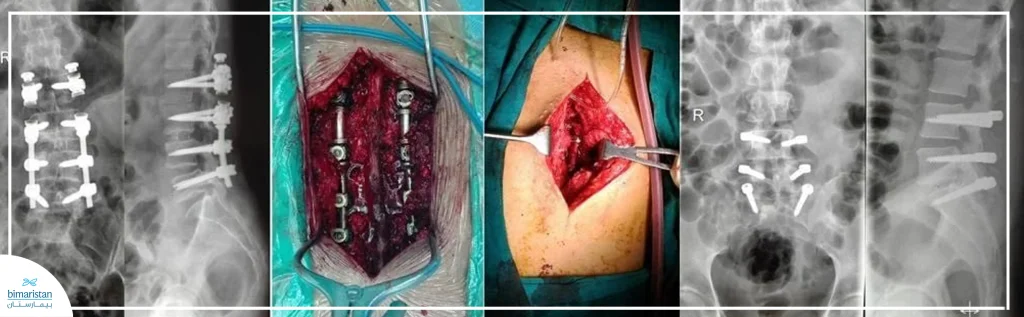
After preparing the vertebrae, the surgeon inserts special screws into the affected vertebrae and then connects them with rods or flexible connectors that allow for a limited degree of movement. This system is designed to stabilize the vertebrae and reduce abnormal movement without completely restricting movement in the lumbar region.
Ensuring that the vertebrae are stabilized and the wound is closed
The surgeon verifies the position of the screws and the fixation system using intraoperative imaging, then closes the incision in layers after ensuring there is no bleeding or residual pressure on the nerves. Afterward, the patient is transferred to the recovery room for vital-sign monitoring and to begin recovery.
Advantages of Dynamic Lumbar Stabilization
Dynamic lumbar stabilization is characterized not by focusing solely on stabilizing the affected vertebrae, but by balancing support for the spine, pain relief, and the preservation of as much mobility as possible. The importance of this technique is particularly evident in patients with degenerative conditions or mild instability who do not require complete vertebral immobilization. Among the most notable advantages of dynamic stabilization of the lumbar spine are:
- Preserving some range of motion in the vertebrae: Dynamic fusion does not turn the treated vertebrae into a rigid bony mass, as occurs in some traditional fusion procedures, but rather allows for a limited and controlled degree of motion, which helps keep the lumbar region more flexible during bending, sitting, and walking, while reducing excessive movements that cause pain.
- Reducing pressure on adjacent vertebrae: When a vertebra is fully fused, mechanical forces may be transferred to nearby vertebrae, which may increase the likelihood of their degeneration over time; however, with motion-preserving fusion, the load is distributed more evenly, and therefore may be a suitable option for some patients for whom the goal is to relieve pressure on adjacent levels as much as possible.
- Relief of lower back and leg pain: Dynamic stabilization helps reduce abnormal movement between the vertebrae and can also help relieve pressure on compressed nerves in cases of spinal stenosis or a herniated disc, which may help relieve back pain, leg pain, numbness, and tingling—especially when these symptoms are related to instability or nerve compression.
- Supporting the vertebrae without completely restricting movement: This feature is one of the most significant differences between motion-preserving fusion and traditional fusion, as the patient receives mechanical support for the affected vertebrae without completely losing motion at the treated level, which can be beneficial in cases where rigid fusion is not necessary.
- Improved Daily Mobility: As pain decreases and spinal stability improves, the patient may become better able to walk and sit for longer periods and gradually resume daily activities; this does not mean an immediate return to strenuous activity, but it may help the patient regain a more comfortable lifestyle compared to the pre-surgery phase of chronic pain.
- A suitable option for some moderate cases: Dynamic stabilization is not used for all spinal conditions, but it may be appropriate in select cases such as spinal degeneration, limited instability, or some mild to moderate degrees of spondylolisthesis, as in these cases, it may provide a middle ground between insufficient conservative treatment and full traditional fusion.
- The possibility of combining it with nerve decompression: In many cases, the goal is not only to stabilize the vertebrae, but also to relieve pressure on the nerves. During the procedure, the surgeon can decompress the spinal canal or nerve roots and then add a motion-preserving stabilization system to support the vertebrae, making the treatment more comprehensive when the problem involves both nerve compression and spinal instability.
Risks and Complications of the Procedure
Dynamic lumbar stabilization is considered relatively safe when performed on an appropriate patient by an experienced surgical team, but it remains a surgical procedure that may carry risks, as with any other spinal surgery. The likelihood of complications varies depending on the patient’s age, overall health, the extent of vertebral damage, the type of device used, and the medical team’s experience. The most significant risks and complications of dynamic lumbar spinal fusion include:
- Postoperative Pain: It is normal for the patient to experience pain at the surgical site during the first few days, and they may need pain medication and regular follow-up until they gradually recover.
- Bleeding or blood accumulation: Bleeding may occur during or after the procedure, and in rare cases, blood may accumulate near the surgical site, requiring monitoring or additional intervention.
- Infection at the wound site: Superficial skin Infection or deeper inflammation around the screws and fixation system may occur; this is usually treated with antibiotics and may require surgical debridement.
- Nerve injury: The lumbar nerve roots may be damaged during decompression or screw fixation, which can cause pain, numbness, or weakness in the leg; however, this is rare when precise surgical imaging and planning are used.
- Cerebrospinal fluid leak: A small tear in the dura mater surrounding the nerves can lead to a cerebrospinal fluid leak, which may cause a headache or require surgical repair.
- Loose screws or device failure: In some cases, the screws may become loose, or the fixation system may loosen or break, especially if the bones are weak or if postoperative exercise instructions are not followed.
- Persistent pain or recurrence of symptoms: The pain may not resolve completely after surgery, especially if the problem involves multiple levels or if there is pre-existing nerve damage or another cause of pain unrelated to spinal instability.
- Effects on Adjacent Vertebrae Over Time: Although dynamic stabilization is intended to reduce pressure on nearby vertebrae, degeneration may gradually continue in some cases, and new symptoms may appear at another level of the spine.
- The Need for Additional Surgery: Some patients may require a follow-up procedure if their symptoms do not improve as expected, if the device fails, or if the spinal problem worsens over time.
Recovery After Dynamic Lumbar Stabilization
Recovery begins after the placement of a spinal brace for the lumbar spine in the hospital, where the patient typically remains under observation for a short period to monitor pain, leg movement, and ensure that their overall condition is stable. During this time, the patient may be encouraged to gradually stand and walk during the first or second day, depending on their condition and the doctor’s recommendations, while avoiding excessive bending, heavy lifting, or sudden movements during the first few weeks after surgery.
The recovery period varies from patient to patient depending on age, the severity of the spinal problem, the type of fixation used, and the extent of adherence to physical therapy, but patients usually resume light daily activities within a few weeks, while a return to strenuous work or sports may take longer, subject to the doctor’s approval. Regular follow-up after surgery is essential to assess wound healing, the position of the fixation device, and the gradual improvement in pain, numbness, and mobility.
In conclusion, Dynamic lumbar stabilization helps relieve lower back pain and support injured vertebrae while preserving a greater range of motion than some traditional stabilization methods. The success of treatment depends on selecting the right patient, an accurate diagnosis, and the medical team’s expertise in determining the most appropriate technique for each case. Therefore, Bimaristan is committed to guiding patients toward the right treatment decision through a structured medical evaluation and specialized pre- and post-operative follow-up.
Sources:
- Li, T., Yan, J., Ren, Q., Hu, J., Wang, F., & Liu, X. (2023). Efficacy and safety of the Coflex lumbar dynamic stabilization device for lumbar spinal stenosis: A systematic review and meta-analysis.
- Zhou, L. P., Zhang, R. J., Wang, J. Q., Zhang, H. Q., Shang, J., Gao, Y., Jia, C. Y., Ding, J. Y., Zhang, L., & Shen, C. L. (2023). Medium- and long-term radiographic and clinical outcomes of Dynesys dynamic stabilization versus instrumented fusion for degenerative lumbar spine diseases.